
About the Episode
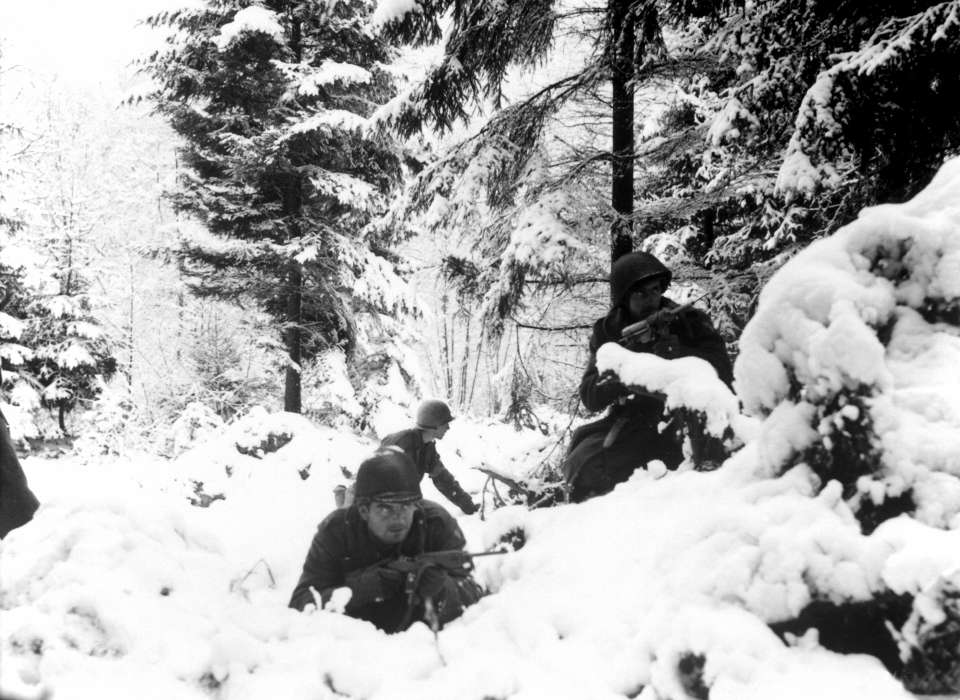
By December 1944, troops are fighting through the Ardennes Forest in the Battle of the Bulge, where Allied and Axis forces both employ deception tactics in efforts to change the course of the campaign—and the war.
Host Bradley W. Hart is joined by historians and authors Michael Bell, John Curatola, Jeffrey Rogg, and Nicholas Reynolds.
Topics Covered in This Episode
- Battle of the Bulge
- Operation Griffin
- Ritchie Boys
- Ernest Hemingway
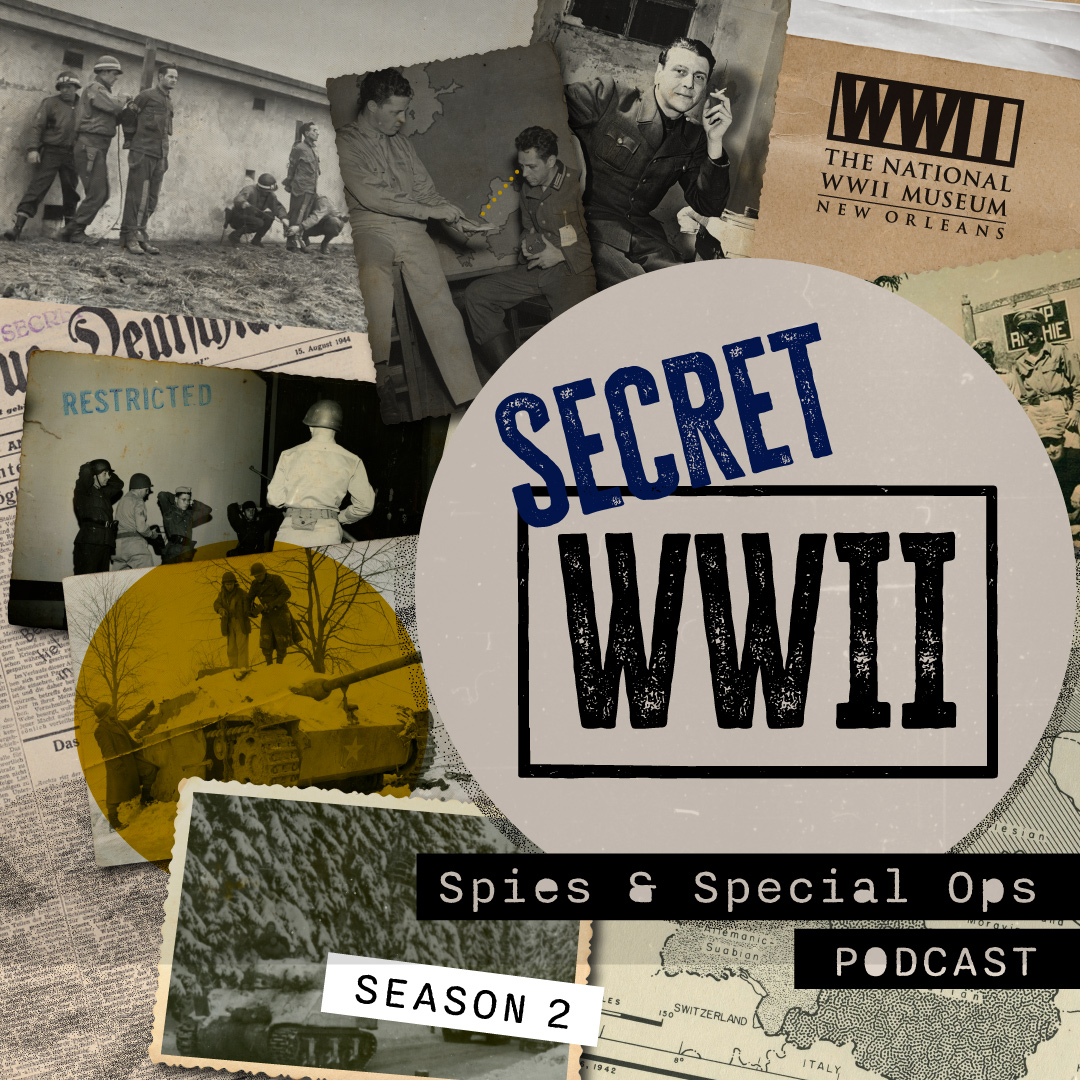
Michael Bell, PhD (COL, USA, Ret.)
Michael Bell is the Executive Director of the Jenny Craig Institute for the Study of War and Democracy. Commissioned in Armor following graduation from West Point, he is a combat veteran, historian, and strategist who has served at every level from platoon through theater army, as well as with US Central Command, the Joint Staff, the West Point faculty, and the National Defense University. As a civilian faculty member at the National Defense University, he also served details to the Office of the Secretary of State and as a National Security Council Senior Director and Special Assistant to the President.
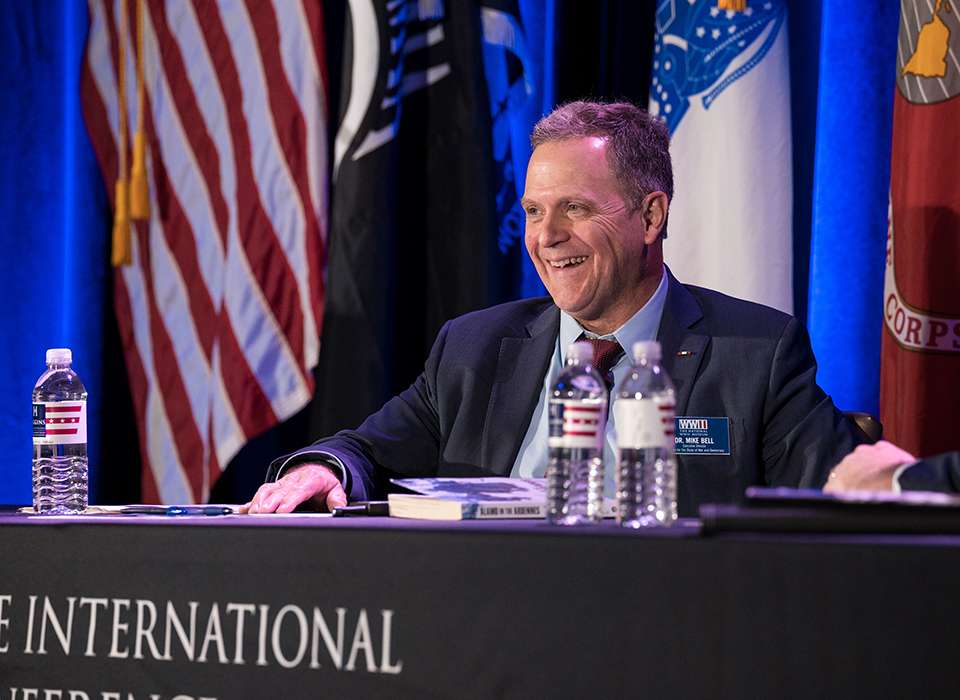
John Curatola, PhD
John Curatola is the Samuel Zemurray Stone Senior Historian at the Jenny Craig Institute for the Study of War and Democracy. A US Marine Corps officer of 22 years, he is a veteran of Operation Provide Hope in Somalia, Operation Iraqi Freedom, and the 2005 Indian Ocean tsunami relief effort. Curatola’s first two books, Bigger Bombs for a Brighter Tomorrow and Autumn of Our Discontent, assess US national security and nuclear capabilities in the early Cold War period. His most recent title, Armies Afloat: How the Development of Amphibious Operations in Europe Helped Win World War II, explores the US Army’s journey in mastering amphibious warfare
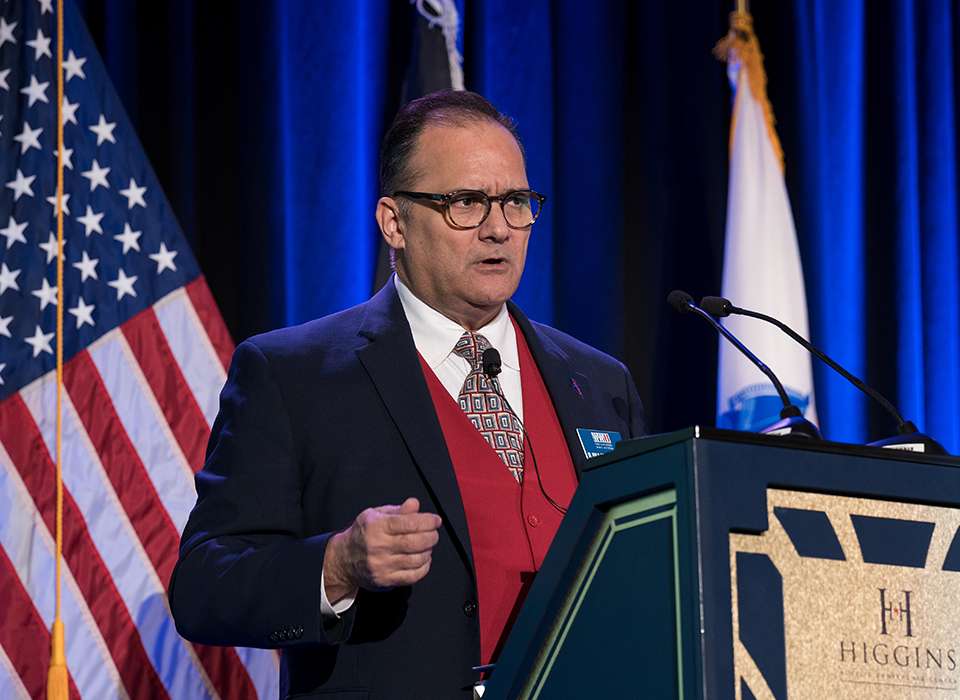
Jeffery Rogg, PhD, JD
Jeff Rogg is Senior Research Fellow at the Global and National Security Institute at the University of South Florida where he conducts policy-relevant research in the areas of intelligence, grand strategy, and national security. He is the author of The Spy and the State: The History of American Intelligence.

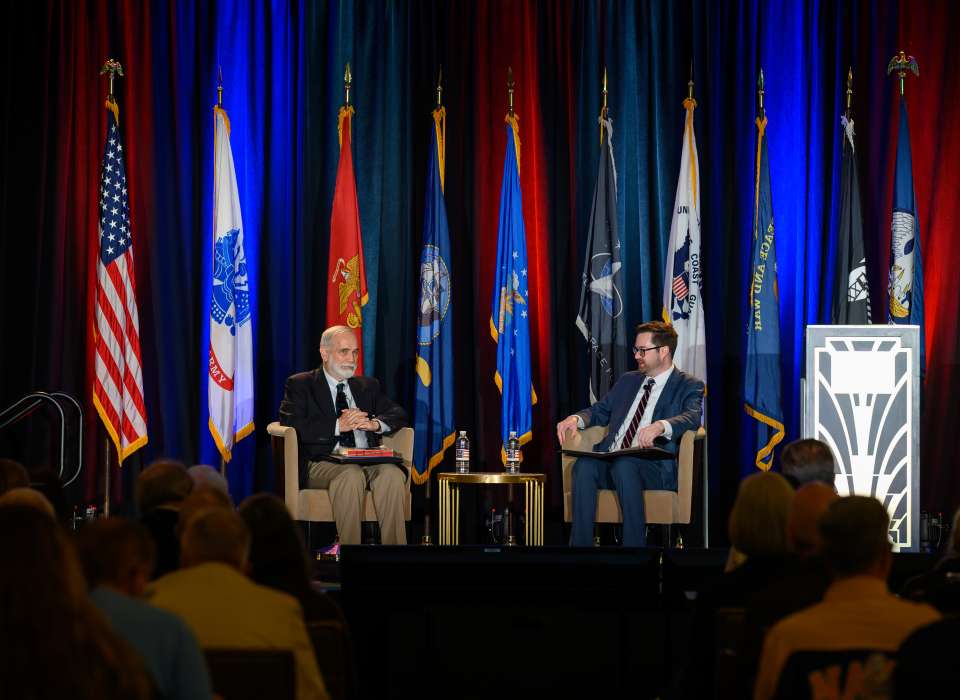
Nicholas Reynolds, PhD
Nicholas Reynolds is a US Marine Corps veteran, serving as an infantry officer and then as an official historian. As a Colonel in the Reserves, he was Officer in Charge of Field History, deploying historians around the world to capture history as it was being made. For many years, he worked at CIA, most recently as the historian for the CIA Museum. Reynolds has taught at the Naval War College, Johns Hopkins University, and the Osher Lifelong Learning Institute. He is the author of Need to Know: World War II and the Rise of American Intelligence.
-
 Topic
TopicBattle of the Bulge
On December 16, 1944, the German army launched a massive offensive in the Ardennes Forest. The Battle of the Bulge would be the largest engagement ever fought by the US Army—and ultimately hasten the end of Adolf Hitler’s Third Reich.
-
Article Type
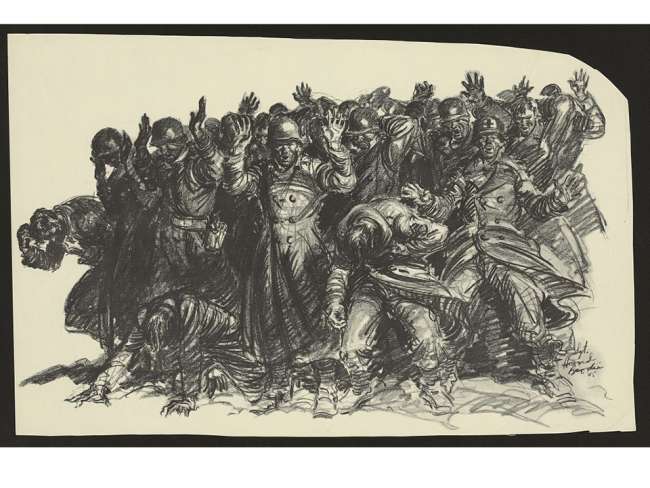
The Malmedy Massacre
Hitler had from the beginning posited the war effort as presenting only two possible outcomes: total victory or absolute defeat.
-
Article Type
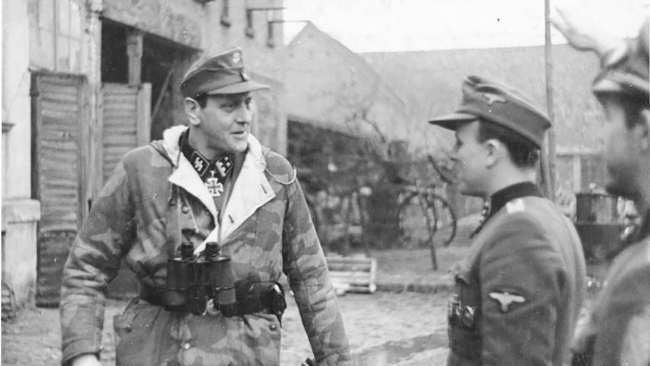
Operation Greif: German Commandos Sow Chaos Dressed in US Uniforms
Adolf Hitler's secret mission to Otto Skorzeny during the Ardennes Counteroffensive would rely on deception, employing English-speaking troops in US Army uniforms and equipment.
-
Article Type
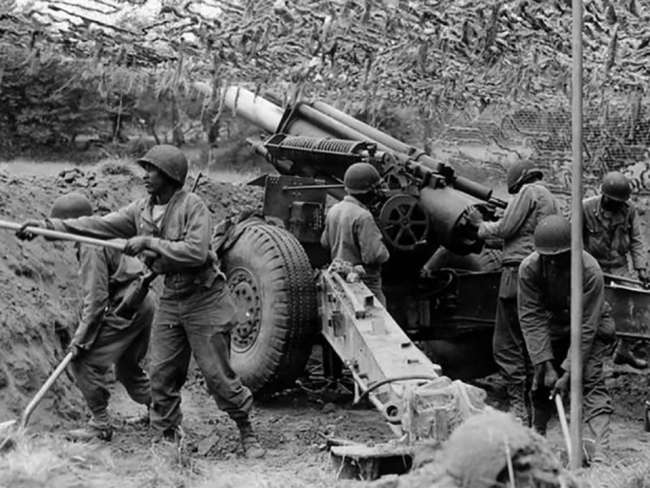
Sacrifice: The 333rd Field Artillery at the Battle of the Bulge
Manning 155mm howitzers, African American gunners sacrificed themselves to defend fleeing infantry. Eleven of them were murdered by the Waffen SS, and then forgotten by the US Army.
Special thanks to The Dale E. and Janice Davis Johnston Family for their generous support of this series.
Part 7: Spies in the Ardennes
Sponsor Read
This podcast series by The National WWII Museum is made possible by the support of the Dale E and Janice Davis Johnston Family Foundation.
Archival
In December, we learned all over again the bitter lesson of war. War is conducted in mist, and turmoil, and uncertainty. Victory comes on no silver platters. The enemy sells nothing cheaply. Under cloudy skies and close hanging ground mists that defied aerial observation, the very much alive German army gathered forces in the forest isles to strike one strong, decisive blow at the American Army.
Bradley Hart
During World War II, intelligence, deception, and covert operations played a crucial role in nearly every key battle. And the Battle of the Bulge, the final German counter offensive against the allies through the freezing Ardennes forest would be no exception. In December1944, Germany launched a secret mission during the Ardennes counter offensive, one that would rely on deploying English speaking troops in US Army uniforms to cause mayhem. It was known as Unternehmen Greif, in English, Operation Griffin. This infiltration into the Allied lines caused panic and rumors spread of a plot to assassinate Supreme Allied Commander Dwight D. Eisenhower himself. In this archival recording, listen as American interrogators question, German Colonel Otto Skorzeny about his involvement in Operation Griffin and the alleged targeting of Eisenhower.
Archival
I asked you, did you ever receive orders to assassinate Eisenhower?
What was their mission? When they were equipped with American uniforms in American vehicle?
They were to create unrest behind the lines during the offensive.
Bradley Hart
To get to the truth about Operation Griffin, I'm joined now by Michael Bell, executive director of The National WWII Museum's Jenny Craig Institute for the Study of War and Democracy. And John Curatola, Samuel Zemurray Stone Senior Historian here at the Museum. Mike and John, thanks again for joining me.
Mike Bell
Thanks Bradley, it's great to be with you.
John Curatola
Happy to be here.
Bradley Hart
Let's talk about the Battle of the Bulge. Before we talk about Unternehmen Greif, Operation Griffin, what's going on in the Ardennes Forest in December of 1944?
Mike Bell
Yeah, so, Hitler comes up with this scheme in the fall of 1944, that he believes will fundamentally change the war by Christmas. And what he conceives is a winter offensive against the Western allies that will split the Americans and the Brits. Reach Antwerp. And his belief then the Americans and Brits will sue for peace and allow, kind of, Germany to focus on the Soviets in the East and that this will be completely transformative. Winter offensive, kind of, hearkening back to Frederick the Great, this will change the war. And so, really under the cloak of deception, this is Wacht am Rhein. You know, the watch on the Rhine, a defensive move that really takes the Allies by surprise because of that.
Bradley Hart
So let's talk about Operation Griffin, Unternehmen Greif in German. This is a really, I wouldn't say necessarily unusual operation for the Germans to have launched. They've engaged in other operations vaguely of this type, but Griffin is different and partially because it takes place during this massive offensive, but what's the intention of this? What do we know about it in retrospect?
Mike Bell
Otto Skorzeny, you know, he meets Hitler in Rauschenberg, in East Prussia on October 22. He's just come back from Hungary where he is really worked to keep Hungary in the war. You know, he is famous for the effort on Mussolini. You know, he's seen as this, you know, Waffen SS commando, but Hitler congratulates him and then lays out the plan for Greif. Here's what you're gonna do. You're gonna form this new brigade and they're gonna be in American uniforms and they're gonna have allied vehicles. And this is going to breakthrough, conduct reconnaissance, but also, sabotage, spring chaos, allow us really to achieve our great objectives. And you know, Hitler even says, you know, hey, the Americans use captured German tanks at Aachen, so they've already opened the door for this procedure. What's incredible then, you know, this is the end of October. Skorzeny quickly writes up, you know, here's what I need for this brigade, you know, 3,300 troops, this is the American equipment I'm gonna need to carry this off. Interestingly enough, the high command then issues radio instructions throughout the force. Hey, for this new brigade commanded by Skorzeny, we need this many people, English speaking, American dialect, this equipment. Of course, this is actually received by the allies, which raises some questions of what's going on. First week in November, the brigade stands up in beautiful Grafenwohr Germany, for those who served in Europe, you know, we spent a lot of time at Graf, fire and tank gunnery, but this was a German training area in World War II. And they start to assemble this hodgepodge of force. They never get the number of soldiers he needs. He's supposed to get a wish list of, you know, 15 Sherman tanks and all these other vehicles. In the end, he gets two Sherman tanks and they're broken. So they start to improvise right from the start. They ultimately find out that, you know, instead of, you know, hundreds of German troops that speak English, there's only 10 ultimately they that thought they had, kind of, idiomatic American English that could really pass. And there's another 30 or 40 that spoke pretty good English, but don't know the American slang. There's, you know, another 120, 150 that have some English and the rest of 'em are just German troops. And so, already this thing is starting to unravel. Oh, by the way, and the campaign launches in five weeks. And so now you're assembling a unit, you're training it. They get some panther tanks and put some sheet metal on it to make 'em look like M10 tank destroyers. All the stuff's painted green with OD stuff. They get American uniforms. Some of the troops will go up to American POW camps, to kind of listen to American idiom, to try to pick this up. But it's really on the fly. A lot of these are just, you know, SS soldiers or Fallschirmjager, they don't have, particularly, clandestine experience. They've never worked behind enemy lines. They don't know demolitions. All the things that are now part of the mission profile they've never done before. And so, there's crash courses on demolition, on American insignia, orders of battle. Some of it is pretty superficial as you see. But the scheme though, is kind of two parts. One is, these squads of either demolition or reconnaissance guys are gonna push through the American lines, race to the Meuse River. In the meantime they'll change signs, put down mines, change minefield signs. But really they wanna recon the crossings of the Meuse so that you can get the force across. The rest of the brigade is with three of the divisions in sixth SS Panzer army, which is the German main effort. And they're there waiting with them and the idea is once you break through the American lines, immediately, this fake unit will race forward. And then, because there's no American defenders, they can race forward, get to the Meuse, confuse people, but this will facilitate this rapid German advance to Antwerp. That part we know doesn't happen. The German timetable never materializes. American defenses aren't broken through completely. It's the demolition squads and the recon patrols that are interesting. Seven of these teams will make it to their mission and return back to German lines. You know, they're dressed as Americans, they pretend to be in the Fifth Armor division. In some cases units will come up and they'll redirect them. At least one American regiment they claim was redirected through that. And they'll, you know, cause some mayhem in the back there. It's interesting, even the 16th, which is the day of the German attack, some of those teams already reached the Meuse River. So they've raced six hours through American lines. In terms of, you know, the infiltration it's pretty amazing. You know, once they're there though, they report, you know, not a lot of of defenses there, but pretty quickly they realize, we're in American uniforms, we need to get back in our German uniforms or we're gonna get, you know, potentially shot as we get out there.
Bradley Hart
By their own side as they advance.
Mike Bell
Well, exactly. They have a pretty elaborate, you know, we're wearing different color scarves. I'm not sure in the dark, in the Ardennes forest any of that would be noticeable, particularly once people are hunkered down. I would note, you know, two of the teams ultimately are captured, and you know, this will kind of electrify the allied communications that we've got. You know, ultimately there's this reports of German paratroopers everywhere, and, you know, what are they doing? You know, Patton is even gonna report to Eisenhower on the 17th about, you know, these guys are everywhere. What's interesting though, one of the teams in the interrogation, German corporal reports that, yeah, you know, we're reporting on the condition of the Meuse bridges, but there's another team out there of German commandos that's gonna kill General Eisenhower. You know, at first he says, capture Eisenhower's staff and then he'll come back and repeat, you know, to kill General Eisenhower. The other team that's captured also repeats that story and says, there's a group of 80 commandos that are going into Paris to do that. And so it really seems that the rumors continue to spread, you know, and they think other parts of the unit may be doing that or they're just bragging, you know, once they're captured in that. But this idea of a Eisenhower action group that's gonna kidnap the supreme commander really does resonate then, certainly with SHAEF headquarters, you know, in the process, you know, they're, you know, causing chaos. General Clark of, you know, from seventh army division saying, he's gonna be held by American MPs 'cause they don't believe he's the real guy. Some American soldiers will be shot by MPs by mistake. There's a little firefight by Eisenhower's headquarters outside of chief of staffs villa. The MPs are shooting at night. They think it's a German infiltrator, it turns out to be a stray cat. You know, it's this kind of, you can imagine the kind of crisis environment. Eisenhower's literally, in kind of house arrest at Trianon for three days in this process. You know, Patton's report to Eisenhower, you know, kraut speaking perfect English, raising hell, cutting wires, turning road signs around, spooking whole divisions and shoving a bulge in our defenses. Literally before, you know, even the decision to commit Patton into the Battle of the Bulge. You know, there's already this kind of mayhem and concern.
Bradley Hart
I guess what this says to me is that this is truly an act of desperation. If you think about what the end game here might be, you've got a bunch of American tanks manned by German crews. You've got trucks that have been repainted with American symbolism. And you've launched this massive counter offensive at the same time. What's the end game here? How would these infiltration units really survive the onslaught from, it turns out their own side that's to come? Or was that not even really a consideration I guess, in some senses?
Mike Bell
Well, I mean they had some unit's symbols, and little triangles on the back of their tanks. I think it's kind of an afterthought. What it seems to me, what they believe is that on the 16th they will smash a hole in the American lines and there will be no defenses then, so that these units could race through. Masquerading as American units, they would look like they were just retreating American units, racing to the Meuse. The problem is, you know, the terrain's too difficult. American units aren't broken even though they're pushed back. And so there is no breakthrough.
Bradley Hart
And let's talk about the failure of that offensive. I mean, John, you and I have talked many times about the importance of the air war to the outcome of the Battle of the Bulge. Take us through how this ends up in an allied victory, despite it being initially a German success in many ways.
John Curatola
Yeah, first let me take off of what Mike just articulated, and you mentioned it too, Bradley, is, you know, this is a desperate gamble, you know, done by the Germans and it's indicative of what you see of the German military, say, subsequent to the summer of 1944 and '45. It's all these crazy, kind of, wonder weapons, you know, V-1s, V-2s, Me 262s, the Me 163, and these kind of goofy ideas that are gonna change the entire war. And here you have, we're gonna have the small elite, I'll use that term, elite group, is gonna punch a hole and is gonna turn the whole tide. But you see, it's indicative of this, as Mike pointed out, it's a tactical thought, but in terms of strategic application, it's completely disconnected. You know, today, in today's military, we talk about the strategic, operational, and tactical levels of war, and they need to be nested and connected. And we're seeing here, as Mike pointed out, well, what's the objective? You know, and how's this gonna translate into a victory? It might work tactically, okay, but tactical victories don't necessarily equate to strategic victories, you know, and so there's this lack of coordination and that I think that's indicative of the German military, you know, the later half of 1944 and as you get into to 1945, certainly. So I think it's reflective of a lot of other issues.
Mike Bell
If I could jump in on that too, you know, the thought of organizing a brand new brigade of soldiers who've never met each other, providing a completely different doctrinal framework and then employing it effectively as part of a three-army attack, you know, you'd look at today and go, you guys are wacky. There's no way that you're gonna achieve that. And then some of the failures, you know, you never get the English speakers. I was amazed, one of the ones, one of the teams that's operating, you know, as conventional units are still with their German equipment or with the fake German equipment, they break through, but they claim to be from the 14th Cavalry group. But he says, you know, I'm from E Company, but it gives it away. If they had studied it enough, they would know that the calvary doesn't have companies that has troops. And so, all these little things you can't pick up in a three-day training exercise, you know, the depth that they needed to really be super effective at every level, you know, it's too superficial. The other piece that strikes me is this notion, yeah, we're gonna hit the Americans hard and their line is gonna break and we're just gonna rush through that because the Americans, if we hit 'em hard, have no stomach for this. They're not very good. You know, on a strategic level, that misassessment, each side has a misassessment, but I think you could argue that's the Nazi high command and Hitler's misassessment. You know, look what we're gonna do to the Americans. They're super vulnerable, the chaos will completely disrupt them and we're gonna transform the war with, you know, with these little tactical actions.
John Curatola
And as you pointed out, you know, Frederick the Great is the mindset for Hitler that the last moment we are gonna be able to save the German Reich, you know, and he is got the painting of him in the Fuhrer bunker and those kinds of things. So to your point, yeah, we're gonna wish this problem to victory. And of course we know that it doesn't work that way. And so you see the Germans, kind of, you know, deceiving themselves that this is gonna work, but desperate times call for desperate measures, I guess. But the Germans have already kind of cracked logistically, you know, in terms of manpower and capability sets.
Bradley Hart
Lemme ask a wider question. You know, one question that we get a lot, and we've talked about in our, in the war symposium recently here at the Museum, is a question of whether the Bulge represents an intelligence failure on the allied side. And I think part of that speaks to exactly what you were just saying, that in some ways we believe that the allied commanders, American commanders believe that the Germans are more depleted, that they couldn't possibly mount an offensive like this. I wanna ask you both, I'm gonna start with you, John. Do you think the Battle of the Bulge represents intelligence failure or a lack of intelligence gathering analysis? Or is this something that, that simply couldn't have been predicted?
John Curatola
The American military, like most militaries, gets comfortable. They recognize patterns and modes, and this idea that, hey, the Germans haven't launched a winter offensive in years. Nobody comes through the Ardennes, of course we know that.
Bradley Hart
Except they have.
John Curatola
Except they have, three times before, you know, but that, don't let that stop you. You know, and I think that the Americans by this time are lulled into this sense of security. I'm sure there were some G-2 officers who were questioning at various levels within the command. But I think most Americans just like the Germans, a little bit of wishful thinking there and that no, they're not gonna mount an offensive, they don't have the capability to amount an offensive. And so you have a paradigm, that's the word I will use, that we're gonna hunker down for the winter and then we're gonna restart offensive operations.
Mike Bell
I agree with that. I think in some ways it's useful to see it as a command failure. You know, you can certainly say it's an intel failure and we talk about that, but I think, I think the cognitive bias of American commanders, they're flushed with success. They don't believe the Germans have the capability or the intention to launch an assault, you know-
John Curatola
Home by winter, home by Christmas.
Mike Bell
Yeah, and what did your G-2, your intel officers do for you? Not a lot. You know, they kind of gave you an odd battle, but you know, you know as much as they do at this point. And so, you know, I think the idea that they can't do it, now, arguably from a German deception piece, they play into that pretty masterfully, you know, the Wacht am Rhein, the belief that these are just local repositioning of units for counter attacks against Allied attacks. We have, in retrospect, you can see the, you know, the photographic evidence of the troop trains, armor, even hospital trains coming up, but the Germans also play that, you know, they have a deception story that this is assembling a new force near Dusseldorf to defend against the Americans. And so, it plays into what we believe on the front, even though, you know, they have the issue orders that you're gonna use charcoal for your fires so it doesn't have smoke, instead of wood, you know? So I think they carry out the deception pretty well. But you're also on a pretty permissive mindset in Allied headquarters. Even after the attack kicks off, General Omar Bradley believes it's still a local counter attack, and he holds that pretty persistently. I think you have to, in this case then, credit Eisenhower's ability to kind of change his thinking when the campaign starts, you know, he'll quickly order, kind of, three things that I think are amazing that show that Ike can overcome this and also suggest that it is a command issue. You know, he'll send 10th Armor division from Patton, north toward the Bulge, and then the Seventh Armor Division, the next day he commits 101st Airborne and 82nd airborne, which is his last reserve, which is really a big deal for a commander to commit your reserve. And then he will go ahead and change the command so that all American forces north of the Bulge will fall under Montgomery. But those are really things that are counter to what Bradley and his subordinates are arguing for. I think it's an example of where his intuition quickly realizes, yep, our earlier assessment was incorrect, and how rapidly can I change in that piece?
John Curatola
And to your point, I agree with you, I wouldn't call it an intelligence failure as much as it is a command failure, because again, there's this kind of permissive mindset, hey, you know, everything's gonna slow down, and the commanders are supporting that. They are not expecting any kind of attacks, so they're not taking steps to, you know, pursue anything that might be counter to what they already have in their mindset in terms of their paradigm. But I also agree with you, Mike, when you talked about, Ike is rather pragmatic in what he does, and there's some unpopular decisions made about those American units that are to the north and giving them to Monty. But, you know, he sees what the requirement is and he's willing to make those changes relatively quickly given what's going on.
Mike Bell
You know, I think at each level you have this permeation of, yeah, either the war's over, the Germans are beaten, no major attack here. This is a nice quiet sector. And I think that adds to the crisis sense, if you will, when it all hits on the 16th. I think the ferocity of the German assault and also the magnitude, you know, what they're able to assemble, you know, in the neighborhood of 45 divisions, you know, for the assault, it's pretty incredible. You know, obviously some of it's hodgepodge like, you know, Panzer Brigade 150, but just to pull that together is a pretty amazing achievement, kind of undercover of this deception scheme.
Bradley Hart
Before and during the Battle of the Bulge, the US government was developing a new aspect of its intelligence operations, a top secret group known as the Ritchie Boys. These operators were often German speaking Jewish immigrants from Europe, and they were a key source of not only intelligence gathering, but also analysis. Jeffrey Rogg joins us again. Jeff, thanks for being here.
Jeff Rogg
Thank you, Bradley, great to be back.
Bradley Hart
Jeff, who are the Ritchie boys?
Jeff Rogg
The Ritchie Boys is used as a general term for the intelligence officers and soldiers who were trained at Camp Ritchie in Maryland. But when we talk about it historically, we tend to be speaking of a select group, and that's German Jewish or Eastern European Jewish refugees or first generation Americans who volunteer. And if you think about it, you know, what better person could you ask to do intelligence than people who know the customs, know the language, and know the, I guess the little quirks that non-native speakers don't know.
Bradley Hart
There's some well-known names in this group of the Ritchie boys, aren't there?
Jeff Rogg
There are, and as I mentioned, it's not just the Jewish Americans, but there were also others, A famous one in intelligence history is, Frank Church. Frank Church later is the senator who leads the famous Church committee hearings that investigate the CIA and the American Intelligence community in the 1970s. So he was a Ritchie boy too. So there's actually this long legacy, but again, perhaps the most famous name might be Henry Kissinger, Dr. Henry Kissinger, who was a Ritchie boy, and then the author, J.D. Salinger, who wrote "Catcher in the Rye", was also a Ritchie boy.
Bradley Hart
So what are they doing here? I mean, you know, the Battle of the Bulge, there's still historical debate as to whether this is an intelligence failure on the part of the Allies to detect this massive buildup that the German operation known as Wacht am Rhein, right? The watch on the Rhine, we know as the Battle of the Bulge, you know, what are the Ritchie Boys doing in the lead up to this battle and how does that play into what happens?
Jeff Rogg
So this is, you know, the Ritchie Boys is, think Inglorious Basterds, but without Quentin Tarantino in the Spaghetti Western style. They served an important role though, because battlefield interrogation is a great source of intelligence. And one of the challenges with the Battle of the Bulge is the lines. You know, we look at it, and if you look at like a map, a military map, you're gonna see lines and it looks like the lines are very clear. Here's the Germans, here's the Americans. But you're talking about such a big area and so many units, you know, it was easy to get, sort of, lost and misplaced. You had to be careful where you were patrolling. And so for instance, battlefield intelligence from like a captured German POW, could be something as easy as, you know, where's your machine gun nest in this area? Where are the minefields that you've laid? Where are your artillery emplacements? And in the Battle of the Bulge, you know, there's so many units, and I'm sure you know, with the Museum you've seen, for instance, Band of Brothers—a lot of people might have seen it. There's a lot of confusion on the battlefield. And so, the Ritchie Boys doing these prisoner interrogations, gathering intelligence themselves, studying maps, also doing propaganda to demoralize the Germans, you know, every little bit helps, is sort of the intelligence... That might be an intelligence mantra, "Every little bit helps." And so, you know, they contribute in important ways to the Allies at the Battle of the Bulge and saving lives, really.
Bradley Hart
So why are they called the Ritchie Boys?
Jeff Rogg
So the Ritchie Boys name actually comes from the camp in Maryland where they were trained, and this was a general military intelligence camp, and they learned quite a bit there. They would impersonate Germans, you know, they would have German POWs come in and teach classes at the camp. Again, the advantage of having native German speakers is, for them, they can pick up on little changes in language or special translations that non-native speakers can't. One of the interesting things when you hear about the Ritchie Boys too, in terms of their prisoner interrogations is, they often chose a light approach. They didn't, like, if they could avoid it, compelling prisoners, certainly not, you know, what we would consider, like, enhanced interrogation today. And they actually found, you know, there's sort of a saying, you get more flies with honey. So, they actually tried a softer hand, and it seemed like they were more successful. When they did have more difficult prisoners, one of the ruses that they would use is, they would dress up as Soviets, and nothing scared the Germans more than the threat of being sent to the eastern front or being put in Soviet hands. I mean, this was a much different war, you know, we forget the war on the western front versus the war on the eastern front, including the treatment of POWs. So that was one of the ruse as they'd used for, especially, I guess, you know, we'll say harder, resistant prisoners.
Bradley Hart
And I bet it got results.
Jeff Rogg
Yes, according to some of the Ritchie boys who did this, this was one of the more effective things they did. The thing that we should also remember is, this was incredibly dangerous for the Ritchie boys who were Jewish. Even though there were laws about how you treat POWs, they're recorded in instances where, when it came to the Ritchie Boys, the Jewish Ritchie boys, the Germans didn't care that they were supposed to be accorded the rights of a POW. They, you know, summarily executed Jewish Ritchie boys. One of the complicated features of the battlefield is, so you had the Ritchie boys who had accents, a lot of them were immigrants. They had to be careful with their own allied troops conducting their intelligence operations, because the Germans at this time, there was an operation called Griffin, and they were sending English speaking Germans wearing American uniforms, behind American lines. And so if you're a Ritchie boy, you actually sort of a suspect to both sides. So it's a pretty dangerous job. This actually even has a bigger implications, because one of their rumored plans was to try and capture or assassinate American generals. And so, at one point there's something that you use in the military, running passwords. So, if you're trying to get through a checkpoint, you know, there's like a coded term that each side uses. And at one point, General Omar Bradley is detained by his own GIs because they ask him the capital of Illinois, and he answers Springfield, and the Americans, you know, these are just GIs, standing there, thought it was Chicago, so they detained their own general. The same issue is happening though across this front. Another American general is detained, because he can't answer which league a certain baseball team belongs to. So just in case you think this only affects the Americans, the British are probably laughing at the Americans, you know, unable to get their act together. But General Montgomery decides to visit Americans during the Battle of the Bulge, and he's also detained because there's a rumor that there is a German commando who looks like Montgomery, that Skorzeny is using to drive around and pretend to be Montgomery. So, this chaos and confusion actually affects the lines and makes this battle space even more confusing. And that's where having the Ritchie boys is valuable.
Bradley Hart
It's the importance of not only knowing geography, but also baseball, I suppose, in that sense. But, you know, this has a real effect beyond these sort of humorous anecdotes. I mean, there are people who are killed in this for the misidentification, and there are also Ritchie boys who are killed by the Germans as, sort of, targeted killings effectively.
Jeff Rogg
That's right. So, they're still Nazis. And so there's recorded instances where Ritchie Boys who were captured, rather than being treated as POWs, were summarily executed. And in one instance, the German officer who orders it, Curt Bruns, becomes later, the first German Nazi, tried and executed for war crimes for ordering the summary execution of two Ritchie Boys.
Bradley Hart
So what happens to the Ritchie Boys after the war? I would imagine that with this, sort of, unique positioning to be able to gather and interpret intelligence from the German side, that they make an appearance later on.
Jeff Rogg
They do. Some of them stay in Europe after the war. And one of the tragic outcomes is, you know, a lot of them found out after the war what happened to their relatives who stayed behind or were stuck in Europe during the war, you know, of course many are killed in the Holocaust. But, you know, the Ritchie boys, and I think this motivated some of them, and one said, you know, there's this accusation, sort of a mixed loyalties. Were they just there for revenge as Jewish Americans? And one of the Ritchie Boys recorded, and this was actually said about Kissinger too, is, what really drove them is they wanted to serve the United States. You know, they believed in the war effort on the American side. After the war, some of them become part of the founding generation of the CIA. The information that they obtained in interrogation, so for instance, you know, you have the trial and execution of Bruns is actually used in Nuremberg as well. And so the Ritchie Boys legacy, just like a lot of intelligence history from the Second World War is, some pretty amazing people and organizations are created on the foundation of the Ritchie Boys.
Bradley Hart
As the allies continued to push toward the German border, William J. Donovan's OSS intensified its efforts at covert action, with bold missions to penetrate inside Nazi Germany itself. To say that these missions were dangerous would be an understatement. And a few key people will make a major impact. Names you know already, like Ernest Hemingway, David K.E. Bruce, Bill Casey, and Alan Dulles. Nick Reynolds joins me again. So this is the period in the war when obviously Germany is losing, to say the least. I mean, this is, you know, the allies are now pushing towards the German border and ultimately pushing into Germany itself. OSS agents are right there, often on the front lines of this as we've been talking. What sort of personal stories stand out to you of OSS agents from this period?
Nick Reynolds
So there's a couple of great ones. One of the ones involves Ernest Hemingway, about whom I wrote a book. Hemingway and David Bruce, who is head of OSS in Europe, get along like a house on fire. And it's just this period when there's a fair amount of motion in France and you know, you wanna find out what's in that gray area between the two armies. And Bruce is driving around, you know, he's got a jeep and a couple of guys and maybe a second jeep. They're carrying personal weapons, like, he carries an M1 Carbine, you know, maybe somebody has a Tommy gun. There'd probably be a couple of M1s, not a whole lot of firepower. And you know, when the Germans retreat, that doesn't, you know, it doesn't automatically return to peace time. It's not like, you flip a switch and everything's fine. And Bruce is driving around France trying to orchestrate these various efforts. Being Bruce, his biography is called "The Last Aristocrat", he has to take a pause every so often and have a gourmet meal. He remembers from before the war where the great restaurants are. And then he goes, you know, and he does his OSS stuff and then he takes the afternoon off and goes for a great meal. And he records this in his diary, that's how we know. I looked up one of the meals before I came here. He consumed three bottles of wine and he describes the meal course by course by course. So, interesting guy and he loves Ernest Hemingway. He encounters Ernest Hemingway in Europe, in France at this time. And Ernest is kind of doing the same thing. You know, Ernest is going around looking for adventure, and when he doesn't find adventure, he makes his own adventure. And so the two kind of come together and they're not a bad team. They wind up in a place called Rambouillet, which is outside Paris. And from there they run the kind of operations that I'm talking about. They run line crossers, they run reconnaissance, they run a sort of a, I don't know if CI is quite the right word, but somebody comes in at one point and says, you know, we've uncovered a traitor in the French resistance, and could we borrow your pistol so we can go kill him? And Hemingway and Bruce say, oh, okay, and they give him a .32 caliber pistol. This is in Bruce's diary, so it's not like I'm extrapolating from a report somewhere, but this works and there's fairly good evidence. I think it's a strong argument that from Rambouillet to Paris, the information that Bruce and Hemingway come up with, helps, is a significant help to these troops as they go forward. They know the Germans are gonna be over here. They know this route is not defended. It advances the Allied cause, in this case it's a French division that they're supporting. And then of course they get into Paris. What do these two guys do? Hemingway and Bruce, they go to the Ritz Hotel and they go to the bar, which is still there, and they order, they have an entourage now, 'cause the word gets out, hey, Ernest Hemingway's over here. Oh, and he's with David Bruce. And so they go into the bar and they order 50 martinis. Now, it's not clear if they have 50 people or they're just gonna drink a couple, three per person. Bruce, the aristocrat goes, "Oh yes, we got martinis, but they weren't very good." And so, but then they stay for dinner at the Ritz and Bruce records, "Well, that was quite a bit better." So, there's the war for the Bill Mauldin privates, and there's a war for the aristocrats like Bruce. And that's not to say he didn't take his share of personal risks, I mean and he did, so. But it's a different war from Bill Mauldin's privates who are unshaven, and covered in mud, and waiting for the next attack.
Bradley Hart
So is Ernest Hemingway formally in OSS, or he's just sort of OSS adjacent at this point?
Nick Reynolds
So, temporarily attached to OSS would capture it. There's an interesting sidebar here where, Hemingway's third wife tries to get him into OSS and she gets him, she has great connections, Martha Gellhorn, and she says, "Hey, would you consider my husband, making him an OSS employee?" And OSS actually staffs this, we have the paperwork and you can see this idea making its way around the various offices in OSS, in Washington. And the the answer is, you know, we really couldn't control him. He's not the kind of guy we want as an employee. He's not formally an employee. And the agreement between, it's kind of like the old westerns where the bad guys are coming over the hill and the sheriff deputizes everybody in town. That's kind of what it was there. And Bruce says, you know, you have my blessing to do these things.
Bradley Hart
So following the liberation of Paris, up until the end of the war, what are OSS agents up to when you get into, for instance, the Battle of the Bulge?
Nick Reynolds
Donovan has this idea that there should be some kind of penetration of Germany. Donovan thinks more in paramilitary terms than espionage terms. So, he's got two branches, secret intelligence and secret op, special operations. He really inclines more to the special operations side, instead of stealing secrets, you know, blowing bridges. So, what can we do? And the British have basically said, "It's too difficult." Germany is a dictatorship, it's very well controlled. We would just lose men and women for no purpose." And that's sort of a challenge to OSS. And Donovan says to Bill Casey, William Casey, give it a try. Casey who has minimal trading, Casey's essentially a business lawyer, and he's not a downtown lawyer, right? Donovan tends to favor the downtown lawyers, the Wall Street lawyers, the guys who work at the expensive law firms. This is a guy who works out on Long Island, and he's very practical. He's like, this is how you structure this deal, or this is an opportunity that you can exploit. And so they're in that sense, they're a little different, but he's a can-do guy and a really fast learner. And so he says, okay, I'm, you know, I'll figure out a way to do this. And he does. They train a couple hundred people and they do it pretty well. And they're finding... They find people who will somehow fit in, in Germany at this stage of the war. And what's going in their favor is that Germany is flooded with forced labor. And so, there are laborers from all over Europe who are basically making the German war effort, making the German economy continue to function. So, you know, and some of them are prisoners in, you know, striped uniforms under appalling conditions, and others are, kind of, more like, you know, more like a semi-homeless handyman who makes a few bucks a day and, you know, goes to a, you know, goes to sleep under the bridge at night. And so, the idea is, we will be close to, we will put people who won't stand out in this stage of the war, and they will report back, you know, the state of the economy or the kind of tactical information I talked about a little bit earlier, you know, "It's worth a try", says Casey. And Donovan says, "Great, go to it." You know, he does, as I say, he makes the effort. And the deployments occur mostly in early 1945. I've seen various numbers. As far as I can tell, it's around 60, 65 missions. So maybe two or three, again, mostly men, but not exclusively, who are inserted into Germany. And most of them would've gone by parachute. Casey, he's not cynical about this. It's not like, you know, we're gonna put these men in and you know, we're just gonna write 'em off. They give them the best chance they can. He anticipates, you know, significant casualties. And you know, as far as anyone can tell, the actual casualties turn out to be like 5 or 10%. So, to his credit, Casey, after the war, goes looking for these guys, after, you know, after V-E day, he goes, and so we had a team, it was last in Munich and we think it was at this location. And he finds a lot of these guys and he personally thanks them and tries to make sure that they have, you know, that their needs are met and that they're rewarded in some way for their service.
Bradley Hart
And of course, William Casey himself has a post-war career that's fairly prominent, what happens to him?
Nick Reynolds
Mix of politics and business. He's very successful. I believe he runs for Congress at one point and he's not successful at that. But he does support various Republican candidates, particularly Ronald Reagan. He is Ronald Reagan's campaign manager. What he was hoping for, was to become Secretary of State as a reward for his services. He wasn't considered right for that job and he was given CIA instead.
Bradley Hart
And of course, he's not the only former OSS member to be director of the CIA. I'm thinking of course of Alan Dulles, who also plays an interesting role towards the end of the war. Who is Alan Dulles, and what's he doing in 1944, '45?
Nick Reynolds
He gets involved with OSS fairly early on, runs the New York office, and then eventually Donovan says, well, why don't you be Bruce's, David K.E. Bruce, the last aristocrat, why don't you be his deputy in Europe? And Dulles said, no, thank you, I don't want to be a deputy. How about I go to neutral Switzerland and run my own op? So, he gets in there, just after Torch, so, which is November, 1942, and he's sealed off. All around Switzerland is occupied territory, enemy occupied territory, right? Occupied France, Nazi Germany, fascist Italy. So, you're this little, you're this island in Europe controlled by Hitler. And, you know, on the one hand it sounds threatening on the other hand, it's a great opportunity for a skilled spy master. And he, basically, with very few resources, runs a near full service spy shop there. And he has, there are three cases that I like to look at, which kind of, illustrate his capabilities, what he is able to do. One is, with the various line crossers, not quite the right word, but the Germans, people who can travel legally from Germany, who can meet with him and talk to him about what's going on in Germany, and one of those is Hans Bernd Gisevius. Gisevius is an Abwehr officer, so German military intelligence. And he has been sent to Switzerland to represent his, he sort of, he has a paper thin cover as a vice consul. And he is also in touch with the German resistance. So this is a guy that Dulles can meet with and they're sort of, are they playing each other? Are they exploiting each other? Are they, sort of, friends and colleagues? It's a very complicated relationship. But that gives you an idea of what kind of thing Dulles is up to. It's probably the first and best look that we have into the German resistance against Hitler, which as a percentage of the population is minuscule. So that's one, Hans Bernd Gisevius, whom I had the pleasure to meet, when I was doing my research in the seventies. And two or three times actually, once went to his house, which was in Switzerland, high above Lake Geneva. And I said, "Why do you live here?" You know, it was really, I mean, you took this little train and you got to the top and he says, "I live up high so I can see my enemies before they see me, I can see them approaching." Anyway, so, Gisevius is one. There's a guy named Kolbe, Fritz Kolbe. And Kolbe is an employee of the German foreign office. He's something between a diplomat and a clerk. He's used a courier. So he has a sealed bag, his official job is to take a sealed bag of documents from Berlin and distributed to German outposts, consulates, embassies overseas. What he does is, he puts a bag within the bag, right? And that bag he's willing to share with the Allies and winds up sharing with Dulles. And he is probably the best OSS, maybe American and British penetration of the Third Reich, right? That's what you want. If you are running intelligence ops, you want somebody to bring you the original secret documents, you can see the chain of custody, right? And you can rely on those documents unless you think somebody has gone to the trouble of fabricating them, which would've been a lot of work 'cause the amount of the amount of information that Kolbe gives to Donovan is just overwhelming. It's far more than the meager communications facilities they have can transmit out.
Bradley Hart
Let's go back to the German resistance for a moment here. Of course, the most famous, sort of, German resistance moment, I guess would be Operation Valkyrie, which is July of 1944, the attempted assassination of Hitler while he's in a bunker effectively, and Hitler narrowly escapes with his life in this case, what do we know about OSS contacts with the German resistance or with Valkyrie itself?
Nick Reynolds
The main contact between OSS and the German resistance to Hitler is this one that I've been talking about, and that flows through Switzerland and through Dulles's office. It's not the only contact, but that's the main one. And there's a lot of traffic back and forth between Dulles and Washington. And then on the German side, between the representative there and the resistors in Berlin. This guy Gisevius goes back and forth. And so, he'll talk to Dulles and Dulles will send something to Washington. Washington was dead set against anything but talk. Says, you cannot promise them any support. You can't say that, you know you're gonna give 'em a bomb, or if they overthrow Hitler, you're gonna consider opening, you know, opening the front in the west and hasting the end of the war or something like that. You can make no promises. And so, then poor Gisevius gets on a train, goes to Berlin, meets with the resistors there and says, okay, this is what the Americans say. In the end, Gisevius is in Berlin on July 20, the day the bomb goes off and does not kill Hitler, okay? It does not kill Hitler because, there were two reasons. It was a British SOE bomb and the guy who set it was missing, some of the hands of his fingers, Stauffenberg. And so it was really kind of, he's really having trouble setting the primers. And he was supposed to set two bombs and he only set one. And the other thing that doomed it was, at the last minute, because of the heat, the briefing was moved from a bunker off to a building, a briefing room above ground. So Hitler lives, Gisevius is there in Berlin, and the initial feedback from the event is, you know, we saw the smoke, we saw people running out, he's gotta be dead. And then a few hours later, Hitler gets on the radio and says, the reports of my demise are greatly exaggerated. And there there's a counter attack, and Gisevius goes underground. He's a huge guy, he's almost as big as Eifler. He's hiding in Berlin, right? He knows Berlin and has enough contacts that he can go from like one attic, one cellar to another, and then eventually, it's Dulles who saves him. Dulles somehow gets him a set of alias docs. And so, he goes out to the mailbox one day and there is like a passport with his picture and description in it. And he uses that to get to Switzerland, makes his way to Switzerland. And that's where he spends the rest of his life.
Bradley Hart
Does Donovan himself, with his bias towards action as we've talked, ever consider a plot against Hitler's life?
Nick Reynolds
That's a good question. I don't know that... A way to reframe the question would be to ask, did OSS ever consider mounting its own operation to kill Hitler? I know the British staffed this question and they looked at it and they decided it would be better to let things, to let Hitler lose rather than have the risk of his being killed and having another Dolchstosslegende, another myth that the country had been stabbed in the back and would've won the war if it only had been, you know, unleashed Adolf, you know, win the war. So, I know the British looked at it and decided against it. I do not know for sure whether OSS ever considered that operation. They did do a study on Hitler, which is quite famous by one of the Langer brothers who was a psychiatrist and wrote, I don't know, a hundred page study or so of Hitler and his behavior, and concluded that Hitler would end by committing suicide.
Bradley Hart
Join us next time as we turn back to the war in the Pacific, where Navajo code talkers will make an impact in the battle of Iwo Jima. And commando teams find themselves in a race against time to rescue American POWs, before it might be too late.