
About the Episode
In August 1945, Japan signals its official surrender, setting off an urgent mission to find the highest-ranking American prisoner of war along with thousands of other POWs. In this episode, we explore Operation Cardinal, the future of the OSS, and the legacy of World War II in American intelligence.
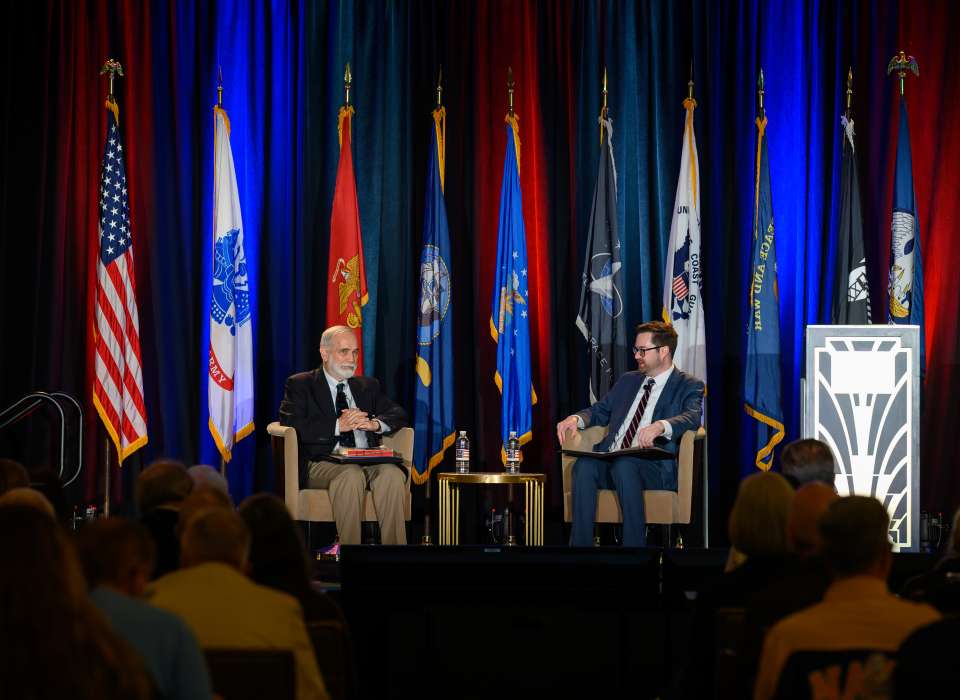
Host Bradley W. Hart is joined by historians and authors Jeffrey Rogg and Nicholas Reynolds.
Topics Covered in This Episode
- General Jonathan M. Wainwright
- Operation Cardinal
- End of War in Japan
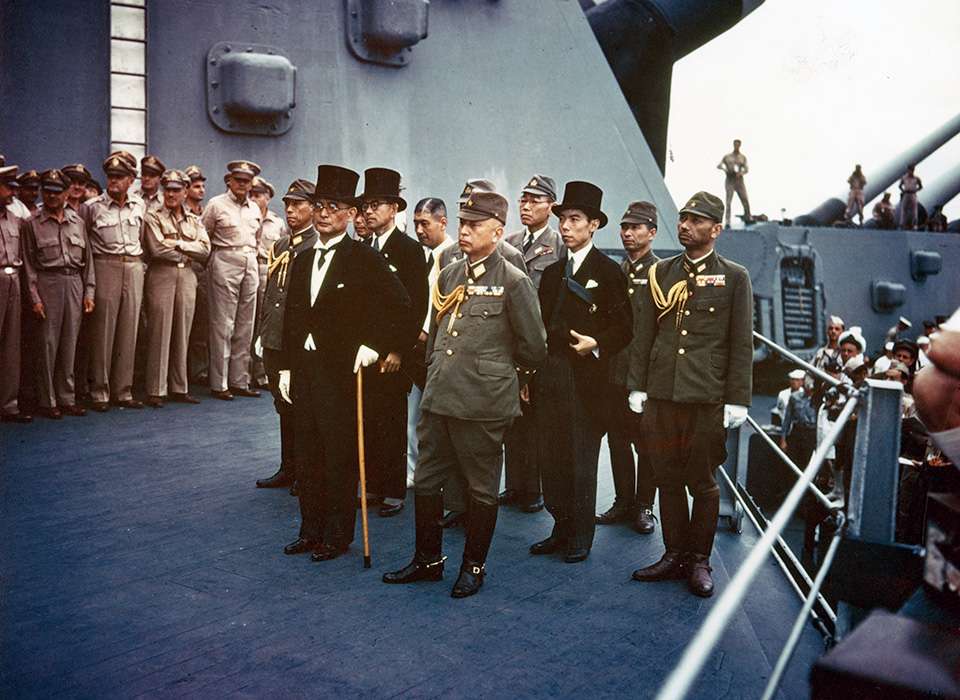
- Surrender Ceremony
- Future of the OSS
- Nuremberg Trials
Nicholas Reynolds, PhD
Nicholas Reynolds is a US Marine Corps veteran, serving as an infantry officer and then as an official historian. As a Colonel in the Reserves, he was Officer in Charge of Field History, deploying historians around the world to capture history as it was being made. For many years, he worked at CIA, most recently as the historian for the CIA Museum. Reynolds has taught at the Naval War College, Johns Hopkins University, and the Osher Lifelong Learning Institute. He is the author of Need to Know: World War II and the Rise of American Intelligence.
Jeffery Rogg, PhD, JD
Jeff Rogg is Senior Research Fellow at the Global and National Security Institute at the University of South Florida where he conducts policy-relevant research in the areas of intelligence, grand strategy, and national security. He is the author of The Spy and the State: The History of American Intelligence.

-
 Article Type
Witnesses: Percival & Wainwright on V-J Day
On V-J Day, MacArthur invited two unexpected guests to witness the signing.
-
-
Topic
V-J Day: The Surrender of Japan
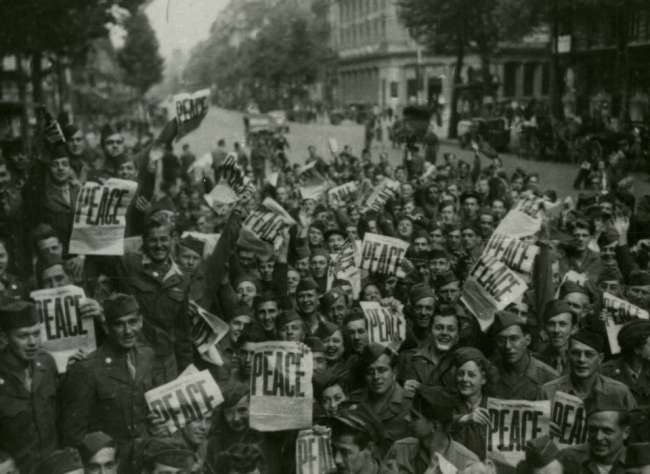
Japan’s ceasefire, Allied landings, POW rescues, and the formal surrender aboard USS Missouri on September 2, 1945, marked the end of World War II.
Special thanks to The Dale E. and Janice Davis Johnston Family for their generous support of this series.
Part 10: Finding General Wainwright
Sponsor Read
This podcast series by The National WWII Museum is made possible by the support of the Dale E and Janice Davis Johnston Family Foundation.
Archival
General MacArthur signs as Supreme Allied Commander. The first pen used is presented to General Wainwright of Corregidor. The second pen to British General Percival, commander at the surrender of Singapore. MacArthur uses six pens in all affixing what will be the most important signature in Japan to the document that ends permanently, that nation's regime of terror and aggression.
Bradley Hart
Let's go back in time to 1942 and the island of Corregidor in the Philippines. Back in December, just hours after the attack on Pearl Harbor, Japanese forces had attacked the Philippines. US defenders and their Philippine allies under the command of General Douglas MacArthur had withdrawn to the Bataan Peninsula and the island of Corregidor. President Franklin Roosevelt ordered MacArthur to leave the Philippines to avoid capture, which he did, leaving General Jonathan Wainwright in charge. MacArthur ordered General Wainwright not to surrender no matter what happened.
The situation since then had changed. Food and supplies were running low, and Wainwright feared a massacre of his men by the approaching Japanese. And now Lieutenant General Jonathan Wainwright, commander of US forces on the island of Corregidor and in the Philippines overall is about to make an agonizing decision. He's about to order surrender.
Archival
This is Lieutenant general Wainwright. Subject, surrender. I decided to accept in the name of humanity. And will, I repeat, will to surrender all troops.
Bradley Hart
Wainwright went into Japanese captivity alongside his men becoming the highest ranking American POW of the entire war. He was transferred from prison camp to prison camp for years. All the while wondering what the American public thought about the terrible decision he had been faced with. He was given only limited information about the war and few chances to write to his wife back in the US. By the end of the war, nearly no one knew whether the general was still alive or where he could be found. Fast forward now to August 1945, the US has dropped two atomic bombs on Japan, and the emperor has announced his intention to surrender. But no one knows whether local Japanese commanders will actually comply with Emperor's decision or whether they might execute American POWs before they do. The race to find General Jonathan Wainwright and thousands of other POWs is on. And OSS will take a leading role in a daring mission called Operation Cardinal. Jeff Rogg joins me again. Jeff, thanks for being here. And who is General Wainwright?
Jeff Rogg
Thanks, Bradley, and General Wainwright had a nickname, unfortunately Skinny, John Skinny Wainwright. And when you see the pictures of him after the Second World War, I mean, he wasn't already, you know, a well built figure. And then after the second World War, you can see the famous pictures of him standing behind MacArthur on the deck of the Missouri during the surrender and I don't even know how he was standing at that time, a couple weeks after he was rescued. Wainwright, like many American generals, had real military pedigree. He was a long standing service member through the First World War and into the interwar years. And he rises to the position of- he's the Commander of American Forces on the Philippines when the Japanese are pressing them. And so all this responsibility, and it is considerable. He has tens of thousands of men. It's not like he doesn't have a fighting force. He has to decide though, with what their desperate position is, do they fight to the death? Do they get starved to death? I mean, they're, this is how desperate their plight is.
Bradley Hart
They're on an island.
Jeff Rogg
They're on an island and getting pushed. And he makes this agonizing, individual decision. Made more agonizing by the fact that General Douglass MacArthur was pushing them to fight on. And he knows that means, the fighting on means the death of thousands or tens of thousands of his men. And so in May 1942, he surrenders. And this is a major, major shock to the Americans and it's one that now Wainwright sits with as a prisoner of war for the next three years.
Bradley Hart
What I find, you know, so tragic about this story overall, in addition to the general human tragedy of is that Wainwright is effectively out of touch for most of the war. He seems to receive some letters via the Red Cross, but he's moved between a series of POW camps and for all conducive purposes, he's missing to the outside world. You know, I've seen press reporting where his wife is writing to him and there's press photographers taking photos of her doing so. She doesn't know whether her husband will ever receive these letters or even where he is, which I think speaks to sort of the wider situation at the end of the Second World War in Asia. You know, let's talk about this operation, Operation Cardinal to rescue Wainwright and others. What goes into the planning for this operation? You know, we've talked about the liberation of other camps like Cabanatuan, this is a very different type of operation.
Jeff Rogg
That's right. This is more of a humanitarian operation than it is sort of the, you know, special operations, shoot him up mission that Cabanatuan was. So Wainwrights moved around, as you mentioned, and he ends up in Manchuria. He ends up, I mean, north of where North Korea is today. And remember, even though he's a general, the highest ranking general taken POW that doesn't really give him exceptional treatment. He's still abused by the Japanese and he's malnourished, and you know, he suffers abuse. And I think the worst abuse is probably of his own making, in his own mind, he doesn't know, he thinks that the American public hates him. You know, he feels like he's a coward and he has to live with this by himself while enduring deprivation for three years. We're approaching the end of the war in August 1945 and the problem is the end of the war isn't exactly the end of the war, and especially not when you talk about the East. The Soviets are still fighting the Japanese and you have a long simmering and it's gonna be exposed soon, the Chinese Civil War going on between the nationalist forces and the communist forces.
Bradley Hart
Well, and also the Soviets have only just entered the conflict against Japan recently.
Jeff Rogg
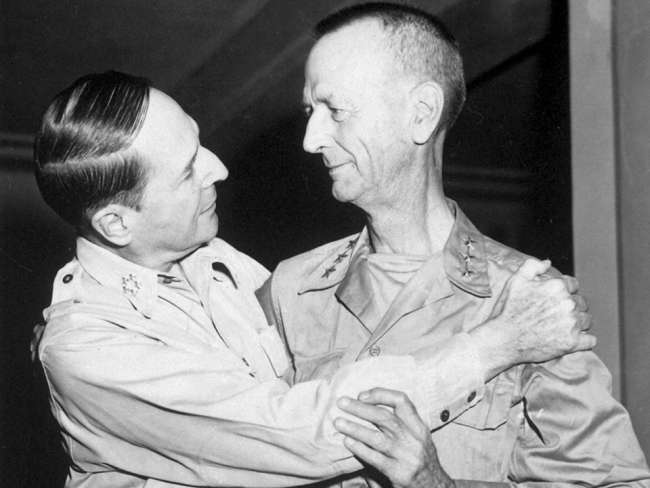
And so they're fighting to retake... They're trying to conquer Manchuria. The Japanese are sort of doing a fighting retreat. The Americans just want to get their people out of there, not get involved fighting either way. And so that's, again, this is where special operations and the OSS are helpful. There's actually special operations hostage rescues that don't involve shooting. It's just you want some of your really well-trained people there just in case. And so, the Cardinal team combines SI and SO Secret Intelligence and Special Operations from the OSS. And again, they went with this OSS small team, there were other commando elements they could have gone with and they thought about, but they don't want to get into a shooting fight with either the Japanese or the Soviets, or the Chinese Communist for that matter. And so a major James Hennessy selected, along with doctor, a major Robert Lamar, and Harold Leith, a linguists, this is important, these are small teams, and when I say linguists, you actually need multiple linguists. You need people who speak Russian, you need people who speak Japanese, you need people who speak Chinese. And so this small team though, is sent in, and remember, so they have pistols, they don't have guns, and they're gonna be parachuted in. Now this isn't like Gunnerside, they're not parachuted in at night. They're actually parachute in broad daylight and they also parachute in with quite a bit of equipment. And a lot of the equipment is actually food because these POWs, I mean, they're dropping dead of starvation and malnourishment. And so they drop in, you know, roughly half a ton of food with them. And the cardinal team is immediately met by Chinese civilians first. But remember they're also behind Japanese lines and so they're met by Japanese soon after. And not all the Japanese know about the surrender. I mean, these are sort of field units. So the Cardinal team, when they land, they split up and some of 'em are trying to gather the supplies and the other half are going to find the POW camp. And unfortunately, half the team's captured by the Japanese, and they're actually, you know, blindfolded and stripped and beat. They're carrying guns. They're beaten a little bit. They're roughed up. And the other half that finds the POW camp, the Japanese officer at least treats them a little bit better. You know, things are confused. The whole battlefield's confusing. And so, the Japanese are very much on edge. Now the teams eventually reunited, which is good and they're taken to a Japanese military headquarters where there's different stories about this, but apparently a very apologetic colonel offers them sake and whiskey. And one telling of the story says that, you know, he offers to surrender then to commit Harakiri, ritual suicide in the Japanese tradition. But the cardinal team says, you know, thanks, but no thanks, we're not here for that. The team's taken to the POW camp and they find a general there, General George Parker, he's the ranking POW but they don't find Wainwright. And they find out that Wainwright's in a camp a hundred miles away. Now remember, they'd already been parachuted in, it's not like they're gonna get picked up and dropped right on the spot, so the team needs to actually figure out what to do now. This is where being resourceful in small teams is helpful. So the team's gonna split up again and Robert Lamar, because he is a doctor, is gonna go and the linguists are gonna take a 26 hour train ride to find Wainwright at this POW camp in Sian. And when they find him, you know, he's in a bad way. And so, the team takes a roster of the prisoners who are there. And it's not just Wainwright, it's also Arthur Percival, who was the governor... Sorry, well a general in command of Malaya and he's the one who had surrendered Singapore to the Japanese in February 1942. So you have some pretty high ranking figures at this POW camp and you think, you know, you want to secure them, but Lamar says, "Well, we have to figure out how we're gonna get you outta here." You know, it's not as easy as it sounds. So Lamar takes off and leaves a linguist in case the Soviets get there, the Soviets are on their way, and now you're Wainwright, and it's like, "Wait a minute, you know, you just got here and you're already leaving me." And so what what happens is, is the Soviets actually get there. And so Wainwright that talks I guess to the Soviet, you know, commander and the Soviets are gonna take a convoy to actually go back to where the OSS Cardinal team is headquartered. And so Wainwright commandeered a couple vehicles to load the POWs on and you know, the Soviets don't... They're getting lost along the way. They don't know where they're going. And so, now if you're the Cardinal team, it's like, "Where's our POWs? Where's our general?" All's well that ends well, luckily, so they end up back with the main Cardinal team. And the reason why there's all this urgency too is MacArthur wants Wainwright and Percival at the Japanese surrender. This is late August 1945, the surrender's on September 2nd. So it's like, "Hey, we gotta get you, you know, we gotta get Cinderella to the ball." And so, you lost your POWs and they eventually make it again, all's well that ends well. And so now you get Wainwright out of there on C-47s, but you still have a couple, you have over a thousand POWs who are left, who are malnourished. And so one of the... This is where planning comes in. We talked about planning with Cabanatuan. One of the problems was parachuting supplies. I mean, they need food, they need clothes, apparently they need some guitar strings, you know, to keep morale up with music. But when they parachute the supplies in, they drop 'em in too hard. You know, they're dropping like from low altitude and a lot of the containers are crashing. And at one point the Cardinal team says like, stop dropping the stuff on us. You're literally dropping, like, dropping them on our heads and it can kill people. The other part though, of the Cardinal team mission that's sort of secret is, I said it was humanitarian but you have to remember, you know, when you have spies, when you have Intel people on a team, it's never just gonna end there. So their job wasn't actually just to get Wainwright outta there and they leave. Their job was also to collect intelligence on the ground. And that includes collecting intelligence on the Japanese, on the Soviets, on the Chinese communists. And that means even staying there after the fact. And so, you see the beginnings of the Cold War, even with the Cardinal team. And the way you see it is, well for one thing, when the Soviets actually take the north and they take over, there was an agreement that they were supposed to hand it over to the Chinese nationalists, but they're actually collaborating with the Chinese communists and when the Chinese nationalists lose Manchuria, you know, the dominoes start falling. So the Soviets are help setting the condition for the communists of China to eventually win the Chinese Civil War. And this makes the Cold War, you know, infinitely worse for the United States. The other interesting thing about the Cardinal team is that they don't realize that back home in the US, the OSS is being disbanded. So the directives already signed by Truman in September, and it's effective October 1st that the OSS is done October 1st. And the Cardinal team, without realizing it, there's an organizational swap that takes place and they go from being OSS to what's called SSU, the Strategic Services Unit because the SI, the Secret Intelligence and the SO, Special Operations elements of OSS get folded into the SSU and then research and analysis branch and morale and other elements get folded into the State Department and it becomes INR today. So, you know, there's a lot of post World War II and early Cold War history that's occurring at the exact same time in the same place. The Postscript with the Cardinal team though is really about Wainwright, what happens to Wainwright? So just as MacArthur promised Wainwright's present for the surrender, and you can know you these pictures at the Museum. And MacArthur, it's complicated about what his relationship with Wainwright is because he had pushed Wainwright not to surrender. And then he sort of becomes this like, argumentative figure about when Wainwright's, well he is a POW, the position of Wainwright in the minds of American leadership in the interim. But then, you know, we see him hugging Wainwright when Wainwright's recovered, he gives him one of the pen he uses to sign the surrender document. Percival is next to Wainwright too, and again, you know, these are two desperate figures who only weeks earlier had endured three years of being POWs. And then, you know, poor Wainwright probably just wants to get home and instead they ship him to the Philippines to see the surrender there, which is symbolic and he probably wanted to be there. But when he makes it to the US, that's really the key because here's a guy who had spent three years in his own head about what his fellow Americans thought of him. And it turns out they thought he was a hero the whole time.
Bradley Hart
In an oral history interview with The National WWII Museum, OSS officer Harold Leith describes the rescue of General Wainwright and the moving question he asked when he knew that help had finally arrived.
Oral History
Where was General Wainwright?
General Wainwright was in a camp 150 miles northeast. The doctor and I both went, 'cause we figured they might need medical work.
And did you meet up with General Wainwright? Correct?
Yeah, I spent quite a bit of time talking with him. Well, he was very grateful that we were there and he was just very nice to me. He thought that the Americans at home were not, did not like him any because he surrendered to the Japanese, when the Japanese took over in the Philippines and he wasn't supposed to surrender to them, MacArthur said he was not supposed to. So I told him that he was a hero as far as the American people were concerned. And he was very grateful when I told him this.
Bradley Hart
It's a pretty remarkable moment. I mean, and it really chokes me up when I see that footage of MacArthur handing Wainwright the pen, which we, as you say, show here in the Museum because this backstory is so remarkable. I mean, I think, you know, it's symbolic not only in the sense of MacArthur handing this pen to the man who'd been forced to surrender, but the fact that he'd been in custody for so long and was essentially missing in the minds of the vast majority of the American public. You know, it's really makes that moment even more moving. There's also an irony that, you know, longtime listeners to the podcast know that MacArthur is not a big OSS fan.
Jeff Rogg
That's right.
Bradley Hart
And so, you know, do you think that in MacArthur's mind, this changes his view of OSS, that they're able to pull off this pretty impressive operation to do something that he really wants done at the end of the war?
Jeff Rogg
Unfortunately, no. You know, there's always... Throughout special operations history, there's been a tense relationship in a lot of ways between conventional military commanders and special operations. You know, they're kind of looked down on, and even the leaders of these special operations unit, they're kind of sometimes looked down on disparage as either a side show or cowboys, or you have to worry that they're reckless and they're gonna make the situation worse rather than better. I do think that that perception has changed in some ways. You also have more, at least today, you have more special operations leaders who actually reach higher ranks and have more positions of authority. But, you know, at the end point here, in the Second World War, basically the OSS had very few allies in the US government and among senior leaders. The writing was on the wall for the OSS as far as it was gonna be disbanded. But one thing that I think emerges from this podcast series is intelligence and special operations is actually there to stay. I mean, even when they try and disband organizations like the OSS. And oh, by the way, the Special Air Service for the Brits, Alamo Scouts, you know, the SOE, you're getting rid of a lot of these special operations elements, but the people survive, you know, Kit Kittleson, and then Colonel Aaron Bank, the founder of Army Special Forces, who actually was in China too, on a different team also named after birds, the teams were named after birds. General Jack Singlaub, these figures are still there and their institutional knowledge is there. And the knowledge of what they were capable of doing that conventional units were not capable of doing, and that they were called on by senior leaders when there was no other option, like Gunnerside or like rescuing people at Cabanatuan means that special operations is here to stay.
Bradley Hart
And Operation Cardinal is, you know, interestingly poorly timed victory, I guess for OSS given it's already been shut down officially at that point but it's still an impressive victory.
Jeff Rogg
That's right, and that's the thing too about looking at cumulative victories. You know, there's sort of a saying, you know, even in the US military today, there's like small victories, like we say in our personal lives, like, "Look for small victories." Once you start stacking them together, and particularly, and I said this about Cabanatuan, you know, Gunnerside is a mission where all you know at the time is the Germans cannot, must not, even at the risk of our own deaths, they cannot get this weapon and same thing with Cabanatuan. Henry Mucci tells his men, you know, all the POWs come back or we don't. That's what they saw the stakes as. That's what they were willing to lose. You know, this is tremendous, the most heroic and noblest sacrifices in some ways we see exhibited by the special operations and intelligence service members in the Second World War.
Bradley Hart
Despite the remarkable success of Operation Cardinal, the days are numbered for OSS. William J. Donovan has lost a key political ally with the death of President Franklin Roosevelt and his old rival, FBI Director J. Edgar Hoover is looking to expand his influence in the new Truman administration. On September 20th 1945, just weeks after the signing of the Japanese surrender on board the USS Missouri, President Harry Truman signs an order shutting down OSS effective October 1st. William J. Donovan will eventually return to private life, but not just yet. He'll play a personal role in the prosecution of Nazi war criminals. Nick Reynolds joins us again. Now, William Donovan himself will end up playing a role for a period of time, at least, in the actual Nuremberg trials themselves. Tell us about that.
Nick Reynolds
So Donovan himself is deeply involved in this. As I say, it's like he's taking a second job. He's got one full-time job, and then he's got a part-time job. If you look at his travel schedule for 1945, it's just mind boggling. You find him in Asia, you find him in Europe, it's almost everywhere but Washington, right so.
Bradley Hart
Might be by choice.
Nick Reynolds
Might be by choice. He flies to Nuremberg, flies to Germany, and he works with Jackson and the team on getting ready for the trials. And here's where the sort of the big personality conflict occurs. Once again, they have different approaches. One of it, it's this, no matter what, there would've been some kind of conflict. You can't have two leaders of this stature running, momentous undertaking like this, right? I mean, this is is something that's gonna set precedents that we talk about today. And they know that. And so there are these two huge personalities that are probably gonna clash no matter what but they clash on some interesting topics and one of them is collective guilt and individual guilt. Jackson favors designating criminal organizations like certain parts of the SS, and the Nazi party, the high command and so forth. And Donovan says, no, we should start at the other end. We should evaluate, we should prosecute men for things that they have done. We should prosecute Nazi officials because they signed an order to do X or Y, not because they were Nazi officials so that's one major sticking point between the two. The other is their courtroom styles. And Donovan favors an approach that's gonna be sort of Perry Mason kind of drama in the courtroom. With him being Perry Mason, right? Jackson favors a much more hands off, methodical approach. Donovan engages in negotiations with some of the senior Nazis, and basically he's looking for something like a plea deal, you know, which he can unfold, you know, and then the Nazi's gonna testify, in court and it's gonna be really dramatic and he's gonna do the examination and the cross examination and whatnot. And Jackson eventually decides, "Hmm, no. You know, I'm in charge here. I can't control this. Thank you so much for your time, Bill." But you know, this is towards the end of 1945, just before the, or around the time that the trial starts. It'd be November-ish 1945 and Donovan goes home.
Bradley Hart
One other interesting aspect about the shutdown of OSS is that Bill Donovan doesn't necessarily go away quietly, and in fact, he takes some souvenirs, let's say with him from from his OSS days with the intention I think of writing the history of OSS. Tell us what happens with the OSS files.
Nick Reynolds
So in the middle of September 1945, Donovan learns that OSS is gonna be closed, shuttered at the end of the month, and he decides that he wants to control the history of OSS in more ways than one. He doesn't want anybody saying bad things about OSS, he wants to be able to rebut and advance his own agenda about what OSS did during the war. He also has, well, he tells people that he himself wants to write a history of American Intelligence, going back all the way to the revolution. Has to wait for Jeff Rogg to do that but he's probably the first one, Donovan's probably the first one to say that he's going to start with OSS or start with the revolution, go up to OSS. So he and two or three others secretly film, microfilm OSS records between middle of September and the end of September. They do it largely at night. They have some rudimentary microfilm technology made by Kodak, sort of looks like a sewing machine. And they create thousands of frames in this process. Eventually those microfilms go to Donovan's office in New York, and yeah, it's a locked room, but maybe a locked filing cabinet, but it's hardly a secure facility and eventually many, you know, probably in the 1970s, the documents wind up back in government hands. And today they're at the National Archives. You can see the original films at the National Archives in College Park. And if anybody wants to doubt that Donovan personally was involved, all they have to do is look at the literal fingerprints that are on some of the frames. You can see the hand of a person holding the documents. I don't think there's any doubt that Donovan actually did this. And there's also, there's another collection at Churchill College Cambridge.
Bradley Hart
What's interesting as well is it's a weird image. You have spies microfilming their own documents in their own headquarters, which is something that, of course, foreign spies would do in this period.
Nick Reynolds
Sure, yeah. I mean, this would've made Duncan Lee's life so much easier, right? Or the NKVD guy's life so much easier. Just bring me the microfilm, you know, we don't have to sit here with a yellow pad.
Bradley Hart
By late 1945, the largest war in human history is over. William J. Donovan's OSS has been shut down, but the threats facing the United States haven't gone away. They've just shifted. And President Harry Truman will quickly realize that while OSS may have been a wartime necessity, there's still a need for intelligence gathering, especially as a new conflict, a Cold War begins. Jeff Rogg joins us for a final conversation of Season Two. Jeff, thanks again for being here.
Jeff Rogg
Thank you, Bradley. Looking forward to talking about the end of the war with you and how its tradition continues to this day.
Bradley Hart
You know, Jeff, one thing that you mentioned earlier on in the podcast series is that the end of the war isn't really the end of the war in so many ways. And you know, that's true both in Europe and the Pacific, maybe especially in the Pacific, because there's really, you know, you have this moment on the deck of the USS Missouri where the surrender is signed by the Japanese delegation, but the conflict is still kind of rolling throughout Asia. There's millions of Japanese soldiers still in Manchuria, the Soviet Union has just invaded. The violence hasn't even necessarily ended. There's still holdout units on the Japanese side that don't believe the surrender is real or don't want to adhere to its terms. So tell tell us more about what this means for the intelligence community. There's really no end to the war in some senses.
Jeff Rogg
One of the fascinating features that I think about as a historian when I look back at the Second World War, is other than the founding period of the United States, I don't see a time in American history where more great minds got together and helped plan a war, but also helped plan the post-war world. And so that's something where, when we talk about the lessons learned from wars, and sometimes historians and national security practitioners tend to be pessimistic. It's fashionable to be pessimistic. And so one thing that, you know, I'm probably supposed to say as a historian is we need to look back and learn the lessons of that war today. So one of the big lessons is, again, you know, getting your finest minds together and think really concretely through the challenges, not just of your present day but the challenges ahead. And the OSS was doing that about the Soviet Union. People who were in operational units were in the field looking at the lay of the land and providing intelligence back to DC, and the OSS, they write this 60-ish page report on what to expect from the Soviet Union in the post-war world, and it even includes a country by country analysis. Why, because they had people in those countries reporting back to them. And this is why you always need intelligence. Intelligence doesn't understand the distinction between war and peace. And the people who did intelligence during the Second World War knew that, but not all the people in DC did. Now they catch up kind of quickly. But going back to the larger issue of what's the real legacy and you know, where the United States finds itself today and what we can learn from this period? Well, there's a lot to learn. And you know, as I said, it's fashionable to be pessimistic. And it's okay for historians and national security practitioners to be pessimistic. We're kind of supposed to be by the nature of our job. But one thing I don't like as much is seeing so many Americans who are pessimistic today. And so that's why these stories are so remarkable and important to remember because the one thing that I would want them to take away more than anything else, the one area of continuity is the people, the type of people, the quality of the individuals. You know, I would draw a straight line from the Rangers at Cabanatuan and the Alamo Scouts, and the Norwegian commandos at Gunnerside and the Cardinal team who rescued Wainwright to the Intelligence and Special Operators today. And so, you know, we were lucky to have those people who volunteered and underwent tremendously difficult training, who risked their lives many times over on missions that no one else could do in the Second World War and were lucky to have people like that today.
Bradley Hart
Yeah, Americans and people, other nationalities who are willing to risk everything on missions that, you know, unlike conventional, many conventional military operations seem almost outlandishly unlikely to succeed in some senses. I mean, missions that are incredibly dangerous even by the standards of military missions. You know, and one aspect of the Second World War that is unique, I think actually in modern history, at least for the United States, is the fact that we end up in sort of an occupying role. But one facet of that is you have another group of people who are willing to take on extremely dangerous missions that fortunately never come to fruition, but those are the Stay-behind units. Who are the Stay-behind units? What do they tell us about the post-war world?
Jeff Rogg
The Stay-behind units arise out of what already had happened during the Second World War. This is why the legacy is so important. So you had resistance elements across Europe even after, you know, the Nazi takeover of different countries. Famously we had talked about the Jedburgh's, and especially in France with the Maquis, the resistance fighters. So the same concept, you know, was already the seed there was already germinating, Hey, we can do the same thing in the event of a Soviet takeover. And this was something that was a very real consideration for Americans and Brits at the end of the Second World Wars, "What do we do if we get rolled over? The conventional forces get rolled over and countries become occupied?" Well, you had already these preexisting resistant networks from the Second World War. And so we continued to arm them, train them, provide weapons that they could hide. And the idea was that in the event of a Soviet military takeover of a particular country of Western Europe, we would have Stay-behind units. That legacy continues to date.
Bradley Hart
Only a few years after the end of the war, the Soviet Union detonate its first atomic bomb, more than a decade later. China will detonate its own atomic bomb. Sort of how does the post-war world unfold here? And what kind of planning do we see as historians that indicates how people are perceiving the post-war period?
Jeff Rogg
Well, one of the areas of continuity, even before the Second World War, is you already saw the seeds of the Cold War with the Russian Revolution, the emergence of communism, you know, Soviet communism or socialism, and this, you know, epical battle that you could see between communism as an idea, as a political economy, as an organizing principle, and then capitalism, you know. And so, that was why it was very much an alliance of convenience between the Soviet Union and the United States when there was a lot of mutual suspicion and actually hatred. I mean, some leading figures, J. Edgar Hoover had an abiding hatred of socialists and communists, and anarchists and subversives. And so, as the war is looking better and better for the allies against the Germans, it's also looking worse and worse for the allies against each other, because now you're worried about what your adversaries intentions are. You know, as a historian, you gotta sort of take the good with the bad and you know, if there's one... I shouldn't really use a word, but I'm trying to think of a better one to use. A good lesson of the Second World War for all sides is how destructive it was. And then when you get nukes, you know, the Americans get the nuke first, and there's different debates over whether we needed to use it or not. And, you know, was it to signal the Soviets? But one of the problems of course, that we know is the Soviets had spies inside the whole time. We talked about Gunnerside. We had spies inside the German nuclear program, and it was a race to get to the bomb. Well, the Soviets get the bomb only a couple years later, they detonate their first one in August 1949, and it's actually one of the first big analytical failures that the CIA's accused of this, how could you not know? The CIA incidentally actually said they were gonna get a bomb, they just got the time wrong. They said something like, you know, the latest 1953, maybe 1951- shrugged the shoulders, and then it's 1949, and everyone's mad and says, "How could you let us down?" You can say that the American evolution of the bomb and the use of it in Japan was the onset of the nuclear age, but we were the only ones who had it. Now the Soviets get it. This is the nuclear age. And this is truly scary. On a different level, than even the Second World War in a lot of ways because now what you're talking about is the annihilation of humanity of the world. And so, again, one of the interesting features of the Second World War is the people who experienced it and then taking that mindset into their later years and something that emerges in the Soviet leadership. And Mel Leffler writes a book called "For the Soul of Mankind." He's an American historian and he talks about the relationship between American presidents and Soviet premieres. And one of the things that emerges is Soviet leaders had been really chastened by the Second World War, a lot of them... The level of loss and destruction, they experienced it so personally that they understood truly what it meant to have a nuclear war. You know, they knew what in its own way, what destruction looked like in a way that by the way, a lot of American leaders didn't.
Bradley Hart
Well, tens of millions of Soviet citizens are killed civilians, not only military so this is a level of destruction that is far out exceeds the 416,000 or so Americans who are tragically killed.
Jeff Rogg
And also what that destruction looks like, in the United States, you don't have it, I mean Pearl Harbor, we see the pictures and that shocked Americans, but they had nothing like the Soviets where cities are ruined, and I mean, again tens of thousands... That's why that becomes a statistic. You know, when Stalin kind of makes that quip about millions being a statistic. What this understanding of this first person witnessing and even personal loss that Soviets experienced is it imparts a certain level of responsibility and understanding in the nuclear age and dealing with the Americans. And, you know, American leaders, many of them are chasten by the Second World War II in their own way. One of the scary things that I think of as a historian today is in some ways, we're starting to see and hear nukes being talked about in a more cavalier way and the possibility of using them in our lifetime, and this is something that was the level of responsibility that you had when talking about nukes during the Cold War, I attribute a lot of it to the experience of the people involved in the Second World War, that direct legacy. Losing that and understanding what truly catastrophic World War looks like is something that is scary 'cause no one really has it today. And they just think it's really bad, but in some ways aren't even acting like it.
Bradley Hart
I mean, your book, "The Spy and the State," is really the first comprehensive study of American intelligence from its origins and sort of the revolutionary period all the way up to the present day. What do you see as being the biggest legacy of OSS and Second World War sort of experiences on the Intel community as we understand it in the post-war world? And what figure do you think had the most influence?
Jeff Rogg
Well, this is a great way to summarize what's been, you know, a series of really amazing podcasts with the WWII Museum. And it's hard for me to say anyone other than Donovan. You know, Donovan, he's such a controversial, remarkable, I mean, he's a character out of a Hollywood movie, just even before his... In the First World War, his courage... And he is a Wall Street lawyer and a multimillionaire, and sort of a rock star and he has these icy eyes larger than life, but, you know, his willingness, his dogged pursuit of changing a system that he saw was broken and disrupting it, that's again, when I talk about the minds that changed the American National Security System and the American intelligence system forever, he's one of them. And we talk about the need for disruption today, having Donovan like figures and that was really, you know, the longstanding legacy is, we understood that we couldn't follow the same patterns of the past. That we need a professional intelligence organization, professional, not just military moonlighting as intelligence or detectives moonlighting intelligence like we had in the Civil War or the First World War, the attache system, but true intelligence professionals. And Allen Dulles even writes as much during the debates over the CIA, he said, intelligence, you know, this isn't just some casual occupation, this is a profession. Donovan knew that and he fought for it. And unfortunately, the one area, and this is the warning that you always have, is he also aspired to lead the CIA and he didn't. But that's, you know, a personal sacrifice that he made in a generation of people who made tremendous personal and professional sacrifices. And so, that's the longstanding legacy is what Donovan and the OSS did changed American intelligence forever. And we actually owe them a debt of gratitude because this country is safer and better off for it.
Bradley Hart
And actually, as historians, we owe OSS veterans a unique sort of debt of gratitude because of the archive being available in the way that it is at National Archives too, in College Park, Maryland. If anyone listening to the podcast wants to research this topic themselves, they actually played a major role in making that archive available.
Jeff Rogg
And, you know, this it's a tremendous archive. One of the things that I like to see, and different societies are part of it, the OSS Society very committed to it, is they help connect relatives of people who served in the OSS. It's a really nice network and collegial network where people say, you know, "I heard that my grandfather, grandmother, you know, relative served in the OSS in some capacity." And a lot of historians, you can access the OSS roles, you can see who was in there, and then you can find out more about them and sometimes, you know, actually it's intelligence so there's dead ends, but oftentimes you can find out more about them and, you know, so that's one of our jobs as historians, is this isn't just big stories like you've heard here, it's also personal stories and historians help make those connections and tell the personal stories.
Bradley Hart
The creation of the Central Intelligence Agency, the CIA in 1947 marked a new chapter in the history of American intelligence. And while this new agency is and was different from the OSS in key ways, it owed much to its wartime predecessor. Former leaders in the OSS, people who learned about the intelligence world from Wild Bill, Donovan himself, like Allen Dulles and William Casey become directors of the CIA. But despite various efforts, William Donovan himself never becomes CIA director. But in 1953, President Dwight D. Eisenhower points him ambassador to Thailand. Bill Donovan leaves that role the following year, returns to private life and passes away in 1959. On hearing of his death, Dwight Eisenhower said to have remarked, that quote, "We have lost the last hero." while Bill Donovan is buried at Arlington National Cemetery under a headstone marking his World War I service and his medal of honor, there's no mention of OSS. But his legacy lives on with a statue today in CIA headquarters and a living legacy in the intelligence community. In 1986, President Ronald Reagan paid tribute to OSS veterans at a meeting of the OSS society.
Archival
I can't think of a more distinguished gathering than this one, nor can I think of any group whose accomplishments and devotion to country makes them more worthy of accolades and praise. And yet it's precisely that praise and those accolades that you decided to forego when you chose a Twilight War. A secret profession, a profession where praise and thanks can only come from history and not from your contemporaries. And it's because secrecy has been your business that you all know how vital it is to your nation's safety and freedom survival. And that's why I'm delighted to be here tonight. None of America's intelligence agents have inspired and protected their nation more than the men and women of the OSS. I cannot attempt to recount tonight the individual deeds Bill Donovan, for example, what a remarkable man he was, a member of the fighting 69th in the First World War, a winner of the Congressional Medal of Honor, a one man intelligence service in the '30s and '40s, and American legend.
Bradley Hart
In 2018, veterans of the OSS received the Congressional Gold Medal in another recognition of their unique wartime service and a testimony to their role in winning the Secret World War II. I'm Bradley W. Hart at The National WWII Museum. This is our last episode of Season Two of "The Secret World War II," but stay tuned for future episodes. The largest conflict in human history wasn't just one on the battlefield, it was also one in the shadows. And there are more stories from the shadows to tell.