
About the Episode
After D-Day on June 6, 1944, the global race is already underway to build the first atomic bomb. In this episode, we explore the efforts happening in complete secrecy to stop Nazis from doing it first.
Host Bradley W. Hart is joined by guests Nicholas Reynolds, author of Need to Know: World War II and the Rise of American Intelligence; Jeffrey Rogg, author of The Spy and the State; and Clare Mulley, the author of The Spy Who Loved: The Secrets and Lives of Christine Granville.
Topics Covered in This Episode
- Alsos Mission
- Carl Eifler and Moe Berg
- Werner Heisenberg
- Gunnerside Operation
- Heavy Water Barrel
- Christine Granville
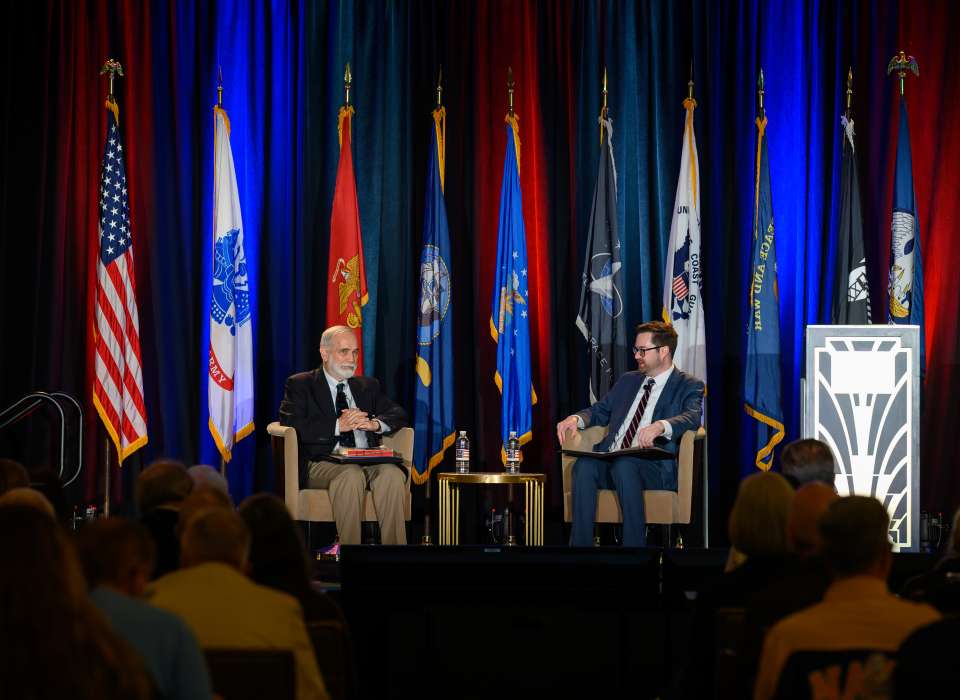
Nicholas Reynolds, PhD
Nicholas Reynolds is a US Marine Corps veteran, serving as an infantry officer and then as an official historian. As a Colonel in the Reserves, he was Officer in Charge of Field History, deploying historians around the world to capture history as it was being made. For many years, he worked at CIA, most recently as the historian for the CIA Museum. Reynolds has taught at the Naval War College, Johns Hopkins University, and the Osher Lifelong Learning Institute. He is the author of Need to Know: World War II and the Rise of American Intelligence.
Jeffery Rogg, PhD, JD
Jeff Rogg is Senior Research Fellow at the Global and National Security Institute at the University of South Florida where he conducts policy-relevant research in the areas of intelligence, grand strategy, and national security. He is the author of The Spy and the State: The History of American Intelligence.

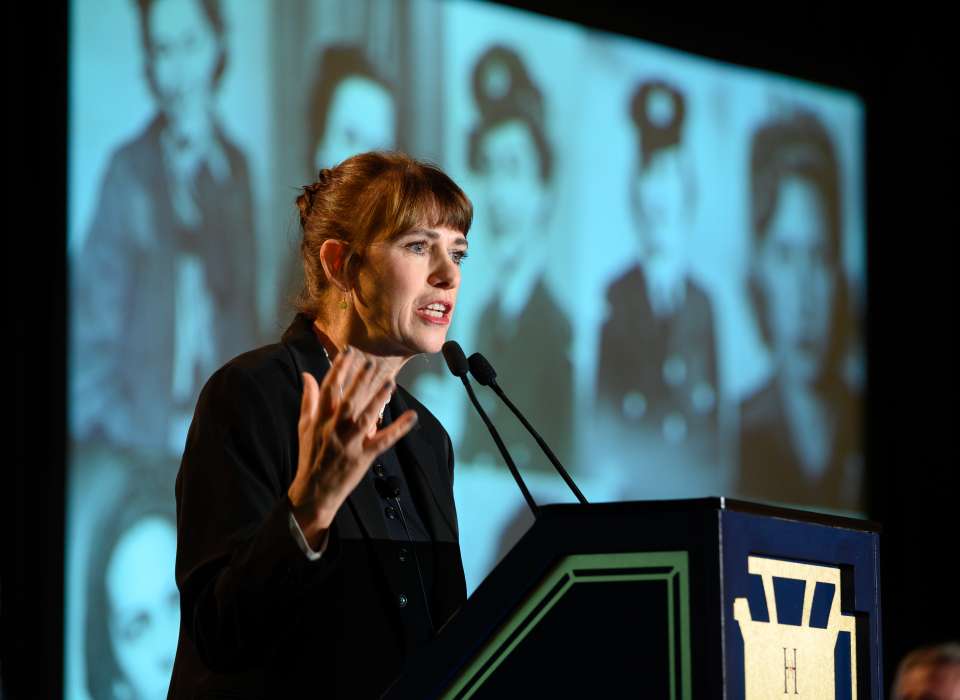
Clare Mulley
Clare Mulley is an award-winning author and public historian focused primarily on female experience during World War II. She is the author of The Spy Who Loved, Agent Zo, and The Women Who Flew for Hitler.
-

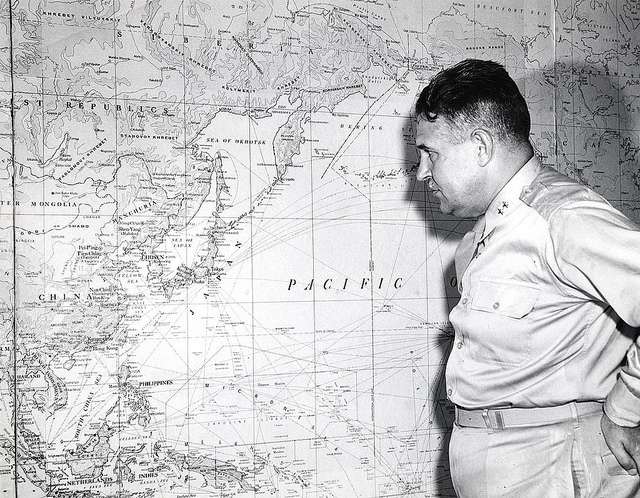
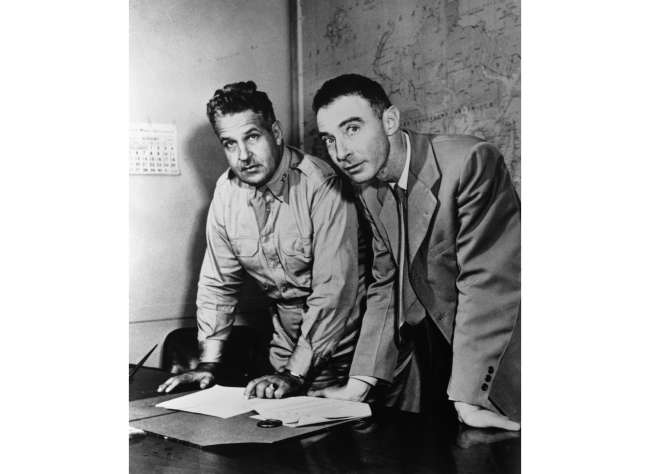
Season 5 Episode 1 – Racing for the Bomb: Author Robert Norris on General Leslie Groves
In this episode, we take a closer look at Lieutenant General Leslie Groves, director of the Manhattan Project. While a lot of interest is rightfully set on Oppenheimer, Groves proves to be an interesting character and pivotal player in the development of the bomb.
-
Article Type
Making Public What Was Once Secret: Los Alamos and The Manhattan Project
Los Alamos and other Manhattan Project Sites developed across the US in 1942 and 1943.
-
Article Type
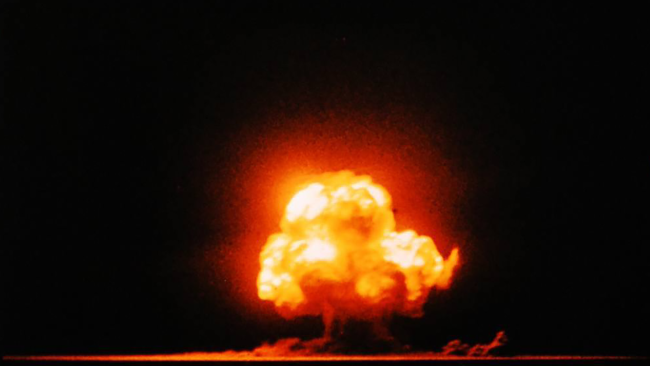
Trinity: Why It Really Mattered
While most people are familiar with the names of “Little Boy” and “Fat Man” as the atomic weapons used over Japan, what they may not be familiar with was how different the respective technologies of each bomb were and why this difference mattered.
-
Article Type
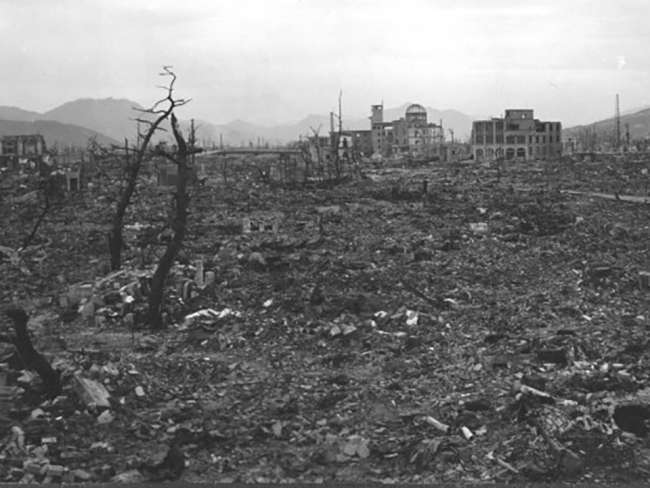
The Most Fearsome Sight: The Atomic Bombing of Hiroshima
On the morning of August 6, 1945, the American B-29 bomber Enola Gay dropped an atomic bomb on the Japanese city of Hiroshima.
Special thanks to The Dale E. and Janice Davis Johnston Family for their generous support of this series.
Part 6: The Race to Stop Nazi Nukes
Sponsor Read
This podcast series by The National WWII Museum is made possible by the support of the Dale E And Janice Davis Johnston Family Foundation.
Archival
On the other side of the world, in Europe, the Allied forces under General Eisenhower are pounding the Germans with relentless force. We do not expect to have our winter lull in Europe. We expect to keep striking, to keep the enemy on the move, to hit him again and again, to give ’em no rest, and to drive through to that final objective, Berlin itself.
Bradley Hart
It is June, 1944. The D-Day invasion has been successful, thanks in part to the largest deception operation in history. As the Western Allies land in Normandy and continue their push toward the borders of Adolf Hitler's Third Reich, Jedburgh teams link up with the French Resistance, causing disruption throughout Nazi-occupied France and harassing retreating Axis forces. But even as the allies push toward the liberation of Paris in August, 1944, there's another mission happening in complete secrecy, the race to build the world's first atomic bomb and the race to stop the Nazis from doing the same thing. We remember the Manhattan Project today as the secret effort to build the atomic bomb. But it had another aspect, too, a mission to gather intelligence about how close the Germans might be to building their own bomb. This intelligence gathering operation was called the Alsos Mission. The Alsos Mission accelerated in the months after D-Day with team members sneaking into France and other parts of occupied Europe, looking for nuclear scientists and the components needed to build an atomic bomb. One of the key players in the German nuclear program was the scientist, Werner Heisenberg. And America's spy intelligence agency, the OSS led by William J. Donovan, had devised a plot to find, capture, and potentially kill Heisenberg. The OSS initially turned to Carl Eifler to lead this mission. He's the brash commander who led dangerous special operations in Burma. But the Heisenberg plot would eventually fall to an unlikely spy, a former Major League Baseball catcher named Moe Berg. I'm Bradley W. Hart, senior historian here at The National WWII Museum, and the host of this podcast series, the "Secret World War II." Joining me to unravel the story of the race to stop the Germans from building an atomic bomb is Nicholas Reynolds, author of the book, "Need To Know: World War II and the Rise of American Intelligence." Nick, thanks so much for being with us again.
Nick Reynolds
It's my pleasure to come back to New Orleans.
Bradley Hart
Season 2, it's very exciting. We've got a number of stories still to tell. I wanna start with one of the most colorful characters from season one of the podcast. That is, of course, Carl Eifler. Last we heard from Eifler, he was in Burma serving with Detachment 101. And since we last talked, I've had some time to actually do some more research on Eifler, including visiting a fascinating collection of his papers actually out in California. And, you know, some of these reports that are contained in this collection are quite honestly, even 80 years later, chilling. These are reports of teams being dropped into the jungles behind Japanese lines. There's actually radio communications here, or transcriptions of radio communications where people are talking about how they're comrades have been blown up, how they've been killed, how they've been captured. And in this particular instance, trying to make their way with passports that are gonna be dropped to them to some border that's not specified. And unfortunately, this report ends before it actually tells us what happened to this particular team, whether they actually make it out. But tell us, how did Eifler find himself in charge of a plot to kidnap Germany's top nuclear scientist?
Nick Reynolds
OSS doesn't really know what to do with him. You know, what do you do with a 250-pound guy who has, still has a lot of energy. Has tremendous amount of energy in stamina. Now, it's not clear who comes up with this idea to put Eifler in with the... Put Eifler in the program to spy on and, if necessary, neutralize the Nazi Manhattan Project. So, you know, the thought is the Germans might be, if we're making atomic bomb, they might be making an atomic bomb as well. Because a lot of the... You know, if you look, the star scientists that come over to the United States, a lot of them are from Europe, occupied Europe, and some of them are German. It's quite possible that the Germans would also come up with an atomic bomb. So, Leslie Groves, who is the general in charge of the Manhattan Project, is in loose touch with Donovan and saying things like, you know, "We really wanna know what the Germans are up to." And, you know, there's some key people in the German program, we know who they are, and maybe we have to take action. And so this is not something that people wanna put on paper in wartime Washington. Some of this even filters up to the level of General Marshall. And Marshall says something like, I don't want to hear about it. Donovan and OSS feel that they can take action, or they're willing to explore what to do. One option is unleash Eifler. You know, take Eifler, get him close to, there's one guy in particular, Werner Heisenberg, who is the father of the uncertainty principle.
Bradley Hart
Werner Heisenberg discovered the uncertainty principle, the idea that we cannot know position and speed of a particle with perfect accuracy. This revolutionary discovery changed our understanding of quantum mechanics and also sparked philosophical and scientific debates.
Nick Reynolds
So, Eifler comes up with this plot to kidnap. Heisenberg lives and works in a part of Germany not too far from Switzerland. And so the idea is to get Eifler into Switzerland, get him across the border, kidnap, you know, just sort of manhandle a poor guy, drag him back across the border, and then smuggle him onto an airplane. There's a couple of variants there. One of them is really hard to believe that anyone would've thought this would work, but it is to parachute into the Mediterranean Sea and be picked up by an Allied submarine. Eifler gets close to doing this, but I think calmer, more rational minds prevail, and the decision is made. Eifler is not the guy for this mission. It's really... It's really... You know, "He is got a lot of skills, we respect him, we wanna keep using him, but this is something for someone with a different set of skills." And I wanna interject a little, a footnote in here. I have met, or I met Werner Heisenberg in the course of my original research in the 1970s. He's very unassuming. When you talk to him, it's like, "Really, this is the great mind?" You know, I think he's... My impression was... And so we were talking... I was doing a military political subject, and Heisenberg knew some of the characters, and I asked him about those characters. And it was clear that Heisenberg's a guy who is, you know, he's a scientist. When you remove him from the world of science and you ask him a political question or a personal question, the answers are really unsatisfying. And you see that in the record when Heisenberg talks about the Nazis, when you see Heisenberg reacting to war news. In one of the books, there's a scene where Heisenberg is told that the Battle of the Bulge is going well for Germany. And so that's at the end of 1944. And Heisenberg goes, "Wow, you know, maybe we can pull it off." This is a guy who is... He doesn't have charisma, and physically there's not much there, but there is a terrific mind. He's one of those guys who you kind of shudder to think, you know, if he... He's not somebody who would have come to the conclusion like some of the people doing the American project that, "Hmm, we're changing the world here, and we better be sure we're doing it for the right reason." Heisenberg's mind was not clear on what he should and shouldn't do for Nazi Germany.
Bradley Hart
So American concerns about a potential Nazi Manhattan Project certainly don't end with Carl Eifler not being assigned to kidnap Werner Heisenberg. Someone else is actually assigned to a very similar mission. And that man is, once described by a former coach, actually, as quote, "The strangest man ever to play baseball." And I think we might also say, given his background in activities, one of the strangest people in OSS itself, I'm referring, of course, to Moe Berg, who's a Major League Baseball catcher turned OSS agent. Nick, who's Moe Berg?
Nick Reynolds
Moe Berg is, as you say, I mean, there are a lot of people who would qualify for strange in OSS. And to say that he's the strangest gives you an idea of the extent to which Moe Berg is one of a kind, living in his own world, and sometimes interacting with people in this world successfully. So, he's Jewish. You know, if you're setting him against the Nazis, you know, is that something you want to consider or you... I think you need to consider it and to see whether he's got the discipline to carry his task out. And I think he does, but it's... You know, it's something... It's a consideration you have to... A threshold consideration you have to look at. He's a Princeton grad, right? Undergrad in Princeton, and then he has a law degree from Columbia, which is also the school that produced Donovan and FDR. And he's a guy who really, he's a good catcher, but he's not a great catcher. So he's just on the limit of being, you know, he loves baseball more than anything else. If you look at his... If you, if you look at the threads in his life, that's the one you see. You know, he always wants to come back to baseball. One of the last things he said on his deathbed was, "How did the Mets do today?" So here's a guy who's really dedicated to baseball, but not quite good enough for it to be a full-time profession for him. So, he's kind of in and out, of, you know, you get the sense of, I guess dilettante would be about the right word, or that he's a... He's a dilettante who manages to get toeholds in professions to the extent that you go, "Hmm, okay, well, that's worth thinking of." He finds his way to OSS, he's got some languages. His best language is French. His German is, mm, okay. You know? Probably order a meal. It's not great. His knowledge of physics is very rudimentary. He did not study physics in college. So this is not a guy who is comfortable following equations on a blackboard, but he is a guy with a certain, you know, he can fit in. He can make polite conversation. He's refined, he's also working on, debriefings is a better word, for OSS. As the Allied armies advance, especially in Italy, they uncover Italian physicists, so they're liberated from German control. And there are... It's not hostile interviews, or not interrogations exactly, but it's more like, you know, so what have you been up to, what do you know, what have you heard sort of thing. So he's got some knowledge of what's going on in the field of atomic weapons in Europe.
Bradley Hart
And so he's sent to do something with Werner Heisenberg.
Nick Reynolds
Yes. So he sent to... So, again, you know, Switzerland pops up, and it turns out incredibly, so this is 1944, around the time of the Battle of the Bulge, and the Germans are allowing Werner Heisenberg to go to Switzerland to give academic lectures.
Bradley Hart
That's a confusing decision.
Nick Reynolds
It really, that's a head scratcher for me. You know, I think actually that's the answer that the OSS was looking for. If you have an atomic program that is on the point of success, then you don't let your leading scientists go to a foreign country and give lectures.
Bradley Hart
In the middle of a war.
Nick Reynolds
In the middle, yeah. The middle... At a crucial point in the war, you know, post D-Day, as I say, Battle of Bulge. The idea is for Moe Berg to get close to Heisenberg and try and figure out if looking for some sign that he has made progress, that Germany's making progress on the bomb. And if Heisenberg gives that sign in some way, then Moe Berg's supposed to kill him. And Moe Berg is given a pistol, and he carries it in loaded to the lecture. He's posing as something like a graduate student, which is kind of odd since he and Heisenberg are not too far apart in age. So, graduate student who is still ABD. I've heard of people going as many as 17 years ABD, that's his cover. And he sits there and he listens to Heisenberg talk about theories that really don't make too much sense to him because he's not a physicist and his German isn't good enough. He sees Heisenberg a couple of other times, once at a dinner party organized by somebody that OSS has ties with. And briefly, he gets Heisenberg alone, leaving that dinner party, and he just can't decide whether Heisenberg should be killed. And that's probably... That that is the right decision, You know, it's not waffling on his part. It's kind of reality. I mean... And as it turned out, the Germans didn't have a bomb. They weren't even close. You know, it was a good thing that Moe Berg didn't kill Heisenberg, which would've not so good for Heisenberg and just as bad for Moe Berg. And the reason is that the, you know, Swiss were pretty tolerant of people spying in Switzerland and doing various nefarious deeds, but they would draw the line. They would say, you know, he would've gone to prison for a long time in Switzerland. There would've... Where could he have gotten out to? At that point, occupied France. You could probably get to France from there, but you don't wanna go to Germany or Italy. But the chances are very good that the Swiss would've stepped in and locked him up, and, you know, OSS would've assassinated somebody that, you know, probably didn't need to be assassinated. I think we have to reflect a little bit on this. So, this is the stage of... This tells you something about the bias for action in OSS, you know, "Let's do something." And then also the lack of sophistication. These are not sophisticated plans, you know? And neither of these guys is quite right for this job. Moe Berg is a better choice than Eifler, but neither of them is really the guy that we want doing this kind of thing. Moe Berg is an interesting figure and kind of a sad figure, I think, because when I read his biography, I get the sense that he never quite figures out what he wants to do with his life. You know, he is never quiet at home here or there. It's okay to be a dilettante as long as you have enough. You know, you move enough in one direction so that you can have a sense of accomplishment at the end of your life. And I don't think Moe Berg had that. I mean, he strikes me as a little bit of a lost soul.
Bradley Hart
You mentioned earlier that you actually met Werner Heisenberg at one point. Did Heisenberg know how close he came to being assassinated?
Nick Reynolds
So, I met him around 1974 or five. I don't think so. We didn't talk about it. We talked about the German resistance to Hitler. And as I say, Heisenberg had met one of the characters that I was writing about, and they, so German, said, this was during the war, and every Wednesday afternoon in Berlin, there would be this basically book club. It was called the [speaking In German], and they would talk about basically great books. And so Heisenberg would present on some great book or theory in physics. You know, there was a retired general. He would present on strategy and so forth. So, it was really kind of otherworldly. I really don't think Heisenberg was aware. I would put my money on that he was not aware of how close he came to being killed.
Bradley Hart
What strikes me is so interesting about the plots, the OSS plots you're talking about here is they're so outlandish. It's like something ripped out of a Hollywood thriller. I mean, the idea you're gonna parachute in the Mediterranean and get picked up by an Allied submarine, I mean, the odds of success there have to be minuscule.
Nick Reynolds
Zero. And I think they would be left to die.
Bradley Hart
Special ops and commando raids also played a key role in dismantling Germany's nuclear ambitions. Jeffrey Rogg, author of the "The Spy and the State: The History of American Intelligence" joins us now to discuss a secret operation in Norway to destroy German nuclear facilities as reported in this archival news club.
Archival
How close a race it was, this struggle between two groups of scientists was revealed by pictures taken of the heavy water hydroelectric plant in Norway. While British and American scientists were racing ahead, Europe was being combed by secret service agents to pinpoint any plants, which by their structural design, suggested atomic bomb factories. Such a one was this upon which commander raids were launched.
Bradley Hart
I'm joined again on the podcast by Jeffrey Rogg, author of the book, "The Spy and the State: The History of American Intelligence." Jeff, thanks again for being here.
Jeff Rogg
Thank you, it's great to be back with you, Bradley.
Bradley Hart
So, Jeff, let's talk about the race to build an atom bomb and one of the most daring operations of the entire war in many ways, and that is the Gunnerside Operation. What is Gunnerside and why is it necessary?
Jeff Rogg
Gunnerside is what you imagine when you think about special operations in the Second World War. You know, parachute dropping in, cold weather. You're in Norway. You have to infiltrate on cross country skis and then blow up a plant that's helping build a secret weapon. And I think that's something that we sort of forget about in the Second World War. So we all know how the war ends with the atomic bombs in Japan, but imagine if the Germans got atomic bombs first. And so let's set the scene with Winston Churchill. You're receiving intelligence reports that the Germans are working on a secret weapon that could end the war. The problem is, is part of this weapon is built in Norway. You can't get there with a conventional invasion, and you're worried about using bombers because of German anti-aircraft fire and bombing's inaccurate. So what do you have left? You have special operations, but the question is, how are you gonna do it? So Germany at this point was ahead of the US in developing nuclear weapons, but that doesn't mean it has everything that it needed. And one of the things you need to produce nuclear weapons at this time is heavy water. Heavy water helps produce plutonium, and plutonium's used to make the weapon. Germany had invaded an occupied Norway starting in April, 1940. And what Norway had that no other country in the world had at that point was a heavy water production plant, a hydroelectric plant called the Vemork plant. And it's in Telemark, Norway. When the Germans take over, they start producing a lot of the heavy water. Now, part of the story that's interesting is French intelligence and the Norwegians had smuggled out heavy water before the German invasion, like a couple months before. But the Germans know this, so they start really producing, upping the heavy water production. And the British know about this because they have a spy on the inside, Jomar Brun, and Jomar Brun is one of their chemical engineers. And so the Special Operations Executive, which is a British organization, is tasked with this mission. Now, the advantage of the SOE is, even though it was a British organization, there's actually allies who are part of it. This is why it's good to have allies. You know, we just saw the Winter Olympics, and the Norwegians did well. They always do. And one of the events they do particularly well at, and I like to watch, is biathlon, where they cross country ski and shoot at the same time. So if you think about it, for the commandos that you want for this mission, that's like perfect. You're asking for like Norwegian Olympic biathletes, and that's exactly what they get. The Norwegians are also good at mountaineering. And so the plan is to have a small Norwegian team parachuted in ahead of time, and they parachute into this place called Hardanger Plateau. And this is a hundred kilometers, 60 miles from the Vemork plant. They're gonna link up with British Commandos that are sent in by gliders. These gliders will be sent in with commandos on it, and then they're all gonna go to the plant and they're gonna blow it up and get out of there. So that was the plan. And in October, 1942, the Norwegian commandos, this Grouse Team it's called, is sent in. And the leader, Jens-Anton Poulsson, and his small team parachute into Hardanger Plateau at night, and they wait for the British Commandos. The problem is, again, gliders are a fairly unreliable way to infiltrate. So the gliders crash, and the one that crashed kills everyone. The other couple are either shot down, but all the British commanders are captured by the Germans and they're executed. So, you have 40 British Commandos who are killed. What happens with that small Norwegian Grouse Team? Well, the plan is to try and do this again, but a different way. So the Grouse Team's told, like, stay in place. And you have to understand what stay in place means is they're gonna survive on Hardanger Plateau, this, like, desolate cold area of Norway. But at the time they're like, "Okay, we'll just send another mission in maybe a month later." Weather doesn't allow it.
Bradley Hart
A month is a long time.
Jeff Rogg
A month is a long time if you're freezing, especially, you know, by recorded accounts, this is one of the coldest winters in recent history in Norway. And so the Grouse Team actually is on the ground just scraping by. You know, there's reports like they're eating lichen or, you know, killing reindeer here and there and surviving from October, 1942 through the winter to February, 1943. And that's when the British launch what's more famously known as the Gunnerside Operation. So, in February, 1943, weather actually allows for the drop of another Norwegian commando team. They're not gonna use British Commandos and do this big operation this time. It's gonna be a very small operation. This is, you know, just how complicated these operations are. They drop another team onto Hardanger but they have to link up together. And then they cross country ski 60 miles to get to Vemork plant. That's when the operation really starts though. So you've had this poor Grouse Team, and apparently when they find them, I mean, they're in a pretty sad state. So, you know, they're able to get their spirits up. Prepare and then infiltrate to the Vemork plant. I mean, this has, again, all the makings of a special operations raid. There's one suspension bridge that leads across the ravine to the plant itself, and it's guarded by the Germans. And the Germans already knew from the previous failed mission that Vemork was a target. So the team scrambles down this sheer cliff face, crosses an icy river at night in the middle of winter, climbs up the other side to an unguarded railway line that led to the plant. So, by accounts, they are able to actually make their way to the plant undetected and pretty easily on this railway line, and they surprise a Norwegian who's working there. Apparently, they break his glasses accidentally and apologized for it. And he has no problem, by the way, letting 'em do their mission. And they set the explosives in the chambers, the electrolysis chambers that hold the heavy water with the barrels, but they shorten the fuse. And then they get outta there, and at this point, you know, after they set the fuses, the next challenge is to get away without being caught.
Well, luckily, even though the explosions, obviously, were loud, it's a hydroelectric plant, and the Germans are actually used to quite a bit of noise. And because it's in the basement in this mountain plant, it sort of muffles the sound. And so the Norwegians get away, really, before the Germans know what's going on. Now, the Germans do mount a major operation to try and catch them. And, you know, again, this is where everything about this mission is just so daring. Some of the commandos ski all the way to Sweden, like a couple hundred kilometers, other ones remain in Norway for the duration of the war to continue their acts of resistance, and none of them are caught. What more could you ask for? I mean, Hollywood couldn't even think of this if they wanted to. And they did make a movie about it called "The Heroes of Telemark" with Kirk Douglas, which the real heroes of Telemark like Poulsson and Joachim Ronneberg, who led the the second mission said, you know, wasn't exactly accurate. Because, I mean, truth is stranger than fiction in this case. And the real story is even better than the Hollywood story.
Bradley Hart
It sounds like the opening sequence of a "James Bond" film. It really does.
Jeff Rogg
Absolutely. Well, that's another important thing to remember about these special operations missions, is, so because of missions like Gunnerside, you can't imagine having today a modern military without a special operations element. And it's because of this. Winston Churchill didn't have a choice. So, sometimes you need special operations forces, you need people who are specially trained who have the resourcefulness to, like the Grouse Team, survive even during winter. Now, the other thing that's important to remember, and this is sort of the footnote to Gunnerside, the Germans rebuild the plants. They don't stop. So the following year, the allies actually bomb the plant from the air. That was the plan. And later towards the end of the war, the Germans try and recover the heavy water that they had, and their plan is to ship it by ferry. And this is interesting because we spoke about the Museum's holdings here, but the Norwegians sabotaged that ferry and they sink it in a fjord. And some of the barrels of this heavy water float, and others sink. And I understand that you have a recovered barrel here at the Museum.
Bradley Hart
We do. We have a barrel from that mission that was recovered, I believe, from the bottom of that fjord. But, yeah, really remarkable artifact from this race to the nuclear weapon. Let me ask you this, I mean, what would've been the significance of the Germans getting the bomb first in your view? I mean, this to me would've been a game changer.
Jeff Rogg
Probably as catastrophic as what it looked like when we got the bomb first and then used it in Japan, and everyone wondered, I mean, now you're destroying cities with one weapon. Imagine, you know, V-1 nuclear rockets. I mean, you know, the sky's sort of the limit here. But the larger point is, we need to think about it at the time that these decisions were made. And all you know when you're Winston Churchill is they're working on this secret weapon. Atomic energy was known about, the level of destruction wasn't exactly. But no matter what, you cannot let the Germans get there first, and you are willing to absorb serious costs in order to stop it from happening. So, I should mention, I had the... I had the pleasure of going to see the Commando Memorial in Achnacarry, Scotland last fall, and it's dedicated to the commandos who fell in the Second World War. And so that includes, you know, the British Commandos who dared to actually go on the initial operation to try and destroy the plants. You know, they're part of the raid, even if it wasn't successful, that first mission. That's one of the things about special operations, is there's a grit in determination that you hear, a refusal to give up. And the monument at Achnacarry actually says, "United we conquer." And I just think it just captures the spirit of the commandos.
Bradley Hart
Agents for the British Special Operations Executive were operating all over Europe during the war years, sometimes cooperating with Bill Donovan's OSS and sometimes undertaking dangerous missions of their own alongside other Allied fighters. One of the most accomplished SOE agents was a woman referred to as Churchill's favorite spy. To learn more about her story, I'm joined on the podcast by Clare Mulley, author of the book, "The Spy Who Loved: The Secrets and Lives of Christine Granville." Clare, thanks so much for being on the podcast.
Clare Mulley
It's a real pleasure to join you, thank you.
Bradley Hart
Let's talk about Krystyna Skarbek, AKA Christine Granville. She's been described as Britain's first and longest-serving female special agent. What first drew you to the Christine Granville story and why do you feel it's so important?
Clare Mulley
I had a longstanding interest in Polish history. I'd studied Polish politics as part of my first degree, and I had taught English many years ago in Poland, in a city called Bydgoszcz, which suffered terribly in the war. And I think it's the geopolitics. You know, Warsaw is halfway between Berlin and Moscow, and it's the impact of being the center of those two very aggressive neighbors. It's given them this tumultuous, fascinating, dramatic history. But my work focuses on the female experience in the Second World War, and the Polish women were extraordinary in their courage, but also in their achievements. And Krystyna Skarbek was born a Polish countess, although she served directly for the British Crown throughout the war. Well, the book is called "The Spy Who Loved" because Christine was a very passionate woman. She loved adventure and adrenaline. She loved men. She had two husbands, many lovers. But above all, she loved freedom and independence, by which I mean both freedom for the country of her birth, Poland, for her adopted country, Britain, and all of the allies, but also freedom for herself personally. She was very much ahead of her times in that regard.
Bradley Hart
So how did she become involved in intelligence work?
Clare Mulley
She was married already to her second husband when war broke out. He was a diplomat, and they were in Africa. So they made their way to Southern Africa, caught a ship to come back to Europe. They wanted to serve Poland directly, but immediately wartime conditions were in place. By the time they reached Europe, Poland had already been occupied. Poland never capitulated in the war. They got their armed forces, a large 35,000 troops out and they kept fighting and with the resistance inside their country. But the first place that she knew she could get into the battle was to work with the British. They docked at Southampton. Within two days, she is demanding to be taken on rather than volunteering at the British Secret Services, MI6.
Bradley Hart
So what does she get involved with doing for MI6?
Clare Mulley
Well, they... First of all, they're kind of astound. They're like, "No way can you work for us. I mean, you are Polish and you do have to be British to work for the British Secret Services," so she was ruled out immediately. Then they said, "Why do you wanna serve?" She said, "My mother was born Jewish. I feel this, I am passionate Pole. I feel this very deeply." And they think, "Well, that makes you in the German eyes Jewish yourself. This is suicidal." And above all, of course, she's a woman, and they were recruiting no women in this role for another 18 months. Partly, when they recruited, just 'cause her example of how much could be achieved. But she insisted and explained that she knew, she knew all the right languages, she knew she had very important contacts in Poland, and she knew the secret routes, the smuggling routes in and outta the country underneath the German radar because she used to smuggle cigarettes across the border by ski. She didn't even smoke, actually. She just did it for kicks. And the first memo in the British files says that she is a flaming Polish patriot, an expert skier, and a great adventurous, as well as absolutely fearless. But I think it gives you a little insight to her character that one of the men had written in pencil in the margin I saw, "She terrifies me." So, yeah, so this is why they took her on.
Bradley Hart
So Christine Granville is an expert skier even before the war. What's she doing going across borders in the snow? How is she actually doing this?
Clare Mulley
She is an expert skier. She had been skiing up in those mountains before the war. She's also a Miss Ski Beauty prize winner from one of the resorts there before the war. During the war, not many people are skiing. I mean, the borders are closed. This is pretty fundamental stuff. But the people who are skiing are members of the Resistance, the key couriers, mainly the Poles. And she is among them. So what they're doing is taking the back routes. She knows the smuggling routes of the mountain village people called the Gorals, and they are key in the smuggling at the early stage in the war. So they are helping her. It's the route she knew with them that she's taking. But even just the terrain and the temperatures are one of the key enemies. So, in that first winter when she's skiing across these mountains, it's conditions of minus 40 degrees. Apparently, that is enough to freeze the birds on the branches of the trees. I mean, that, I think, sounds quite romantic. But certainly on the first trip she makes into Poland like this, she skis past the bodies of two people. They've not been caught. They're trying to get outta Poland, they're on foot, and they haven't been caught. They've simply frozen to death in the mountains and she covers them with snow and puts pine branches down. She makes a cross out of pine and they say some prayers, and then they just have to press on. So, that's her first enemy, really. It's incredibly courageous.
Bradley Hart
You know, one thing you talk about in, not only this book, but your other work is the advantage in some way that female agents have in this period because they kind of defy the expectations of the adversary.
Clare Mulley
Yeah.
Bradley Hart
The Germans in this case. Tell me about that, especially in Christine's case.
Clare Mulley
Yeah, they have advantages and disadvantages. So, I think at this point, in the end of the 1930s and 1940s, women have a real superpower, arguably, perhaps we still have it today, which women tend to be overlooked and underestimated, and particularly by the very misogynistic Nazi German regime and officer corps. They weren't expecting women to have the nous or the military strategic insights to collect information and so on. And so this did give them a bit of an opportunity. But, you know, able-bodied men, particularly of conscription age, moving around an occupied territory are always going to be suspect. They're gonna be subject to checks, often, they're gonna be arrested and taken away. Women are moving around the whole time by bicycle, hitching rides in trucks, whatever, to keep family businesses going, looking after family members. They're moving around all the time and they can't check all the women. So this gives them that advantage. On the other hand, women have no protections under the Geneva Convention. They're not seen as being soldiers. They're not legally soldiers, in fact, certainly not at this point in the war. And so if they are caught, they are either shot immediately or they're brutally interrogated and then shot, or they're just sent to be labor to death or sent straight to an extermination camp, a death camp. So the women face the same absolutely fundamental risks that the men do.
Bradley Hart
She's serving throughout the entirety of the war, which is remarkable.
Clare Mulley
Yeah, she's the longest-serving agent for Britain, male or female, and one of the most high achieving.
Bradley Hart
Let's talk about some of those achievements. I'm thinking, for instance, in 1944, she carries out this really incredible rescue, convincing the Gestapo, of all organizations, to release some fellow agents literally just hours before they're scheduled to be executed. Tell us about some of her exploits and in your mind some of her biggest accomplishments as an agent.
Clare Mulley
Yeah, I mean, that's a fantastic story. It's probably not her biggest accomplishment, but it is one of the very dramatic ones. So there are various things. She makes the first contact between the British and the Polish Resistance. The Polish contribution to the intelligence war is huge. So this is very significant very early on in the war. Then in 1941, Churchill actually told his daughter that at this point she was his favorite spy. So this is in the spring of 1941, because she's smuggling microfilm taken by the Polish Resistance, hidden inside her leather gloves as she skis across borders, which shows the massing of tanks and troops on what was then the German side of the German Soviet wartime border and the creation of a series of fuel and ammunition dumps clearly to support a land-based invasionary army. This is the first evidence of Hitler's preparations for Operation Barbarossa, in which he will invade or German forces will invade Soviet-held territory in the war, forcing Stalin to change sides in the war and join the allies opening up the eastern front. I mean, absolutely fundamental turning point in the war. And she is the woman who brings this information across several enemy borderlines, behind occupied territory, which eventually reaches Churchill's desk in time for him to take action.
Bradley Hart
So in terms of rescuing fellow agents, how do these stories play out? It's remarkable.
Clare Mulley
Yeah, yeah. So that's just... This little story about the microphone,. this is all in the first theater of the war, but the work that makes her legendary is undertaken in Nazi Germany-occupied France in 1944. So she is sent in to support the D-Day in the South, and while she's there, she helps to coordinate the supply of weapons and ammunition to the French Resistance. She makes the first contact between the French Resistance and the Italian partisan across the Alps, very important. And while she's up in the mountains, she realizes that there is a very important garrison on a strategic pass called the Col de Larche pass, which she knows is one of the routes the Americans want to take, and they need that garrison taken out. And she realizes that it's manned largely by Polish conscripts, Polish soldiers who have been forced, perhaps some of them have German heritage, they live in those borderland areas. Some of them are taken with threats to their families and so on. So they're conscripted, they don't necessarily support the German cause. And so on her own, she hikes up. She's just armed with a loudhailer and a silk red and white scarf, which is tying up her hair. And when she takes out the scarf, it's the Polish flag. So she can indicate to the Poles that she is someone they can talk to. And then she speaks to them. She gets away from where the German command is. She goes around to where the German soldiers base and she speaks to them in Polish. And within a couple of hours, she has convinced them on a set time a week later they are to defect. And what they do is they pull out the pins out of the big weapons, stop them from being effective, they take all the small arms they can carry, and they march down and join the French Resistance. So, on her own, she single-handedly secures the defection of an entire Nazi German garrison on this pass in the Alps. And then when she marches down from the mountains, she hears that Francis Cammaerts, circuit leader, and two other officers have been arrested in her absence by the Germans, and they're scheduled for execution the next morning. So this is just a little PS to the main job up in the mountains. She then begs the French Resistance circuit they're working with to release these two men, or these three men. But they, I think, rightly refused. They think they cannot risk the weapons that they've had transported to them. They've got very specific orders to undertake, which rows to close, which trains the lines to take out and so on in advance of the landings, and they're not gonna risk their men and weapons. So again, on her own, she cycles over 20 miles to the prison where these men are being held. She actually walks around and she sings a love song that she and Francis Cammaerts, they've had a good time together, that they have sung to each other in happier days. And he hears her and he thinks she's just come to say goodbye, so he sings the chorus outta the cell window, and then she knows she's got the right prison. And then she marches in, demands to see the senior Gestapo officer. She's taken a prop, a broken radio, wireless crystal. So they can't use it, it's broken, but it proves that she has contacts with the Brits, with the SOE, and she claims to be Montgomery's niece, the general. She has various other claims, and she demands the release of these three men. And they're just laughing at her. They've got a gun trained on her. But she says, you know, "The Americans are gonna be here within hours." This is a complete fabrication. It'll take some days. She says, "I will have you hanging from a lamppost unless you release these men." And within a couple of hours, the guy there, his hand is trembling so much, he puts down the gun. Apparently, he spills his tea into the saucer of his cup and he agrees. And so that evening, she and the general drive out. They go to the football stadium, which is being used as an execution ground. The men are all marched there. They think that's it. And then they see Christine in the car and they have a moment of hope, and they're all collected and driven away to freedom.
Bradley Hart
So it's a remarkable story. And the fact that Christine Granville, and we should explain her name by the way. So why does Krystyna Skarbek become Christine Granville? How's that happen?
Clare Mulley
Yeah. So, Krystyna Skarbek, that's her birth name. She's already had two husbands, but she doesn't keep their names. In 1940, when she's serving in Poland and Hungary, she's actually caught by the Germans. She manages to get away twice. It's extraordinary. On the second occasion, she's being interrogated and they are rather brutally beating the man in the next cell who she's been working with. He's worrying how long can they hold out, but it's she who saves both their lives. She has caught a flu in the mountains. She's got a temperature and a hacking cough. And what she does is she bites her own tongue, not a little but hard repeatedly until her mouth fills with blood. And then when she coughs, it looks as if she's coughing up blood. Now, this is the symptom of tuberculosis. And the Germans at this point, there is no cure for TB. The Germans are rightly terrified of this disease. It's carried by waterborne droplets, so interrogation and TB do not mix well. And so they throw her out. And believing that he's her lover, which he is, in fact, they threw him out as well. Now, if I were them, I'd have gone straight to the border as fast as possible. One of the many things I love about them is they just walked around to the nearest bar and have a large glass of wine. And they hatched a bit of a plan. They managed to escape to... They're being followed. But they managed to get to the British embassy. And the British ambassador, who's got quite a soft spot for Christine, agrees immediately to help them. And he gives them temporary British passports. These are like renewable, six monthly documents, a wartime document. And he gives them new names and identities to go with them to help them go across the borders. So, he asks her for her height and her eye color, all of these things, new names. She picks Christine Granville. Granville is a Channel Island's name. She speaks fluent French, fluent English, but with a French accent. But she's claiming to be a Brit, and that would explain why she would have that language set. And then they ask her for her date of birth. And again, I mean, she's just a magnificent woman because she just took a moment and she paused, and then she said, "1915." Now, I know she was born in 1908. So she just takes the opportunity. This is one of the few perks of being a female special agent, is you can choose how old you want people to think you are. So she knocks seven years off her date of birth. And perhaps that's partly identity disguise, right? But even after the war, she never fesses up. So even her gravestone has the incorrect dates on there because she's quite happy being seven years younger. Thanks.
Bradley Hart
You mentioned her training, which is quite extensive, but also the fact that she's trained in silent killing, which she is exceptionally good at. Can you tell us about that?
Clare Mulley
Yeah, that's the course that she excelled in. One of the notes says she's as brave as a lion. So, yeah, this is killing with just a commando knife. It's Fairbairn and Sykes knife developed by these former guys who'd worked in the Shanghai docks. They're pretty quick and lethal, a rope or your bare hands. She actually said that that knife was her favorite weapon in the war. There was a story, I interviewed a couple of women who knew her after the war in London where she lived after the war. And apparently, she would keep it on her mental piece. And if after a dinner party people didn't leave early enough, she would pick it up and start fiddling with it. It's like a little hint to get going. But, in fact, there is no evidence she ever killed anyone during the war. She did make great use of her sabotage equipment and very good use of hand grenades, but largely as a threat in various occasions in the mountains rather than deploying them. So I think her best weapon is actually her brain. What she excels in is talking her way into situations and outta them again. It's really remarkable.
Bradley Hart
The Christine Granville story comes to a tragic end after the war. She does survive all of this violence around her and these incredible run-ins with the Gestapo and other groups like that. Incredibly tragic end.
Clare Mulley
Yeah, I mean it's unbelievable, really. She... Yeah, she served from 1939. She was in post by December of that year all the way through the war, three different theaters. She has extraordinary medals of civilian honors, of course, 'cause she's a woman, not allowed to get military honors from the Brits, but an array of medals that any general would be proud of. And she survives the war. And then just seven years after the end of the war, she is murdered. She is stabbed to death with a commando knife, much like the one she'd have carried through the war in the lobby of the hotel where she has her rooms by a man she knew. I mean, again, under the Freedom of Information Act, I managed to get the murder papers, the court case, the trial reports, the medical papers. They caught the man and he was hanged for it, and it's the most distressing story that this woman should come to such a harrowing end.
Bradley Hart
That end is partially brought about by the fact that the British government doesn't give her much recognition after the war, at least publicly, nor do they give her the means to really support herself despite her heroism.
Clare Mulley
Well, yes, I've gotta say this is not Britain's finest moment. At the end of the war, she is back in Cairo when the armistice happens, and she is demobilized. She's not completely cut dry. I mean, she's given a hundred pounds. It's three months salary. It's not nothing. But she's not given what she would've really have valued, which is ongoing work worthy of her service and experience. All the men she served with are given different positions in the occupying authorities in the British zone of Germany and so on. She's not. She's offered a clerical job, secretarial work. This is not her skillset. She'd be no good behind a desk. She should be out there. But those skills are no longer recognized. And she's not given British citizenship. So when she has offered these honors, you know, good medals, she actually refuses to accept them. She says, "I won't accept honors from a country that after six years of directly serving the Crown won't give me permanent British citizenship." And the British government is shamed and they, at that point, extend her British citizenship. And she lives in Britain after the end of the war. Of course, in Britain, there is massive demobilization. You have all these guys coming back wanting their work back. You have a lot of Poles who can't return. Britain's first Mass Immigration Act was the Polish Resettlement Act after the war. So you have thousands of Poles in Britain as well, who can't return because the communists are rounding up and shooting these people. So she's among them, and there is mass unemployment. There's a spike in violent crime of course as well. You get these traumatized veterans coming back and so on. And so she makes life work. She gets various sort of down at heel jobs. This is a countess before the war, but now she is serving, and one of the jobs she gets is a bathroom stewardess. So, it's basically cleaning the toilet rooms, cleaning the latrines on passenger ships because this gives her own amount of freedom. She's still traveling the world in this role. And one day on that ship, the captain says they're having a dinner and they want anyone, any staff on the ship who was honored to wear their medals. So she wears her medals, and nobody can believe that this woman has got all of these medals. And, you know, she's got a foreign accent, she's female. Surely, she's a fantasist. And just one guy sticks up for her, another bathroom steward, and they become lovers for that duration of that voyage. But when she gets back to London, she's had enough, she moves on in her life, and this guy can't let her go. He actually becomes a stalker. And eventually, he is the man that surprises her in her hotel and takes her life. But, you know, it's a dramatic end to her life and it's unforgivable. And it's important that we know this story, but it's not what people should focus on when they think about her. I mean, I think all too often when we think about women in the Resistance, and female special agents in particular, we think of the romance of their stories. We think of their courage, yes, and their sacrifice. And, of course, many women did lose their lives in service, and we should honor that, of course. But we tend to think of their beauty and the romance of the stories, and we are not so good at remembering the achievements of these women, how effective they were in their roles. And Krystyna Skarbek, Christine Granville, is a fantastic example of how much the women could achieve. So, please, when you think about her, think of her at the height of her service in France.
Bradley Hart
By the end of 1944, Paris had been liberated and the allies were approaching the borders of Germany. But the war was far from over, and the "Secret World War II" was still heating up. Join us next time as the Germans are about to launch their final counteroffensive of the war. They'll deploy a secret operation that will stun Allied Commanders in the Battle of the Bulge.