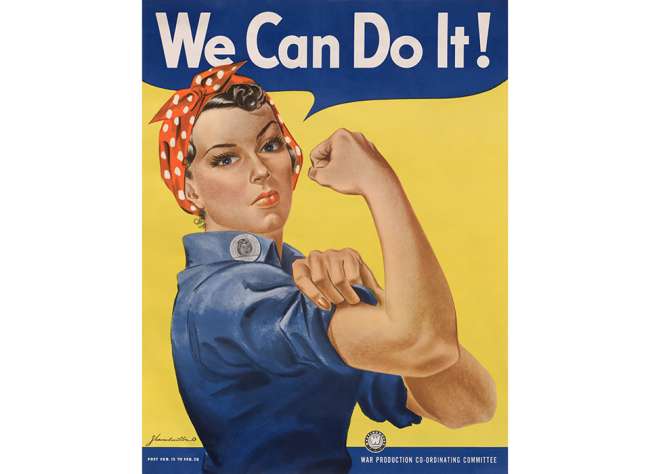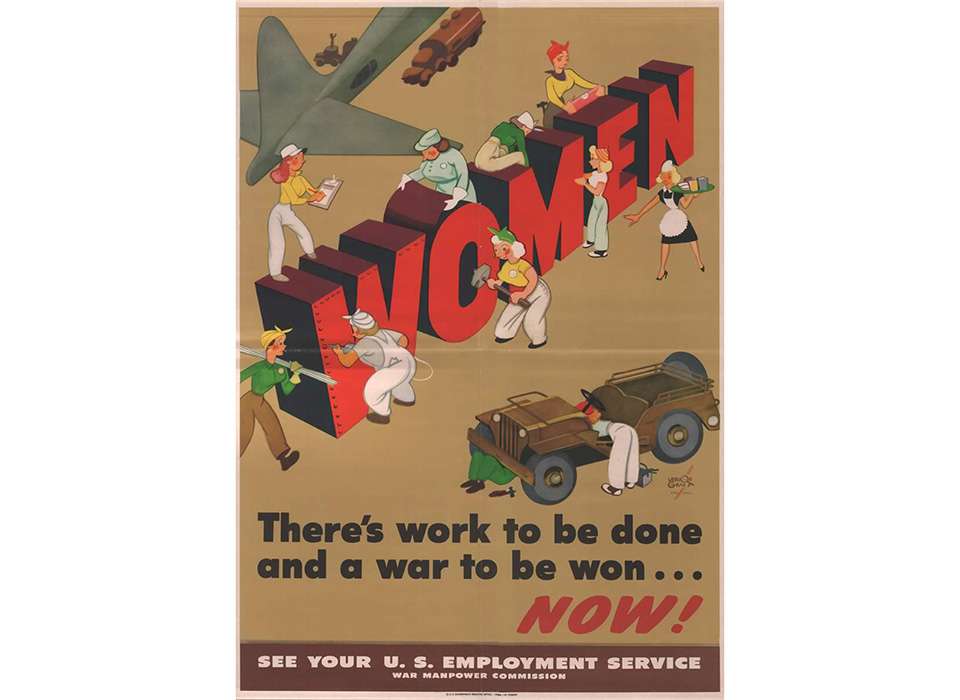
Top Photo: ‘Women: There's work to be done and a war to be won...Now!’: This propaganda poster created by the War Manpower Commission’s US Employment Service in 1944 shows different employment opportunities available for women during World War II.
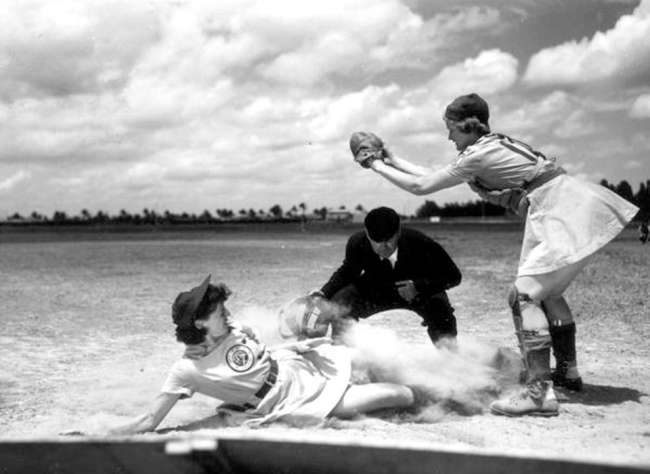
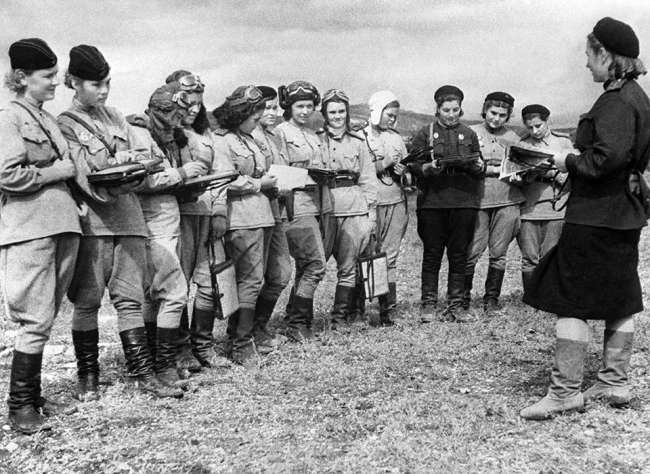
This month, we invite you to consider how the war that changed the world changed life for American women. From taking on expanded roles on the Home Front, to participating in the US Armed Forces, to technological advancements that impacted everyday tasks, life during and after World War II was significantly altered for American women—leading to dramatic economic and social change.
You may already know that by the end of World War II, an additional six million American women joined the workforce, totaling more than 19 million working women; an additional 350,000 served in the Armed Forces. However, a deeper analysis of the ways women were able to contribute across all sectors during the war can help students understand how women’s roles changed over the course of the 20th century.
Teachers can help students understand how the mandatory draft and the need for defense industry growth increased demand for employees—and how women were encouraged to fill this demand. Additionally, educators can highlight how the need for wartime participation paved the way for the integration of women into the Armed Forces.
Students can analyze primary sources such as pamphlets and flyers from the National Archives, Research Starters from The National WWII Museum, and propaganda posters like these from the University of North Texas to see how women were encouraged to work in the defense industries, join the military, or support the war effort through domestic initiatives like rationing and victory gardens as well as joining up for military service. Through this analysis, students can draw conclusions about the gender norms of the era as well as the critical and varied roles that women played in winning World War II.
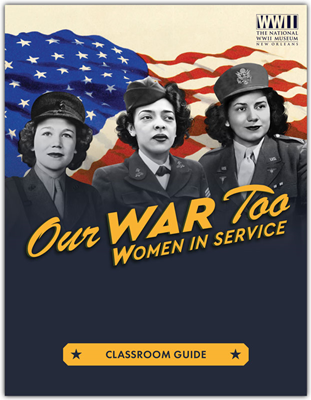
The National WWII Museum’s Curriculum Guide for teaching American Women's Experiences in World War II
Highlights from The National WWII Museum's Collection
In The National WWII Museum’s From the Collection video series, curators explore some of the amazing artifacts that are on display and in the archives at the Museum. This video highlights an original copy of the very first issue of Ms. Magazine from 1972, showing the iconic WWII-era comic book heroine Wonder Woman. Erin Clancey, Museum Associate Vice President of Exhibits and Collections, explains that Wonder Woman represents “a warrior for justice, armed with a golden lasso of truth, [who] fought Nazis and villains on the page, mirroring the real world efforts of women who supported the war effort and called for equality.” Students can draw conclusions about how the iconography and messaging that began in World War II may have served as an incubator for the ideology that was further explored during the women’s rights movements of the 1960s and 1970s.
A Closer Focus on Specific Topics
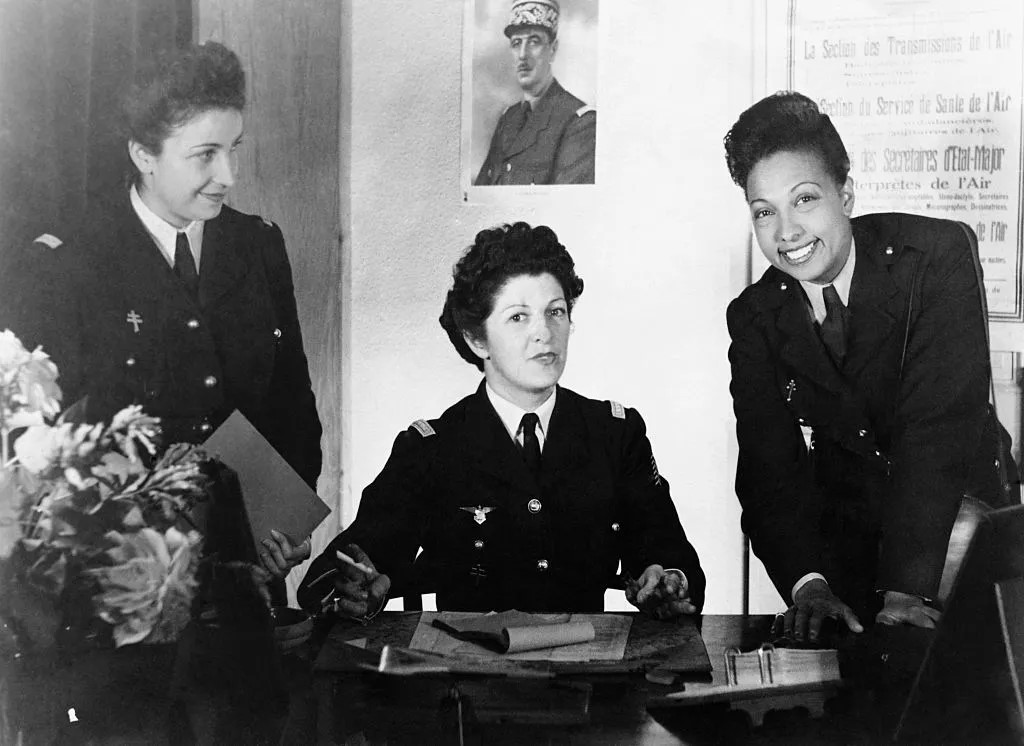
Josephine Baker (right) with Commander Alla Dumesnil (center) in Algiers in 1944. On May 23, 1944, American-born Baker officially enlisted in the women’s auxiliary of the Free French air force and became a Second Lieutenant. Office français d’information cinématographique (OFIC). Wikimedia Commons
- The Women Who Spied for Victory - Women were an important part of the intelligence services that helped the Allied powers win World War II. Often underestimated, able to operate behind the scenes, and skilled in speaking multiple languages, women were recruited to support both the British Special Operations Executive (SOE) as well as the American Office of Strategic Services (OSS). According to records from the CIA, “Of the 13,000 personnel that made up the OSS, more than 4,000 officers were women, and they created propaganda, interrogated German prisoners, decoded intelligence, stole secrets, provided analysis, and engaged in counterintelligence.” Some of these women, such as the entertainment icon Josephine Baker or the distinguished Virginia Hall, served in Europe as secret operatives. You can learn more about how women’s covert intelligence work helped organize supply drops, sabotage missions, disrupt rail lines, coordinate safe houses, and train resistance fighters in this webinar from The National WWII Museum’s Education Department.
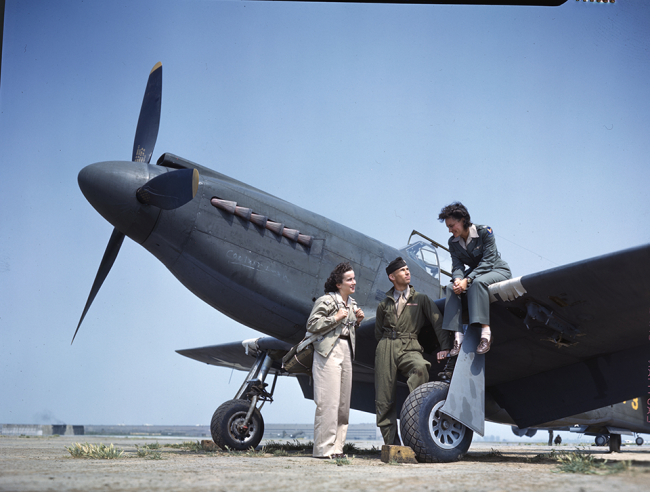
- Women Airforce Service Pilots - As early as the summer of 1941, female pilots Jacqueline Cochran and Nancy Love independently submitted proposals to the US Army Air Forces to create programs utilizing women pilots in noncombat missions. In this way, the Women Air Force Pilots (WASP) was created. In this article, you can read more about the nearly 1,100 women who tested, flew, and ferried 12,650 aircraft over 60 million miles as part of this civilian women pilots’ organization. You can also hear firsthand about the experience of flying in the WASPs through oral histories from pilots Jean McCreery, Geraldine Nyman, and Shirley Kruse. While the WASPs were not granted military veteran status until 1977, their service was indispensable and paved the way for future female aviators in the armed services. As First Lady Eleanor Roosevelt wrote in her September 1, 1942 My Day column, “We are in a war and we need to fight it with all our ability and every weapon possible. Women pilots, in this particular case, are a weapon waiting to be used.”
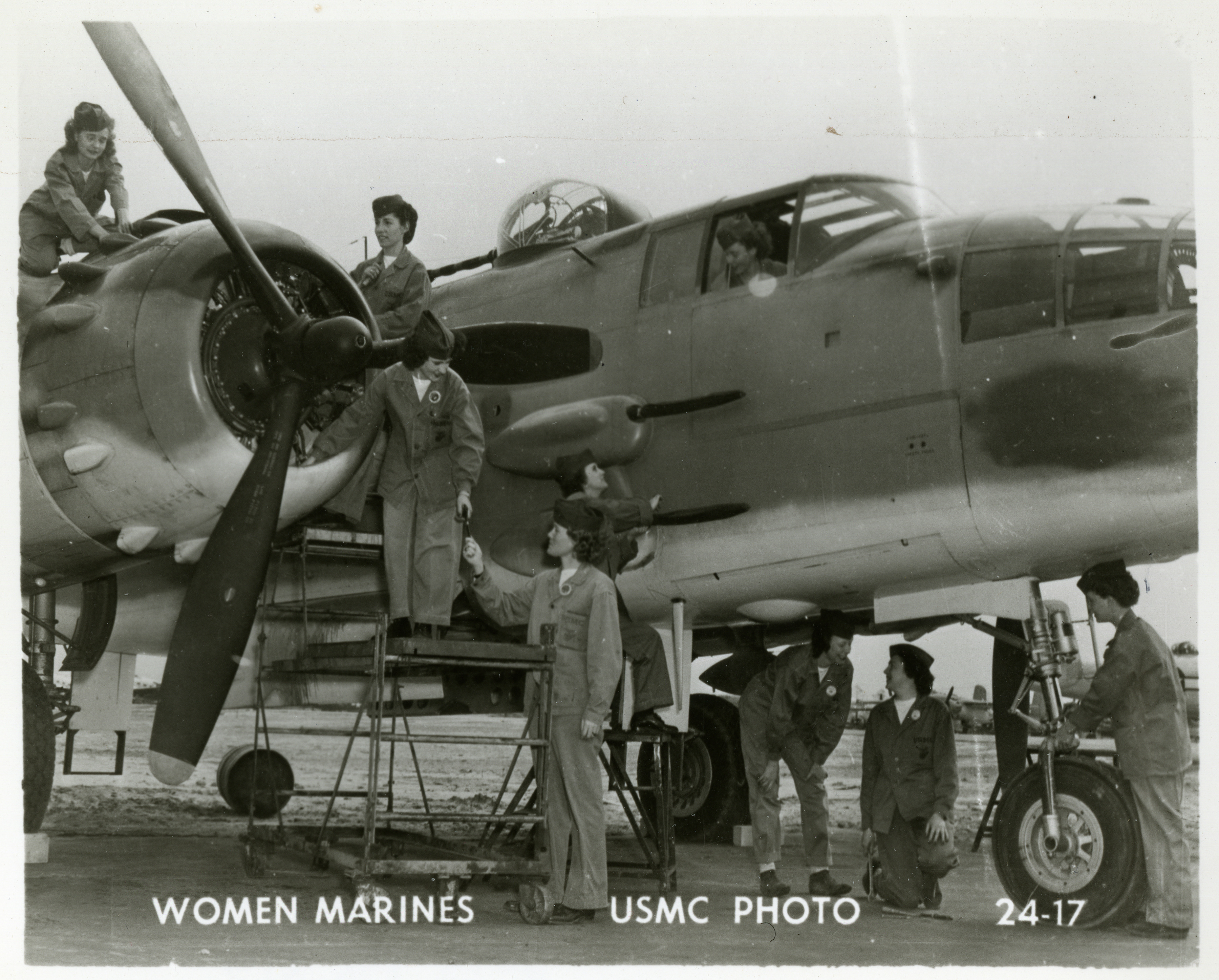
Members of the US Marine Corps Women's Reserve work on a B-25 Mitchell bomber outdoors. From the Collection of The National WWII Museum.
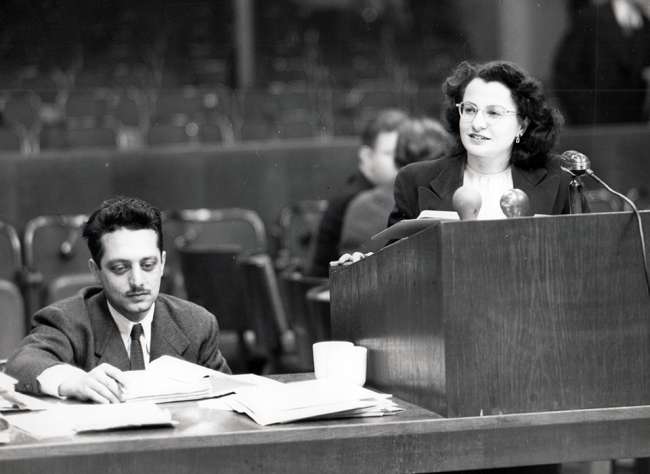
- The Women War Crimes Prosecutors - In this article by Museum Historian Haley Guepet, PhD, you can read about pioneering female attorneys like Katherine Fite, Harriet Zetterberg, and Cecilia Goetz who participated in the Nuremberg Trials as well as Belle Zeck, who prosecuted German chemical company I.G. Farben for developing the deadly gas used to kill prisoners in concentration camps. Teachers could combine this article with primary sources such as Fite’s detailed and compelling letters home, an excerpt from Goetz’s opening statement charging the Krupp Group with criminal responsibility in Nazi actions, or Zeck’s oral history from the Shoah Foundation. As Guepet writes, “though often marginalized in official and personal accounts, women lawyers at Nuremberg were essential to the trials’ legal and historical legacy. Their contributions demonstrate both the barriers these women faced in the American legal world of the 1940s and the intellectual labor they performed to help build modern international criminal law.”
Teaching and Learning Tips
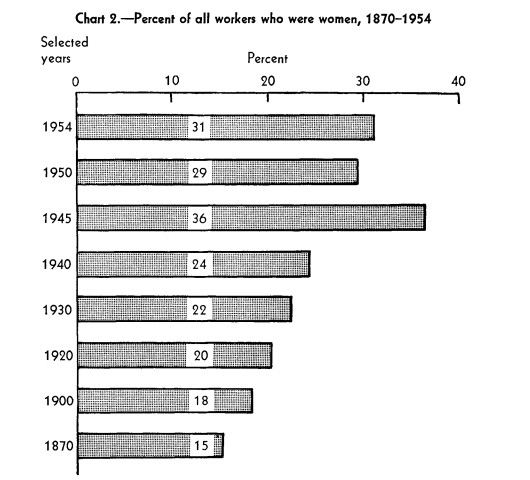
Graph taken from 1954 Handbook on Women Workers, courtesy of the US Department of Labor, Women’s Bureau
Social studies teachers know that their students will be more successful if they can interpret data—whether that’s through tables, charts, graphs, or other types of visualizations. Teaching how World War II impacted women is an excellent topic through which students can practice analyzing data because the changes women took part in are easily described with numbers. Examining the WWII-era labor force, education attainment rates, fertility data, and the boom in homeownership can help students understand how society changed as a whole and how conditions changed for women during World War II. Additionally, there are many websites and resources to help teachers use data in the classroom, such as the US Census Bureau’s resources on Women in the Workforce, the classroom resources from the US Bureau of Labor Statistics, or even this collection of data from the US Department of Labor that doubles as a primary source, entitled 1954 Handbook on Women Workers. Students of history need to develop the skills to analyze numbers, and by pairing this data with strategic questioning about what these numbers show and why they changed over time, students can draw important conclusions about how World War II impacted women.
Annie Preziosi
Annie Preziosi is the Curriculum Development Specialist at The National WWII Museum.
Cite this article:
MLA Citation:
APA Citation:
Chicago Style Citation: