
About the Episode
By December 1941, America is warned that an attack from Japan is likely, but Pearl Harbor is not precisely identified as the target.
In this episode, historians Nicholas Reynolds and Jeffrey Rogg join host Bradley W. Hart to study this critical time frame of the days leading up to Pearl Harbor, and why America was not aware of an imminent attack.
Topics Covered in This Episode
- Pearl Harbor
- Cryptography
- Captain Laurance Safford
- Admiral Husband E. Kimmel
- Franklin D. Roosevelt
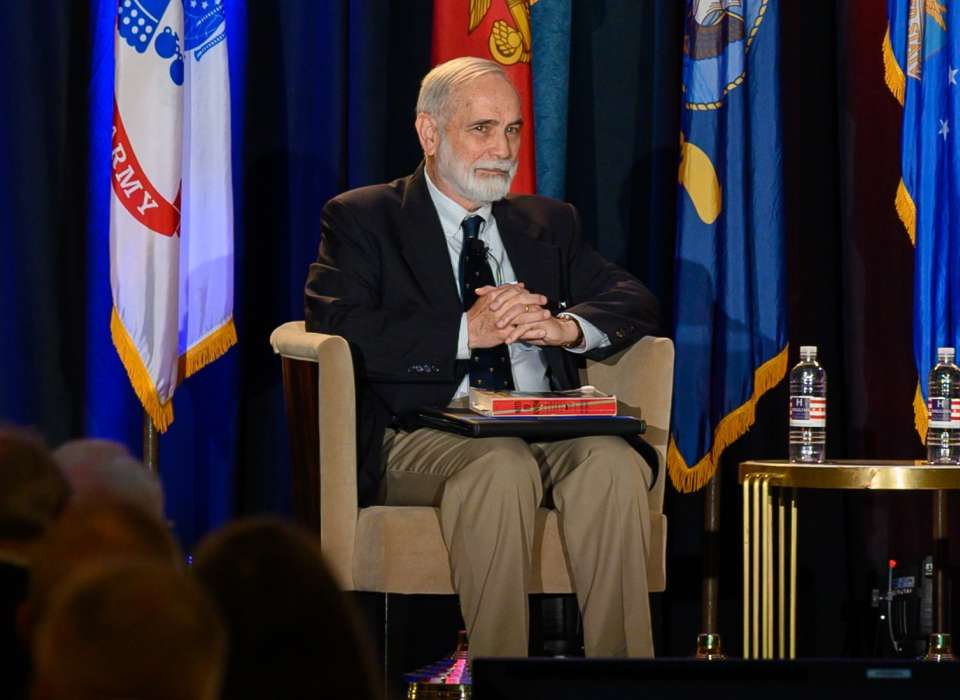
Nicholas Reynolds, PhD
Nicholas Reynolds is a US Marine Corps veteran, serving as an infantry officer and then as an official historian. As a Colonel in the Reserves, he was Officer in Charge of Field History, deploying historians around the world to capture history as it was being made. For many years, he worked at CIA, most recently as the historian for the CIA Museum. Reynolds has taught at the Naval War College, Johns Hopkins University, and the Osher Lifelong Learning Institute. He is the author of Need to Know: World War II and the Rise of American Intelligence.
Jeffrey Rogg, PhD, JD
Jeffrey Rogg is Senior Research Fellow at the Global and National Security Institute at the University of South Florida where he conducts policy-relevant research in the areas of intelligence, grand strategy, and national security. He is the author of The Spy and the State: The History of American Intelligence.

-
 Article Type
US Intelligence Failures at Pearl Harbor
Japan’s attack on Pearl Harbor was a shock to the Americans, but it was preceded by serious intelligence failures
-
Article Type
The Road to Pearl Harbor: The Long Fuse
Major events are often rooted deeply in the past—the “long fuse” that leads to explosions.
-
Article Type
The Road to Pearl Harbor: The Short Fuse
The attack on Pearl Harbor was decades in the making, but still came as a shock.
-

The Attack on Pearl Harbor | WWII IN 2
On December 7, 1941, Japan launched a surprise attack on Pearl Harbor, bringing the United States into World War II. John Curatola... -
Topic
Pearl Harbor Attack, December 7, 1941
The National WWII Museum commemorates the "date which will live in infamy" through articles, oral histories, artifacts, and more.
-
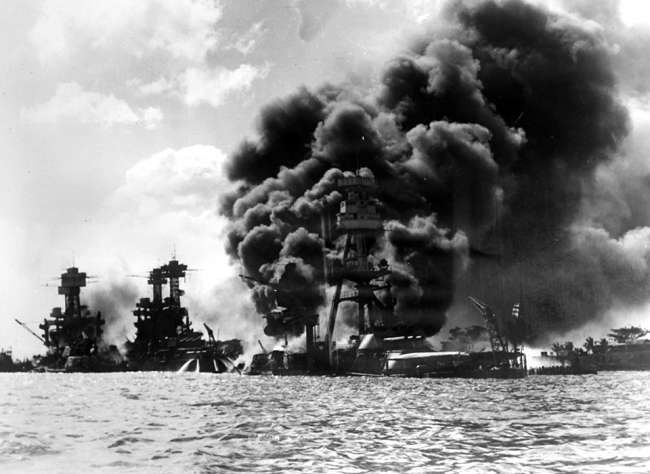
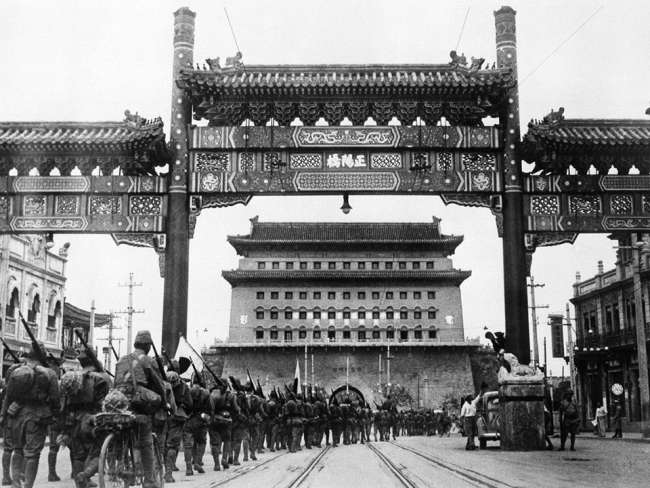
Special thanks to The Dale E. and Janice Davis Johnston Family for their generous support of this series.
Part 2: What Did America Know?
Bradley Hart
It's November 27th 1941. Urgent Army and Navy dispatches are sent to top commanders across the Pacific. Admiral Husband E. Kimmel and General Walter Short in Hawaii, and Admiral Thomas C. Hart and General Douglas MacArthur in the Philippines. The Navy warning reads, "This dispatch is to be considered a war warning. Negotiations with Japan looking towards stabilization of conditions in the Pacific have ceased and an aggressive move by Japan is expected within the next few days." The dispatch does not specifically say Pearl Harbor, and Kimmel appears skeptical that Pearl Harbor is the likely target. But Kimmel wants answers, and he urgently wants to know the location of Japan's naval forces. But what his team does not know is that the Japanese carrier strike force is already moving across the Pacific Ocean, and it's doing so in strict radio transmission silence. Joseph Rochefort, the Navy intelligence officer leading Station HYPO, a key US Naval communications, intelligence, and crypt analytic unit in Hawaii, was later asked about this critical period when more information reaching the right people might have changed the course of history. He said, "An intelligence officer has one task, one job, one mission. That is to tell his commander today what the Japanese are going to do tomorrow. If he doesn't do this, then he's failed. Therefore, we failed." Rochefort acknowledges the failure of American intelligence to predict Pearl Harbor and take some responsibility himself, but the verdict of history is less certain. In this podcast, which is made possible by the support of the Dale E and Janice Davis Johnson Family Foundation, I'm joined again by Nicholas Reynolds and Jeffrey Rogg. So as we get closer and closer to the attack on Pearl Harbor, there's an interesting background to what's going on in Hawaii in December of 1941. So Nick, take us through, first of all, the Japanese Purple Code and why it's important here.
Nick Reynolds
So this is a Japanese diplomatic code, and it is the code that the US government has focused on, or partly it's just how the cookie crumbled. It's how events developed, reading Japanese traffic in Washington. Yardley's reading it. When Yardley's fired, William F. Friedman, the great army code breaker, gets a truck, goes to New York, and takes his files, right. Load them on a truck, take them to Washington, put them in Army headquarters, which by the way, are on the National Mall between the Lincoln and Washington monuments.
Bradley Hart
The temporary buildings over there.
Nick Reynolds
The so-called temporary buildings, big ugly buildings, three, four stories, high in a couple of cluttered rooms, that's where the army code breakers work. So Friedman develops talent for, or he continues Yardley's tradition as it were. And he hires remarkable people. There's a couple of great stories there. One of them is a man named Rowlett, and he's local actually, he's a Virginian, and Rowlett is a guy who, again, has cipher brains, he has an instinctive feeling for this, and then there's people like Gene Grotjan. I think Grotjan is the right pronunciation. And she's a statistician. And she was hired, took a federal employment exam, and was hired for like the Railroad Pension Board, something like that. And Friedman went around looking at people who got unusually high scores on that entrance exam. And he finds her, and she's another person who just has this amazing skill for code breaking. And she is one of the ones... She's often credited as the one to make the first big inroad into this Japanese diplomatic cipher in the summer of 1940. First, they make an inroad, right? You figure out that XF always means Tokyo, something like that. And so then you put that in as a wedge and then, you know, it spreads until eventually, they figure out the whole system. And they're doing this mostly with paper and pencil, right? So they hand you a yellow pad, they hand you a pencil, you sit at your desk all day, and after months and months of work, I believe 18, 20 months is what it took to get to that point.
Bradley Hart
Special kinds of people do this work.
Nick Reynolds
Special kinds of people. Give them, you know, double rations. And then this guy Rowlett, who is, you know, not quite at the top, he's at the top of his profession in terms of skill, but he's not managing very much at this point. And Rowlett says, "Let me see if I can reverse engineer the machine that created this." And when does he do this? Where does he do this? He does it in his spare time at his house, right? It's like, you know, "Honey, I'm going down to the basement for a few hours."
Bradley Hart
To build a Japanese encryption machine.
Nick Reynolds
Yeah, right, and so they reverse engineer it. It's ugly, it makes noises, sparks fly, but they can go both ways. They can take encrypted Japanese text, put it in and get plain, and the other way around, just a phenomenal achievement. So this is what we have in the run-up to the war, and this is... You know, we talked a little bit about this being the greatest achievement of American intelligence to date, which I think is fair. Though you might take a footnote and say the greatest American crypt analytic achievement up to that point.
Jeff Rogg
I'd like to use what Nick said, the history there to zoom out and then zoom in. So zooming out, what's important is, again, the differences between the Japanese government at the time and the American government. So again, the focus is diplomacy there, right? The US is interested in the Japanese diplomatic codes. Why? Because FDR, Cordell Hull, the Secretary of State, Stimson, Knox, this is the cabinet level officials, they're still in this diplomatic mindset with the Japanese. We're gonna negotiate with them. So what do you need? You need Japanese diplomatic traffic.
Bradley Hart
Well, it's the assumption as well that if there's going to be a war, they would tell their diplomats.
Jeff Rogg
You'd think so. So this is what the Japanese mindset, what the government's doing is different. We talked about the militarism in Japan. So the Japanese military is doing the opposite thing from the United States. They're planning for this war with Yamamoto. They're planning for this major strike and they're cutting off completely the civilian elements of the government plus the diplomats. They don't know what's going on with this planning. They don't know it's the plan even. And until the very end, you know, Hirohito, the emperor, he has to approve it, and he approves the strike on Pearl Harbor in November 1941. But the Japanese military kept this heavily compartmentalized. And so even with the American ambassador, Joe Grew, he said in November 1941, "Even if war is imminent, I can't give you any warning." Now, on the American side, we're still trying to negotiate till the last minute. So we have the opposite problem. We have the cabinet officials in FDR and DC, and they're not really giving Short and Kimmel and Pearl Harbor a lot to go off of on the status of the negotiations with Japan. Is war imminent or not? This becomes a problem. But zooming in then, look at what the Navy and Army cryptographers were contending with. The Cipher Bureau leaves this big gaping hole in American cryptology, which is diplomatic traffic. So who's gonna do it? Well, we have the Army and you have the Navy. We have the Signal Corps, the Signal Intelligence Service, and we have OP-20-G, the Navy. You guys are gonna do it. Well, they look at each other and it's kind of like the Spider-Man meme, you know, that a lot of the listeners might know where all the Spider-Mans are pointing at each other. So what's the solution? It's the most bureaucratic solution you can come up with in American history called the Odd-Even Day Agreement. The Army is going to decipher Japanese diplomatic traffic on even days and the Navy's gonna do it on odd days. And do you think they actually shared a lot of it with each other? You know, when you look at all the different divisions, the different mindset between the Japanese government and the American government, the Japanese government and the civilians, the American government between the civilian policymakers and the military, and then within the US military, between the Navy cryptographers and the Army cryptographers, you know, you can see how a lot of things can slip through the cracks.
Bradley Hart
So Jeff, let me ask you. I mean, I think this is an important point because I'm sure all of our listeners and most Americans are familiar with the story of Pearl Harbor, right? When did the Japanese actually decide on this plan of attack? When is this actually decided and when does the fleet sail?
Jeff Rogg
The lead up to Pearl Harbor, again, is fascinating in what a good job the Japanese did of planning it in secret and Yamamoto. The way they executed the mission was brilliant from an intelligence standpoint. You know, Nick had already mentioned, we didn't have human espionage, just the US government didn't have human espionage at the time.
Bradley Hart
So there's no human intelligence at all.
Jeff Rogg
There's no human intelligence. Now, apparently, now, there was a very good Soviet spy named Richard Sorge in Japan, and there's a, you know, kind of this conspiracy theory that Sorge and his sources knew about Pearl Harbor and they told Stalin, but Stalin kept it from FDR. Hearsay, that's hearsay. The Japanese, aside from doing a good job of containing the plan within their own government, they also kept whatever foreigners, you know, whatever diplomats were there, they weren't privy to it. Interestingly, Joseph Grew sent a cable in January 1941. That's important because that's when Yamamoto actually starts planning the attack. And in this cable, he claims that the Peruvian ambassador told him that the Japanese were working on a plot to attack Pearl Harbor. Again, January 1941.
Bradley Hart
So 12 months before the attack.
Jeff Rogg
So you'd think, based on that information and it went to the Navy, you'd think that we would have enough time to really spin our intelligence towards finding out if this was true or not. But again, it's hearsay, and this is only when Yamamoto starts planning it. So as the plan evolves, you know, we mentioned how this is mind-blowing to think that you're gonna send all these ships full of planes, 3,000 miles across the ocean, but there's also a technical problem with it, which is how are you going to destroy ships in a shallow anchorage? How do you do it? Dive bombers and torpedo bombers. The problem was there wasn't a shallow-running torpedo at the time. The Japanese had evolved a torpedo, it was called the J91. They started development in the early '30s, but it was only by August or September 1941 where they had finally figured out the technology to make it run at the depth that you could use it at Pearl Harbor. So in other words, not only is the concept evolving very quickly, but so is the technology to actually execute it. And the missing piece here again is, all right, we think there might be an attack. What other information did we have or could we have? Well, the Japanese weren't dumb. And so one of the most clever deception operations they did involving Pearl was they had their fleet before they sailed out in November 1941. They had the Kido Butai use the existing codes at the time and use their telegraphers. American listeners are listening, and so this is where the CAST-HYPO agreement and disagreement-
Bradley Hart
Because the Japanese know that we've broken their codes.
Jeff Rogg
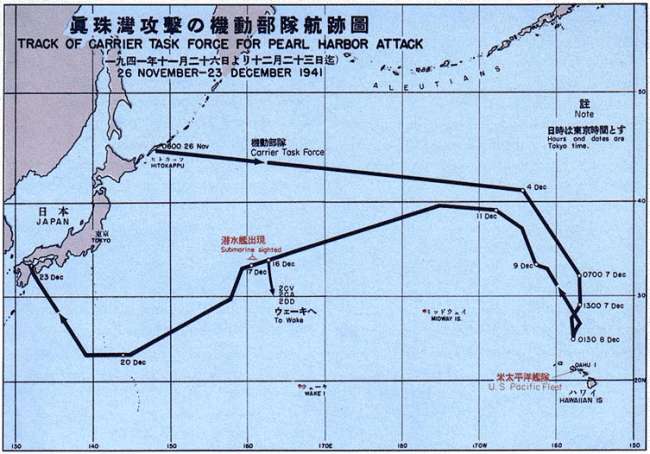
They don't know it, they probably suspected or are worried enough about it that they have to both deceive us and be very careful with their operational security. So the deception plan goes like this. They allow their ships, their main carriers, to send messages, and we know they're sending messages and they're sending them from Japanese home waters. They keep telegraphers. They disembark them from these ships and they have them continue to send messages because telegraphers have something, it's called a fist, it's a signature. It's how fast they type, the way they type. And our code breakers are so good, they can say that person's still in Japanese home waters. And so both CAST and HYPO think that the main carriers are still in Japanese home waters ahead of Pearl Harbor. Now, they disagreed because they knew that Japanese light carriers and submarines had been on the move, but CAST thinks that the submarines, they're gonna attack Pearl as well, are still in Japanese home waters, but HYPO thinks they're in the Marshall Islands. So DC gets this and they go, "OP-20-G goes with CAST," 'cause they say you're closer, you probably have better information. The other thing that the Kido Butai does is Yamamoto insists on total operational security. They are only allowed to communicate using signals that they can see, either lamps or flags. And so when they steam off for Pearl Harbor in November '41, Hirohito hears the plan at an imperial conference in November 3rd 1941, and approves it. And then the actual go for the attack is given in December 1941, December 1st. Yes, it's a go, negotiations were breaking down. We didn't know where they were, and just to put an exclamation mark on this, even on December 6th 1941 and December 7th, ONI, the Office of Naval Intelligence, was still estimating that the Japanese main fleet was in home waters and CAST, the listening post in the Philippines on December 6th and what might have been December 7th, the morning of, still said that the Akagi, which is one of the ships that attacked Pearl, was still in Japanese home waters.
Bradley Hart
So Jeff, I mean, we use the term Kido Butai, which is the sort of nomenclature, really, for this task force, but how big is this fleet? How big is the Japanese fleet?
Jeff Rogg
The main part of it is the carriers. Six carriers, which are... I mean, this is your one shot, basically, because you don't have any carriers left after this. But it also includes escorts. One of the biggest things is the resupply ships. You know, you're running on... It's kind of like when you do a long road trip. You know, imagine if a place says, you know, last stop for gas for however many miles. Are you gonna be able to get there? The Japanese weren't sure. They actually thought they might have had to leave ships at anchorage, basically, off Pearl. And so, you know, the logistical strain on the Japanese fleet is tremendous. And this is why in terms of the decision to execute the attack, once it's decided, you can't go back, there is no going back. You know, you can't turn around, you can't just leave the ships in the water and let them loiter there for a couple days, you know, you have to attack. And so this is the main Japanese fleet. There's submarines along with them, escorts, they're all adhering to strict silence. You know, in terms of military history and, you know, not just intelligence failure, you know, it's one of the most remarkably well-planned surprise attacks in history.
Bradley Hart
So Nick, I mean, I wanna go back to this question of intelligence failure. How big of a failure is... Was this detectable? Could the US have detected this attack before it took place?
Nick Reynolds
I think the short answer is only it was unlikely that the US was going to detect it. We would've had to get very lucky, we would've had to do things that we weren't doing. You know, how would you detect it? We've talked about codes, right? We've talked about analyzing codes. There was no coded message that we intercepted that said, "Hey, they're gonna hit Pearl Harbor or Hawaii." There was no... We just talked about analysis. The analysis was all cutting in a different direction. And then the last thing was, even if you had those two things, you've still got to have the last thing, which is the commander who is receptive and is gonna go, "Oh, got it. Okay, I'm gonna act accordingly." In this case, if you had told Admiral Kimmel, "Six Japanese carriers are steaming north of Oahu, getting ready to launch an air attack on Pearl Harbor." He would have said, "You're out of your mind." You know, there are a couple of quotes. I believe it was Admiral Pye who was one of the admirals at Pearl Harbor, just out of the question, no chance. He's war plans officer, his nickname was Socrates, they called him Soc McCollum 'cause he was so smart. He said, "Never happened. Just never happened." You know, contrafactual is difficult. You know, the only things I can think of are what if you had patrolled more aggressively, right? Especially you have submarines, you could put submarines out. You could have put aircraft out flying. How long and how aggressively are you gonna do this, you know?
Bradley Hart
Well, even if you find the Japanese fleet, I mean, you're not at war with Japan.
Nick Reynolds
You're not at war with Japan, so what you do is you report it, and then there's another conversation, you know? What are you gonna do about it? Yamamoto had given the order that, "If discovered, we go back." It has to be a surprise attack. But, of course, we don't know that, right? We don't know that Yamamoto has made that decision. You raise a great issue, and, you know, I don't have a great answer.
Jeff Rogg
You know what's fascinating about that counterfactual and Yamamoto saying, you know, "If we're discovered, we go back." So from the US perspective, the orders, the standing orders, basically, coming through the Department of War, through the Department of the Navy to Kimmel and to Short respectively, was not to provoke an attack.
Bradley Hart
Right.
Jeff Rogg
On November 27th, both Kimmel and Short receive different messages from their respective departments, the CNO, Harold Stark to Kimmel, and George C. Marshall to Short, the Army. And so for Kimmel, the message is essentially this. And this goes to a larger point about what we knew or what we didn't know. War was looking imminent, but not necessarily an attack. So that's the question of imminence is by late November, talks were breaking down. Cordell Hull since, basically, a démarche to the Japanese saying, "Get out of Indochina." They had invaded French Indochina in 1940, and get out of China. And the Japanese weren't gonna do either, so we reached cross purposes. War itself is looking imminent. But if you look at the Second World War, the European front, the French and the British declare war in Germany in September 1939 and nothing happens till the Germans invade in May 1940, France. So just because war is imminent doesn't mean an attack is imminent. And FDR, this goes, again, to the very... Stimson, basically saying, "Don't do anything to provoke the Japanese to Marshall." Well, you're giving difficult orders to your theater commanders, Short and Kimmel. On the one hand, Kimmel's told on November 27th, "We need to be prepared for war. We're gonna have to defend East Asia from the Japanese. And in order to do that, we need to prepare to go on the offensive." So in other words, for the disposition of Navy ships at Pearl, and, you know, we've talked about this and fair minds can disagree about what you do if you're a commander. If you're being told you need to get the fleet ready to sail across the Pacific Ocean, and I had a boat, I fished, I know what saltwater does to a boat, you need to make sure your maintenance is in order. So you're probably not gonna have your ships spread all over the Hawaiian islands. You're gonna have them at anchorage. You're gonna be getting ready to go on the offensive across the Pacific. Short gets a different order from Marshall and it says, "We need to be prepared for war." And basically, I guess the easiest way to say this from like a rules of engagement standpoint is do not fire unless fired upon. They call it the go/no-go, because basically, what Short's reading here is, "Okay, so I need to be prepared for a war, but I don't wanna be provocative, I don't wanna cause hysteria among the civilians on Pearl Harbor." He had already been given a stand to order by Marshall in 1940 on alert, a full alert, and the army didn't wanna be the boy who cried wolf. And so Short looks at this message and says, "Well, I don't know what you want me to really do here because you're saying get ready, but don't alert anyone." And so his response, which actually is reasonable at the time, is his big fear wasn't an all out Japanese attack. What they feared would kick things off is that the Japanese would sabotage, sabotage American planes and naval ships at Pearl Harbor. So he prepares Pearl for sabotage, and one of the things he does, I already mentioned how Kimmel brought, you know, had the ships together in Battleship Row. Well, Short orders the airplanes to be parked next to each other on the surface because that's an easier way to defend from sabotage, but it's a very bad way to defend from an air attack.
Bradley Hart
Let's go back to Washington DC, Nick. What does FDR know about any of this? What's the president being told?
Nick Reynolds
So FDR is a kind of leader who likes to get his information from people who he is familiar with, people he has dealt with, people who are in his social circle, people who ideally have gone to Harvard. He wants Bradley to come in and tell him, you know, "Close the door, they're gonna have a chat, a confidential chat about what's going on." He is not... The reason I say this is to make the point that he's not the kind of guy who is waiting for finished intelligence analysis to be presented to him by a briefer from an intelligence agency. In any case, that product doesn't exist in those days, and what they get is raw intelligence. Navy or Army decides that this or that message that they have decrypted is important enough to present to the president. And they do it on alternate days, just as, you know, it's a whole package. You do the whole thing from soup to nuts, and that includes briefing the president. And he's briefed while he's in bed, he's also briefed while he's having his sinuses packed. Imagine that. He has terrible sinus problems that are aggravated by smoking chest busters, cigarettes, and so the doctor comes in and they push gauze up his nose, and over there, there's a briefer reading, "By the way, Mr. President, the Japanese ambassador today received this note or that note." More likely that what sinks in is something that the Secretary of State might call him, he's a pretty good consumer of this intelligence, might call the president up, have one of these chats and say, "You know, "Mr. President, I think we're going to war with Japan. These are the indications I get. This is how the negotiations are going." One of the briefers says at one point early in December, brief Japanese message that says, "Destroy your communications equipment. Destroy the secret transmission gear." That's really a telltale sign that you're getting ready for war.
Bradley Hart
Only one reason you would do that.
Nick Reynolds
Oh, yeah, you don't do that because you're, you know, gonna go to Best Buy and get the new one. You do that because you don't want anyone else to get it and you don't want it to fall into enemy hands and you're getting ready to get a new enemy. And the briefer says something like, "Mr. President, you know, I wanna draw your attention to this particular fact here, and it might mean war, sir." And the president says, "Oh, really? Do you think that'll happen soon?" "Could happen any time, sir." You know, this is Roosevelt's strength and his weakness. You know, he's supremely confident, in charge of situations, great at dealing with people, but on the other hand, you kind of wish he had gone into crisis mode a little bit.
Bradley Hart
So Jeff, let me ask you. I mean, so there certainly is a transmit or a cable that is sent to the Japanese ambassador in DC, but before we get to that, what are these negotiations even about? Why is the US negotiating with Japan so heavily in 1941?
Jeff Rogg
Well, this goes to, you know, the arc of the history between the two countries and, you know, the tragedy of American thinking that they were gonna be, again, a junior, but still roughly allied partner in East Asia. And Japan's turn towards militarism, you know, we talked about the invasion, both of Manchuria and then China, '31 and '37, then they invade French into China. They announce the Greater East Asian Co-Prosperity Sphere, which from the Japanese side is just code for this is gonna be our empire in East Asia. And so if you're the US, you're looking at this and this is precisely the outcome you wanted to avoid. The whole goal of the US was to keep East Asia open, freedom of navigation, freedom of trade. Japan instead is looking at it as this is gonna be our empire.
Bradley Hart
As the opposite.
Jeff Rogg
The exact opposite. You know, from a negotiation standpoint, what we had settled on, what the American policymakers had settled on was we wanted to see, I guess a show of good faith you might call it, is that the Japanese start to withdraw their forces from Indochina and China. That was our negotiating position.
Bradley Hart
Which is not gonna happen.
Jeff Rogg
Well, that's the problem. The Japanese said, "Kick rocks, no, it's not gonna happen." The interesting thing about how these negotiations, you know, fall apart is each side sort of knew what the other's negotiation position was and each side wasn't gonna accept it. But we had that major, major card, which is in 1940, we start to slowly turn off the spigot to Japanese oil. And then in '41, which we embark with them completely. And that's where, from the Japanese perspective, that's an act of war from their side because they won't be able to... The country cannot function without oil. You know, they have no industrial capacity estimates. I believe the Japanese estimates before the war was that we had 500 times the oil, I mean, this is just rough, and 70 times the industrial capacity. So they knew they were very much at a disadvantage compared to the United States. It's a sad mark on the history. Cordell Hull sends a note in late November, and this is when negotiations are breaking down rapidly. And the way the Japanese view it is, it's an ultimatum. And so that's when after they receive that, which is again, you know, withdrawal from Indochina and China, that's when things break down rapidly. Within days of that, that's when the Haruna message is sent. Haruna is the order to burn your code books. By the way, someone who received that message that the Japanese were burning their code books was Kimmel in Pearl Harbor who did not share it with Short. And Short says after the fact, had he known that they were burning their code books, he would've taken different measures. Whether you believe him or not, again, this is after Pearl Harbor happens, different story, but even on December 6th, FDR sends a missive, a personal missive to Hirohito, asking him to continue to negotiate. And unfortunately, that same day on December 6th, the Japanese, we intercepted a Japanese cable to their diplomats in DC with a 14-point response to the Hull note. And we decoded the first 13 points on the evening of December 6th. We only decoded the 14th point on the morning of December 7th. And that 14th point was important. Because in popular memory, listeners might read different things about it, what we say the 14th point was, was a declaration of war. It wasn't. And others will say it was a declaration of Japan breaking off diplomatic negotiate... Breaking off diplomatic relations with the United States. It was not that either. What the 14th point said is basically, "We're sorry, but we don't think there's any point to negotiating any further." The reason why that's important is the Japanese had done that before. And Theodore Wilkinson, who is the Director of Naval Intelligence, when he sees it, his response is, "Well, that's unfortunate, but, you know, it doesn't necessarily mean catastrophe."
Bradley Hart
It could be a negotiating tactic.
Jeff Rogg
It could be a negotiating tactic. George C. Marshall is riding his horse when the message is received, the 14th point. So he comes back to the office and he gets this message and instead of picking up his scrambler phone, this is important, he telegraphs Pearl Harbor and Short and says, "We received this." And retrospectively, he is fiercely confronted with this in hearings in Congress, "Why didn't you immediately use your scrambler phone?" And what Marshall says is, "Well, two things. One, I didn't want to alert the Japanese to the fact that we were breaking their code. And two, I didn't wanna provoke anything." And these are the standing orders that he got. And one more interesting point on how that evolved during the hearing, George C. Marshall is known for being very stoic and, you know, that was his model. He's confronted by Frank Keefe, who's a Republican senator, and you can actually see George C. Marshall losing his temper about this particular instance because he's basically being told, you know, "Why didn't you act more on these cables that we're intercepting?" And his response is the following. He says, "I'm not a bookkeeping machine. And if I had to read every message that was sent to the War Department, I would no longer be the chief of staff." When you look at all the messages that FDR is getting, that cabinet officials are getting that they're not sending back to Pearl Harbor, you know, you can see how there was just a communications breakdown.
Bradley Hart
So we're at the morning of December 7th 1941, the date which we'll live in infamy, as FDR famously says. I wanna ask you both though, as we sort of wrap up before we get to the attack itself, foreseeable, not foreseeable?
Nick Reynolds
I think not foreseeable. I'm gonna stick with my previous answer, which was we don't have the specific intelligence, we don't have the analysis, and we don't have the right mindset in the commanders who are on the spot. So this raises a question that occurred to me while listening to Jeff a moment ago. So Short and Kimmel say, "But you didn't tell us. You didn't give us enough information. It wasn't perfect information, but there was still good enough information that might have changed our dispositions. General, Admiral, just what would you have done, sir?" If I were the, you know, the historian who was lucky enough to have an interview with them, I'd say, "Sir, so we give you information, say the Japanese are on the move and they might be coming this way, they might not be coming... What are you gonna do?" And I don't think either of them had a good answer.
Jeff Rogg
Agreed with Nick, and it's important, you know, to go back to the premise behind your question, which is that for 85 years, there's been a conspiracy theory that FDR knew about the attack, or if not FDR, FDR plus Marshall plus a few others. The origin of this conspiracy theory, if I could probably locate it with one person, was John T. Flynn, who was a America First Committee leader. He was an opponent of FDR, so, you know, he has his bias. And he writes a pamphlet in 1944, the war's still on. And he, basically, lays out the case for, you know, as Nick laid about the opposite case, why we should have been prepared or why FDR should have known. But that's the important piece. You know, he lays out a lot of the evidence. But then he says something at the very end that, you know, if you study intelligence or if you're an intelligence officer like Nick, it instantly like lights up in your head. He says on the basis of his case that he lays out, FDR, and he's kind of derogatory, he says like the three old men in his cabinet knew everything. They had everything but the time and place of the attack.
Bradley Hart
Those are pretty big pieces of information to have.
Jeff Rogg
All of us are looking at each other because we're like, "In intelligence, that is everything." It is called actionable intelligence. And if you go to a policymaker, if you wake up George C. Marshall or get him off his horse when he's riding his horse, if you wake up FDR and you say, "Sir, you need to see this." There's gonna be something huge. They're gonna say, "Where and when?" And you're gonna say, "Well, I don't know." Again, there was no actionable intelligence, and so what we have to go off is what did we know? What was there available to the best of our knowledge? The answer to that is we know that everyone thought that if there was gonna be an attack, when there was gonna be an attack, it was gonna start in East Asia, so not at Pearl Harbor. And sure enough, like we talked about, there was an attack, it was just the next day in the Philippines on December 8th.
Bradley Hart
But I think you've alluded to an important point, which is that this was almost unfathomable in the sense of two simultaneous attacks, right? Almost simultaneous, right? So Nick, tell me, you know, again, is this a failure of imagination or that the Japanese have done something that no one really can conceive of?
Nick Reynolds
Yes, so the Japanese have overachieved, really, not only have they put together six... Coordinated the operations of six aircraft carriers, but they've also got two or three prongs, right? So there's two prongs steaming towards Pearl Harbor and then they come together in the attack, and then there's one going towards the Philippines, then there's their air forces out of Formosa who bombed the Philippines. They're really on a frontier here, on a military frontier.
Bradley Hart
So there are a few warnings, if you will, about what's going to happen at Pearl Harbor. Not as specific, of course, as anyone would have wanted. One of them is Grew's letter, Ambassador Grew, who writes and says, "There may be an attack. I can't tell you when, I won't have time to give you any more specifics than that," basically, but there's also what's known as the East Wind, Rain Transmission. So Nick, tell us about the East Wind, Rain Transmission.
Nick Reynolds
So the East Wind, Rain Transmission is a Japanese message intercepted in November 1941.
Bradley Hart
Which is ostensibly a weather report.
Nick Reynolds
Ostensibly a weather report, but the idea is this is gonna be a code, a code transmitted in the clear. So East Wind, Rain will be the Japanese words for East Wind, Rain, and that will mean war with the United States. And then there are other weather combinations, which would mean war with Great Britain attack on Indochina or whatever. After the war, Laurance Safford, the counterpart of William F. Friedman in Washington, sort of the father of modern navy crypt analysts, crypt analysis says, "Hey, we intercepted just before Pearl Harbor, we intercepted East Wind, Rain." So we knew that it was gonna be war with America. Well, commander or maybe captain by that point, the problem with that is, according to the NSA historians who've studied this very precisely, is nobody could ever find it, right? Nobody could ever find that message intercepted just before Pearl Harbor. And the other problem was Safford was a conspiracy theorist who didn't like Roosevelt, and so his story kept changing. It was slightly different every time they pressed him on a point and they said, "Give us the evidence." And in the end, he admitted that some of the testimony that he gave, he used some specific words that he said he saw in that message, they were not from a message in December, but from the original message in November. So one of the things I like to say is that we have to remember these guys are not really intelligence officers, they are crypt analysis, crypt analysts. I'm a little annoyed with Safford for doing this. You know, you think living in that world, he should know better. And it's hard not to make a determination that this was not a professional act on his part, but sort of revealing his political attitudes and his dislike for the Roosevelt administration.
Bradley Hart
But even if you had understood what that message, I mean, if you can read the message, what does it mean?
Nick Reynolds
Well, yeah, so it means war with the United States, but how does that change things? It's like, well, that's one of the themes running through this conversation is, so you know war with Japan's coming, but you still don't know it's Pearl Harbor on Sunday morning, December 7th. He's the most extreme of the guys of the characters after the war who kind of... The characters that we've been talking about. Joe Rochefort and Eddie Layton are kind... You know, they're trending in the same direction, but they're not as extreme as Safford here.
Jeff Rogg
There's a piece of this, it's literally a piece of it, the missing piece, I guess we'll call it with the East Wind, Rain message in the hearings after then the joint committee's investigation. You know, they're assembling evidence, and so this is, I think, you know, where part of this emerges, the East Wind, Rain message. And one of the arguments of the Republicans, you know, it's a bipartisan commission, which means it's really a partisan commission, they say that the Democrats are hiding the crypt analysts from them and they're hiding evidence from them. Well, consequently, apparently, the East Wind, Rain message, I guess the decrypted message or something, is something like assigned numbers 7,000, but it's missing from the record. So in other words, you know, you look at your files when you're pulling your evidence and we have like code 6999 decrypt and then code 7001 decrypt. Well, the East Wind, Rain message is missing, and so this adds to the, you know, conspiracy-
Bradley Hart
The mystique.
Jeff Rogg
Yeah, and the mystique. But, you know, to Nick's larger point is, okay, even if we had it, we had enough other information about the imminence of war. None of it... East Wind, Rain, that's not actionable intelligence. And I think there's something we need to underline too for the conspiracy theory, that's so pervasive. What we've established, aside from the difficulty, you know, the sophistication of the Japanese attack, not just the failure of imagination, but, you know, American naval culture wasn't ready for it, American military culture wasn't ready for it. FDR, George C. Marshall, Admiral Stark, and cabinet level secretaries like Stimson and Cordell Hull, they're not sitting there, as Nick said, pulling all the information together themselves, they're being fed information. So if someone, if anyone would've known about this attack ahead of time, it wasn't gonna be FDR at the top, it was gonna be a cryptographer at HYPO or a cryptographer at CAST. And again, my response to this idea that American leaders knew about the attack and didn't stop it is the people who would've figured it out were the people who were literally attacked at Pearl Harbor and the Philippines the next day. Meaning, how on earth would those people have known about the attack and allowed their officers or allowed their friends, their family, their fellow service members to sit there and get killed the very next day? Because in order to believe the theory that FDR knew about it, you have to know that someone else down the pipeline would've known about it themselves. It defies belief and the history isn't there to show it.
Nick Reynolds
So you said an interesting thing a little earlier off camera, and that was that Roosevelt had been present at the commissioning of the Pennsylvania.
Jeff Rogg
Arizona.
Nick Reynolds
Arizona, sorry.
Jeff Rogg
Yes, in-
Nick Reynolds
Arizona.
Bradley Hart
When he's undersecretary of the Navy.
Nick Reynolds
Right, right.
Jeff Rogg
That's right, yeah.
Nick Reynolds
Previous war. To imagine that he would consign that ship to this... Of course, you don't know that ship, but any one of those ships to that fate is hard to accept. He loved the Navy. And that was one of the things about Pearl Harbor, when it happened, he kept saying this is happening to... He had a, sort of a... Took a paternal instinct, it was his navy. He didn't feel the same way about the Army or the Air Force. This was kind of like his navy, this was his baby. Someone had struck his child.
Bradley Hart
Diplomatic warnings of a looming attack did not precisely identify Japan's next target. And without the ability to read more Japanese naval communications and quickly, American intelligence simply couldn't know with confidence where the fleet might be headed. But the Japanese first air fleet is in fact moving toward Pearl Harbor, and it's getting ready to attack. In our next episode, we'll look at the events of one of the deadliest days in American history and the aftermath of a Sunday morning that no American who lived through it would ever forget.