
About the Episode
June 1942: Six months after Pearl Harbor, the US Navy’s codebreaking unit—Station HYPO—can now decipher Japan’s naval code, and Admiral Chester Nimitz ambushes the Japanese fleet at Midway. Meanwhile, on the American Home Front, initial arrests of selected foreign nationals are followed by a broader policy of incarceration for more than 120,000 people of Japanese ancestry.
In this episode, historians Jeffrey Rogg and Stephanie Hinnershitz join host Bradley W. Hart to discuss the intelligence breakthroughs that helped turn the tide in the Pacific, and how the war shaped policies toward Japanese Americans at home.
Topics Covered in This Episode
- Japanese Incarceration
- The Home Front
- Fifth Column
- Battle of Midway
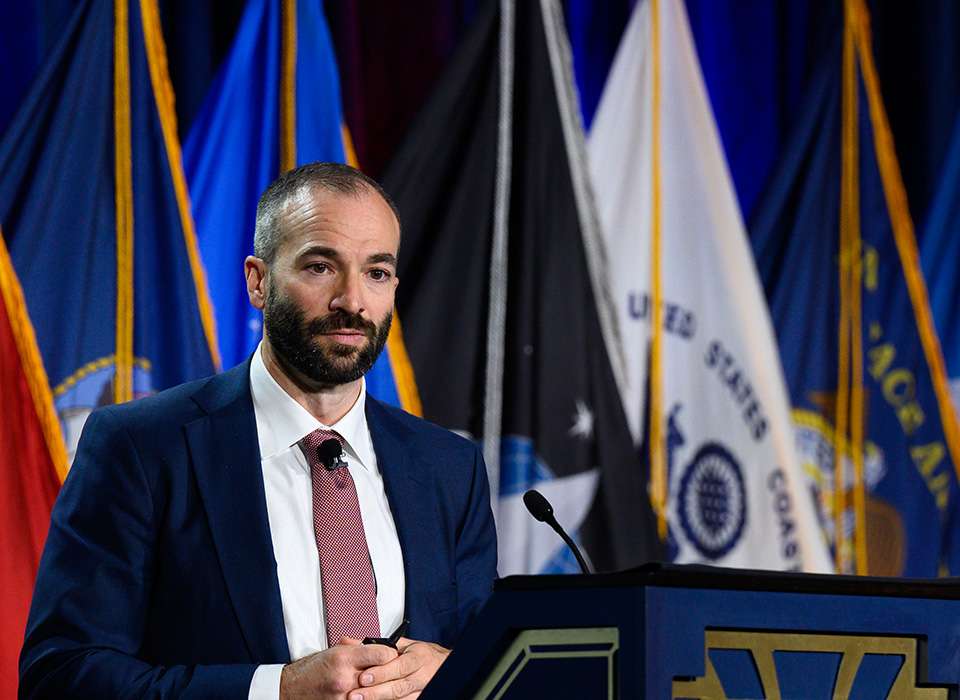
Jeffrey Rogg, PhD, JD
Jeffrey Rogg is an assistant professor in the Clements Center for National Security at The University of Texas at Austin, where he also serves as the associate director of research for the Intelligence Studies Project. He is the author of The Spy and the State: The History of American Intelligence.
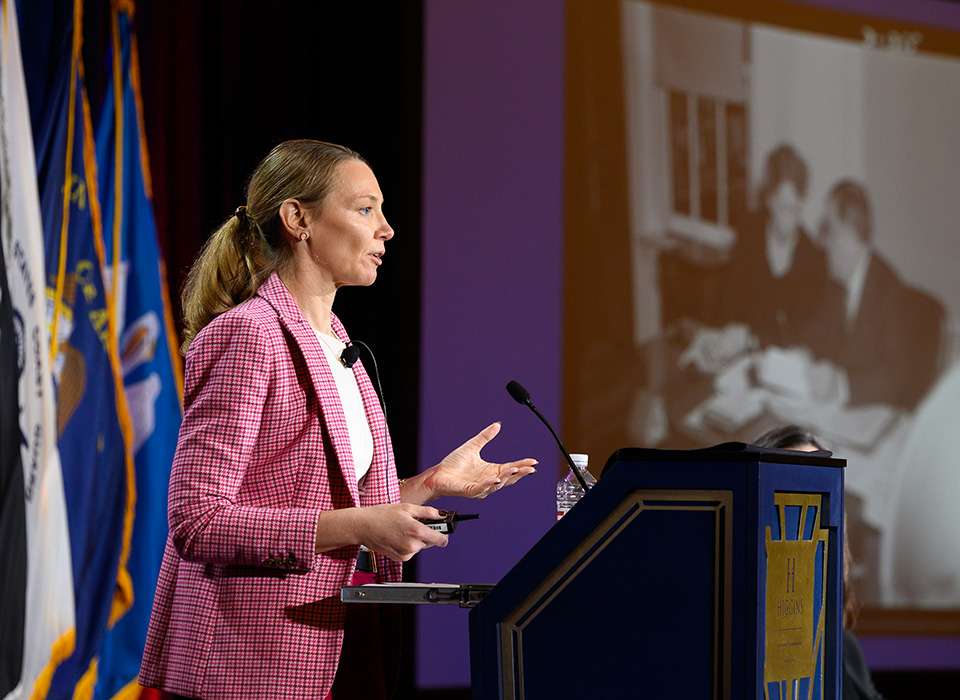
Stephanie Hinnershitz
Stephanie Hinnershitz, PhD, is an assistant professor of security and military studies at the Air Command and Staff College at Maxwell Air Force Base. She specializes in the American Home Front during World War II, particularly Japanese American incarceration, civil-military relations, and race.
-

The Battle of Midway | WWII IN 2
John Curatola, Military Historian at the Jenny Craig Institute for the Study of War and Democracy, describes to us the harrowing d... -

Part 2: Breaking the Midway Code
Six months after Pearl Harbor, America makes a breakthrough in understanding the Japanese naval code, and the Battle of Midway becomes a turning point in the war. In this episode, we explore the significance of the Battle of Midway, the creation of the Office of Strategic Services, and a bold German espionage effort on American soil.
-
Article Type
First Strike at Midway: Attacking and Discovering IJN Kaga
As Dusty Kleiss pulled away from the Japanese fleet, he kicked rudder in his Dauntless and looked back at his target. Kaga was undergoing a series of explosions that utterly eviscerated the ship, exposing her innards like some disemboweled animal.
-
Article Type
The Battle of Midway
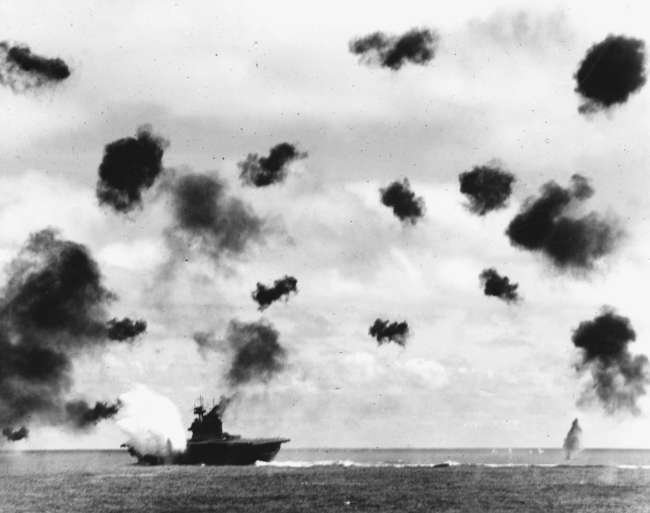
One of Japan’s main goals during World War II was to remove the United States as a Pacific power in order to gain territory in east Asia and the southwest Pacific islands. Japan hoped to defeat the US Pacific Fleet and use Midway as a base to attack Pearl Harbor, securing dominance in the region and then forcing a negotiated peace.

Special thanks to The Dale E. and Janice Davis Johnston Family for their generous support of this series.
Part 4: Turning Point at Midway
Bradley Hart
It's June 1942, six months after the attack on Pearl Harbor. The nation is still reeling from the shock of that Sunday morning. But in the meantime, the US Navy is working to set the conditions to change the course of the entire war in the Pacific. The Navy is repairing the physical records of Pearl Harbor, while elsewhere, its carrier forces prepare for the next offensive. But in the shadows, something even more important is happening at Pearl Harbor. The US Navy's secret code breaking unit, Station Hypo, led by Joseph Rochefort, has made a major breakthrough. They can now recover enough of Japan's critical JN-25 traffic to reconstruct key elements of Japanese plans. This unlocks an entirely new set of intelligence for Navy commanders, including Admiral Chester Nimitz, who is about to have the opportunity to turn the tables on the Imperial Japanese Navy near a place called Midway. In this oral history by the National World War II Museum, US Army Air Force's pilot James Muri describes the high stakes at the Battle of Midway.
James Muri
Well, it had to be. It had to be a turning point in history, simply because had they taken Midway Island and loaded it down with troops, they had all the ocean to go back and forth from Japan to Midway. They could have reinforced that one set of islands and taken their time and gone down a little, and bombed, and bombed, and bombed, and bombed. And sooner or later, we would had to have given up to the islands. There isn't any question. So we had to keep the islands, we had to keep Midway. That is the important thing.
Bradley Hart
This decisive American victory at Midway, made possible in part by Rochefort's team of dedicated code breakers, will change the entire trajectory of the Pacific War. Meanwhile, on the American home front, in the six months since Pearl Harbor, initial arrests of selected foreign nationals are followed by a separate and much broader policy, the forced removal and incarceration of more than 120,000 people of Japanese ancestry. Most of them are US citizens. In this podcast, which is made possible by the support of the Dale E and Janice Davis Johnston Family Foundation, I'm joined again by Jeffrey Rogg and also Stephanie Hinnershitz, a fellow here at the National World War II Museum who specializes in the history of the home front during World War II. Let's start with the immediate aftermath of the Pearl Harbor attack. On the afternoon of December 7th, 1941, much of the American battleship fleet now lies at the bottom of Pearl Harbor. What is the US Navy in particular doing in the immediate aftermath to recover from this setback?
Jeff Rogg
You know, we talked about what a shocking blow it was. No one could really contemplate something like this happening. And you know, that's top down. That's from the average American citizen up to FDR, and certainly the US Navy. But one thing that should give us all cause for optimism is just how resilient the US is. And you see that in the aftermath of Pearl Harbor. Unfortunately, one of the tendencies is heads roll. And so Kimmel and Short are quickly replaced. Chester Nimitz replaces Husband Kimmel as the Commander-in-Chief of the Pacific Fleet. Eventually a couple months later, Harold Stark is replaced as the Chief of Naval Operations by Ernest King, who is in fact a Naval aviator. So you can see that mindset change, going to carrier warfare from battleship warfare. Another important change takes take place though with the cryptology. Two brothers, Joseph and John Redman take over Navy cryptology. And this becomes important because they have a tense relationship, to say the least, with Joe Rochefort. And so in the lead up to the Battle of Midway, which is really. We go from what looks to be, and we talked about it, a catastrophic intelligence failure to a resounding intelligence success.
Bradley Hart
So if we look again at the Japanese side again, just to flip the lens around, Pearl Harbor, of course, they see as a strategic victory. Yamamoto has achieved his objectives, not necessarily all of what he thought might happen there, but certainly it is seen as a victory. There's a series of other Japanese victories, in places like the Philippines immediately after as well. So, how does the tides start to get turned really in the Pacific?
Jeff Rogg
Right. And that's a good point is, you know, the Philippines was, in many ways, as devastating, if not more so a defeat for the Americans. And, you know, this is where you see the Japanese are on the march, and they're on the march across the Pacific. And this includes in Southeast Asia, and of course, you know, it looks like they're going to be projecting power across the Pacific towards the United States. So how are we going to roll back the Japanese is the big question. And you know, they had their victories, but quickly the US again rebounds. And one of the surprising things we do, they surprised us certainly with Pearl Harbor, is Jimmy Doolittle, famous pilot, decides on a really daring raid. He's going to launch planes, and, you know, just like the Japanese didn't know if they could make it all the way to Pearl Harbor, we weren't sure we're going to make it close enough to bomb Japan.
Bradley Hart
Launching B-25s.
Jeff Rogg
B-25s from the Hornet. And the Hornet's important because it's going to play a role in the major Battle of Midway. But Jimmy Doolittle, and again, this isn't, it's more of a signature victory. It has an effective boosting morale after Pearl Harbor. They're able to bomb the Japanese. And the reason why this was so devastating in turn for the Japanese is, you know, their psyche, they didn't think the home islands would ever be touched. So what this does, and this is why it's important as we move to Midway, is now it convinces the Japanese they have to knock out our carriers. They have to knock out our carriers. They knocked out our battleships. And now everyone knows, you know, the secret's out, carrier warfare is probably the way of the future, but they can't let themselves get bombed like that again.
Bradley Hart
But one surprising aspect of the aftermath of Pearl Harbor is that many of those battleships in Pearl Harbor are actually refloated. They're actually repaired and put back in service.
Jeff Rogg
We tend to think, you know, when you hear that a ship is hit, that it just sinks automatically. You have a great exhibit, I just saw it yesterday on the USS New Orleans.
Bradley Hart
Yes.
Jeff Rogg
If you make it here, you should see it. And it had its bow blown off by a torpedo. I mean, the bow was blown. I was astounded when I saw this. And it still made it back to port. It was refitted with an entirely new bow and kept fighting the war. So, you know, just because a ship is hit doesn't mean it's actually sunk. And we talked about yesterday, one of the things the Japanese did in March 1942 is they wanted to raid Pearl Harbor again to sort of impede our recovery efforts. You know, the US, when we're looking at ship to ship, and surface warfare at the time, the idea is, you know, how do you put ships out of commission? And the way that the US has to do this is we, you know, we have to identify this is where the signals intelligence is important. We have to identify where the Japanese ships are. And basically now the question is, is in naval warfare, you used to have to be able to see the other ship to fight. Now you're putting up planes. And so in order to, being able to identify where the ships are going before they get there is going to give you the element of surprise. And that's what Rochefert and Station Hypo is working on, ahead of some of the major conflicts in the Pacific.
Bradley Hart
And we'll talk about the Battle of Midway in a moment, but first I want to go to you, Steph. I mean, so I mean, you've studied the home front extensively. You've written some books on this topic. What's the response on the home front beyond shock, obviously, that this attack has taken place? What goes on in the first few months after Pearl Harbor?
Steph Hinnershitz
Yeah, so what happens is actually a quickening of a process that's been going on since well before Pearl Harbor. So with the attack on Pearl Harbor, there's already suspicion since like the late 1930s, and certainly up through 1940, 1941, right before the attack of, are there going to be people, especially people who will become enemy aliens, so the Japanese, the Italians, the Germans, foreign born. Are they working with the enemy to facilitate some additional attack, right? So that's sort of immediately after Pearl Harbor, what are we going to do to secure the home front? So is there something that can be done? The answer is yes. And from both the FBI and the military, that is trying to get a handle on, are there any spies, are there any subversive agents who are looking to sabotage the war effort? And like I said, this has been a long time in the making. So going back to the 1930s, George Patton, when he was in war planning, he had actually developed a plan for interning Japanese enemy aliens in Hawaii at the time, so on the island of Oahu. That's already in place. So after the attack on Pearl Harbor, there's a plan there to arrest, detain, and then eventually intern, enemies who might be seen as subversive or suspicious for helping to facilitate another attack. And one thing that you had mentioned with the ship to ship, so the big challenge along the West Coast is are the Japanese Americans living in Oregon, Washington state, and California facilitating some sort of ship to shore communication that could help to facilitate attack on the West Coast? So that's immediately after Pearl Harbor. President FDR will issue Proclamations 2525, 2526, and 2527. It's a lot of numbers, but basically this is what will give the FBI the power to start pulling from the list that it had been collecting for a while now, people they put on, because they represent some kind of threat or potential threat, the FBI will go out, start to arrest, detain, and that begins what will eventually become the removal and the later incarceration of Japanese Americans, both foreign and American born along the West Coast.
Bradley Hart
Now, these are really interesting lists actually. I've come across a number of these in the archives, as have you. These are often people who belong on the German side, groups like the German-American bund, often foreign born, right? This is what the allegations of something called the fifth column is what they're really referring to. The history of the term fifth column is really interesting. What does it actually mean and refer to?
Steph Hinnershitz
So this actually goes back to the Fall of France, right? So in 1940, the idea that the reason why this happened, right, why the Germans were able to be so successful is that you have the different fronts, right, you have different elements of a war victory of an operation, but there's this nebulous kind of fifth column that is working internally to sabotage any sort of kind of official military operations or military plans. So it sort of fits that a lot of our leaders in the United States will look at what happened with the Fall of France, and then also look at what happened with the attack on Pearl Harbor and say, "Well, this had to have been the work "of some sort of fifth column."
Bradley Hart
There had to be help with it effectively.
Steph Hinnershitz
Absolutely.
Bradley Hart
So before we go back to sort of the military trajectory, what's FDR thinking in this period from your research? And what's the thinking in the white, obviously there's a lot going on, but what's his thinking in terms of the home front at this moment?
Steph Hinnershitz
Yeah, so obviously, I mean, he's as suspicious as other people are about what's going on. What are the internal threats to the home front? So seeing the home front as not something that's completely separated from the Eastern theater, or the Pacific theater, but you have to defend the home front. It is a war front for the most part. So he is doing a lot of things as Commander-in-Chief, right? Obviously, he's working, right, at headquarters to try and facilitate broad strategic plans, but he's also a politician. So he's also trying to juggle the various components of the Democratic Party, those in the South and then those on the West Coast. And they are starting to put a lot of pressure on, can you do something about the Japanese problem along the West Coast? He's also looking to increase mobilization. We've been mobilizing, right, since 1940 at least, but what can you do to actually really gear up the war machine and start being able to produce more things, which goes hand in hand with the sabotage threat, right? So if we want to keep producing what we need to fight and support the Allied War effort, then you have to make sure that there's not a fifth column that is both working to facilitate possibly another attack, but also looking to sabotage war production internally. So he's got a lot of different things going on that he's got to focus on to make sure that we secure the home front, while also having a lot of conflict, right, and dealing a lot with his advisors and the military about where is the line between protecting the home front and overstepping civil rights. That's going to be something that comes up time and time again in the days right after Pearl Harbor. How do you secure the home front in the United States when you do have rights? What is he going to do about that?
Bradley Hart
The sabotage aspect you mentioned is really interesting, because I've seen there's thousands of these investigations throughout the course of the war. It's not always clear what's happening with these, right? Someone will be investigated by the FBI, and then the file will just kind of end, right? So sometimes people get arrested, sometimes they get interrogated, not really clear whether this is deliberate or just incompetence in some cases in an industrial facility or something like that, which obviously is the challenge that the law enforcement, especially the FBI have in this period too. But let's talk before, one of the essential enablers of the naval success we'll see at Midway, and later on in the Pacific is a result of this industrial sort of buildup that we see very rapidly. What exactly is going on? How fast is this happening, especially on the West Coast?
Steph Hinnershitz
Yeah, so I mean, it really does kick up the idea that you're going to need to be able to staff, right, these plants with people to do the work, which leads to a whole different kind of mobilization to attract people to wartime industries. So really turning out, especially on the West Coast, ships, planes, making sure that these plants are functioning. A lot of different contracts, so government contracts become super, super important at this time that we all are very familiar with this today, but the idea that you give contracts to these plants, you produce certain things, and then they have to meet, right, those quotas that they're getting, that they're basically have gotten the contracts on. All these different factors are coming together to make sure that we are producing what we need to produce. And then there's all kinds of different incentives as well from the federal government to make sure that this happens.
Bradley Hart
So, Jeff, let's pivot back to naval strategy. So Pearl Harbor has taken place, we have the Doolittle Raid. This is a really dramatic period. I mean, it's in some ways astonishing when I remind visitors to the museum here that Battle of Midway takes place in the summer of 1942. This is only about six months after Pearl Harbor, and it's an incredible reversal. So take us through first off the intel background of what's taking place here, and what does the US know, and when does it know it?
Jeff Rogg
Great question. So one of the advantages I suppose that we had after Pearl Harbor, is, you know, cat's out of the bag. The secret surprise attack has been done. So now the Japanese are engaged in more persistent operations. In other words, we've kind of suffered from a lack of traffic analysis, because the Japanese weren't doing as much before the Second World War, before it starts with Pearl Harbor. Now we have a lot more traffic, which does mean there's a lot more information, but it means you have a lot more that you can possibly decode. So Hypo goes into overdrive. And when I say overdrive, I mean they're working every day. Joe Rochefort gives himself ulcers, both in terms of the stress of feeling responsible for Pearl Harbor, and also just how hard he's working. You know, it wasn't a healthy lifestyle. Nick told you they're chain smokers sitting down in a basement drinking coffee. I had alluded to attention in the code breaking. Joseph Redman takes over as the Director of Naval Communications, and he boots Laurence Safford at OP-20-G, and puts his brother, John Redman, in charge. Redman and Rochefort don't see eye to eye. But luckily, Rochefort has an important ally with the Pacific fleet, and that's their intelligence officer, Edwin Layton, Eddie Layton. And Layton has Nimitz's trust, which is very important in intelligence. You have to have the trust of your policymakers. And this is something that I think was an issue before Pearl. Rochefort wasn't able to tell Kimmel where the Japanese fleet was, and that doesn't really produce a lot of trust. Layton and Rochefort are kindred spirits and they're friends. Both were Japanese linguists who also understood, Rochefort more so, but cryptology. Station Hypo and Rochefort go into overdrive, and they get more traffic, and they start breaking more of the JN-25B code. That was the code that we had so much trouble with before Pearl Harbor. And what we're starting to do is really put together the order of battle of the Japanese fleet, the directions, you know, Nick talked about direction finding, where they're located. And so, you know, how are you going to test this? That's the important thing. By the way, if you test it and you're right, you're probably going to gain your commander's trust. If you test it and you're wrong, you're going to lose that trust. So this is very important. So the Doolittle Raid happens in April 1942. Shortly thereafter, the Japanese had planned for an invasion of Port Moresby in Papua New Guinea. This part of their own island hopping campaign to take over the South Pacific. Well, we broke the codes to find out about that operation, the landing at Port Moresby. And they were sending two aircraft carriers, two of their fleet carriers to secure it, the Zuikaku and the Shokaku. We had an idea of what the Japanese plan was, and Rochefort is able to tell Layton, lay out the plan, you know, they're going to send their fleet carrier, two fleet carriers to secure this invasion. And so Nimitz believes Layton and Rochefort, and he decides to send two American carriers in response, the Yorktown and the Lexington, to help with intercept and defend against the invasion. And that results in the Battle of the Coral Sea at the beginning of May 1942. Now, we lose the Lexington in the battle. So in some ways it's considered a defeat for the United States. But it actually was a big success for two reasons. One, it was proof that our signals intelligence was working. This is important. And the second is the two fleet carriers that the Japanese sent were sufficiently damaged or degraded that they weren't going to be present at Midway. So we knocked out two of their fleet carriers. So Coral Sea is actually, you know, it's the victory before the victory at Midway.
Bradley Hart
So after Coral Sea, as you say, the US Navy has sort of proven its capability in detecting where the Japanese fleet is, sort of understanding Japanese intentions in a way that certainly wasn't the case before Pearl Harbor. Midway is this very dramatic confirmation that we have that capability, and also we managed to catch the Japanese fleet, really in a way that I'm not sure anyone could have predicted prior to Midway.
Jeff Rogg
Oh, you hinted at this question yesterday is, you know, was Pearl Harbor one of the greatest intelligence failures in history? If the answer to that is yes, then we can also say that Midway's one of the greatest intelligence successes in history in terms of a battle, in terms of military history. But again, there wasn't necessarily agreement about this. So luckily, Rochefort got Coral Sea right, and Layton convinced Nimitz. And so now Nimitz trusts his intelligence officers, which is good. What we were trying to figure out is what was going to be the next Japanese blow. And remember, after the Doolittle Raid, the Japanese goal was we have to knock out their carriers. We can't, not only for the security of naval warfare, but they don't want to be attacked on the Japanese home islands again. It doesn't look good to your population that you're propagandizing of how successful you are, and the Americans are hopeless, and then they drop bombs on you. So the plan is to knock out the American fleet. And the way that they're going to do that is to lure us to battle. And so they decide that they're going to do it at Midway. You know, the islands across the Pacific, for the listeners, just when you roll out a map, I mean, the Pacific is enormous, and there's all these islands and small atolls. So we had a station at Midway. And the Japanese plan to attack it, not because they care as much about Midway, but they know that, you know, as part of this geostrategic defense and depth that the United States has, we're going to have to defend Midway. So we're going to have to send our fleet to battle at Midway. And they think they're going to surprise our fleet there. So they plan on attacking Midway, but they're not going to say, just like Pearl Harbor, they don't say, "Hey, we're going to go attack Pearl Harbor. "Hey, we're going to attack Midway." They say, "Hey, we're going to go attack this place "with a code name AF." And we knew by this point that the Japanese were using these codes. We identified the code for Port Moresby. I think it was like SZP or it was, you know, three letters. We knew that AH was Hawaii, AA was Wake Island. But there wasn't an agreement about who or what AF was. And this is where the Redman brothers disagree with Rochefort. John Redman's in charge of OP-20-G. Rochefort already thinks that AF is Midway a couple months ahead of time. You know, we're trying to figure out what all these abbreviations are. So he thinks it's Midway, but John Redman thinks it's, I think, Johnston Island, a different island. So how do you test it? Because you want to be right. So in Hypo, they come up with this, this somewhat ingenious solution. They tell Midway, you know, they code this, and they send a code to Midway and say transparently, so in other words, don't code this, but say that you're having trouble with your freshwater supply, your desalination plant. And so Midway says, okay, and they blast out this message, "Hey, we're having trouble with our water supply." So the Japanese pick up on this and they say, you know, "AF is having problems with its water supply." Boom. Now we know where they're going to attack.
Bradley Hart
They accidentally confirmed what we believe might be the case.
Jeff Rogg
That's exactly right. So, you know, this was a good little piece of deception, a clever piece of deception. And the other important thing it does is it resolves that very important, that possibly divisive bureaucratic dispute between Redman and Rochefort. You know, we need to know what AF is. And so not only though, by this point, do they identify Midway, but this is where the amount of signals intelligence that Hypo was doing, and the sophistication with which they were doing it, they were able to pretty much lay out the whole plan of attack for Midway ahead of the operation to Nimitz. And I'm talking about the composition of the strike force, the direction of attack that was going to happen on Midway, the date of the attack, June 4th, 1942. And so, you know, we had said way, way, way back when we talked about the First World War, you know, why was signals intelligence so important? Why did we invest so many resources in it? Because, you know, going back to Herbert Yardley, poker's a lot easier when you know your opponent's hand.
Bradley Hart
So Midway is a great victory for the United States. It's a complicated battle. It's actually a huge battle that involves carriers, aircraft, all sorts of things. What's the aftermath of it? Where does the US end up in the Pacific War after June of '42?
Jeff Rogg
Well, you know, Rochefort says this himself, "We got lucky at Midway." Even though we knew everything, skill is very important, but it never hurts to have a little bit of luck. So when the Japanese attacked Midway, you know, they launched their planes, this is a carrier battle, and they launched their planes against the island. Well, they didn't realize that we had kind of cracked the code and knew what their plan was. So we sent our fleet carriers, we sent the Yorktown, the Enterprise, and the Hornet to go intercept them. So this is going to be a carrier air-to-air battle. And sadly, you know, we didn't even have the best planes at the time. So we send these poor torpedo bombers to go strike the Japanese fleet. And these things are slow flying. They're kind of sitting ducks. And so the Japanese aircraft, the Zeros, you know, they mount their counterattack, and they're slaughtering our, you know, first wave of planes. There was another group under a Naval aviator named Wade McClusky, and he was a dive bomber. They were dive bomber groups. So little better planes. You know, this is a different way that you're striking the aircraft. And so they were trying to find the Japanese fleet. You know, we had a rough location, but the ocean's very big. We've put up our planes and they still have to find the fleet. And so he's not finding the fleet, and, you know, planes are operating on pretty thin margins of fuel. So he's about to turn around because the fleet wasn't where he thought it would be. And he's, you know, like, "All right, let's try and box this out one more time." Kind of like the Coast Guard today would look for a ship or something. They box it out. And they see the wake of, I think it's the Arashi, a Japanese destroyer, trying to catch up with the main Japanese fleet. And on a hunch, McClusky says, "Let's follow this destroyer onto the fleet." And they found the Japanese fleet. And again, you need a little more luck than that. The Japanese planes that would've met our dive bombers were either already engaged against the torpedo bombers. So they thought they're in this turkey shoot, and they think everything's going well. And then the other planes that the Japanese were preparing for their next sorties on wake were on the deck being armed and fueled. So you have two pretty good things that you want to hit with a bomb, fuel and other bombs. And so timing's everything in life. And McClusky and this bomber group, we sink four Japanese carriers, the four Japanese carriers that were there. I mean, you know, if Pearl Harbor was devastating for us, this was almost unrecoverable for the Japanese.
Bradley Hart
So, Steph, I want to pivot back to the home front on that point. I mean, there's two things going on. The first is American industrial production is now producing more carriers effectively, right? The US is actually going to be producing more carriers, whereas the Japanese are pretty much stagnated in terms of industrial production. But number two, this is the moment where that roundup of alleged fifth columnists, whatever you want to call them, takes a very different direction, which people had perhaps not anticipated. So take us through first the industrial side, and then why there's this sort of abrupt, and in some ways surprising and troubling shift.
Steph Hinnershitz
We are, like I mentioned earlier, right, we are producing things, more carriers, especially along the West Coast, especially, and then also on the East Coast as well. But the West Coast, if we're looking and connecting to Japanese Americans and that story, yeah, I mean, huge numbers of people have moved from across the country to go to these plants to produce things. It's a booming population, places like Oakland, right, get a huge, huge influx of Black Americans who are coming from all across the country. So production is sort of the name of the game. That's one thing that we are focusing on with the home front producing, and then also making sure that we are protecting those different plants and those facilities. And then when you line up Midway in the Doolittle Raid and put that up against what's going on with Japanese Americans, after FDR signs Executive Order 9066 in February, which gives John L. DeWitt actually all commanders, so the US is split up into different defense commands. All the commanders have the ability, the authority to identify people who they deem are especially threatening, right, or they have the potential to pose some kind of threat to the home front. Those individuals can be identified, removed, and then placed wherever, right? And initially the FBI, under the Department of Justice handles that, the arrest, the detainment, and then internment of people who they have identified as being subversive or a risk. And then with Executive Order 9066, that creates this new process where now the military is responsible for basically doing an evacuation, right? They round up, remove about 120,000. We know there's more at this point, right? We've done the research, so there are more. But that number, 120,000, give or take, they're placed first in army detention centers, and then eventually they are transferred to the War Relocation Authority, to one of the 10 camps that probably are more well-known. So like Manzanar, Tule Lake, there are some in Arkansas as well. But that's, by the summer, certainly the summer, spring, summer of 1942, Japanese Americans from the West Coast, most are in one of those 10 camps. But when you do have, right, these successes at Midway, and then also the Doolittle Raid, it's really interesting because then you start to see a lot of conversations among some of the higher ups, the war officials, the basically politicians, advisors to FDR, who actually are starting to say, "Do we need to continue, right, to hold some of these people "because now the threat along the West Coast "is not what we thought it once was." So you have this military victory that is also shaping domestic policy, specifically how it applies to Japanese Americans, and those who are being held within the camp. So it's a really actually short amount of time from Pearl Harbor to the Executive Order in February of 1942, to already by the summer, right, you have people thinking, "Do we actually need to keep these individuals "in these camps?" And of course, they are held, they continue to be held up until the end of the war. There's a release program, but, yeah, I mean, it's an interesting way to connect things that are not typically connected in the literature, right, what's going on in the Pacific, and then what kind of impact does that have on domestic politics? So in a lot of ways, right, the victory at Midway is a victory for Japanese Americans in the camps, because you're going to start to see kind of a shift in policy as well.
Bradley Hart
So, Jeff, as a historian of American intelligence history, what do we know now eight decades later, more than eight decades later, about any sort of spying activity that was actually taking place on American soil during this period?
Jeff Rogg
Well, I like what I read about the reaction to the First World War, and there were German saboteurs who blew up munitions depots, so our fears were really well-founded with domestic spies and sabotage in the Second World War. And, you know, one author basically wrote, there was this group called the American Protective League, the APL, and they had a quarter of a million members, and they would just provide tips randomly on their neighbor. They spied on their neighbors and everything. And one intelligence historian said that for all the tips that flooded the Secret Service in the State Department, millions of tips, not a single German spy was discovered by them. So, you know, when we look at the Second World War, you see the same kind of reaction. We had a much more sophisticated intelligence and domestic intelligence system at the time. And at the same time though, there were instances of spies and saboteurs. The Germans landed saboteurs by submarine.
Bradley Hart
Operation Pastorius.
Jeff Rogg
That's right. And this actually ties into Japan, and what Steph talked about with the internment of the Japanese, because there were very famous Supreme Court cases during the Second World War concerning what do we do with the old word, I'm going to use the revolutionary war word here. Sorry, I'm an intelligence historian. Intestine enemies, you know, internal enemies. And how do we treat them, especially if they're American citizens? So, you know, a German national who also happens to be an American citizen who is sentenced to death for being a saboteur by an American military tribunal, this becomes a very famous Supreme Court case Ex parte quirin. And on the Japanese side, Fred Korematsu, who was a Japanese American, decided he wasn't going to listen to the internment order, you know, not go to an internment camp. And so he's detained and arrested, and he challenges his internment, and it results in a very famous Supreme Court case. You know, this is landmark American constitutional law called Korematsu versus US. And it's interesting because this is in 1944. So this is well after the internment order. And the court decides, doesn't look good today, that there was nothing racial about the internment of 120,000 Japanese Americans. They actually applied what was called strict scrutiny to the case, which is that's the highest order of scrutiny that the Supreme Court can apply to Constitution, to legislation and Executive Orders. And under strict scrutiny, they said there was nothing racial about this. Now, you know, you might ask yourself, "Well, what about all the German saboteurs? "Why didn't we intern millions of German Americans?" Probably a combination of racism, voter blocks. You know, I don't think that would've passed muster. Japanese Americans were a small enough minority. And again, frankly, as Steph had indicated, we did pretty well with containing, there were spies and saboteurs, not nearly as many as people thought. We arrested them when we found them. And in terms of what we had most of fear, like FDR famously said, it was fear itself.
Bradley Hart
Steph, what do we know about FDR's personal thoughts on internment? I mean, he dies on April the 12th, 1945, but what do we know about his own thoughts on that?
Steph Hinnershitz
It evolves along with a lot of people at this time from '42 up until his death. So initially he and a lot of political advisors are not actually convinced that there needs to be a mass roundup of all Japanese Americans from the West Coast and placed in the camps. Initially, a lot of political advisors are perfectly happy letting the FBI continue to do the job.
Bradley Hart
That is their job.
Steph Hinnershitz
That's their job. This is - they're law enforcement. This is a law enforcement task. It's a civilian task. So totally happy to let them continue to do what they want to do. But it's the military officials, especially John L. DeWitt, who say, "We're not going fast enough. "There are not enough arrests." So if sabotage is the biggest risk to the home front, then why are we not arresting more people? Because the only way that you can know that sabotage is working is if you don't know about it. So it's this very bizarre reasoning for it, but basically the speed, right? There's no way, DeWitt and the military would argue there's no way that the FBI is actually doing its job, because they're not arresting or detaining enough people. So then that's when it becomes this evacuation. At that time period, FDR, again, it's still not entirely convinced that this type of military operation with American citizens is necessary. And that's the key thing. If you want to do this with Japanese nationals, like you said, I mean, this is something that we've been doing for a long time, but it's that very tricky issue of what do you do about the citizens? Eventually what happens is for the most part, you have the Department of Justice and FDR, right, gets kind of worn down by political pressure, by members of the Democratic Party, by people from really across the country, and also the military who are saying, "We can't leave this to the FBI. "There's just no way that we can continue "to do this." It's wartime, right, with the Korematsu case. Wartime is not a normal time, right? Extraordinary measures are required, especially when we're in a total war.
Bradley Hart
A declared war as well.
Steph Hinnershitz
Yeah, you have to do it. I'm sorry your rights are violated, but this is war, and these measures have to be taken. It's not actually too much later after you have the Japanese Americans in the camp, where FDR is going to join the war department, so John J. McCloy, right, and the Henry Stimson, in terms of questioning was this actually ever necessary, and does it continue to need to be necessary? So it's pretty short, 1943, by that point, January, February, that's when Japanese Americans are cleared to serve in the military. And so that creates a tension point as well, right? How can you possibly, you're telling me these people are good enough to serve in the military?
Bradley Hart
Just months later.
Steph Hinnershitz
Just months later, but they're also in the camps. This makes no sense whatsoever. It's bad for morales. And that's another argument that FDR also starts to put out. Maybe this was needed in 1942, in the spring or the winter of 1942. But by 1943, we have moved on, right? That threat is no longer there. So that's when Midway and Dolittle's Raid comes into the argument. The threat is not there. There's no way we need to continue to do this. So he starts to shift. He will still though, along with a lot of people, will hold on to the belief that we needed to do it initially, right? It needed to happen. That was a military thing that needed to happen. It was a shame, right? I'm sorry it did, but it was part of military strategy. But by 1943, certainly through 1944, there's really not a need to continue to keep most Japanese Americans in the camp, right? That's something that FDR takes, along with a lot of other people. Now, the ones who are deemed subversive or especially threatening, they still belong in the camps. That's the reasoning that's used by the FBI, right, by FDR. But it's very interesting how his opinion evolves along with military events. So you really can't kind of separate what's going on in the Pacific from what's going on in the home front because it's part of this bigger strategy.
Bradley Hart
I wanted to add, because I remember this interesting piece, you'll know it better than I will, Steph, but the highest density of Japanese Americans were on Hawaii, on the Hawaiian islands.
Steph Hinnershitz
Oh, yeah.
Bradley Hart
And we didn't intern any practically there, which is, again, remarkably inconsistent with what we did in the United States.
Steph Hinnershitz
Yeah, and this goes back to your point as well when you mentioned about why did we not intern the millions of Germans. Yeah, on Hawaii, there's just a very, I don't know, crude isn't the right word, but a very basic pragmatic logistically interning 30 some percent of the population that you need to actually continue to make the war machine operate. It's just not very practical. Also, the FBI is there deemed as it's doing its job. The military commander Emmons, he's okay with the FBI doing what it's doing, doing a lot of thorough investigation. They've been doing it, right, in Hawaii for a couple years at this point. So yeah, the numbers of, certainly there were many who were detained right after Pearl Harbor, but the numbers who were interned, right, held in a DOJ camp were far fewer, right, than what's happening in the United States.
Bradley Hart
So, Jeff, I want to ask you, as we look forward towards 1944, '45, there are two people we've talked about who have really interesting ends to their story. One of them being, of course, Joe Rochefort, but then also Admiral Yamamoto, the man who has planned and executed the Pearl Harbor attack. He's actually killed in, what I think we could conclude is an intelligence success for the United States. So take us first through Rochefort and then through Yamamoto's story.
Jeff Rogg
Sure, with Rochefort first though. So the Redman brothers never forgave Rochefort for being right. And immediately, he deserved recognition for his work in Station Hypo for the Battle of the Coral Sea, certainly for Midway. But the way the Redman brothers pivoted it is they said, "Well, no, this wasn't Rochefort driving it. "This is a team effort, everyone. "Yay team, even though you got Midway wrong. "So we can't celebrate this one person "and give him a distinguished service medal or, "we have to celebrate the whole Hypo Station." And so it becomes watered down. And Rochefort also is removed from Hypo, and I think he moves onto other naval assignments and not very glorious ones. He never receives individual recognition for the amount of work he did even before Pearl Harbor, and then certainly through Midway. And to be honest, if there's a singular figure, if you had to choose someone who probably did the most in terms of, well, I was going to say not just signals intelligence, but really American intelligence in a decisive moment in the Second World War, which is the Battle of Midway, it's Joe Rochefort. When does he finally get the recognition? After he's dead in the 1980s. Better late than ever, but you know, this is another point on, you know, why failures happen. We talked about this yesterday. If you don't recognize the good work of your people, there's a saying that victory has many fathers, and defeat is an orphan. And so, you know, we kind of see that with the approach to Pearl Harbor, and, you know, everyone's blaming each other for Pearl Harbor, and then for Midway, everyone's taking credit. But I would give it to Rochefort.
Bradley Hart
What about Yamamoto?
Jeff Rogg
Yamamoto passes a little bit sooner than '44, '45. It's spring '43, April 1943. I don't want to be cliche, but live by the samurai sword, die by the samurai sword, and supposedly he dies clutching a samurai sword. Yamamoto is, you know, theater commander in the South Pacific, and he's going to fly to Bougainville. And so the code breakers intercept information about his flight itinerary. And, you know, he's not flying unescorted, you know, he has fighters with him. He's in kind of like a light carrier. So we send P-38 Lightnings, which if you've ever seen them, it's all we could muster at the time that could make the far enough trip. The P-38s were that really weird plane that had like the two tails. And, you know, so they're kind of recognizable. The reason I'm mentioning this is because this goes back to the credit thing. And our P-38s intercept Yamamoto's flight. And they actually shoot him down. And he's actually struck by 50 caliber bullets, you know, so he dies a fairly traumatic death. But the two pilots who claimed to have shot him down, they never resolved who actually shot him down. So they gave both pilots of the P-38 credit for the mission. Yamamoto's death is a national tragedy for the Japanese. I mean, you know, he was, as we've talked about, probably the most formidable military mind and strategic thinker that the Japanese had. And, you know, I made that kind of cliche comment about live by the samurai sword, die by it. But you know, SIGINT in some ways was a failure before Pearl Harbor. SIGINT was a success both in the Battle of Midway and destroying whatever ambitions Yamamoto had for the Japanese empire, and for killing Yamamoto himself, which is, you know, a degree of vengeance, just deserved vengeance for the people who died at Pearl Harbor.
Bradley Hart
After the war, Congress will undertake the broadest public investigation yet into the events of Pearl Harbor. There are many investigations, the Roberts Commission, the Hart Inquiry, the Army and Navy probes, and combined with the Congressional Report, this will become one of the most investigated events in American history. But despite all those government reports, the debate over Pearl Harbor has continued for more than eight decades. In our last episode of season three, we'll look at what the government concludes about Pearl Harbor, what historians have made of it sense, and look at the questions that remain to the present day.