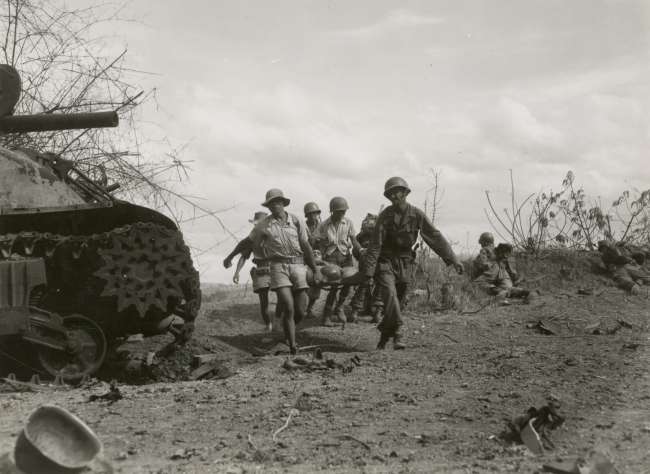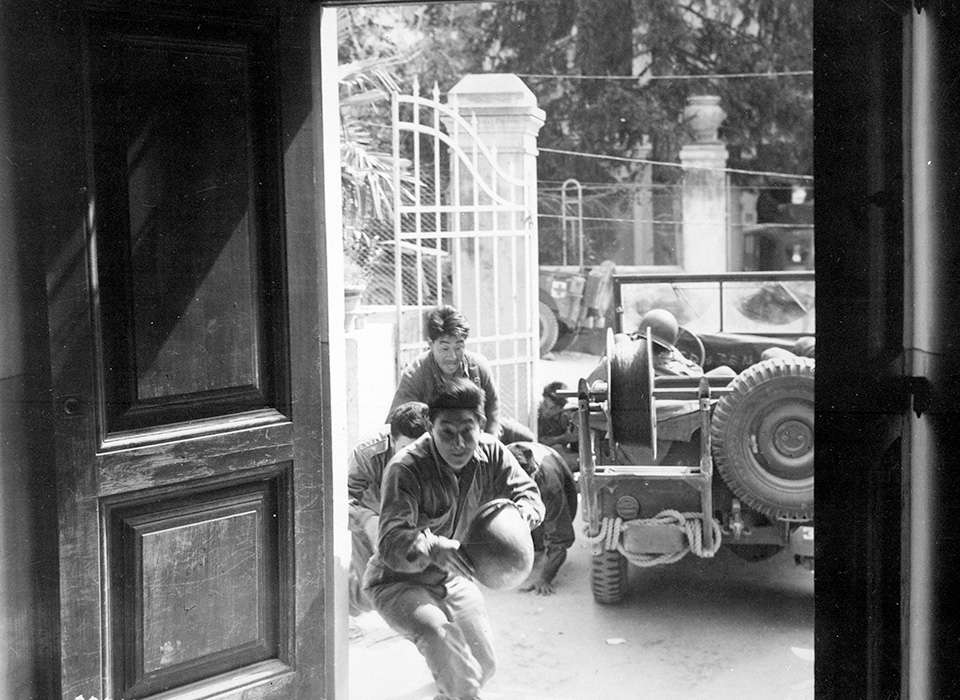
Top Photo: Americans of Japanese descent, infantrymen of the 442nd Regiment run for cover as a German artillery shell is about to land outside a building in Italy. National Archives.
World War II was a global conflict that reached every continent and many different peoples. As a result, when we teach about the Asian American and Pacific Islander experience during the war, there is no simple or straightforward narrative. While we now celebrate Asian American and Pacific Islander (AAPI) Month in May, in the 1940s, AAPI peoples had a dramatic variety of experiences. For some communities, the war led to military service and citizenship; for others, it brought incarceration, displacement, and discrimination. Examining these experiences through continuity and change over time allows students to explore both the immediate impacts of the war and its lasting consequences.
To begin exploring this topic, teachers should develop context through historical background. Museum Distinguished Fellow Dr. Robert Citino explains how American naval Commodore Matthew Perry’s trip to Japan in 1853 inadvertently led to rapid industrialization and the Meiji Restoration—a political reorganization that ended feudalism there and installed an emperor. For students, this gives depth and detail to connect the “opening” of Japan to its imperial ambitions and eventual military conflict with China.
While Japan transformed, similar rapid industrialization in the United States created labor demands that sparked legal battles over citizenship and immigration. By the time World War II began, most AAPI people had been born in the United States or arrived prior to 1917. Some 25,000 Chinese immigrants had arrived in California by the early 1850s, but the 1882 Chinese Exclusion Act was enacted and extended to prohibit their immigration. Japanese and South Asian laborers arrived until the Immigration Act of 1917 (the Burnett Act) dramatically restricted them.
People from across Asia could still migrate to Hawaii, a US territory from 1898-1959, and Filipino peoples, who were American colonial subjects from 1898–1932, continued to arrive in the mainland United States. By the time of the 1940 census, about 126,000 persons of Japanese ancestry lived on the US mainland, mostly along the Pacific Coast. Additionally, that census shows nearly 78,000 Chinese Americans, around 46,000 Filipino people, and 2,400 Southeast Asian Americans, labeled as “Hindu,” residing in the United States. More than half of these people were American citizens by birth.
When Imperial Japan bombed the US naval base at Pearl Harbor on December 7, 1941, Americans were shocked. The event led the United States to enter World War II the next day, and the experiences of AAPI peoples were anything but monolithic.
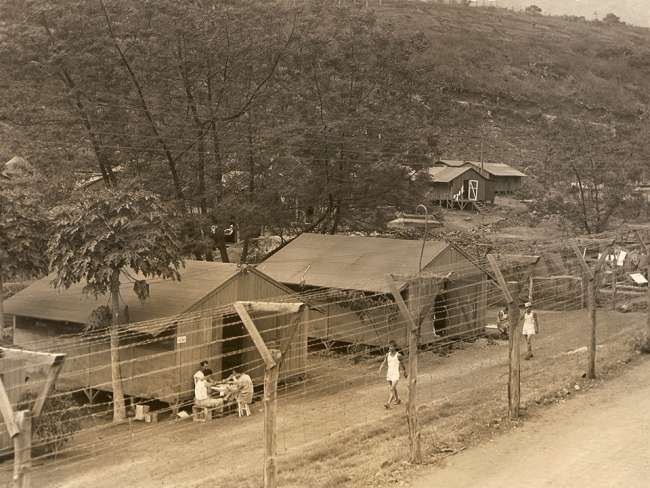
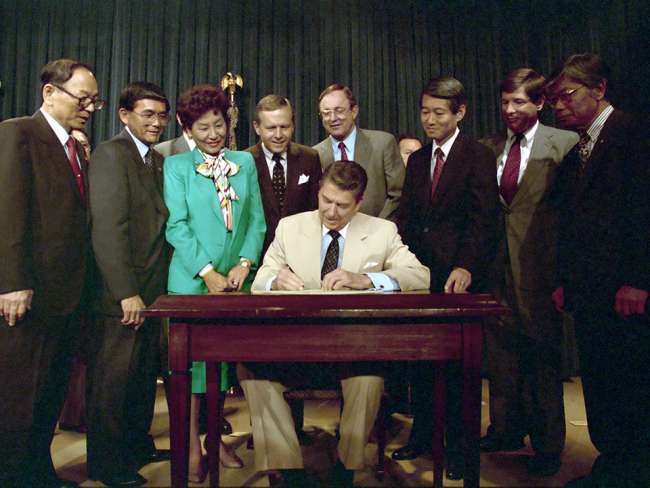
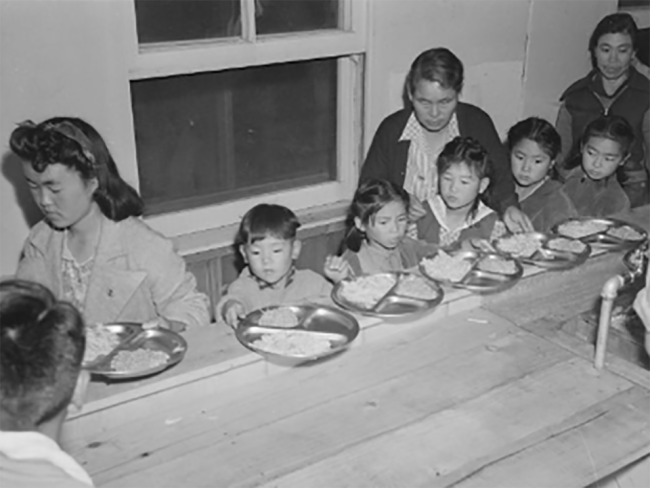
Within months of Pearl Harbor, Japanese Americans faced mass evacuation and incarceration enforced through Executive Order 9066. You can read how “virtually all Japanese Americans were forced to leave their homes and property and live in camps for most of the war.” This was especially shocking to the almost 80,000 Nisei (the Japanese term for children born in America to Issei, Japanese-born immigrants), as they were citizens by birth. Two Nisei, Fred Korematsu and Mitsuye Endo, made legal challenges that ended up in the US Supreme Court. While the Korematsu decision upheld the constitutionality of “excluding” American citizens in camps, the Ex parte Endo ruling, released the same day—December 18, 1944—ruled that the government could not detain a citizen who was “concededly loyal” to the United States. President Roosevelt issued an order allowing Japanese Americans to return to the West Coast the day before the ruling, but the experience lingered in the collective memory of Japanese Americans, who eventually won reparations in 1988. And yet, the experience of Japanese Americans doesn’t represent those of many other AAPI peoples, who considered Japan an enemy.
Even before Pearl Harbor, the Philippines, Korea, and mainland China were occupied by the Japanese. Some 2,700 Korean men who had been forced laborers for Japan were captured by US forces as prisoners of war and interned in prison camps in Hawaii for the duration of the war. And a decade earlier, after the Japanese invasion of Manchuria in 1931, some Chinese Americans like Hazel Ying Lee had already signed up to train as pilots.
By 1941 most Chinese Americans and Filipino people were well acquainted with the atrocities associated with Japanese occupation, such as the infamous Nanjing Massacre in China in 1937 and the horrific Bataan Death March in the Philippines in April 1942. Ultimately, about 20 percent of Chinese Americans and thousands of Filipino people (who were US nationals but didn’t have the full rights of citizens) enlisted in World War II. Enlisting also provided a unique path to full citizenship during a time when that was otherwise mostly out of reach. You can teach more about AAPI enlistment through this lesson from the Asian Art Museum in San Francisco, which illustrates how Korean Americans like artist Ernie Kim and US Navy Officer Susan Ahn joined the Armed Forces and fought in Europe.
Even by examining experiences from a variety of AAPI perspectives, we can see how the war in the Pacific led to conflicts within the Asian diaspora in the United States that can’t easily be classified. In fact, in December 1941, an article appeared in the pages of LIFE magazine meant as an aid to distinguish between the facial features of the “friendly” Chinese and the “enemy alien” Japanese people. For this and the other reasons above, we recommend teaching this subject with care, nuance, and a focus on developing student comprehension around the specific situations of various nations to show the range of impacts on AAPI peoples.
Highlights from The National WWII Museum's Collection
In The Arsenal of Democracy exhibit at The National WWII Museum, you can visit the “United but Unequal: I Am an American” gallery to view archival footage, photographs, and artifacts like “Relocation Instructions” that tell the story of Japanese American incarceration.
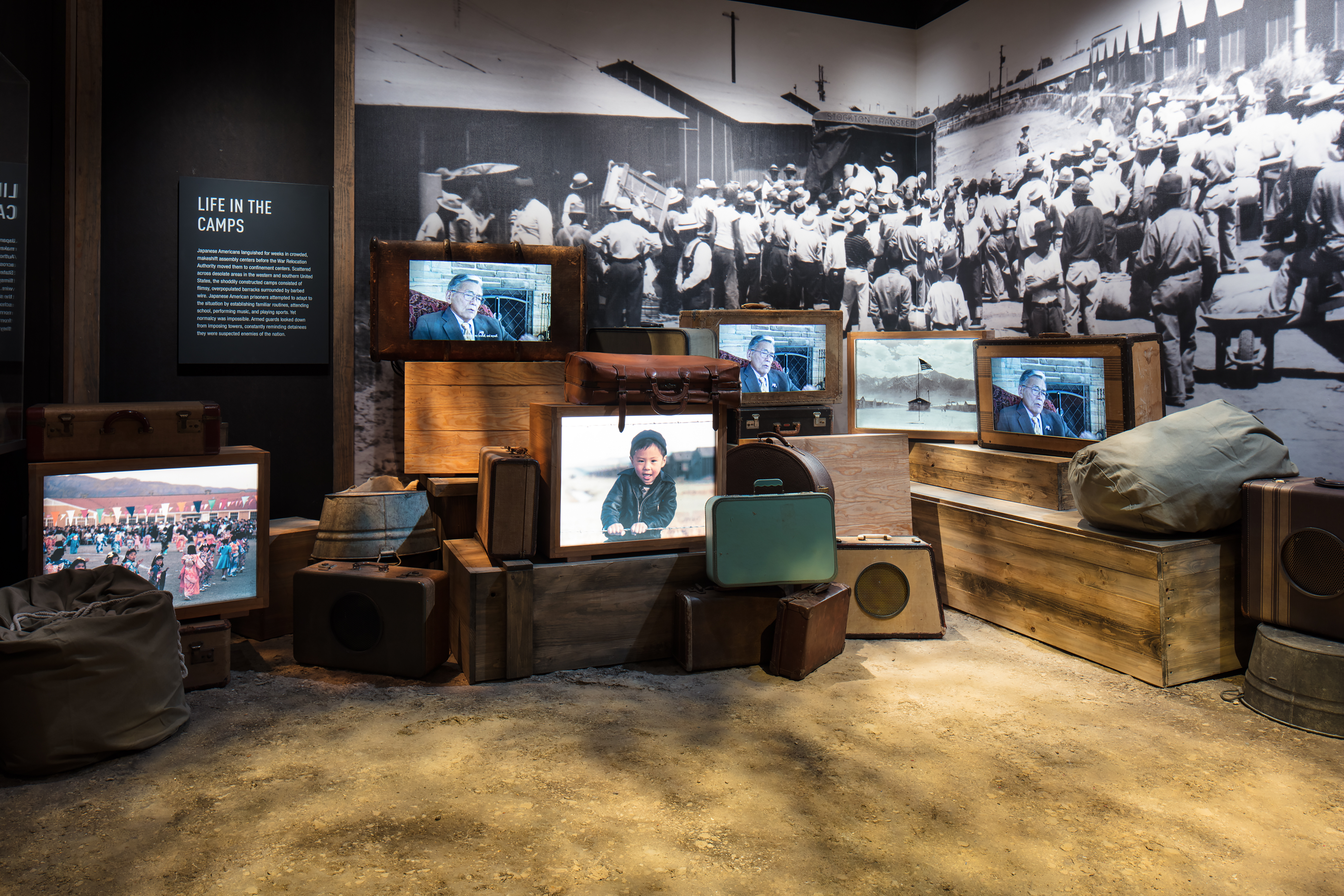
Online, you can also view the pages of the 1944 Rohwer Center High School yearbook, which, at first glance, seems like that of any other high school on the Home Front. However, the Rohwer Center students were children of Japanese American descent who were forced to leave their homes along the West Coast and required to live behind barbed wire for the duration of World War II. Investigating this yearbook allows the viewer to notice how educators and students endured a terrible situation in ways that are both inspiring and sobering.
A Closer Focus on Specific Topics
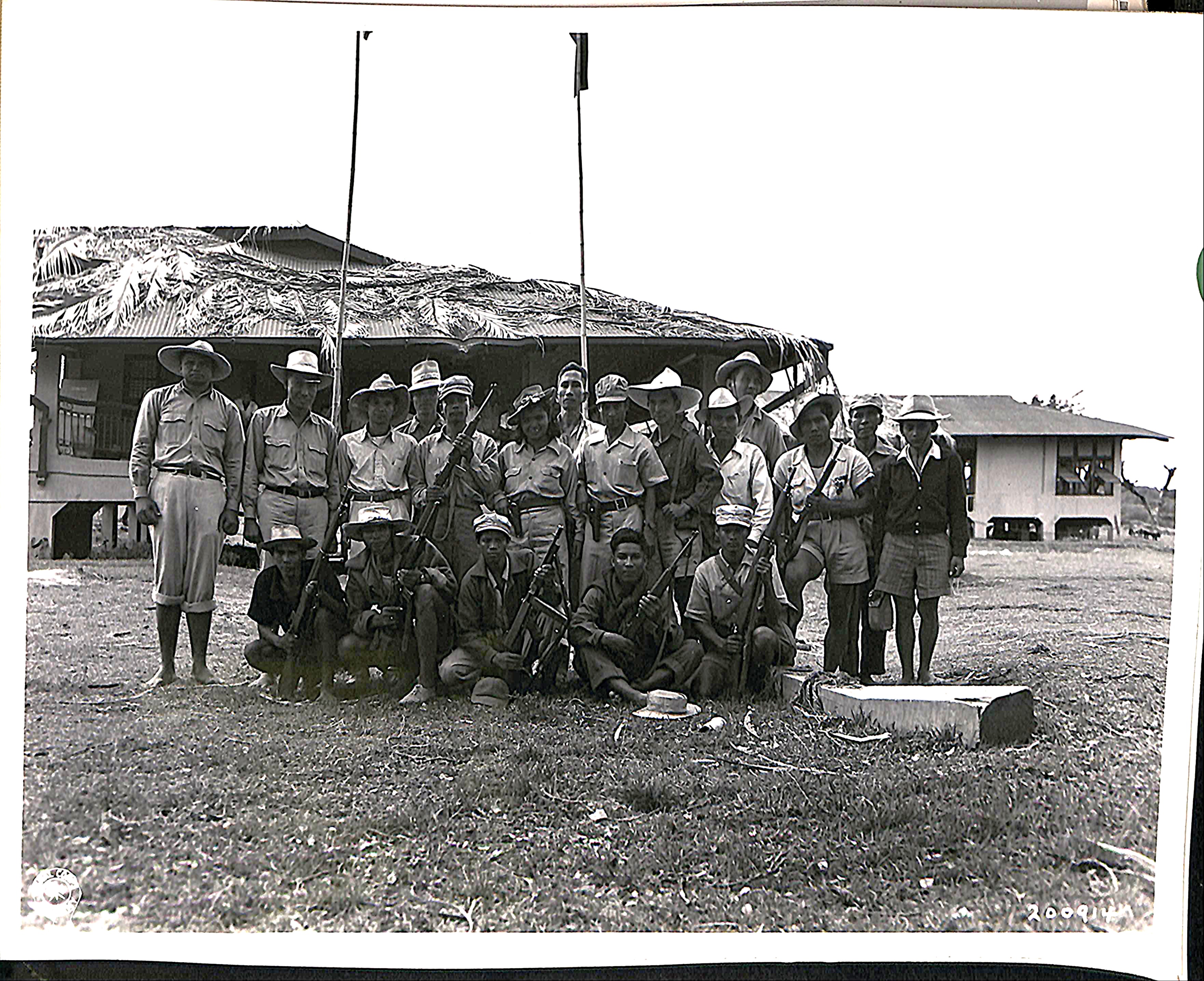
Florentina Punsalon, Filipino guerilla leader, is shown with her guerilla band near Luzon, Philippines, January 1945. Courtesy of National Archives
Guerilla Warfare in the Philippines
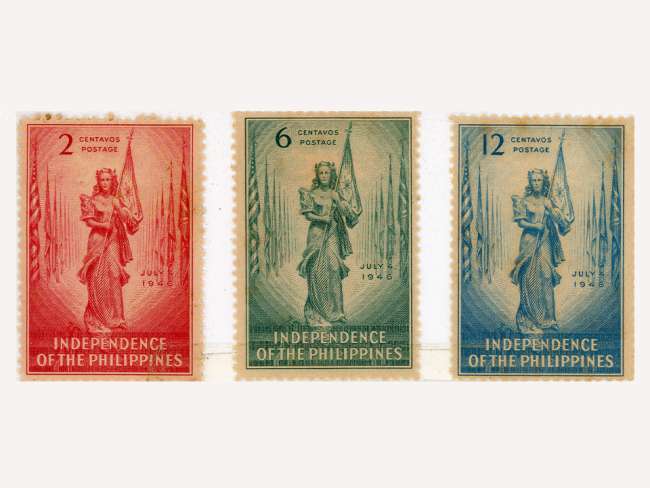
To learn about an often-overlooked force for Allied victory, read this article, which explains how “some 260,000 Filipinos served under US command in the Philippine Commonwealth Army, the Philippine Scouts, and even guerrilla units during Japanese occupation. They played a critical role in the Philippines’ defense and ultimate liberation.” According to Cecilia I. Gaerlan, the Executive Director of Bataan Legacy Historical Society, “Filipino troops had made up seven-eighths of the main line of resistance during the Battle of Bataan. The US Sixth and Eighth Armies employed thousands of Filipinos during the liberation of the Philippines.” Nonetheless, because they were not all full citizens, many did not receive veteran benefits due to the First Supplemental Surplus Appropriation Rescission Act of 1946.
Nisei in the Military
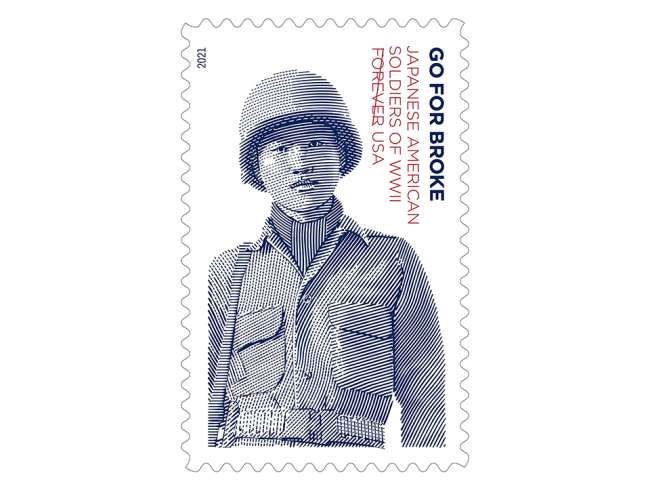
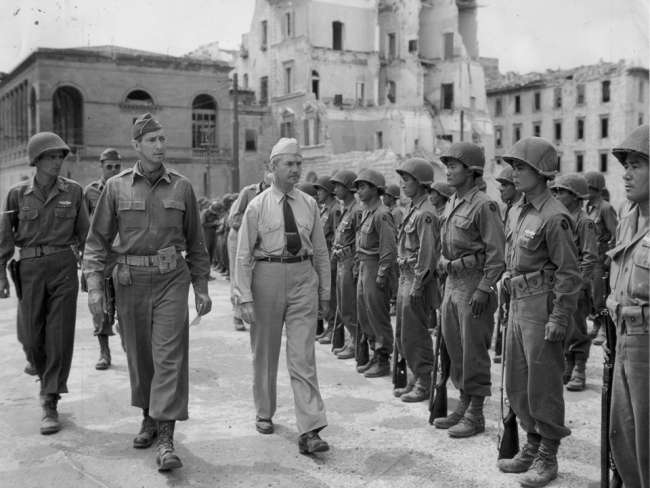
An estimated 33,000 Japanese Americans served in World War II. While some served as linguists or Japanese interpreters, others, such as the 100th Infantry Battalion, fought in Italy and then participated in the liberation of Southern France. Additionally, the the 442nd Regimental Combat Team, a segregated Japanese American unit, liberated prisoners from concentration camps during the Holocaust and “is remembered as the most decorated unit for its size and length of service in the history of the US military.” These men went on to serve their country while leaving behind families who had been incarcerated, an irony not lost on many servicemen.
Vietnam during World War II
Teachers can also help students understand World War II’s significant impact on geopolitics and migration in Asia, as well as how this led to future military conflict for Americans and migration for many AAPI peoples. For example, Vietnam was a French colony called “Indochina” that was invaded by the Japanese in 1940. Initially, the Japanese allowed French colonial powers to remain but, in 1945, they initiated a swift military takeover to oust the French. In this article, you can read about how the US Office of Strategic Services (OSS) “reached out to a Vietnamese man who had drawn positive attention from the Fourteenth Air Force the previous year when he escorted a downed American pilot out of Vietnam and into China.” Thus began a collaboration between the OSS and Ho Chi Minh, eventual leader of the Vietnamese Communist Party and the first president of Vietnam. This wartime relationship demonstrates how alliances formed during World War II shifted to Cold War tensions that contributed to the war in Vietnam and, consequentially, waves of immigration to the United States, which is now home to more than 2.3 million Vietnamese Americans.
Teaching and Learning Tips
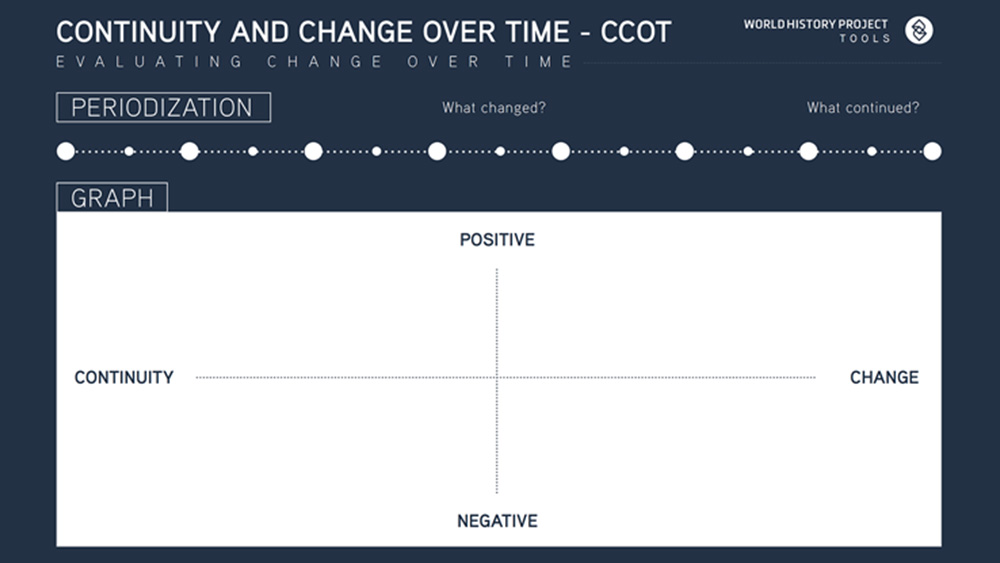
This is an example of the student-facing Continuity and Change Over Time (CCOT) Tool developed by the OER Project to help students process complex events in social studies over time.
Using the Continuity and Change Over Time (CCOT) tool from the Open Educational Resources (OER) Project is a fantastic way for teachers to scaffold student thinking processes about complex topics over time. This tool encourages students to use a scatterplot chart to map how events promote continuity or change on the x-axis and to think about how the impacts are positive or negative on the y-axis.
For this topic, teachers could ask students to think about milestone events in the migration and citizenship status of AAPI Americans to understand how this topic evolved during World War II. Teachers should make sure students understand Supreme Court cases like Wong Kim Ark, Korematsu, and Ozawa as well as legislation like the Immigration Acts of 1917 and 1924 and the McCarran-Walter Act of 1952, which provided a path to immigration to the United States for AAPI refugees and orphans.
Alternatively, students could consider how boundaries and political control in specific or various regions changed from the 1930s into the 1950s to understand the impacts of both Japanese occupation in World War II and the enduring impacts of Allied victory. For this use, students could consider how shifts from colonial power to Japanese occupation and then to self-governance occurred in various parts of East and South Asia. OER also offers this specific lesson that centers around a CCOT tool and asks students to track how global change occurred between World War II and the onset of the Cold War.
Getting students accustomed to using this tool and thinking in terms of continuity and change can help them think about and identify larger patterns and contextualize historical events within larger time periods to understand a complex topic.
Annie Preziosi
Annie Preziosi is the Curriculum Development Specialist at The National WWII Museum.
Cite this article:
MLA Citation:
APA Citation:
Chicago Style Citation: