
About the Episode
This season of the Secret WWII podcast explores all angles of the surprise attack on Pearl Harbor. In this episode, host Bradley W. Hart is joined by historians Nicholas Reynolds and Jeffery Rogg to discuss America's intelligence efforts in the years before World War II, and the rising tensions between Japan and the United States.
Topics Covered in This Episode
- Pearl Harbor
- Station HYPO
- Admiral Isoroku Yamamoto
- Admiral Husband E. Kimmel
- General Walter Short
- Joseph Rochefort
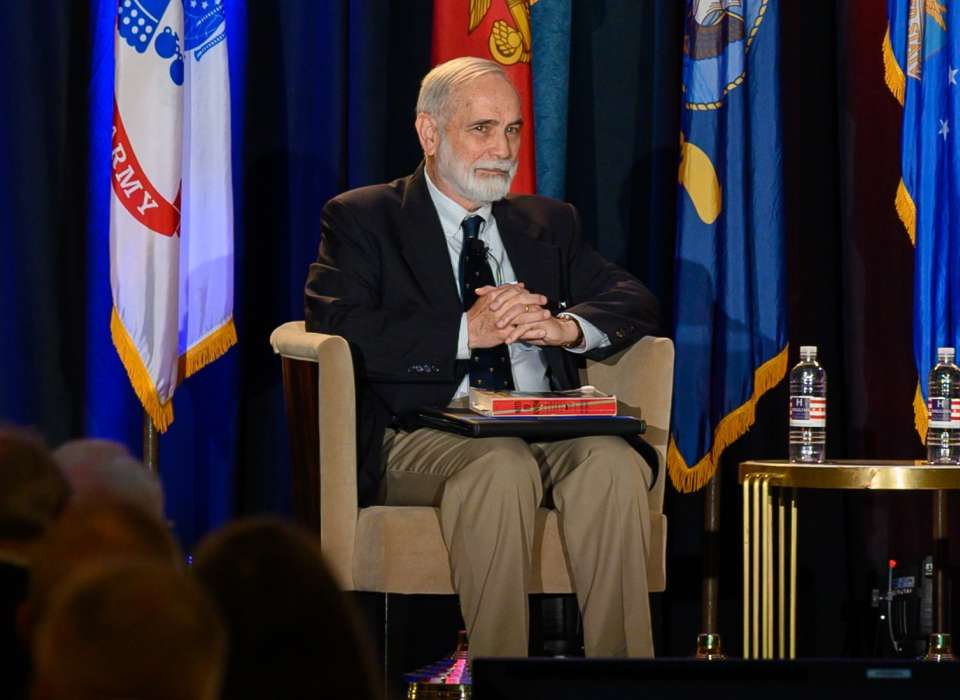
Nicholas Reynolds, PhD
Nicholas Reynolds is a US Marine Corps veteran, serving as an infantry officer and then as an official historian. As a Colonel in the Reserves, he was Officer in Charge of Field History, deploying historians around the world to capture history as it was being made. For many years, he worked at CIA, most recently as the historian for the CIA Museum. Reynolds has taught at the Naval War College, Johns Hopkins University, and the Osher Lifelong Learning Institute. He is the author of Need to Know: World War II and the Rise of American Intelligence.
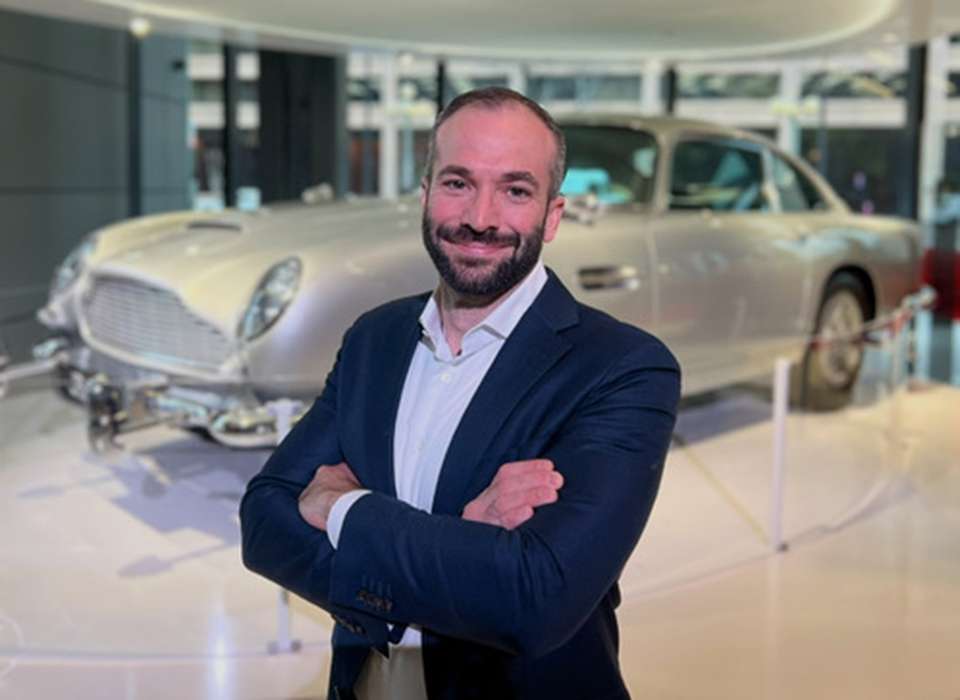
Jeffery Rogg, PhD, JD
Jeff Rogg is Senior Research Fellow at the Global and National Security Institute at the University of South Florida where he conducts policy-relevant research in the areas of intelligence, grand strategy, and national security. He is the author of The Spy and the State: The History of American Intelligence.
-
 Article Type
Kermit Tyler: A Call That Would Live in Infamy
On December 7, 1941, Kermit Tyler was called about aircraft approaching Pearl Harbor and told the radar tech not to worry about it. His reply has been debated for the past 80 years.
-
Article Type
US Intelligence Failures at Pearl Harbor
Japan’s attack on Pearl Harbor was a shock to the Americans, but it was preceded by serious intelligence failures
-

The Attack on Pearl Harbor | WWII IN 2
On December 7, 1941, Japan launched a surprise attack on Pearl Harbor, bringing the United States into World War II. John Curatola... -
Topic
Pearl Harbor Attack, December 7, 1941
The National WWII Museum commemorates the "date which will live in infamy" through articles, oral histories, artifacts, and more.

Special thanks to The Dale E. and Janice Davis Johnston Family for their generous support of this series.
Part 1: How Did Pearl Harbor Happen?
Bradley Hart
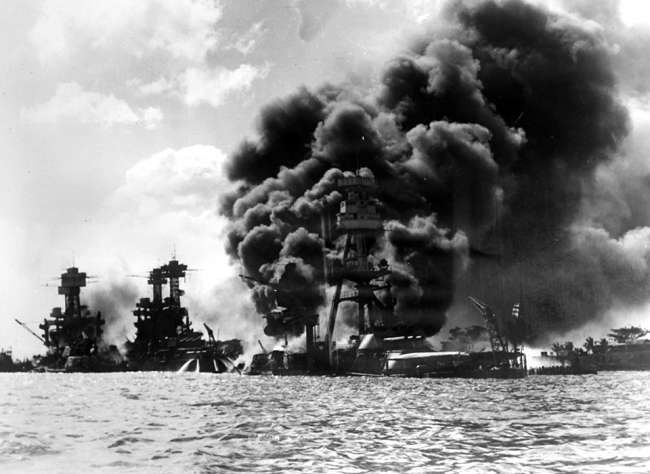
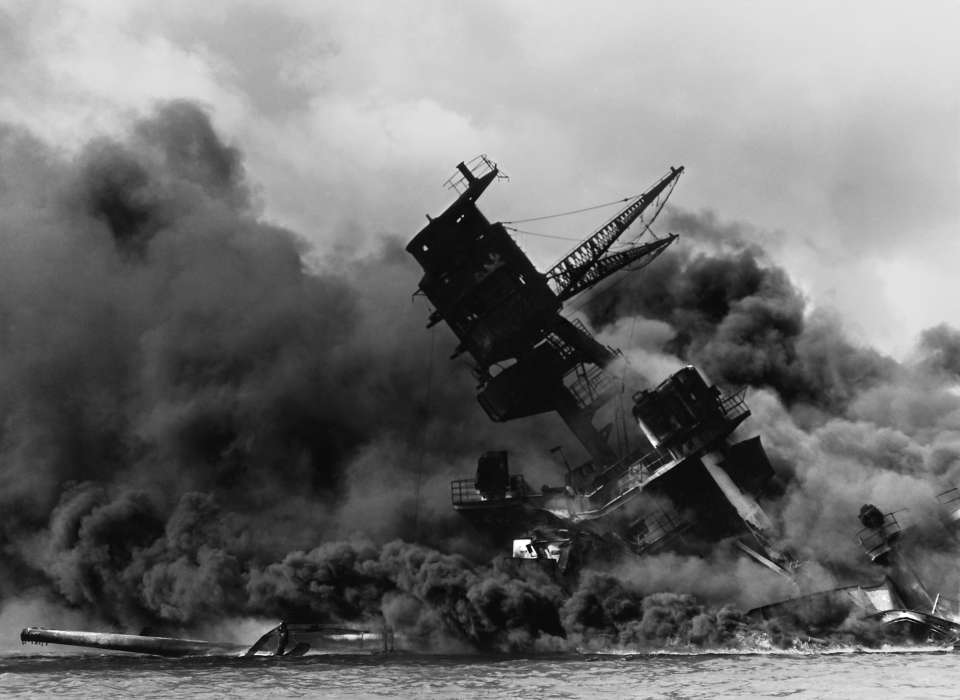
It's a quiet and clear night on the Pacific Ocean. The clocks have passed midnight. The date is December 7th, 1941. And within hours, the world will change forever. It's just before four o'clock in the morning. And at this early hour, American sailors onboard the mine sweeper USS Condor near Pearl Harbor spot something unusual in the water. Something is moving, and that something looks like the periscope of a submarine. The Condor's crew radios to a nearby destroyer, the USS Ward. At 6:37 AM, the crew of the Ward spots a periscope and what looks like the conning tower of a submarine. Eight minutes later, the ship opens fire, the first American shots of the Pacific War. At 7:02 AM, a radar station in Hawaii detects a massive radar echo. The officer then on duty at the information center believes the echo is just American B-17s flying from California. In an interview with the National World War II Museum, that officer, Kermit Tyler, explains.
Kermit Tyler
I got a call at 7:15 or thereabouts. Almost immediately they had a huge blip, so it makes sense that they must be the B-17s. So as I sized all this up, I thought it has to be the B-17s. And so I said, "Don't worry about it." I did my job the best I could with it.
Bradley Hart
But it is not American B-17s. It's the first wave of 183 Japanese aircraft. And over the next few hours, more than 2,400 Americans will lose their lives at Pearl Harbor. As we mark the 85th anniversary of the attack on Pearl Harbor, this season of the "Secret WWII" podcast will explore all angles of how this unprecedented attack happened, including the background of this momentous event with spies, espionage, and secret codes to shed new light on one of the most defining events in American history. I'm your host, Bradley W. Hart, from the National World War II Museum. This season is made possible by the support of the Dale E and Janice Davis Johnston Family Foundation. And I'm joined today by Nicholas Reynolds, co-author of the new book "Ortiz's War: The Allies' Secret Weapon Against the Nazis in France," and Jeffrey Rogg, author of "The Spy and the State: The History of American Intelligence." One of the truisms about history is it's just one thing after another, right? And to understand the road to Pearl Harbor, we have to understand where the United States is before Pearl Harbor. And I think that story can only really begin in the very early 20th century when we have really the first war that involves technology like radio. So Nick, let me start with you. What is codebreaking? Why is there a need to break codes and what actually are codes and ciphers?
Nick Reynolds
I could talk all day, but I'll give you the short version. So for a historian, what we see is World War I is the first major war in which people are communicating with radios. Telegraph's been around for a little bit, but this is the first time that we really see people on a large scale, armies and navies on a large scale communicating through the ether. So that brings up the other issue that if you could communicate with your own ships and you're communicating in the clear, you're also communicating with the enemy. So then we start seeing codes which are introduced to protect your transmissions. Cryptography is kind of the general term for secret writing, making codes and breaking codes. So those are the two related disciplines, making and breaking codes. And that's what you see. You see the early days of modern cryptography in World War I.
Bradley Hart
So Jeff, you've written a comprehensive account of the history of American intelligence. I mean, why does codebreaking become such a big deal in the early 20th century?
Jeff Rogg
It gives you a capability that no one thought would be possible, which is to know what the enemy was doing before they did it. And during the first World War, due to the scope of the war, the size of the war, a lot of the plans, the operational plans for the military involved, especially on the German side, the mass movement of troops over really long fronts, and offensives on both sides had to be carefully organized. And so if you had the ability to find out what was going to happen before it did, that was an advantage any military would want. So all the different armies, they all get into codebreaking. But what I'd like to add to that is they also did something that is unusual, at least for the Americans. We had this tendency after a war to retrench. After the war though, we realized that this new intelligence ability, which was absolutely invaluable in war, would be just as valuable in peace.
Bradley Hart
But let's talk about, I mean, is this the first time this has ever happened? Are we never reading anyone else's messages as adversaries in previous wars?
Jeff Rogg
The radio was one innovation, but remember the telegraph came before that. And so even during the Civil War, the North and the South, the Union and the Confederacy were actually tapping into each other's telegraphs lines in order to intercept messages. So it wasn't the first time. And the US actually created the Signal Corps, which was responsible for these intercepts in the period between the Civil War and the First World War. So the understanding of the capability was there, but the need for it and the expansion of the technology really occurred during the First World War.
Bradley Hart
What happens in the interwar period? I mean, you've written a comprehensive account of the Second World War in terms of the development of human intelligence in addition to signals intelligence. What goes on after World War I?
Nick Reynolds
What happens in the interwar period? So there's this place called the Black Chamber. It's a townhouse in Manhattan, and it is funded by the Department of War, basically the Army and the Department of State. It sounds like such a bargain to the tune of about $100,000 a year. And the principal character who is associated with that is Herbert O. Yardley, who had initially worked for the State Department as a code clerk, and then he worked for the Army in World War I. And now he's kind of in this gray area. He's neither an employee nor not an employee, right? So he's something between... And he's basically a government contractor, and he leads these very talented group of people in breaking codes, diplomatic codes mostly, and especially Japanese diplomatic codes. I don't know why we singled out Japan. I guess it was a sense that that was the power that was going to be an adversary in the future. During negotiations to limit naval armaments in the 1920s, they were breaking the Japanese traffic that contained the negotiating positions of the Japanese. And we effectively, we, the US government, effectively drove the Japanese to their last negotiating position. We did that over and over again, and it was a huge win for the US government at little cost, right? The ratios of how many capital ships this group can have versus that group versus the Japanese, and the Japanese basically got the short end of the stick.
Bradley Hart
They were probably surprised everyone knew their position before they presented it.
Nick Reynolds
Well, I don't think they caught into it, but yeah, if they'd been conspiratorial or more conspiratorial, maybe they would've figured it out. This goes on for most of the '20s. They don't just read Japanese traffic, they read other kinds of traffic. The War Department, not exactly a silent partner, but I get the impression that it's mostly Yardley, his initiative and his day-to-day management. And then Stimson comes to... So this is the grand old man of American politics in the 20th century, really. I mean, he's got partner in a major law firm in New York. He's personally wealthy. Now he's Secretary of State in the Hoover Administration. And he comes to town. The people at state are afraid to tell him about this Black Chamber, and they kind of bide their time, and they're kind of waiting for him to get a little comfortable in the job. And then they say, "Oh, Mr. Secretary, by the way, we need to tell you about this." He has almost a visceral reaction and says it's got to be shut down. He calls in, he has an undersecretary and calls a man a man named Cotton who's got the similar credentials to his. And he agrees, "This is outrageous. We can't be doing this. We're the good guys." Only after when his memoirs are written do we get the, "The reason we shut it down was gentlemen don't read each other's mail." I'll hold a candle for Stimson because he was not naive, he was not anti-intelligence. He was just hopeful in the interwar period that we would get a little better world than we had before.
Bradley Hart
The return to normalcy idea, right? Very common in the 1920s.
Nick Reynolds
Yeah.
Bradley Hart
So Jeff, let me pivot back a little bit. I mean, when we talk about codes, what would this actually look like? So what is a code in this context? How is this information being transmitted? How would one encode or decode something?
Jeff Rogg
Well, one of the things that we need to remember about codebreaking is it required the cooperation of the major telegraph and telecommunications companies in the United States. So today we think like NSA or an intelligence organization, they just hack into something. They steal it. The Cipher Bureau, which is the real name for the American Black Chamber was the Cipher Bureau, actually would work with Western Union and they would give them access to the codes. And not only that, or the communications rather, the other constraint that the Cipher Bureau faced over the course of the '20s was they didn't have their own radio sites. So they're not collecting the information themselves. A country like Japan, which wanted to communicate with its diplomats at the Washington Naval Conference, as Nick mentioned in 1921, '22, they would have to send the instructions. This is a different type of diplomacy in the 1920s. In earlier periods of history, you gave diplomats a considerable amount of leeway and power because you couldn't communicate with them immediately. That's why codebreaking was so, so, so important because now we brought codebreakers to Versailles with us. It improves your negotiating position because the capital city, whether it was Tokyo, whether it was St. Petersburg in Russia, they would communicate directly with their diplomats so they could actually conduct the negotiations from the seat of power. That's different than other points in history. Like Nick mentioned, you don't want to just say what you were going to say over the line because everyone knew it was being tapped, and so you'd have to encipher it. Codebreaking at this time, it's a very technical and difficult task. When you read what the codebreakers did, it's probably for a lot of us, it's painstaking. You sit for hours and hours and hours and look at numbers and letters and you know they don't mean what's written up there and you have to go through all these different combinations. And so it's a very laborious process. To Nick's point, I thought this was an interesting. There's a couple things on the Cipher Bureau that's remarkable because Yardley writes a book about it. He calls it the American Black Chamber, after and he's pretty aggrieved that they shut it down. And he says something about the Washington Naval Conference with the Japanese and negotiations. It's pretty easy to play poker when you know your enemy's hand. And that was what codebreaking allowed him to do. One of the other interesting features of the Cipher Bureau in terms of who funded it, because this is important, the Washington Naval in conference involved navies. Who wasn't part of the Cipher Bureau? The Department of the Navy. The reason why for that is the State Department agreed to go in on it and say kind of pooling money. The War Department and the State Department jointly fund the Cipher Bureau. They only agree to do it though if the Navy's cut out and excluded. And this actually becomes important to our story about as we get towards the interwar period in the 1930s in Pearl Harbor, because the Navy is reliant on the Cipher Bureau for its codebreaking for a few years. And then in the mid-20s, it decides, "Well, they're not breaking enough codes for us, so we're going to create our own." They already have a code and signal section, but they're going to create their own organization, OP-20-G. One of the points to develop about this is how codebreaking starts in the United States and then gets pulled apart at the seams during the 1920s. Nick mentioned the State Department and Stimson. The War Department was already cutting its funding for the Cipher Bureau by 1929. So when Stimson is left with a decision to fund the Cipher Bureau, the War Department was already out, and they were already looking at... They still had the Signal Corps, so they were looking at the Signal Corps as being responsible for doing their codebreaking. So the State Department had a choice, keep it or get rid of it. And the Navy has its own codebreaking section. So what really becomes important as we look at military history leading up to Pearl Harbor is you have naval cryptography, which you would think would concentrate on navies. You have army cryptography in the War Department. Who's doing diplomatic codebreaking? No one.
Bradley Hart
Well, but let's go back just to this point of codes generally. How many codes are there, Nick?
Nick Reynolds
An infinite number. So code is sort of a meta word, right? A code could be, I decide when I mean Bradley, I'm really going to say John. So that's a code. But the more sophisticated code is I say Bradley is John, and then I encipher John so it becomes a set of numbers instead of... So that gives you even more protection.
Bradley Hart
But for instance, the Japanese, I mean, we're breaking their codes, right? But it's easy to say their codes, but there's not just one code.
Nick Reynolds
There's an infinite number of codes and you see that, especially as you get into the run up to World War II, you go, "Well, wait a minute. There's the flag officer's code, there's the JN-25, there's the consular code, there's the diplomatic code, there's purple, there's red." Really a head-scratching number of codes. One of your threshold problems is which one of those groups of numbers that you get from Western Union, which one are you going to work on? And the US government pretty much decides to focus on Japanese diplomatic code over the other kinds of codes. And it is, as Jeff pointed out, this is kind of a... Here's another head-scratcher. Why are the Army and the Navy focusing on diplomatic codes? At some point in the '20s and '30s, there was a decision that diplomatic codes were more important, maybe because it's peace time. And one of the things that makes me chuckle about this is the fact that the Army, working on Japanese diplomatic codes, doesn't show them to the State Department in the 1930s because they're afraid that there's going to be a Stimson type of reaction and that they'll be shut down. And so if asked what they're doing, they say, "We're just practicing for the next war. What we do now has no application until the next war." So don't worry about it. Nothing to see here, folks.
Bradley Hart
It's almost fear of the capability that they're developing in this period. Let's go back to Yardley for a minute. I mean, Yardley actually becomes a very famous person, as intelligence officer probably shouldn't, or cryptographer probably shouldn't. But what happens to Yardley? He kind of blows a lid.
Nick Reynolds
So he writes the book that Jeff talked about, and guess where it's a best seller?
Bradley Hart
Japan.
Nick Reynolds
Japan. And the title is transliterated and becomes , and the Japanese military and Navy reads it and goes, "Boy, we're not going to be caught out again." So this contributes to... I won't say it's not a major factor in the lead up to World War II, but it is one factor. And on the one hand, they're not going to be caught out again. On the other hand, they're a little annoyed, right? So there's this sense that the allies, the Westerners, are treating Japan like second-class citizens, like Johnny-come-lately empire. Yardley makes a few bucks with his book and is kind of a celebrity in Japan. And he insists, he says, "I didn't do this just to get, I didn't do this to get back at you." Sure you didn't, Herb. He says, "I did it because you broke my rice bowl, because you took away how I was getting my salary and feeding my family, so I had to do something." That was his excuse for his tell-all.
Bradley Hart
But he's not done yet. He still has a-
Nick Reynolds
He's not done. No, no. He tries to sell. He winds up going to other countries offering his services. Chiang Kai-shek gets an offer and accepts. And then in World War II, he goes up to the Canadians and says, "Hey, I've got all this capability. I've got all this knowledge, experience. I'll put it to use for you." And we get wind of it and we say to the Canadians, "If you hire Yardley, you will never see another American in any more classified traffic from us." So the Canadians go, "Okay, sorry." And then he goes, he comes back to... He opens a restaurant in DC, claims he's got the best bean soup in town. I mean, there's a little competition for that.
Bradley Hart
I was going to say, yeah.
Nick Reynolds
And he's a poker player. Jeff hinted at that. And he writes a book about poker.
Bradley Hart
So Jeff, take us... I mean, Nick's alluded to this already. Why is there this focus on Japan in this period? What's going on sort of in the wider sphere of the 1920s, 1930s that makes the US kind of focused on Japan in terms of this kind of thing?
Jeff Rogg
Well, Japan, since the Meiji Restoration, and for audience who have seen Tom Cruise's movie on "The Last Samurai," you're seeing the Meiji Restoration, where Japan starts to... It's an insular society. It's an insular country. And it's forcefully opened by the United States in the mid 19th century, sort of forcefully opened to trade. And it realizes that it's behind militarily. And so there's a real tug in Japan between the tradition that's there, but also keeping up with the rest of the world, and not just keeping up with it but really prospering. And so it westernizes, it begins to westernize. And part of that westernization is the adoption of Western military technology. And it also emerges along with that as sophisticated. It's producing really good military equipment for the time. And this is a major point is it goes to war with Russia. It starts with a surprise attack at Port Arthur, which we keep in mind for Pearl Harbor. You can notice it almost slipped and said Pearl Harbor.
Bradley Hart
Yeah.
Jeff Rogg
Because it starts with a surprise attack. And no one expects Japan to have a chance, but it takes on the Russian empire and-
Bradley Hart
Which is huge. I mean, it's one of world power.
Jeff Rogg
So that's when Japan realized, "Hey, you know, we can be a major power in East Asia." And so Japan, it's not content with its position in the world, it invades Korea in 1910, I think. The United States is looking at this, and one of the policies that we had at the time, it was, you know, in the turn of the century, the open door policy. We wanted to keep China open for our trade because we realized it would be a major trading partner for the United States. Well, at the time, the real predatory imperial powers were Western European powers. They had carved up different parts of Asia. We had the Philippines at the time, and one of the reasons we had the Philippines was to be able to assert ourselves militarily. So we look at Japan, and we actually think maybe they would be a good partner. So we actually think of Japan as a partner at this time, a subordinate partner, a smaller power, but they have an interest in keeping East Asia open too. So we think that we're going to work together to keep, especially China, open. In other words, freedom of trade, freedom of navigation. And this is important because Japan emerges as a naval power. We talked about the Washington Naval Conference. The three big powers that we were interested in, we're one of them, the British and the Japanese. And so the agreement that we tapped into, this is the reading your opponent's hand was what was called the 5:5:3 agreement, and it was the amount of tonnage of naval ships. And the agreement was five for the US to five to the British to three for the Japanese. So they were kind of stuck in a subordinate role. I have to also add, you know, as we talk about the Cipher Bureau, so we're paying attention to the Japanese, you know, Yardley's cracking the code. And he publishes this book. He reveals to the Japanese. He becomes insanely popular in Japan too. What happened to Yardley in the United States? It wasn't just the Japanese who were fascinated and outraged, you know, a combination of both. The Americans are fascinated and outraged by this. So I like to tell people, for those of us who remember, you know, think of Yardley like Snowden before Snowden. He's like Edward Snowden before Edward Snowden. And when you read the newspapers at the time, people write op-eds just like we have today. And some people are saying, "This guy exposed national security secrets. You know, this is a threat to our national security." And other people, kind of like Snowden said, "He revealed that the US government is doing some really controversial and un-American things." You know, people like Stimson thought, "This is not what we do at this point in time." You know, there's a reaction against Yardley, and Nick mentions, you know, he says, "Well, you took my rice bowl." This is a problem also with the American intelligence system at the time that Yardley talks about in the American Black Chamber. He and his employees didn't have status as civil servants, so they didn't have protections. So when they're let go and they kept a couple of them, but they got rid of Yardley, he doesn't have a source of income. So in a way, you know, the lesson here is you be careful if your spies once scorned, you know, you have to be careful of how you treat your people. But Yardley is unfairly blamed by one of his rivals in the Army. We'll talk about William Friedman. He's blamed in a 1948 Senate investigation into cryptography. You know, if Yardley hadn't published this book, the Japanese wouldn't have learned about the codebreaking. Codebreaking was going to continue technologically regardless of whether Yardley published this book or not.
Bradley Hart
There's no way it can't, right? I mean-
Jeff Rogg
Exactly.
Bradley Hart
the technology is there.
Jeff Rogg
The Japanese weren't going to keep the same codes in the 1920s, because again, codebreaking evolved. Nick mentioned, you know, how you change and encrypt names. Well, they also had things called additive books. So not only did you have the original code, but you would add random, according to a pattern, random numbers or letters. So I mean, by the time you get to the late 1930s, what codebreaking and the difficulty of solving codes looked like in 1939 compared to when Yardley was doing it in 1921, '22, it's almost a totally different ballgame.
Nick Reynolds
I've heard the argument made that Yardley actually did the US government a favor because the Japanese modernized their codes early. So by the time we get really interested in the run-up to World War II in breaking their codes, we've had a longer period to do it than we would've had if they had just kept using the 1920s codes longer.
Bradley Hart
So let me ask you this, Nick. I mean, I'm kind of fascinated by the strategic dimension of our relationship with Japan in the 1920s, 1930s. I mean, from your perspective, was there another alternative here? I mean, could the US and Japan have a different relationship? And who's responsible for the deterioration of US-Japan relations in the 1930s?
Nick Reynolds
So how much time do you have? There are people, prominent people on both sides, in Japan and the United States, who essentially say, "Hey, you know, we can do some things together, and worst case, we can coexist, right? We don't have to be enemies." And that, if you look at the career of Joseph Grew, who was-
Bradley Hart
Our ambassador to Japan.
Nick Reynolds
Ambassador to Japan, 10 years, I believe, you see that as one of... He didn't speak Japanese, by the way, but he still fit in very well with the ruling class in Japan. You know, the whole thrust of that is we can get along. And the invasion of China, if I were advising the Japanese government, I'd say, "Do you really have to invade China?"
Bradley Hart
1931
Nick Reynolds
You go to Manchuria, and then 1937, there are mileposts, and that's the second big milepost, an incident that widens the war. And so that's one of the things that makes the US uncomfortable. And there are people on the US side who are outspoken critics of Japanese expansion, and I think Stimson is one of those gentlemen. So you see why should we worry about China? Well, I mean, it's the argument, why should you worry about aggression in general if you're concerned about the world order? So you see the divergence of the two countries, and at the same time then within the Japanese government, there's not just one big blue arrow, right? There are all these little arrows, and some of them going left, some of them right, some of them straight. There's the Army, there's the Navy, and then there's strong personalities like Admiral Yamamoto, who kind of have their own strategy. So it's a complicated picture. It didn't have to end the way it ended. But I would say once the Japanese went into China, the chances started to diminish.
Jeff Rogg
To Nick's point, there was this militarism in Japan, and think about the danger between people who are sort of passive and peaceful and non-interventionist and militarists. They assassinate the Japanese prime minister in 1932. And so it's interesting to see the way the US, the bent of the cultures in each country at the time. You know, we kind of talked about Stimson, and he writes in his autobiography later with his reason for shutting the Cipher Bureau, "This was an era of peace and trust," is what he says. "And in order to get people to trust you, you have to trust them." I don't think that same sentiment would've been reflected in Nazi Germany as it rose or fascist Italy or Japan. In other words, the US at the time has this sense of normalcy, isolationism, non-interventionism. In Japan, the militarists are taking the country in a different direction. And one of the reasons this becomes important in our diplomatic negotiations with the Japanese is you see it reflected in, you know, how we reach cross purposes with the Japanese. We think to ourselves we can negotiate this with the Japanese. We're interested in the economics of it. This is the Great Depression. We still wanted, if not needed, China as a market for US goods. Again, the Depression is affecting Americans.
Bradley Hart
Japan's a big trading partner as well in this era.
Jeff Rogg
You know, we have to be careful about this even today. We thought that we would have enough shared interests. Well, you know, the Japanese are looking at the view of the world and every time, you know, they invade Manchuria in 1931, and what the US does is essentially issue a strongly-worded statement condemning it, but we don't do anything else. They invade main, I mean, they really invade China, the main invasion in 1937. And they're brutal too, by the way. Like, you know, they're committing war crimes-
Bradley Hart
I think we have to be clear, this is not what... You know, the war in China is really brutal, right? I mean, I think that's something that we often lose sight of, is this is not a war in the way that we even think of World War II in a lot of ways.
Jeff Rogg
But it was as bad just even sooner than World War II. And so when, you know, the United States though, what did we do again? Well, we didn't do much. And so what the Japanese militarists are seeing is we're kind of backing down. You know, we're not punishing their aggression at all. And this is something, again, you have to be careful of international relations and negotiation is the appearance of being too conciliatory, appeasing with militarists who just see that you reward their aggression with nothing. And so it might be a case also of too little too late where you know, the US actually starts to impose... The big key with Japan is they don't have natural resources. So if we want to shut off the spigot to their oil, they get most of their oil from us, those big Japanese ships that they need for these invasions and to project power, we're in control of that. So by the time we get to the point where we want to be more assertive diplomatically and we use economics, it's after Japan was, you know, the militarists had already taken hold of the government and that mindset had taken hold. But in the United States, we weren't there yet.
Nick Reynolds
So one of the words that has kicked around at this time is autarky. So the idea that you control the own resources, the raw materials that you need for your economy, as opposed to having a multilateral system where you buy this mineral from one country and you buy technology from another country. No, the idea is you control as much as you can for yourself.
Bradley Hart
Benito Mussolini has done this in Italy starting in the 1920s, right? So let's talk about some of the main figures who are involved with Pearl Harbor, and I want to start with the Japanese side. So Jeff, Admiral Yamamoto, right? Responsible for not only planning, but also executing the Pearl Harbor attack. Who is he?
Jeff Rogg
Isoroku Takano was his original name. And he comes from very humble upbringings, a fishing village, his dad's a school teacher. And his name actually, his dad's 56 when he has him. So Isoroku is the Japanese for 5-6. Maybe not the most original name. But he is extraordinarily intelligent, very disciplined. He has one major vice, is gambling. He's a gambler, so kind of like Yardley. And he enters the navy, and he fights in the Russo-Japanese War. He's injured. His parents die sometime after that, and he's adopted by the Yamamoto family. So that's when he takes the name. He goes to study at Harvard in the United States. So he's American educated.
Bradley Hart
And speaks English.
Jeff Rogg
And he speaks English. And he also, fascinatingly, gains a real admiration for Abraham Lincoln. Abraham Lincoln becomes one of his favorite figures. And one of the reasons why, again, look at what the Japanese do, we kind of talk about it, is he sees Lincoln as a kindred spirit in the sense that they both came from very humble upbringings, also intelligent, but he also sees him as sort of like this, you know, fighter for humanity. Again, it's remarkable because when you think about what the Japanese government was doing at the time in China, and this is again why Yamamoto is such a complex figure. He's not a militarist, and he doesn't like the direction that Japan is going militarily, but he's also a patriot. And so, you know, he's stuck in this very complicated position. He goes back to the United States as a naval attache. And, you know, again, you got to look at what people study when they're here. This is, I think, you know, interesting points about his history. He takes an interest in the oil industry. So he makes a personal investigation in it. He also becomes interested in aviation, which, you know, for a naval officer during this period, it's still new technology and how you want.
Bradley Hart
This is the new frontier of war.
Jeff Rogg
This is the new frontier, and so you have to be very forward looking, and he is. But again, the problem that's holding Yamamoto back is that he's not a militarist. However, the Japanese Navy recognizes that they have a real talent in him. So they actually sort of promote him in order to protect him. So he, you know, he reaches the rank basically as the commander of the Japanese fleet, the imperial fleet. What he realizes with the position his country's in, you know, we're getting close to Pearl Harbor, is he doesn't want to fight the United States, but he's also not going to say no to being responsible for it. So what he does, and this is so important to compare, you know, where his mindset was versus the American Navy at the time, is he... And this is from 19th, late 30s to Pearl Harbor, a dramatic shift in the Japanese approach to how they would fight the United States. Our codebreakers had listened in on Japanese military naval exercises in the early 1930s, 31-35. And the Japanese Navy at the time was, we knew that they had tremendous strategic capabilities, but that what they were planning for was essentially to defend, defend the home islands. They thought they were going to fight mainly in the East and Japanese territories. Yamamoto instead decides that he's going to adopt an offensive strategy. He decides that if we're going to fight the United States, it's a war we can't win, the Japanese can't win over the long term, the best we can do is deliver such a blow to the Americans that they might just have to negotiate their way out of it. It might be a fait accompli. They have to accept Japanese power in the Pacific.
Bradley Hart
Which happened with Russia in the Japanese war.
Jeff Rogg
So Yamamoto designs, and again, the problem is is everything that the Americans knew about how the Japanese would fight, Yamamoto goes the opposite direction. He's going to attack Pearl Harbor. He's going to steam the Japanese fleet, the Kido Butai, across about 3,000 miles of ocean, which at the time, the US Navy knew we had the capability to resupply and make that sail. We didn't know the Japanese could. And by the way, neither did the Japanese. It was Yamamoto who really pioneered this, came up with a plan. And he's so convinced of it, by the way, that he even threatens to resign if the Japanese will not commit to his plan to attack Pearl Harbor.
Bradley Hart
So Nick-
Nick Reynolds
Let me just toss in to add to Jeff's last point, if you don't mind, which is that Yamamoto is part of a big shift from battleships to aircraft carriers. So the Japanese Navy pre-Yamamoto is really focused on capital ships, and the big battle that they would foresee would be capital ship versus capital ship. And by the time we get to Pearl Harbor, it's largely on account of Yamamoto himself. There is this emphasis on carriers.
Bradley Hart
How does the US miss this? Do we simply not know that Yamamoto has devised this plan? What's going on here?
Nick Reynolds
One way of answering this is to look at Japan as a target, as an intelligence target. What Japan has going for it is it's an island with a very particular culture. You can't just go to Japan and fit in, right? Because you are physically not Japanese and then you're also ethnically not Japanese. So we have very few resources reporting on Japan. And there's an interesting footnote to the history of this period, which is a couple of guys in the US Army who come to this realization in the 1920s and come up with a scheme for establishing sort of a Black Chamber. But they would have an office in Japan and they would kind of be an independent... They would be independent of the embassy, which is its own little world. And they would be out there in Japanese society, and they would be able to get insights into Japanese thinking that the embassy didn't get. It was a great idea, but it collapsed on a kind of financing. And it's this guy, Sidney Mashbir, he wrote the story of this initiative, which is just an intriguing little, could have been huge, footnote to World War II. And Ellis Zacharias, who many will know as a prominent naval intelligence officer, thought Mashbir was on the right track and supported him as best he could. And so it's an interest... Another footnote here is that it was the Army and the Navy working together, US Army and Navy, who worked together a little better than the Japanese army and navy. I don't think they ever had each other assassinated, which was the case in Japan. That's one of the themes of this conversation, there's a lot of non-cooperation, let's put it that way.
Jeff Rogg
They say in boxing, going off Nick's point, that it's the punches you don't see coming that knock you out. And so this was the punch that the Americans didn't see coming. We have to think about what the Americans were looking at. Aside from looking at the Japanese maneuver exercises, how did they view naval warfare? We thought the Japanese were defensive. Okay. Well, a couple people, a couple people like Billy Mitchell, who's the father of the Air Force in the 1920s, 1924, he war games strikes from carriers. So using planes to attack ships from carriers, and even talks about the vulnerability of Pearl Harbor. During the 1930s, the US Navy was war gaming too, and we even war gamed an attack on Pearl Harbor in 1938 and '37, '38. And even an American Admiral, James Richardson, right before Pearl, he was relieved by FDR in 1941, February, spring 1941, had not wanted to position the US fleet at Pearl Harbor. He thought it was vulnerable there. Hindsight's 2020, right? So what do we do? We tend to pick out the people who had enough foresight, but where were those people in relation to what I guess I would call the main school of thought at the time? Well, again, the main school of thought at the time was aircraft carriers, you use them for reconnaissance. You don't use them en masse. You know, you just send one out with a couple planes on it and they put up their planes and they look. In other words, we didn't have this idea of aircraft carriers being the centerpiece of naval warfare. And by the way, neither did the Japanese until Yamamoto, as Nick said. And you know, if you look at the available evidence, the Japanese had attacked the German fleet at Qingdao in 1914. The British had attacked, these are using carrier ships, planes to attack ships. The British had done the same thing in the First World War. And then in Taranto in 1940, the British sunk, they attacked Italian ships, but they used one aircraft carrier and they launched 20 planes. This is what people thought carrier warfare was. For Pearl Harbor, the Japanese took a fleet of aircraft carriers and they launched in total almost 400 planes. No one in the United States, or at least no one who would've kept their job in 1941, Richardson was relieved, remember, would've predicted that you would use aircraft carriers that way and so dramatically-
Bradley Hart
It had never been done before.
Jeff Rogg
And that was the punch that we didn't see coming.
Bradley Hart
So let me ask you, Jeff, about two of the other important American figures in this case. So Admiral Kimmel, Lieutenant General Walter Short. So they're going to become highly controversial figures post-Pearl Harbor. Who are these officers?
Jeff Rogg
So Admiral Husband Kimball is in charge of the Pacific Fleet at Pearl Harbor, and General Walter Short is in charge of the Hawaii Department of the Army. The interesting thing is who's in charge of security? Well, it was the Army. The Army was in charge of security in Hawaii. But of course the Navy has the ships, including the aircraft carriers, that would be pretty convenient to send out on reconnaissance and patrolling. So you really do want the Army and Navy to work well together. So Kimmel and Short don't necessarily work that well together and neither do the Army and Navy at Pearl Harbor. In other words, they're not necessarily sharing all the information that both they're getting at Pearl Harbor and then that they're getting from Washington, DC.
Bradley Hart
And some of that information, Nick, is coming from a place called Station HYPO.
Nick Reynolds
Station HYPO.
Bradley Hart
In Hawaii. What Station HYPO? Who's Joe Rochford? And why is this such an important part of the story?
Nick Reynolds
So a wonderful, wonderfully interesting part of the story. Joe Rochford is one of the originals in the story of Pearl Harbor, and he's a dedicated officer who has not finished high school, let alone college and enlisted in the Navy in World War I and basically worked his way up and more or less designed his own career, almost as if you went to a factory and you said you needed an intelligence officer for the Pacific War, they'd say, "Hey, we'll design this figure called Joe Rochford for you." So he becomes a Japanese linguist, goes and lives in Japan for a while to learn Japanese. He's sent by the Navy. He also gets into the field of crypt analysis, thanks to Safford, Laurance Safford in Washington, DC, who basically tries to attract people in the Navy by running puzzles in Navy newsletters. So he is the right man in the right place, gets to Pearl Harbor 1940, '41, well before Pearl Harbor, and he's running the Station HYPO, which is a crypt analysis outpost of the Navy. It has two or three main posts. It has CAST, which is in the Philippines, and one called NEGAT, which is DC.
Bradley Hart
What's actually going on in Station HYPO?
Nick Reynolds
So it's Joe Rochford's shop. He is, I believe, a lieutenant commander at this point. And he has, the numbers vary, but well under a hundred before Pearl Harbor. And there are two or three groups, right? The sort of, is it fair to call them the elite? So there are crypt analysts who are trying to break a Japanese code. So what the central office in Washington did was assign various codes to various offices, right? So they would take on one code, they would say to Hawaii, "Hey, you work on this other code." And then they would say to CAST in the Philippines, Cavite, Naval Base, "You work on this third code." So there's that, that's one important activity that they're engaged in. And these are the same kind of brains that we talked about in codebreaking, people like Yardley, Friedman. These are people who are fulfilled looking at numbers day in, day out, trying to find patterns.
Bradley Hart
Takes a special kind of person to do this work.
Nick Reynolds
Yeah. Yardley said it requires cipher brains. And people either have them or they don't. It's like doing crossword puzzles, right? Some people just get them and some people don't. And same with Sudoku. Along with them, you have traffic analysis. So instead of reading a message from a Japanese ship or a Japanese headquarters to a ship, what you do is try to figure out the pattern there so that this headquarters with this call sign is talking to that ship. And so in that way, you can get an idea of where ships are and what the various groups are made of, right? So there's like five battleships and two aircraft carriers and 10 destroyers. And you can tell this by analyzing the various call signs. The third activity is direction finding, and there's a couple of big ears on the island of Oahu. And the idea is when the enemy fleet transmits, you get a vector to that transmission. And ideally you get two vectors, and where they cross is roughly where the ship is. If you asked Joe what his job was, he would say it was to keep the admiral informed of what the enemy fleet is doing and where they are.
Bradley Hart
In December of 1941, that will become a critically important task.
Nick Reynolds
Yeah, so they can tell something's going on, right? So they can see patterns. Again, they're not reading Japanese traffic, but they can analyze Japanese traffic. That's the key for them. And they're very good at it. And they see shifts in the run up to the war. There's the call signs. There's thousands of call signs in the Japanese Navy. When you think about it, every ship has a call sign and then departments within the ship have call signs, and various staff elements have call signs, so on and so forth, but it's well over a thousand and maybe north of that. And so in November, there's a shift. And then on December 1st, on or about December 1st, there's another shift. And this in itself is very unusual because you've just changed them within the previous month and now you're changing them again. So why would you do that? So there is this sense of impending doom in Rochford's office, which is called the dungeon, by the way, because it's an underground space and it is not a healthy place to work. Not only is there this tremendous tension that comes from the work that they're doing, but it's also a place where almost everybody is smoking something, right? Mostly cigarettes, but there are people who smoke cigars and pipes. And so this is miasma the whole time. There's no sunlight, there's no windows. You see people who get sick from working there.
Jeff Rogg
To add to Nick's description of HYPO, he also alluded to another important station, which was CAST and Cavite. And we're focused on Pearl Harbor, and that's really the traumatic attack and surprise that we all think about. But we also have to remember that the Japanese attacked the Philippines the very next day, and that was absolutely catastrophic for the US Army and the number of troops who were killed or captured over the Bataan Death March. I mean, it's sort of the forgotten parallel to Pearl Harbor is it wasn't as much of a surprise, but was kind of a package deal. And so CAST is just as invested in the outcome as Pearl is and HYPO. And why that's important is because they're both also working on an overlapping mission, which is identifying the location, the order of battle of the Japanese fleet. And this is particularly important if what happens if your two major stations disagree over the location and the order of battle. That happened right before Pearl Harbor. In retrospect, neither of them got it right.
Bradley Hart
By December 1941, the Japanese Carrier Task Force is moving toward Pearl Harbor, and American military leaders are warned that an attack is likely somewhere in the Pacific, but they don't know where. This critical timeframe in the days leading up to Pearl Harbor of what was known and not known will be studied for decades. In our next episode, we'll look at what the US knew and when it knew it.