
About the Episode
In the Pacific theater, the Allies take Iwo Jima, where Navajo Code Talkers play an integral part in this success. Meanwhile, Allied commandoes and guerrilla fighters in the Philippines launch a daring raid to free prisoners of war before it might be too late.
Host Bradley W. Hart is joined by historians and authors Mike Bell, John Curatola, Jeffrey Rogg, and Nicholas Reynolds.
Topics Covered in This Episode
- Iwo Jima
- Navajo Code Talkers
- Raid at Cabanatuan
- Soviet NKVD
- Elizabeth Bentley
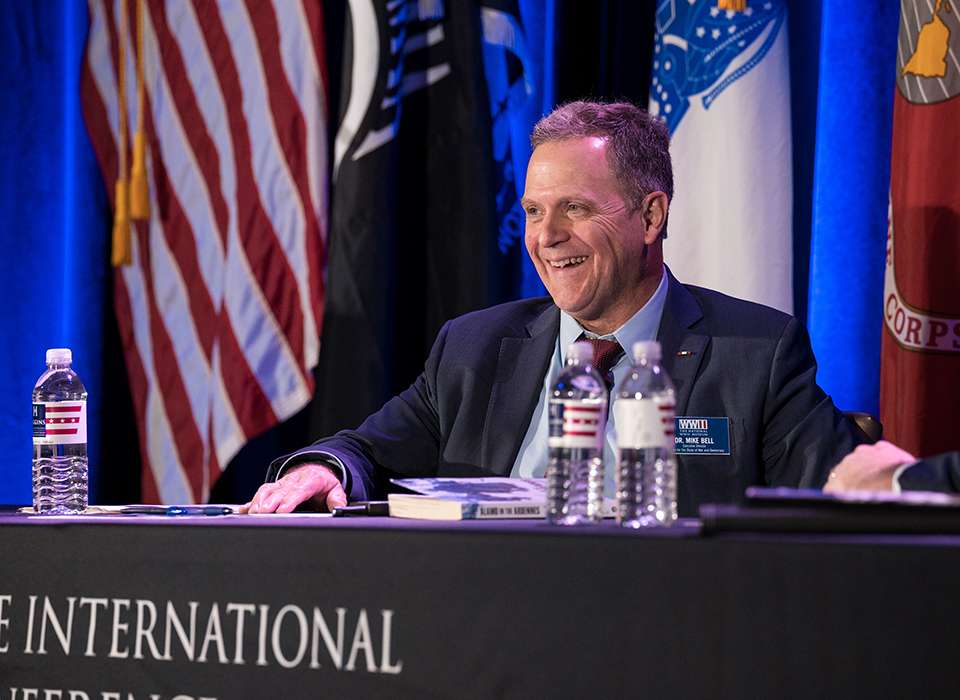
Michael Bell, PhD (COL, USA, Ret.)
Michael Bell is the Executive Director of the Jenny Craig Institute for the Study of War and Democracy. Commissioned in Armor following graduation from West Point, he is a combat veteran, historian, and strategist who has served at every level from platoon through theater army, as well as with US Central Command, the Joint Staff, the West Point faculty, and the National Defense University. As a civilian faculty member at the National Defense University, he also served details to the Office of the Secretary of State and as a National Security Council Senior Director and Special Assistant to the President.
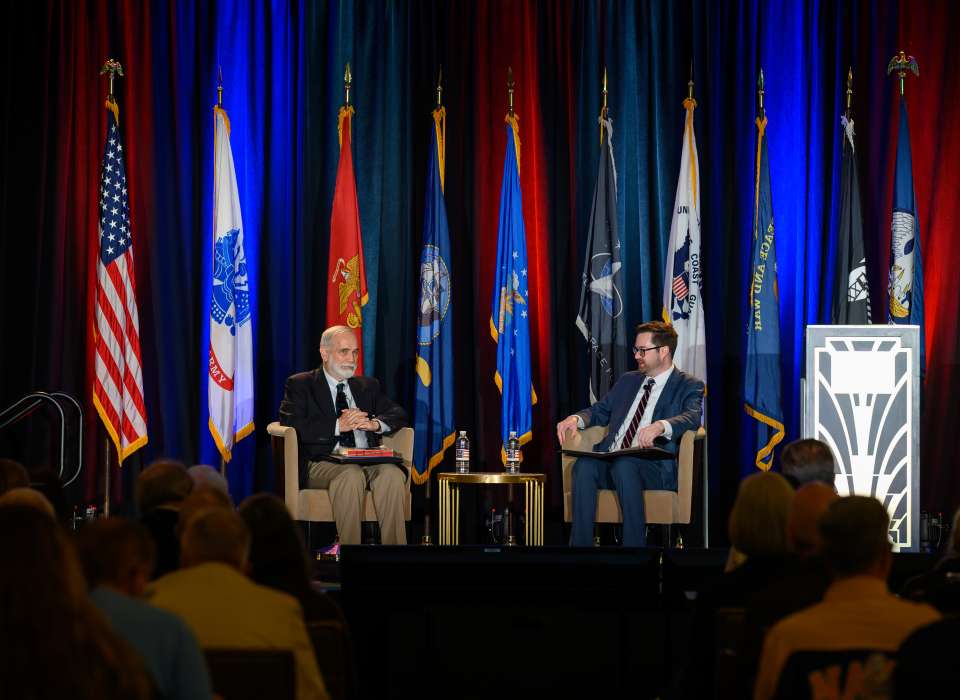
John Curatola, PhD
John Curatola is the Samuel Zemurray Stone Senior Historian at the Jenny Craig Institute for the Study of War and Democracy. A US Marine Corps officer of 22 years, he is a veteran of Operation Provide Hope in Somalia, Operation Iraqi Freedom, and the 2005 Indian Ocean tsunami relief effort. Curatola’s first two books, Bigger Bombs for a Brighter Tomorrow and Autumn of Our Discontent, assess US national security and nuclear capabilities in the early Cold War period. His most recent title, Armies Afloat: How the Development of Amphibious Operations in Europe Helped Win World War II, explores the US Army’s journey in mastering amphibious warfare
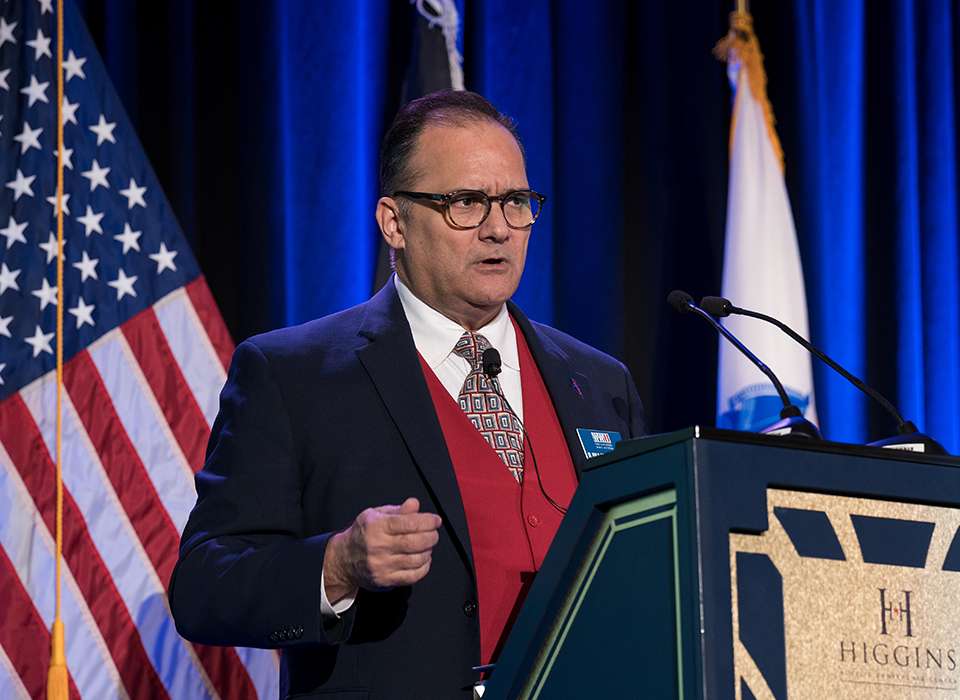
Nicholas Reynolds, PhD
Nicholas Reynolds is a US Marine Corps veteran, serving as an infantry officer and then as an official historian. As a Colonel in the Reserves, he was Officer in Charge of Field History, deploying historians around the world to capture history as it was being made. For many years, he worked at CIA, most recently as the historian for the CIA Museum. Reynolds has taught at the Naval War College, Johns Hopkins University, and the Osher Lifelong Learning Institute. He is the author of Need to Know: World War II and the Rise of American Intelligence.
Jeffery Rogg, PhD, JD
Jeff Rogg is Senior Research Fellow at the Global and National Security Institute at the University of South Florida where he conducts policy-relevant research in the areas of intelligence, grand strategy, and national security. He is the author of The Spy and the State: The History of American Intelligence.

-
 Topic
TopicBattle of Iwo Jima
In 1945, US forces bounded forward in the Central Pacific as combat reached ever bloodier crescendos.
-
Article Type
Iwo Jima: Sacrifice and Sanctuary
In the annals of US Marine Corps history, few battles resonate like that of Iwo Jima.
-
Article Type
Call for Action and Liberation in the Philippines
As General Douglas MacArthur’s campaign on Luzon was underway, news of the Palawan massacre produced a call to action to save thousands of Allied POWs and civilian internees from a similar fate. With the extraordinary assistance of Filipino guerrillas, four daring raids were launched behind Japanese lines to liberate those camps.
-
Article Type
The 1941 NKVD Prison Massacres in Western Ukraine
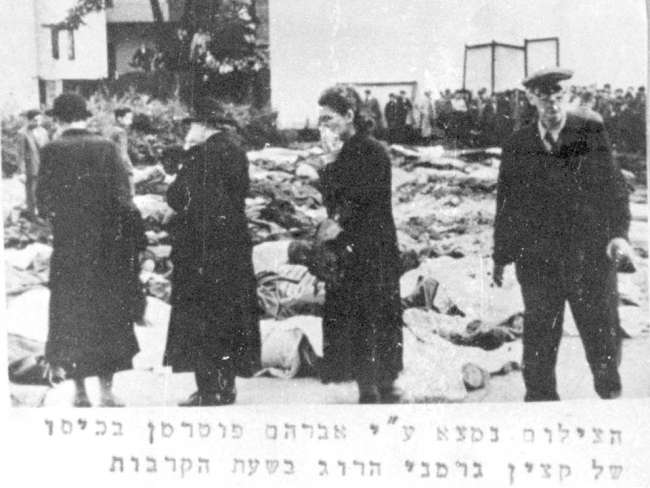
During the German invasion of the USSR, the Soviet Secret Police (NKVD) brutally murdered between 10,000 and 40,000 political prisoners in Western Ukraine over the course of eight days, which sparked waves of ethnic violence following the German occupation of the region.
Special thanks to The Dale E. and Janice Davis Johnston Family for their generous support of this series.
Part 8: Code and Combat on Iwo Jima
Sponsor Read:
This podcast series by The National WWII Museum is made possible by the support of the Dale E and Janice Davis Johnston Family Foundation.
Archival:
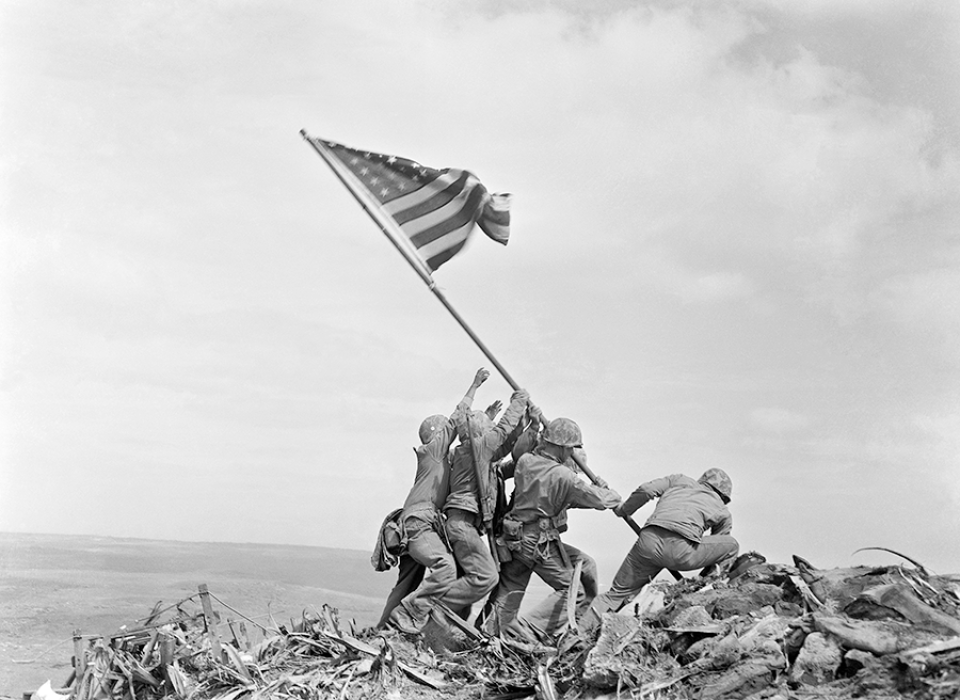
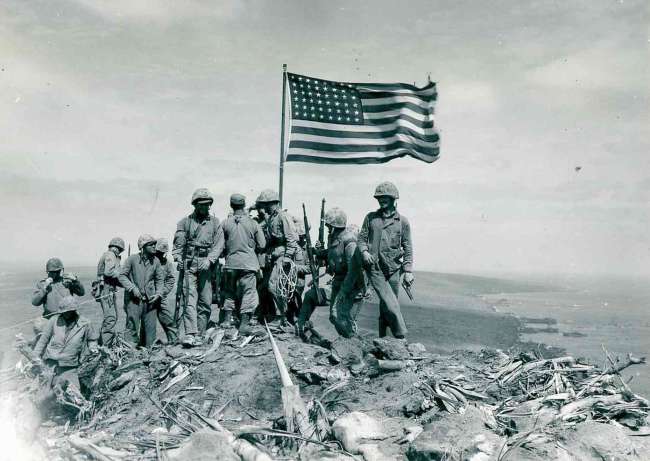
We delay the music of the Cleveland Symphony Orchestra to bring you a special report by the Secretary of the Navy, James Forrestal. Speaking from Guam. Up the precipitous side of a six hundred foot extinct volcano, so precipitous that it seemed almost vertical, went a platoon of American Marines. And then, a few minutes later, from the thousands of throats upon ships and on land and sea, came the sudden cry, there goes the flag! As you know by now, Iwo Jima is a tiny island five miles by two and a half. Mount Suribachi, where our flag went up on Thursday, being its highest point. That was how the Stars and Stripes went up on the first island of Japan's outer rim of island defenses. It's the first step in a sequence of doom for their homeland.
Bradley Hart:
In the early months of nineteen forty five, the allies are advancing in both Europe and the Pacific. In February, an iconic photograph is taken of Marines raising the American flag on Mount Suribachi on the island of Iwo Jima. But an under told story from The secret World War Two made this iconic moment possible. Major Howard Connor, a signal officer for the fifth Marine Division, said, quote, were it not for the Navajos, the Marines would have never taken Iwo Jima. In this oral history from The National WWII Museum's collection, Bill Toledo, who was a Navajo code talker in the Marine Corps, explains how one simple word can become code.
Oral History:
I still remember, yeah, like a tank. That's a turtle named after a turtle because it has a heavy shell. Navajo, we call it. There's an egg that we eat for breakfast. There was a bomb. That's what we call it. Is a code name for a bomb. And then there's a potatoes hand grenade. We call it. We call potatoes. [speaking Navajo] Airplane, Like a buzzard. You know those big- cause they're wide wingspan. There- a buzzard was a bomber. We call it, the code name for that. The bomber is [speaking Navajo]. And then you have the hummingbird. The little tiny ones. You know, that was a fighter plane. We call it [speaking Navajo] Battleship was a whale. We call it big fish. We codename is, uh. And then the cruiser is a small whale. And then we call it A submarine is the iron fish. We call it [speaking Navajo]. And then then the words like "that." Letter T code name for letter T is turkey [speaking Navajo]. And then hat is [speaking Navajo] hat, you know, like a cowboy hat, we call it. So we call it. We put that together. It says turkey hat. And then hill code name for letter H is a horse. And then the "ill" is a sick. So we call that sick horse. [speaking Navajo]. Letter A is named after the red ant we call [speaking Navajo] Letter B is a bear. Letter C is cat [speaking Navajo]. Letter D is deer [speaking Navajo]. So. So those are some of the code names for the alphabets.
Bradley Hart:
Michael Bell and John Curatola joined me again. Mike and John, thanks for being here.
Mike Bell:
Hey you're welcome Bradley. Thanks.
John Curatola:
Happy to be here.
Bradley Hart:
John, let me start with you. You know, you've you've written extensively on the air war and the air war in the Pacific. Let's talk about Iwo Jima. Why this little volcanic island?
John Curatola:
Yeah. It's a it's a little speck of of dirt in the middle of the Pacific. It's about eight square miles. It's really not much of anything, but it's the waypoint from the Marianas to Japan proper and starting in the fall of nineteen forty four, twenty first Bomber Command is going to plant its flag there in the Marianas and start conducting air operations, strategic bombing operations over Japan proper. Well, the problem is that on Iwo Jima is a small Japanese detachment that not only has a radio, but also have radar, and they can detect the Americans moving air fleets across the Pacific up to Japan proper. Another problem that you have is that there's a couple of airfields on Japan, and every now and then the Japanese will get froggy and they will fly an air raid down the Marianas and and bomb our new precious B-29s on these nuisance raids. So what you have here is fortunate location for Japanese Japanese forces. One other thing that happens along the way is that the B-29 has some problems, as they say in the Air Force. Never fly the A model of anything. Well, this is the A model, and it has all kinds of mechanical problems. And they would kind of like to have an emergency airfield for B-29s that are having problems either in or out or back from the target itself to divert to so they can eventually make it back to the Marianas. And oh, by the way, they also envisioned that they were going to need some fighter escorts as well, and that might be a place where we could put P-51s, where they could provide that fighter escort for those B-29s while they're over the Japanese homeland.
Bradley Hart:
So, Mike, let me ask you, at this point in the Pacific War, what's the overarching strategy here? We've got MacArthur down in the Philippines, you know, shortly after this. Actually, he's not there yet, but he's pushing that direction. We've got this sort of discussion about where where the next jumping off Point Pacific might be. What are we doing here?
Mike Bell:
Operations of Luzon and northern Philippines start in January. So it's just a month prior. You know, this was seen as the set up, of Iwo Jima and Luzon into the move into Okinawa. We'd already decided we're not going to go to Formosa. We'll go to Okinawa. And from there, this sets up the plans for the invasion of southern Japan as a. As the kind of final staging point or base, if you will. So at this point in the war, you know, I think I think you're trying to look for. How do you bring about the defeat of Japan? There are the advocates, you know, John suggested that think maybe air power alone can do this. The other piece is once you're in the Philippines, you can now interdict Japanese shipments from the southern resource area. And so you can take away the the bauxite, the fuel oil, all the things they need for their war economy at the same time. So each of these, I think are, are crafted to kind of put the final stranglehold, if you will, on the home islands with the hope that this can bring about the overall surrender of the Japanese Empire.
Bradley Hart:
Now, John, let me ask you, you know, this is a battle that has a pretty unusual trajectory in some ways. I mean, one of the sayings that you and I have talked about in the past is the Japanese are not on Iwo Jima. They're in Iwo Jima. What do the Marines face when they go ashore?
John Curatola:
Yeah, absolutely. By this time of the war, the Japanese have have learned to adjust their tactics a little bit. They've realized that the Americans, when they do an amphibious assault, they're going to bring so much firepower with sixteen inch guns and close air support and all that firepower that it doesn't pay to put defensive positions on the shoreline because the Americans are going to blow it up with pre-landing fires. And so what they decided to do is to build defensive positions within the island itself. And as I mentioned, you know, it's a tiny speck of land. It's only eight square miles. The Japanese will dig twenty miles worth of tunnels in this eight square mile island, all interconnected with defensive positions, interlocking fields of fire, well supplied. And so when the Americans land on Iwo Jima, they don't see a lot of dudes. They're all in Iwo Jima, not on top of Iwo Jima.
Bradley Hart:
So let's talk about the Navajo code talkers. What's this group of Marines and what are they doing? Why are they unique?
John Curatola:
Yeah. It's interesting. Um, you know, the need to send coded messages and have secure communications, has been part of military operations for decades. And it's even more important now when you have electronic communications, either whether it be wire or wireless. And what happens is in the First World War, they actually the US Army actually started using Choctaw to use for communication security. Well, there's an American missionary by the name of Philip Johnson, who grew up on Navajo lands, and he comes up with the idea that the Navajo language is not written. There's no symbols for it. And it is very, very complex. And maybe that's a great way to have secure communications. And so what he does is he actually goes to San Diego, to the eleventh Naval District, and he meets with Marine General there named Clayton Vogel. And he proposes this idea of using Navajo as a language for secure communications. And he's a little skeptical. The general is a little skeptical, but they run a little test in February of nineteen forty two, and they tell them to to translate, you know, a number of messages. And the Navajos are able to translate these things. Uh, these three messages in basically 20 seconds where if you used normal encryption, it would take thirty minutes. And the general was sold on this. And so he goes to the commandant of the Marine Corps who buys off on the idea, and they start recruiting Navajos from New Mexico, Arizona, Utah, kind of where the the Navajo Nation is. And at this time, the Navajo Nation is about fifty thousand people. Generally, they're on the reservations and they're going to start recruiting, uh, Navajos, and they're going to have the first twenty nine are going to go down to San Diego and go through Marine Corps boot camp, and then they're going to go to a communications school and learn about basic communications, and then they're going to follow on with some training with regard to how to use their codes. But what they find out is they develop two different types of codes. One is a Phonetic code, and one is one that uses coded terms. So instead of using Alpha Bravo Charlie Delta that we would phonetically they're going to use Native American or Navajo words phonetically. Like they're going to use the word [speaking Navajo], which is the word for ant. And that symbolizes the letter A. And so they'll learn how to spell words using these Navajo words themselves. Then they also have coded terms of the type two one. Will they have these unique names for different types of applications, i.e. iron fish means submarine, hummingbird means fighter plane, vulture means bomber aircraft. And so they're actually to develop these terms over time. And these Native Americans are going to be sent to these islands in the Pacific. They're going to go to places like Guam, Peleliu, Okinawa, Iwo Jima, and they're going to be sending tactical communications from the front lines back to higher headquarters. And this is a time when about two dozen Non-navajos can understand the language because it's so complex, and certainly no Japanese are going to be able to understand.
Bradley Hart:
Those people probably aren't in the Imperial Japanese Army or Navy.
John Curatola:
That's right. The thirty people or two dozen people who can. Yeah, they're usually Americans. And even then you have a dialect issue and those kinds of things as well. So it's incredibly complex language that is not written down. And it's something the Japanese are never able to break.
Mike Bell:
To emphasize your point, you know, not only are you using a very complex language, Native American language, but on top of it, you have this kind of phonetic code and the other code. And so, you know, there had been a sense, like with the with the Germans, that, oh, we can study Native American languages because the U.S. military is going to use those again on the battlefield. This takes it to a different level where you can't really crack that unless you understood what Navajo meant. And even within the dialects And to learn how different tonalities, how you say a word also changes this meaning, you know, within this Navajo language itself. And, and so it really is a very precise language.
John Curatola:
And what's interesting about this, and I just found this out recently, was that this whole application remained classified until nineteen sixty eight because the Americans thought we might use this again in the future. And only then was it declassified. So it really talks about, you know, how important this was looked upon during the war and the fact that it was classified for decades afterwards.
Bradley Hart:
And what's interesting as well is it's almost uniquely American advantage that you have people who speak these languages that are largely or exclusively regional to the United States, especially in the example of the Navajo, the southwestern United States. Whereas an adversary would have even if they study these languages, an incredibly difficult time, even really knowing what's going on, let alone decoding it.
John Curatola:
Yeah. And when they actually- after the war and they do some interviews with Japanese officers, especially their Intel officers, that they will say, hey, we could figure out what the U.S. Army was doing, what the Army Air Corps was doing. We couldn't figure out what the Marines were doing when they were using these codes.
Bradley Hart:
So how big of an advantage is this in the Battle of Iwo Jima that we have the Navajo code?
John Curatola:
Well, I think it's significant because again, you're at this tactical level of war. The ability to articulate ideas and reports relatively quickly on the battlefield will save lives. It is actually imperative to have to shoot, move and communicate. Those are the three things on a modern battlefield that are important shoot, move and communicate in a relatively quick manner. And these gentlemen are able to facilitate that. Well. And you have, you know, the access by this stage of the war have some very capable battlefield acquisition methods of, you know, radio traffic. And so it's not like you're just talking and it's all secure. Your adversary is actually aggressively intercepting those and try to take those to, to take away those advantage or anticipate where you're going to attack or where you're weak. What units are short on supplies. All those are tactical advantages that this really wipes away that they're not able to get. Whereas in other theaters, you know, you'd hear the Army and and if they're able to quickly respond to that, they can take advantage of it. But you can't do it with the Marines on, on Iwo.
Bradley Hart:
In another region of the Pacific, more than a thousand miles away. A group of Allied commandos and guerrilla fighters set out on a daring nighttime raid on a P.O.W. camp in the Philippines. They're hoping to rescue more than five hundred POWs from the Japanese. Jeffrey Rogg joins me again. Jeff, let's talk this incredible raid on Cabanatuan. What's what's the background of this raid? What's going on in Cabanatuan?
Jeff Rogg:
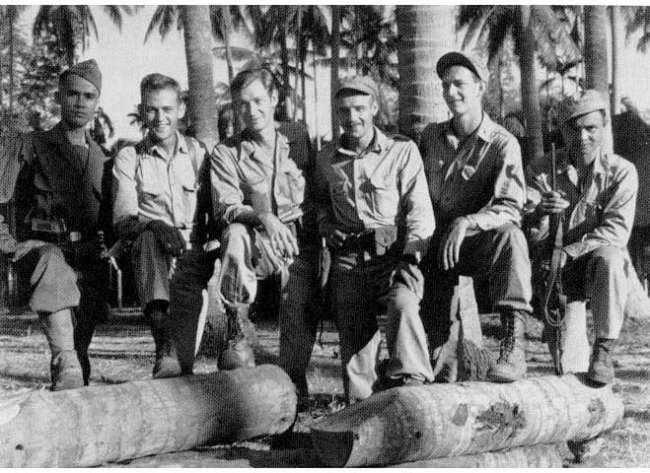
Well, first, I think we need to look back on it from today. And when you ask operators from special mission units, what the toughest type of special operations mission they have is, they'll tell you it's hostage rescue. And you didn't have in the Second World War a Delta Force or Seal team six, but you did have some really well trained and really tough units, and probably some of the toughest were the six Ranger Battalion and the Alamo Scouts in the Pacific. And so in January nineteen forty five, they're going to execute one of the most noble and heroic special operations raids of the entire Second World War. And that is the raid at Cabanatuan. A lot of the attention in the Second World War and Special Operations is on raids like Gunnerside, like we talked about, or the Jedburgh, and connecting with resistance fighters. But we need to remember that there's another type of special operation and that's rescuing people. Hostage rescue before Cabanatuan. One of the elements that took place that took part in the raid, and that's the US Army's six special reconnaissance unit known as the Alamo Scouts, actually did its own hostage rescue. And this was October nineteen forty four. And it was a small Alamo scout team called Team Nellis after the team leader, uh, Bill Nellis and they rescued sixty plus French, Dutch and even, I believe, Japanese civilians from a Japanese camp at [?] in New Guinea. And so the Alamo Scouts actually have a little bit of muscle memory here before Cabanatuan. But one of the things about Cabanatuan that's important is it's one of the greatest hostage rescues or POW rescues, probably more appropriate to say POW rescues of the Second World War. But it takes place after one of the worst POW massacres in December nineteen forty four on Palawan island near Puerto Princesa. The Japanese had burned to death and then shot the survivors of a small group of relatively small group of POWs. About one hundred and fifty and only eleven survive. Now the U.S. finds out about this. And remember, the Japanese are on the back foot and being a POW in a Japanese camp during the war was already brutal. There is a difference between the treatment of American POWs by the Germans and the Western Theater. Now remember, the Germans were terrible to the Soviets and other prisoners of war, but the Japanese really mistreated American POWs. And so the highest rate of POW deaths, American POW deaths in the Second World War was in Japanese POW camps. So with the approach of the end of the war, now you have the concern that the Japanese are going to summarily execute all your POWs. And the plight of the POWs at Cabanatuan was particularly bad. In October, the Japanese had actually moved away the healthier prisoners that they had there to bring them to work camps. And so it left about five hundred POWs. And it wasn't just Americans, by the way. There were Brits there. There were some civilians, but these were people who had been tortured, malnourished, abused. And now they're facing mass execution. The Americans again are there, island hopping, and they make it to the Philippines by January nineteen forty five. They land on Luzon and that's that's the island that Cabanatuan is on. And so they they know that the prisoners at Cabanatuan are probably facing execution. The question is, is how are you going to get to them? The large conventional units were fighting the Japanese along a front. And so, you know, if you think about it again, this conventional battle, it's grinding and it's also slow. And so if you if you wait on the conventional troops, the Japanese probably have enough time to execute your POWs. So again, kind of like gunner side, what are you going to do? Well, this is what special operations are for. And so this mission falls to a lieutenant Colonel Henry Mucci of the Sixth Ranger Battalion. Mucci was notorious for how hard he trained his men. He was a West Pointer. He was a martial artist and a boxer. And there was a quote sort of attributed to Mucci by one of his rangers who said that Mucci said when he was training them, I'm going to make you so mean you'd kill your own grandmother and his men, you know. They hated him when they trained him, but they loved him after. And by the way, the same thing can be said about the Alamo Scouts. The Alamo Scouts went through a six week selection process that was rigorous and kind of like the Rangers. They're doing the same basic missions, patrolling, reconnaissance. You know, the Rangers is more men. The Alamo Scouts is smaller elements for reconnaissance. And so, you know, these are really hardened troops by the time they get to to Luzon in January nineteen forty five. But it's one thing to be well trained and tough. It's another thing to be prepared. And so rescuing five hundred POWs twenty five or so miles behind the front, behind enemy lines when they're held by Japanese who are willing to execute them, and with Japanese reinforcements nearby, is a tough mission for anyone. Luckily, the Americans have overhead reconnaissance overhead surveillance, so they have pictures. They also have the Filipino guerrillas who have been operating behind enemy lines, you know, fighting behind enemy lines the entire war. And so they're going to augment the Rangers and the Alamo Scouts. The problem with the camp, when Mucci and Captain Robert Prince, who was the commander of C company, which is going on the raid when they see it, is there's open fields surrounding it. So how are you going to get there and launch this raid and kill the guards quick enough? Take out the guards, rescue the prisoners before they just start killing the POWs. So they have to devise a distraction. Now, originally, Mucci wanted close air support and they have P-61 Black Widow planes. The problem was, is they it's not a matter of trust necessarily. They were worried about how many people knew about the operation and it leaking. And then the Japanese finding out about it. So they decide on a different ruse. They're going to have one P-61 buzz the camp ahead of the mission. The way the mission is executed Is two Alamo Scout teams, Team Nellis, which had already done a hostage rescue and then Team Rounsaville after the. Tom Rounsaville, who was the team leader. They're going to go ahead. And so they infiltrate ahead of the main Ranger body, and they're going to survey the camp. And one of the ways they do that, you know, some of them dress up as just Filipino farmers to try and get close to it. Other ones are doing overwatch around the camp, and then the main ranger force has to march twenty five miles. Again, twenty five miles ish behind enemy lines. And when I say March, I mean really march fast because most of the movement has to be done at night. So this is important to to the mission because again, training, toughness and preparation is one thing. But how do you get back? The Rangers didn't take much with them because they had to travel light and fast. So they have weapons, very little food, you know, lots of ammunition, very little food, very little water. And now they have to get five hundred malnourished POWs back the same route that these really tough Rangers and Alamo scouts, they're able to make the march. How do you get back? So the Rangers set off. The Alamo Scouts are already in place, and they're augmented as well by Filipino guerrillas, a couple hundred Filipino guerrillas under Captain Juan Pieta. And one of the important things the Filipino guerrillas are going to do is they're going to be a blocking force to prevent Japanese reinforcements from reaching the camp. And they're also going to help transport the sick POWs when they are in place. The P-61, as planned, is going to start buzzing this this POW camp. And there was a debate about what time to launch the raid. And Mucci decides like right about sundown, not after sundown. The plane has to be visible, but not too far ahead because you have the Rangers who are trying to basically belly crawl across this flat ground. And so what's interesting is the plane buzzes the camp, and sure enough, the Japanese are distracted. But one of the reasons they may have been distracted is apparently on this particular plane. And I know you have planes that have scandalous art from the Second World War. There's a nude blonde. So this plane gets the Japanese attention and the Rangers start the raid. And it's it's remarkably successful. Some of the Japanese were able to resist, but they were largely surprised. And the Rangers took out most of the guard towers. But one Japanese Mortarman was able to get some mortars off and unfortunately, one of them fatally wounds the battalion surgeon, Captain James Fisher. Other than that, though, the raid takes about a half an hour and they secure all the prisoners, which is remarkable. And then again, the challenge is to get them all back. So they had arranged to have carts. I mean, this is really a desperate march back. And it actually the line reaches about a mile, a mile and a half long, which is really long. You can have what's called breaks in contact along that line. These prisoners are in a desperate way. You have Rangers and Alamo Scouts who already themselves, you know, have been awake for so long. Carrying men physically, and then you have them pulling carts physically. And it's so desperate, actually, that the line isn't even able to make it back to the American front. They have to stop about seven miles away. And now, luckily, the American send a relief column of trucks in a convoy, and they're able to get them all out of there. And I should also mention, one of the Alamo Scout teams remained at the site even longer in order to make sure all the POWs were able to make it back. The Japanese didn't sit back and let this happen. They did send reinforcements, and this is again where the Filipino guerrillas were important. They're able to hold off Japanese reinforcements in. All in all, looking at Cabanatuan. I mean, it's a miraculous raid. One of the other interesting elements. You know, you have these tough, uh, special operations types. You have Alamo Scouts and you have the Rangers. They also sent along some photographic elements and they take pictures. And you can see some of the pictures of the men on after this raid. And there's there's pictures of the POWs who, you know, they're in a bad way, but some of the Rangers are just asleep. They're exhausted from this mission, you know, being up hours and hours. When you look back on this raid, it was so successful that we actually repeated a few times afterwards and launched more POW rescue operations and rescue about seven thousand POWs just following the raid from Cabanatuan. And so when we think about special operations in the Second World War, I always like to remind people that one of the most noble types of special operations is hostage rescue and rescuing truly desperate people in circumstances where, you know, they're facing imminent death. And we're lucky to have units that follow that legacy today.
Bradley Hart:
And what's remarkable about this is not only the number seven thousand POWs rescued throughout the combination of these raids, but the fact that many of these POWs have actually been in custody, I guess, for years at this point, some of these people were captured in the initial fall of the Philippines.
Jeff Rogg:
That's right. In fact, Cabanatuan held a number of prisoners who had already experienced the Bataan Death March, the American surrender in the Philippines in nineteen forty. In May nineteen forty two was a disaster. Tens of thousands. And the plight actually for the Filipino civilians was even worse in some ways than for the Americans. And so, you know, these prisoners had when you read about the conditions in the camp summary execution by Japanese guards, you know, there's movies that are made about this. So this is actually a formative moment in some ways for the modern special forces community.
Bradley Hart:
How is this raid remembered and viewed today?
Jeff Rogg:
Certainly with a lot a great deal of pride by the Rangers. They often they honor the raid every year and there will be Rangers from the current battalions, you know, present as an honor guard at these raids. You know, going back to what these missions had in the Second World War versus today. You can't necessarily compare the technology. You can't compare the ability to plan all the ISR, intelligence, surveillance, reconnaissance. But I think what you can compare is the quality of the individual, the type of individual that served. And one of the great examples is a. He eventually retires as a command sergeant major, but. Galen Kittleson. Kittleson. He was on Alamo, the Alamo team Nellis. And he participated in that first hostage rescue at [?] in New Guinea. And then he's also on the Cabanatuan rescue operation. And then eventually Command Sergeant Major Kittleson also participates in two POW rescue operations during the Vietnam War, including the very famous Santee raid. And so he this this one person has continuity in POW rescues across two major wars. And that's the kind of lineage command Sergeant Major Kittleson is still well regarded in special operations today. That's the kind of lineage that our own hostage rescue units have. And, you know, one fact that seems somewhat intuitive when you think about it, but but maybe isn't necessarily top of mind to all of our listeners is that this is one of the most difficult types of operations. This is not like a raid where you're blowing something up or simply wiping out enemy units. Hostage rescue is really hard.
Bradley Hart:
That's right.
Jeff Rogg:
And one thing that operators will remind you is aside from the military difficulties, they're politically contentious. You know, all eyes are on this particular mission as one person related different missions, you know, fail over longer periods of time, like unconventional warfare might fail a hostage rescue fails, can fail very spectacularly at a singular moment in time with all eyes on it. And the political repercussions, uh, usually bounce back. And so there's a great deal of planning. There's, you know, a great deal of toughness in the people executing the mission. And we forget about the stress on the people making the decisions and also all the support that goes into it. So, you know, I had already mentioned the Filipino guerrillas, but one of the problems that they even had to figure out, and the way they they got around it is the Filipinos had these carts that they used, you know, for, for basic farming and getting around. And one of them thought and, you know, Captain Juan Pajota was like, let's use these to get these POWs out. So there's a certain level of support and resourcefulness that you need for these missions. And that's, that's another element of continuity that you still have to this day, even though, you know, arguably we have a lot more resources we bring to bear.
Bradley Hart:
Even as the war enters its final stages, the seeds of a future conflict, a cold conflict are already being planted back at home. Donovan's OSS is contending with the activities of a foreign Intel agency, the Soviet NKVD, a precursor to the KGB. Nick Reynolds joins us again. So, Nick, one thing we've talked about throughout the podcast is that, of course, the German espionage services, the Abwehr, the Gestapo, OSS, British, SOE, MI5, MI6, you know, this sort of alphabet soup of acronyms here. They're not the only intelligence services operating during the Second World War period. And of course, beyond the war, too. There's the Soviet NKVD, which will later on become the KGB. So how large is the NKVD in this period, and what are they up to, both in Europe and the United States during this period?
Nick Reynolds:
The NKVD is huge. The end strength of the NKVD is approaching a million. Now, a lot of these guys are border guards, but a lot of them aren't, and a lot of them are intelligence officers who are deployed overseas under deep cover and under official cover. And they have very sophisticated operations in America, and they've had them for quite some time. We see the creation of OSS is really exciting for them. Like, wow, you know, all all this time we were having trouble figuring out where we should focus our attention in the United States, right? Because there is no Americans don't have an NKVD. They don't have an MI5 or an MI6. And so now we got an intelligence agency, and that can be our target. I mean, that's what intelligence officers like to do. They like to penetrate other intelligence agencies. And so they go at it big time. And there's varying counts. But a pretty reliable one is that they have eighteen reporting penetrations of OSS by the end of the war. And the biggest one is, of course, Duncan Lee. Duncan Lee is the one with the best access. And he's a really good spy. So the Soviet handler says Duncan. So he sorts Donovan's mail, sorts the daily traffic, and decides what Donovan's going to read on a given day. Right. So they get this in a worldwide intelligence service like that. There'd be hundreds of cables coming in every day. The director can't see them all. And so somebody like Duncan Lee goes through the traffic and says, hey, you know, he really should know this. He really should know that. Well, in addition to doing that, it's like, well, the NKVD should know it too. So the NKVD handler says, Duncan, just, just, you know, bring me a drop copy. You know, Duncan says, no, no, I won't do that, because if I'm caught, I will be in big trouble. So. But I'll tell you what I do. The really important ones, I'm going to memorize them and I will come out and dictate them to you. NKVD is not too happy, but it's the only deal they're going to get and they take it. The interesting thing about this is many years later, so fast forward thirty, forty years and we get a glimpse into the Soviet files around about nineteen nineteen ninety. So we are able to take a piece of OSS traffic that crossed Duncan Lee's desk. And we are able to find almost verbatim, almost verbatim, the same document in the Soviet files.
Bradley Hart:
So how was he transmitting these memorized memoranda, if you will, to to Moscow. How did they ultimately.
Nick Reynolds:
Well, so you he would go to a meeting with somebody who was in a Soviet the Soviet embassy or the illegal Rezidentura. And he would dictate back to him. This is what it said. This is the document that Donovan read today. And so the poor Soviet is is sitting there writing this out probably longhand. Right. No, no tape recorders, no iPads. He writes it out longhand, takes it into the common guy. The common guy puts it on the wire. Amazing.
Bradley Hart:
So what happens to Duncan Lee?
Nick Reynolds:
Duncan Lee? So he's a lawyer, right? Duncan Lee, at the end of the war, when there's a you know, there's one of the people who is a middleman between Lee and the Soviets as a woman named Elizabeth Bentley. Elizabeth Bentley basically turned state's evidence and tells the nation and the FBI what she has found out, and she basically spills the beans on Duncan Lee. Duncan Lee can see what happens to other people that she has implicated. And the worst thing you can do, Duncan Lee figures, is plead the fifth. That means you're guilty. You. You will not be convicted on. After taking the fifth, you won't be convicted on that little slice of of information because it's unconstitutional. But you're you're done. It's it's over. Right. And so he doesn't take the fifth. He lies, he lies and he lies and he lies. And he also appears to be more anti-communist than Then J. Edgar Hoover, he gets involved with fighting the Chinese communists. He gets involved with Claire Chennault. He lives in Bermuda for a while. When the pressure gets a little too much for him, he wants to get away from, you know. You know, it's not really pleasant having people, you know, reporters calling you up and saying, hey, is it true? Or having an FBI agents who say, we need you to come down for one more interview, Mr. Lee. So he lives in Bermuda for a while, lives in Canada for a while, but basically dies without, you know, without acknowledging what he did.
Bradley Hart:
And there's really no doubt that he was operating as NKVD?
Nick Reynolds:
To me, as a historian, there is no doubt that the, you know, the it's and it's not just circumstantial evidence. It's not just it's not just an interpretation. To me, the documents speak for themselves. We don't just have these documents that I talked about earlier where you can see the same report on, you know, let's say, railroads in France. And you can see that in in the OSS files and then the NKVD files. We also have some not all some NKVD files that talk about a man who is almost certainly him as an agent.
Bradley Hart:
So, Nick, who is Elizabeth Bentley? Why is she important?
Nick Reynolds:
Elizabeth Bentley is important in this context because she is the first one to really establish that the Soviets had penetrated OSS and other parts of the US government. Elizabeth Bentley and Whittaker Chambers and Whittaker Chambers. Mhm. You know, a lot of people didn't quite believe him when when he made similar accusations. But Elizabeth Bentley makes accusations and and they stick. And the FBI. The FBI listens to her, takes her at at face value. And by and large, her allegations proved to be very accurate. The back story, I think, is fascinating. So she became a Soviet spy, in part because she was the lover, or maybe more than in part, she was a lover of Jacob Golos, who was one of their coordinators, who was an illegal in New York City and a US citizen, by the way. He and Elizabeth were kind of a team, and they were also, you know, they were also a couple. In November nineteen forty three, Thanksgiving Day, they went out for Thanksgiving dinner and they go back to Golos apartment. And Golos has a heart attack and dies. And Elizabeth has a pretty good idea of what he's been up to. And she knows that those little bits of paper in his in his pocket, you know, you know, they're cryptic references to a bus station in Hoboken and bank deposit box here and something in the safe at the office. And so here he is, dead on the floor. And she's going, boy, I better get rid of the evidence first as much as I can before I call anybody. So that's what she does. A lot of us might dial 911 first and worry about the worry about the paper trail later. But she does that. And the Soviets, for their part, go, oh my God, oh my God. Or oh my Stalin or whatever the the non-believers would say at this point. And they come and they want to they want to get Elizabeth Bentley to they want to do damage control, and they want to get her to give up everything that she still controls or knows about. And they want her to, you know, to go quietly. And so Golos is this gritty, working class guy kind of appealing, you know, uh, said to have been very attractive to women and charming, charming in a, you know, really down to earth. And the Soviets sent a guy in a three piece suit. And Elizabeth Bentley says, um, you are not my kind of guy. The Soviets said, well, we can we can provide for you would would you like. They have they don't really understand her or America. They said, would you like a two week vacation in Connecticut? And that's like, you know, Elizabeth wants- she's living in Manhattan. She wants to go to Connecticut for two weeks? I don't think so. And there's a cable back to Moscow, which is like, we can't we don't know what to do. Maybe we should just, you know, make her disappear. And Moscow says, no, we're trying to get away from that sort of thing. Um, you know, try, try whatever else you can. And so she's in this gray area for a couple of years. She eventually gets into another situation. She's with a man who's not in the business but doesn't appear to be quite right. And so she goes to the FBI and she says, uh, you know, I'm not sure what's going on here. And if the so the relationship develops with the FBI. And eventually she says, okay, I'm going to tell you the whole story. She gets debriefed by the FBI agents, and then eventually she does these hearings on the Hill. I don't know. We don't really have television in those days, but they are photographed. You know, they're splashed across the newspaper and it's one revelation after another. It's just a blockbuster of, you know, and these are famous people in in American politics. And she's not just talking about. And, you know, Golos is not a household name. Never, never was, never will be. But some of the people that she met. These are household names.
Bradley Hart:
So who's she naming the names of?
Nick Reynolds:
Well, Duncan Lee would be one. The guy in the oss oss front office. You know, this is these are these are blockbusters. So the whole making people disappear thing is real for the NKVD in this period. I mean, there are agents or alleged agents who simply disappear. Even the United States. Yes. I would take a footnote in nineteen forty five. You know, they are kind of kind of sort of trying to move away kind of sorta, you know, they will make exceptions when they have to. Earlier on you'd see you see the round in the nineteen thirties and the very first part of the war, you do see the, you know, the purges of the security services, which are just insane, just insane. And so you send a guy, you send an agent or an intelligence officer out to the West. He he gets an identity. He lives in New York or he lives in London. He's successful. He's either a handler or somebody who uncovers information on his own because he gets access. And then the NKVD decides, oh, they're too cosmopolitan. You know, they haven't, you know, they're losing touch with their roots. So why don't we just bring them back and shoot them? And Golos is one of those. Golos has been in the United States for a long time. He's gone back and forth to Soviet Union. He's got another family in the Soviet Union, but he only has to see them once every five or ten years. So he can he can have relationships like like the one with Elizabeth and Golos is one of the guys who gets a summons back to back to Moscow. And he saved inadvertently by the FBI that says, you know, you haven't filled out the right paperwork. It might have been a violation of the Foreign Agents Registration Act. I'm not sure. So you can't travel because this is still pending. So the Soviets save it- the FBI, saves Golos life so he can continue to be a Soviet spy against, uh, against America.
Bradley Hart:
Even as William Donovan's OSS faces increasing threats at home, it will still play a major role in the last months of the war. Join us next time as the allies close in on Berlin. And a secret and controversial mission is underway by an OSS operative to help bring the war in Europe to an end.