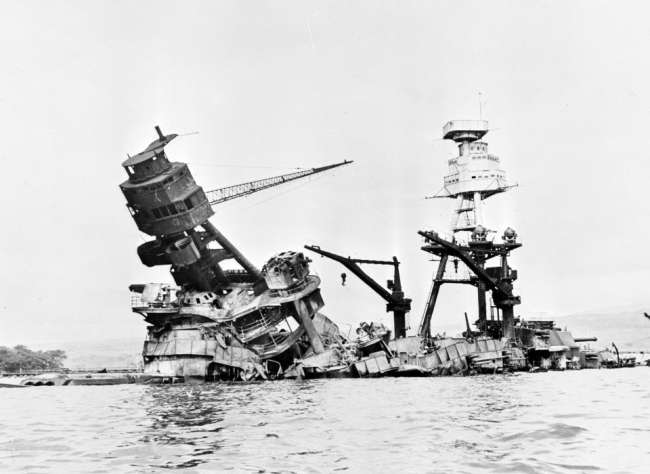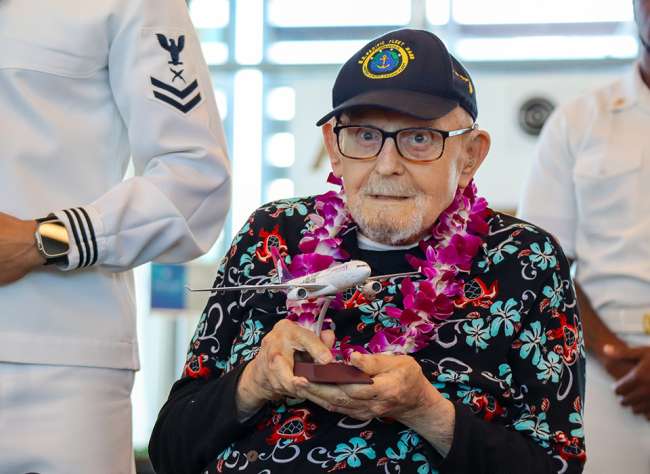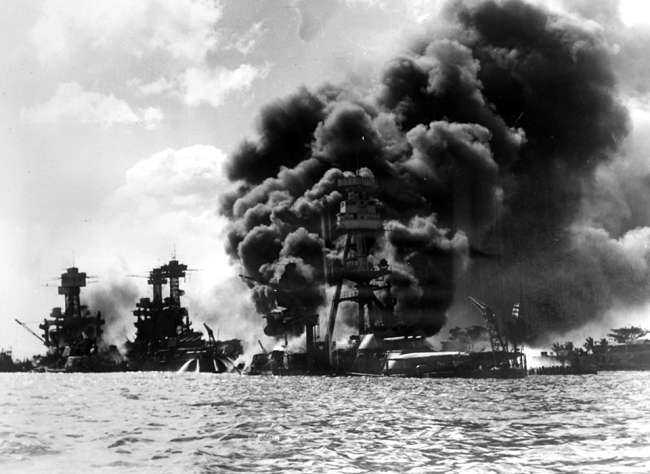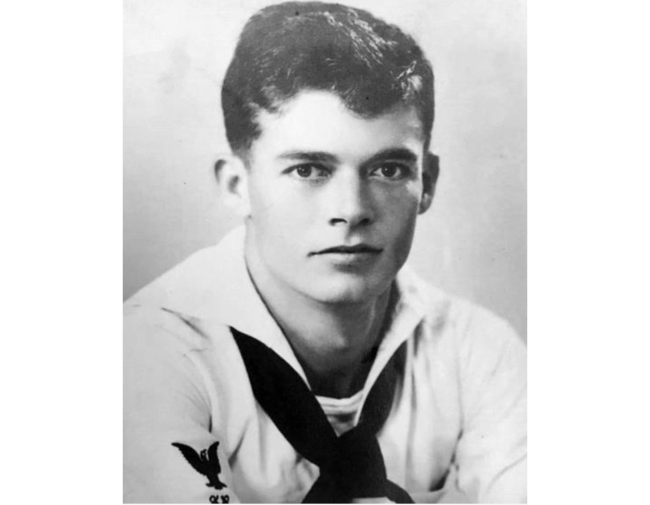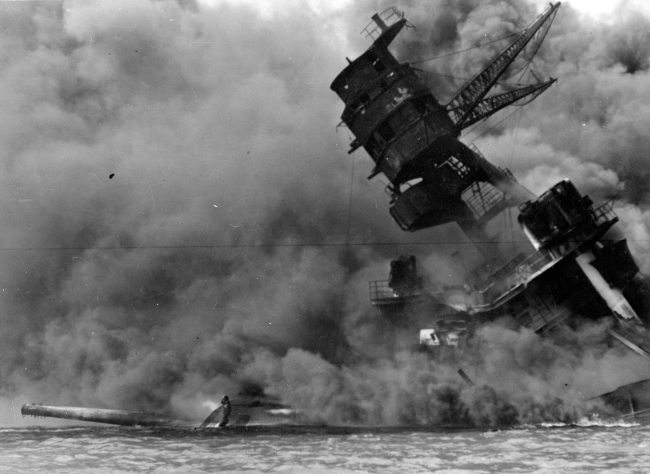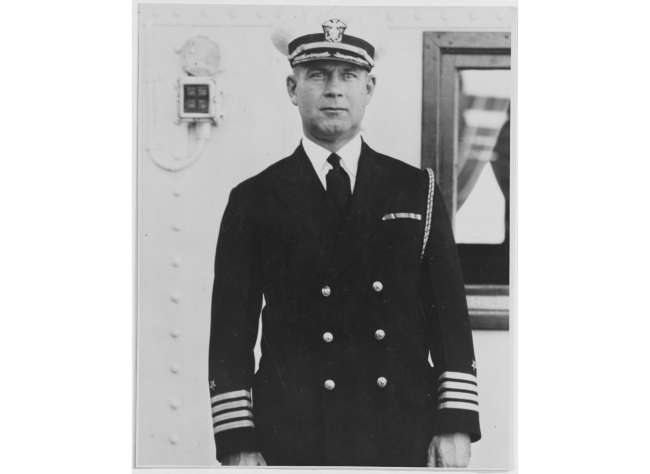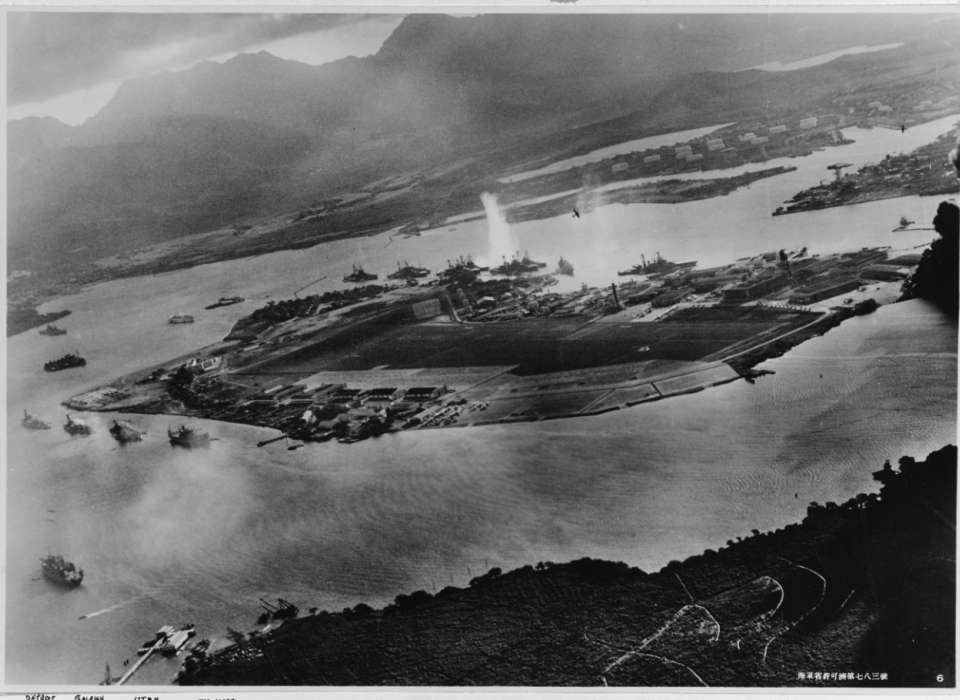
Top Photo: Photograph taken from a Japanese plane during the torpedo attack on ships moored on both sides of Ford Island at Pearl Harbor. The view looks east, with the supply depot, submarine base, and fuel tank farm in the right-center distance. A torpedo has just hit USS West Virginia on the far side of Ford Island (center). U.S. Naval History and Heritage Command Photograph.
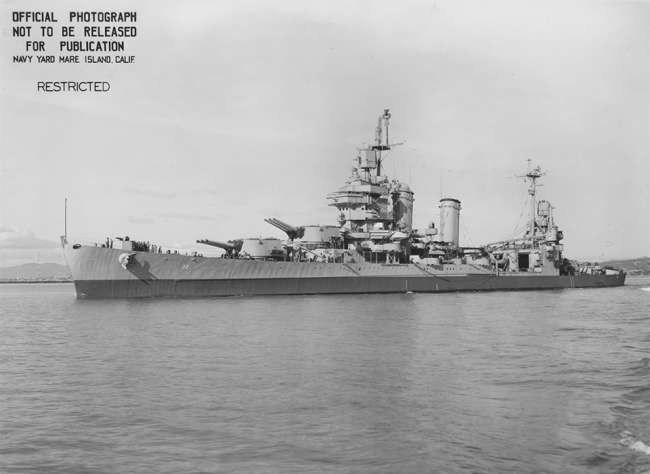
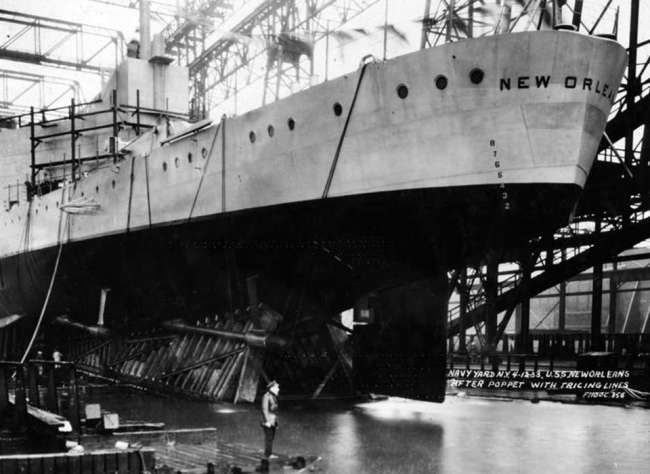
On December 7, 1941, the US Navy cruiser USS New Orleans (CA-32) was anchored at the American naval base at Pearl Harbor in the territory of Hawaii. That Sunday morning, Howell M. Forgy, the chaplain aboard the New Orleans, was preparing his sermon for the day’s upcoming service. A Lieutenant Junior Grade and Presbyterian minister from Kentucky, Forgy wrote in his 1944 memoir that he planned to base his remarks on a passage from the third chapter of St. Paul’s Letter to the Philippians, which emphasized the need to forget the past and focus on the future. His preparations were halted, however, when “the silence suddenly exploded into the deafening clang-clang-clang of the general alarm.”1
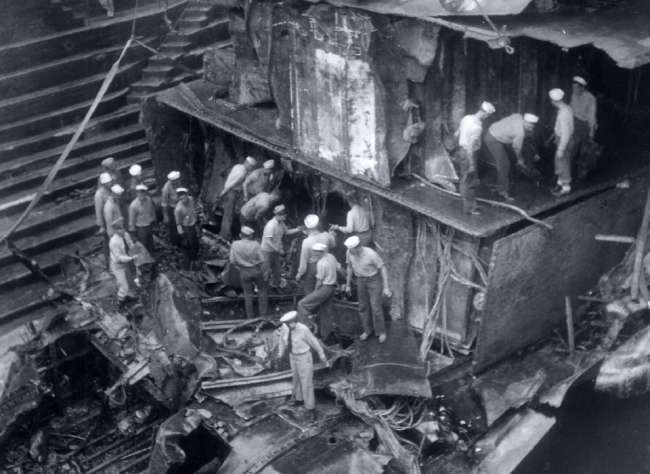
After rushing to his battle station in the ship’s sick bay, Forgy went up on deck to see what was going on. Moments later, he saw the initial results of the Japanese surprise attack on the US Pacific Fleet at Pearl Harbor, including the damage done to the battleships USS Arizona, USS West Virginia, and USS Oklahoma. Years later he recalled that he “gaped with a sense of fascinated helplessness” as bombs continued to fall and American servicemembers scrambled to return fire, treat the wounded, and keep their ships afloat.2
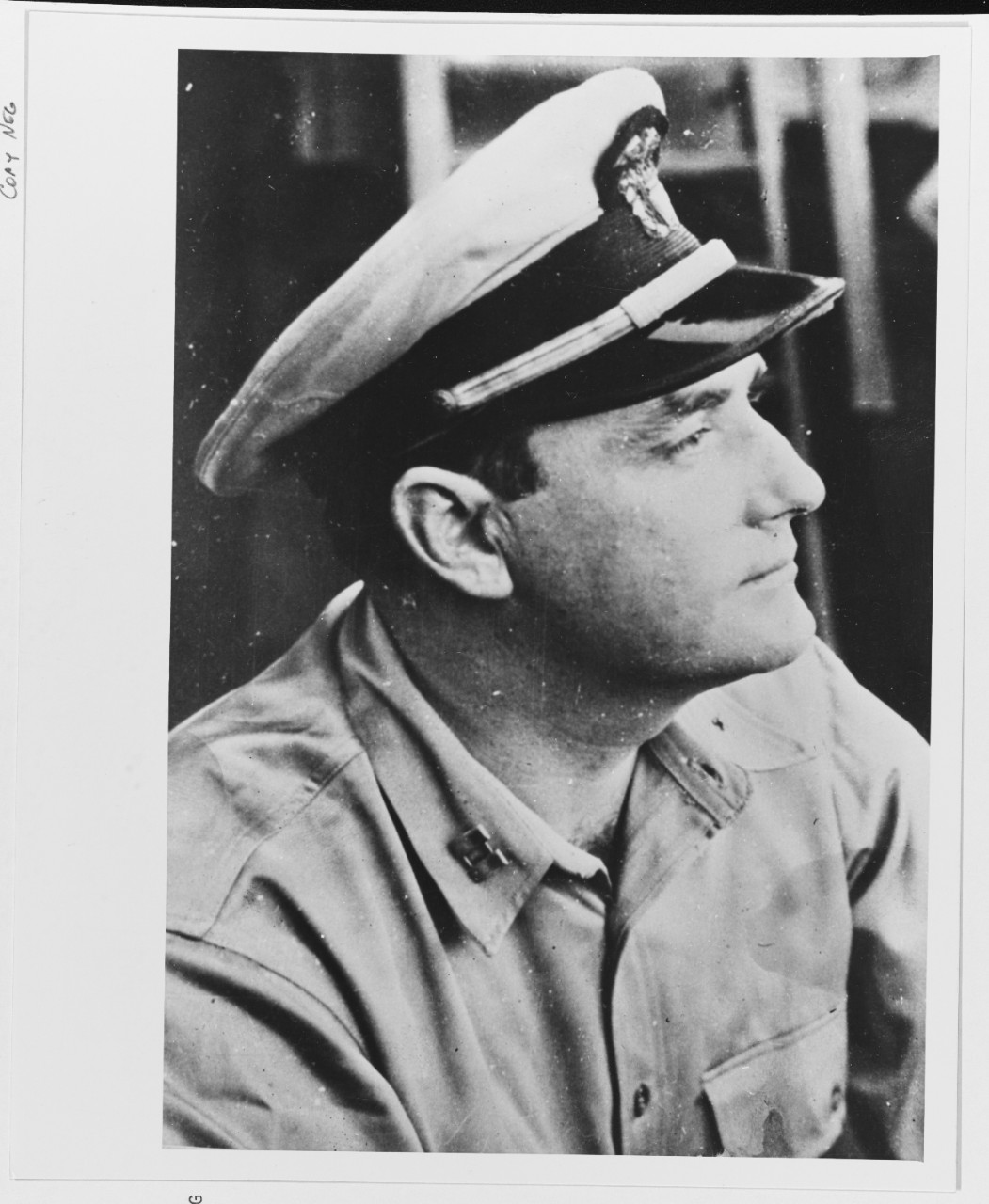
Lieutenant Howell M. Forgy, USN(ChC). Photograph taken circa 1942-43. Photograph from the Office of War Information collection in the U.S. National Archives.
During the battle, Forgy encouraged the exhausted sailors of the USS New Orleans as they rushed by carrying fresh shells for the ship’s antiaircraft guns, recalling that he “slapped their wet, sticky backs and shouted, ‘Praise the Lord and pass the ammunition.’”3
From Battle Cry to Song Lyrics
Among the millions of Americans who entered military service after the Japanese surprise attack on Pearl Harbor was a young songwriter named Frank Loesser. Born into a German Jewish family in New York City, Loesser never formally studied music but was already writing songs for Broadway shows by the time he went into uniform in 1942.
Following the United States’ entry into World War II, the government mobilized all elements of American society in pursuit of victory, including the music industry. As historian Kathleen Smith observed, “The government needed Americans to recognize the all-encompassing nature of the conflict and the potential threat it posed to every facet of American life: a victorious Axis meant, at best, an uncertain future for the United States and, at worst, the end of a free, independent, democratic country.”4 Those stakes inspired many observers, including songwriters, to see the conflict in existential and religious terms.
In April 1942, Loesser excitedly wrote to his wife: “I have a title—‘Praise the Lord and Pass the Ammunition’—which is a quotation from a news story a few months ago—a sentence supposedly spoken by a brave Navy chaplain.”5 As Loesser told the story in his lyrics, an unnamed chaplain or “sky pilot” puts down his Bible to operate a gun left vacant by the death of two gunners, while exhorting his comrades to proclaim their faith and carry on the fight. It became one of his first solo compositions.
Loesser was one of many songwriters who used their talents to serve the American war effort. In his 2006 history of American popular music during World War II, John Bush Jones wrote that wartime songwriters’ success came from “wisely couching war-related subject matter in the familiar forms of the romantic ballads, rhythm numbers, dance tunes, and novelty numbers (rather than, say, militant marches or patriotic anthems).”6
Upon its release, “Praise the Lord and Pass the Ammunition” quickly became very popular with wartime Americans. In early November 1942, Variety reported that a version of the song performed by Kay Kyser had sold nearly 170,000 copies and after several weeks was “still riding the crest of ballyhoo.”7 The success of the Kyser version gave Loesser his first gold record when it sold more than 500,000 copies.8 Throughout late 1942 and early 1943, the song rivaled “White Christmas” as the top song on both the Variety and Billboard charts.9
Despite the song’s popularity, some listeners did not care for Loesser’s song. Howard Taubman, a longtime music and theater critic for The New York Times, wrote that it had an excellent title but did not stand up to other war songs and marching tunes. He called the tune of “Praise the Lord and Pass the Ammunition” undistinguished and routine, but, fortunately for the song, “it does not get in the way of the words, and they are the secret of its success.”10
Years later, Loesser’s brother Arthur wrote that what made “Praise the Lord and Pass the Ammunition” so popular was that it did not sound like “modern” music that might alienate mainstream America. It did not sound like music from a Broadway show or a night club, did not recall jazz or music written by African Americans, and gave no hint of the author’s Jewish identity. Instead, the lyrics and melody recalled older songs like “The Battle Hymn of the Republic”: “It tastes like school, church, grandma, and biscuits: a master-stroke of diplomacy, aptness, and good business.”11
While many Americans enthusiastically embraced the song, the reaction from American churches was mixed. One Methodist paper in Virginia called for it to be removed from the airwaves and denounced the federal government for promoting a song about a clergyman taking up arms in battle, but a church in Denver, Colorado, announced that they would add the phrase “Praise the Lord and pass the ammunition” to their recitation of the Lord’s Prayer.12
Who Actually Spoke the Words ‘Praise the Lord and Pass the Ammunition’?
The earliest news stories to publicize the phrase “Praise the Lord and pass the ammunition” identified William Maguire, a Catholic priest and career Navy chaplain, as the person who first uttered the phrase. Early reports said that Maguire not only encouraged sailors to shoot back at the attacking Japanese planes but personally fired an antiaircraft gun during the Pearl Harbor attack.13 This posed a problem for the American chaplain corps, who were barred from using weapons.
To set the record straight, Maguire and the leader of the American military’s Catholic Ordinate gave a joint interview to The New York Times in which Maguire denied both firing a weapon and using the phrase at all. As Bishop John F. O’Hara told the paper, “We don’t like to place the nation in a position of boasting about a violation of international law and the Geneva Convention that did not occur.”14
In November 1942, months after the song was released, Maguire appeared on the cover of Life magazine. In an article on recent popular war songs that featured “Praise the Lord and Pass the Ammunition,” Maguire revealed that he did not remember using the phrase at all during the Pearl Harbor attack. “If I said it,” he told the magazine, “nobody could have heard me in the din of battle. But I certainly felt what the statement expresses.”15
Around the same time, The New York Times reported that it was Howell Forgy, not Maguire, who spoke the now-famous words as Japanese bombs fell.16 Nearly a year later in September 1943, after the USS New Orleans returned to duty in the Pacific without him, Forgy admitted that he was sick of hearing about the song that made him famous. Stressing that he was eager to return to duty at sea, Forgy told the Times that he had “learned more about basic religion in my first five minutes under fire than I did in my seven years in the seminary and in preaching.”17
After the war, Forgy remained a Presbyterian minister in civilian life. Illness, however, forced him to retire early, and he died in January 1972. After World War II, Frank Loesser went on to write some of the most popular musicals in American history, including Guys and Dolls and How to Succeed in Business Without Really Trying. He died in 1959 at the age of 59. “Praise the Lord and Pass the Ammunition” remains a key part of their legacies in American music.
- 1
Chaplain Howell M. Forgy, “… And Pass the Ammunition” (New York: D. Appleton-Century Company, 1944), 2-3.
- 2
Forgy, “… And Pass the Ammunition, 5-6.
- 3
Forgy, “… And Pass the Ammunition, 11.
- 4
Kathleen E.R. Smith, God Bless America: Tin Pan Alley Goes to War (Lexington, KY: The University of Kentucky Press, 2003), 6.
- 5
Susan Loesser, A Most Remarkable Fella: Frank Loesser and the Guys and Dolls in His Life, A Portrait by His Daughter (Milwaukee, WI: Hal Leonard Corporation, 1993), 40.
- 6
John Bush Jones, The Songs That Fought the War: Popular Music and the Home Front, 1939-1945 (Hanover, NH: University Press of New England, 2006), 2.
- 7
“‘Praise the Lord’s’ Great Press,” Variety, Vol. 148, No. 9 (November 4, 1942), pp. 41 and 47.
- 8
Thomas L. Riis, Frank Loesser (New Haven, CT: Yale University Press, 2008), 56.
- 9
Jones, The Songs That Fought the War, 156.
- 10
Howard Taubman, “Records” War Song,” The New York Times, November 15, 1942.
- 11
Arthur Loesser, “My Brother Frank,” Notes, Vol. 7, No. 2 (March 1950), 225.
- 12
See “Hits ‘Ammunition’ Song,” The New York Times, November 27, 1942, and “Amends Lord’s Prayer,” The New York Times, November 10, 1942.
- 13
See, for instance, “Chaplain-Gunner Tells of Pearl Harbor Attack,” The Los Angeles Times, August 20, 1942.
- 14
“Chaplain Wrecks Legend of Dec. 7,” The New York Times, November 1, 1942.
- 15
“New U.S. War Songs,” Life Magazine, Vol. 13, No. 18 (November 2, 1942), pp. 43.
- 16
“Lieutenant Claims Phrase,” The New York Times, November 1, 1942.
- 17
“Praise the Lord Song Bores Its Originator,” The New York Times, September 17, 1943.

Sean Scanlon, PhD
Sean Scanlon is a World War II Military Historian at the Jenny Craig Institute for the Study of War and Democracy.
Cite this article:
MLA Citation:
APA Citation:
Chicago Style Citation: