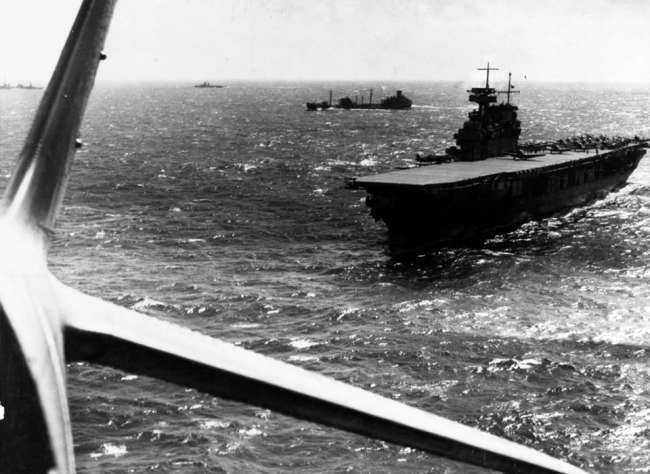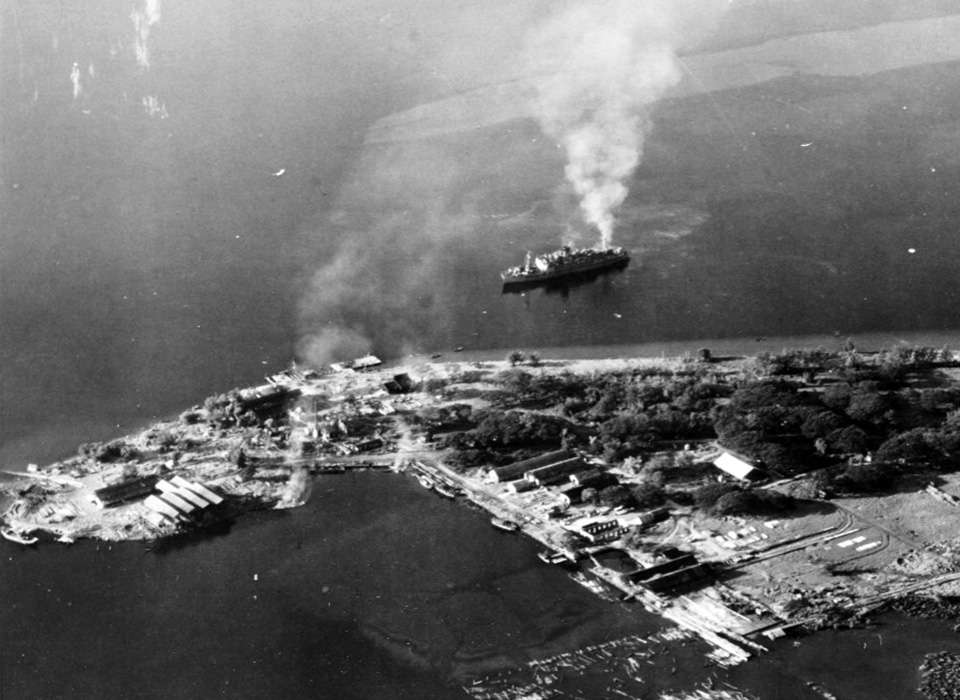
Top Photo: Aerial photo of the former U.S. Naval station, Olongapo, taken from a USS HANCOCK (CV-19) plane on December 15, 1944. The large ship is probably the S.S. ORYOKU MARU, sunk in Subic Bay by Third Fleet planes on December 16, 1944. Naval History and Heritage Command
While the Japanese military was known for brutal treatment of Allied prisoners of war, captives transported on converted Japanese merchant vessels known as “hell ships” endured a unique torment. These ships, which also carried Japanese military supplies and soldiers, often while evacuating Japanese civilians, earned their name due to the intensely horrible conditions prisoners on these transports faced. Allied prisoners spent the voyage in dark, cramped, filthy conditions without adequate food, water, sanitation, or medical treatment.1
Initially, hell ships moved Allied POWs to areas where their labor was needed, such as the Japanese main islands and other recently conquered regions, but later, they also moved prisoners to prevent them from being liberated by advancing Allied forces. If prisoners could not be evacuated quickly enough, they were often executed. These transports began in 1942 and continued into 1945. Historian Gregory Michno estimates that over 125,000 prisoners traveled for more than 1,600 days on over 156 voyages on 134 different ships. More than 21,000 prisoners died in the process.2
Some prisoners died from starvation, dehydration, heat stroke, and disease. But even if prisoners survived the abysmal conditions, they might still be killed en route by Japanese guards or by Allied air and naval attacks. Hell ships did not identify themselves as prisoner transports and often carried their own armament. Tragically, this meant that Allied attacks often hit vessels carrying their own people.3
Oryoku Maru, Enoura Maru, and Brazil Maru
The circumstances surrounding the Oryoku Maru, Enoura Maru, and Brazil Maru illustrate the torment and danger POWs endured aboard hell ships. On December 13, 1944, 1,619 Allied POWs boarded the Oryoku Maru at Manila Harbor in the Philippines, and the ship set out along the coast to Luzon. The next day, aircraft from the carrier USS Hornet (CV-12) located and attacked the ship. After sustaining heavy damage, Oryoku Maru beached in Subic Bay. Overnight, the Japanese civilians on board evacuated. On December 15, another American air attack further damaged the ship, causing an explosion and fire and forcing the Japanese to abandon ship.4
The Japanese guards released the surviving prisoners and ordered them to jump over the side and swim for shore. Guards shot at any prisoners they believed might be trying to escape. When Japanese guards gathered the surviving prisoners at a tennis court in Olongapo, 286 were found to be missing or dead. Another 14 prisoners reportedly died over the next five days as they suffered from exposure to the elements. The Japanese guards also allegedly executed another 15 prisoners deemed too injured or sick to survive the next leg of their journey. From Olongapo, they went to San Fernando, La Union, where they boarded one of two hell ships, Enoura Maru and Brazil Maru. Those ships departed from the Philippines on December 27 and arrived on New Year’s Day 1945 in Formosa, modern-day Taiwan. Additional prisoners likely died during the transit, and their bodies were thrown overboard. Prisoners who died after the ships arrived in Formosa were brought ashore for burial.5
For days the prisoners were held aboard the anchored Japanese ships. On January 9, American aircraft once again spotted the transports and attacked. Enoura Maru took heavy damage, and around 300 POWs died. A few days later, Japanese guards allowed the surviving prisoners ashore to bury their dead. Then the survivors boarded Brazil Maru. They left Formosa on January 13, and more prisoners died during the trip. Most of the deceased were likely removed from the ship while it was still in transit, but those who died during the final days of the journey may have been brought ashore for burial. They arrived at Moji, Japan, on January 30. Of the original 1,619 POWs, only about 500 reached Japan, where they were sent to labor camps for the remainder of the war.6
Ben Skardon, Survivor
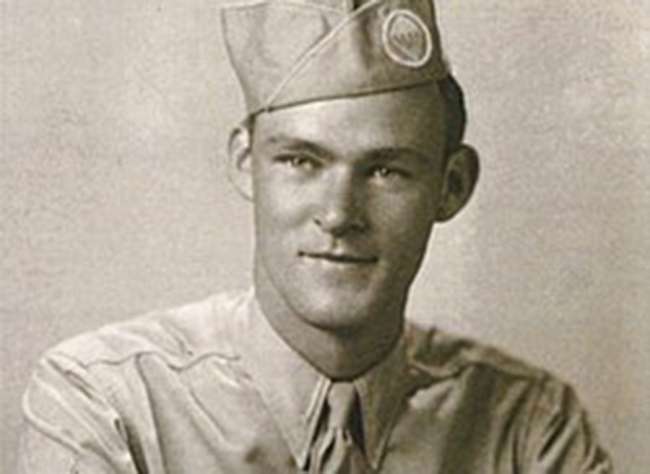
A few prisoners, like Ben Skardon, survived both attacks and a lengthy imprisonment in Japan and China. Skardon, who retired from the US Army in 1962 as a Colonel, received an honorary promotion to Brigadier General in 2021, days before he passed away at the age of 104. In his oral history interview with The National WWII Museum, Skardon described the horrible conditions aboard hell ships, including watching the people around him die from wounds, disease, malnutrition, and dehydration. They scavenged supplies from those who died in order to survive. Skardon expressed his gratitude for the supplies and his recognition of the arbitrariness of the situation, saying of the death of a fellow prisoner, “I think maybe his death kept us alive.” Skardon would be among the very few to survive these ordeals. 7
DPAA’s Enoura Maru Project
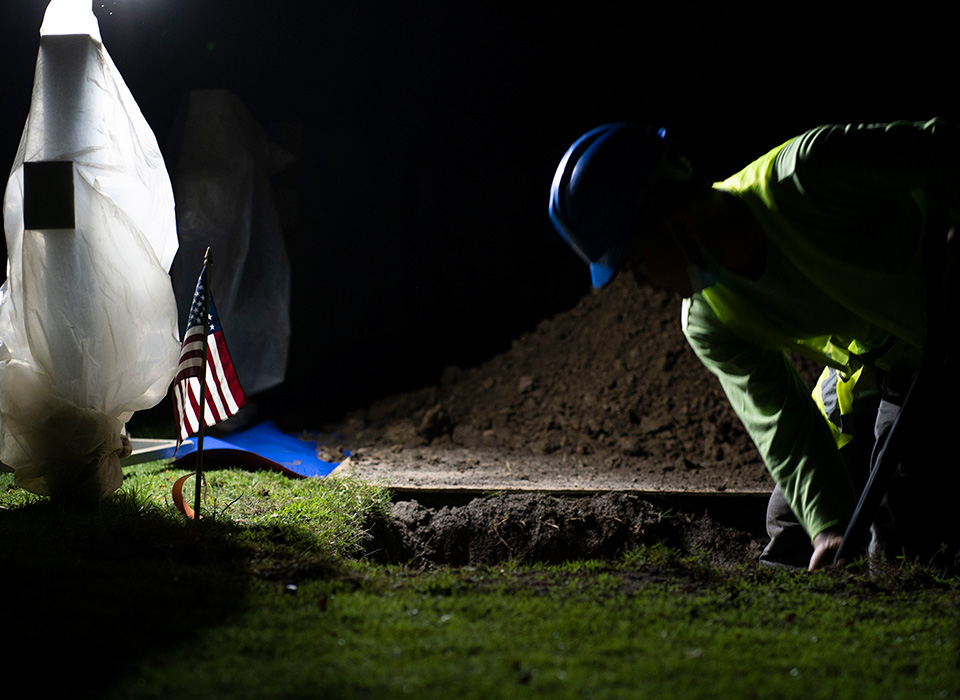
Staff with the American Battle Monuments Commission (ABMC), work in conjunction with members of the Defense POW/MIA Accounting Agency (DPAA), to exhume a casket during a disinterment at the Manila American Cemetery and Memorial (MACM) in Manila, Philippines, March 1, 2023. 22 of the individuals recovered from the disinterment are part of the “Enoura Maru” project, which includes three POW transport ships used by Imperial Japanese forces throughout the second World War, known as “Hell Ships”, and over 400 unidentified sets of remains. (U.S. Marine Corps photo by Sgt. Zachary T. Beatty)
In 1946 and 1947, the American Graves Registration Service tried to locate prisoners who died aboard Japanese hell ships. While these investigators had some success in finding and identifying the missing prisoners, many remained unaccounted for. Some recovered remains could likely be associated with hell ship losses, but the individual could not be identified. As a result, over 400 sets of remains were interred as unidentified individuals during the 1940s and 1950s. In 2017, the DPAA disinterred one of the unidentified individuals and identified Captain Lester Albert Schade in 2018. In 2022, the agency began a larger project to disinter and identify the remaining unknown individuals associated with the Enoura Maru. So far, DPAA has accounted for more than 25 missing individuals of 928 believed to be associated with the hell ship.8
- 1
Adam Bisno, “The Japanese “Hell Ships” of World War II,” Naval History and Heritage Command, November 2019, https://www.history.navy.mil/browse-by-topic/wars-conflicts-and-operations/world-war-ii/1944/oryoku-maru.html (accessed January 22, 2026); Lee A. Gladwin, “American POWs on Japanese Ships Take a Voyage into Hell,” Prologue, vol. 35, no. 4, Winter 2003, https://www.archives.gov/publications/prologue/2003/winter/hell-ships (accessed January 22, 2026).
- 2
Bisno, “The Japanese “Hell Ships;”’ and Gregory F. Michno, Death on the Hellships: Prisoners at Sea in the Pacific War (Naval Institute Press, 2001): 1-86, 151-280, and 309-317.
- 3
Bisno, “The Japanese “Hell Ships;”’ Gladwin, “American POWs on Japanese Ships.”
- 4
Bisno, “The Japanese “Hell Ships;”’ Gladwin, “American POWs on Japanese Ships;” Defense POW/MIA Accounting Agency (DPAA), “Enoura Maru Identification Project,” https://dpaa-mil.sites.crmforce.mil/Projects/WWII/EnouraMaru/InfoSheet (accessed January 22, 2026); Brian MacArthur, Surviving the Sword: Prisoners of the Japanese in the Far East, 1942-1945 (Random House, 2005), 298-308; and DPAA, “Enoura Maru Identification Project Information,” https://dpaa-mil.experience.crmforce.mil/Projects/s/wwii/enouramaru (accessed 15 May 2026).
- 5
DPAA, “Enoura Maru Identification Project;” DPAA, “Enoura Maru Identification Project Information,” and MacArthur, Surviving the Sword, 298-308.
- 6
DPAA, “Enoura Maru Identification Project;” DPAA, “Enoura Maru Identification Project Information,” and MacArthur, Surviving the Sword, 298-308.
- 7
Ben Skardon, interview, The National WWII Museum, undated, https://www.ww2online.org/view/ben-skardon-0#sinking-of-the-oryoku-maru (accessed 27 January 2026); “Beverly ‘Ben’ Skardon, Class of ’38, decorated WWII veteran, passes away at 104,” Clemson News, November 16, 2021, https://news.clemson.edu/beverly-ben-skardon-class-of-38-decorated-wwii-veteran-passes-away-at-104/ (accessed 28 January 2026). For further reading on POWs in the Pacific theater, see: Kim Guise, “Curator’s Choice: Pacific POW Witness,” April 28, 2021, https://www.nationalww2museum.org/war/articles/pow-witness-tokyo-war-crimes-trial (accessed January 29, 2026); “Profile: Ben Skardon,” National World War II Museum, June 19, 2020, https://www.nationalww2museum.org/war/articles/ben-skardon (accessed January 29, 2026); and Gregory F. Michno, Death on the Hellships: Prisoners at Sea in the Pacific War (Naval Institute Press, 2001).
- 8
DPAA, “Enoura Maru Identification Project Information.”
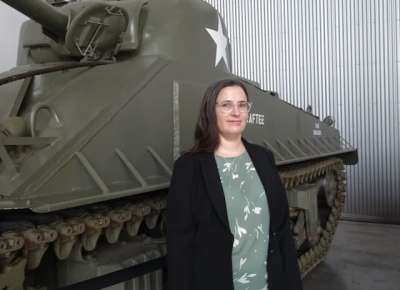
Sarah Patterson, PhD
Sarah Patterson, PhD is a World War II Military Historian at the Jenny Craig Institute for the Study of War & Democracy at the National WWII Museum in New Orleans.
Cite this article:
MLA Citation:
APA Citation:
Chicago Style Citation: