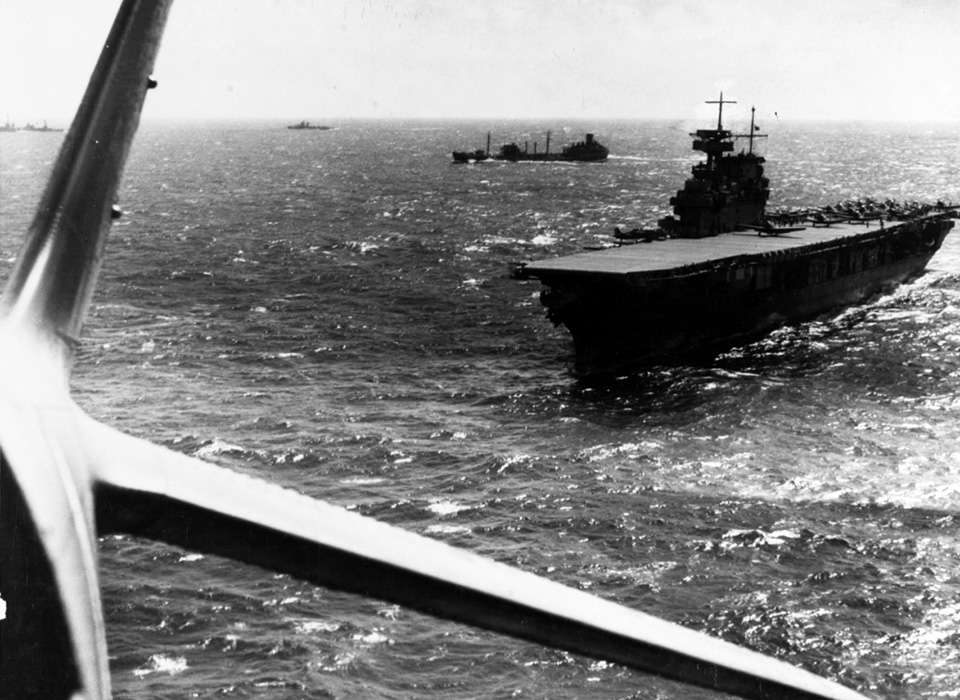
Top Photo: USS Yorktown (CV-5), Operating in the vicinity of the Coral Sea, April 1942. Photographed from a TBD-1 torpedo plane that has just taken off from her deck. Official U.S. Navy Photograph, now in the collections of the U.S. National Archives.
Ship names during the country’s early days faced few restrictions. Most honored past or present naval heroes, the new nation’s ideals, or American cities. During World War II, naming conventions revolved around law and upholding the Navy’s traditions, frequently focusing on ships of earlier eras as well as important Navy and Marine Corps figures.1
Certain types of ships received themed names chosen by the Secretary of the Navy. Aircraft carriers were often named for significant ships or battles. Cruisers were named for American cities and battleships for states. Destroyers and destroyer escorts honored past heroes from the Navy, Marine Corps, and Coast Guard, as well as former Secretaries and Assistant Secretaries of the Navy, influential members of Congress, and notable inventors. Other new ships memorialized recently sunken vessels by taking their names.2
USS Hornet
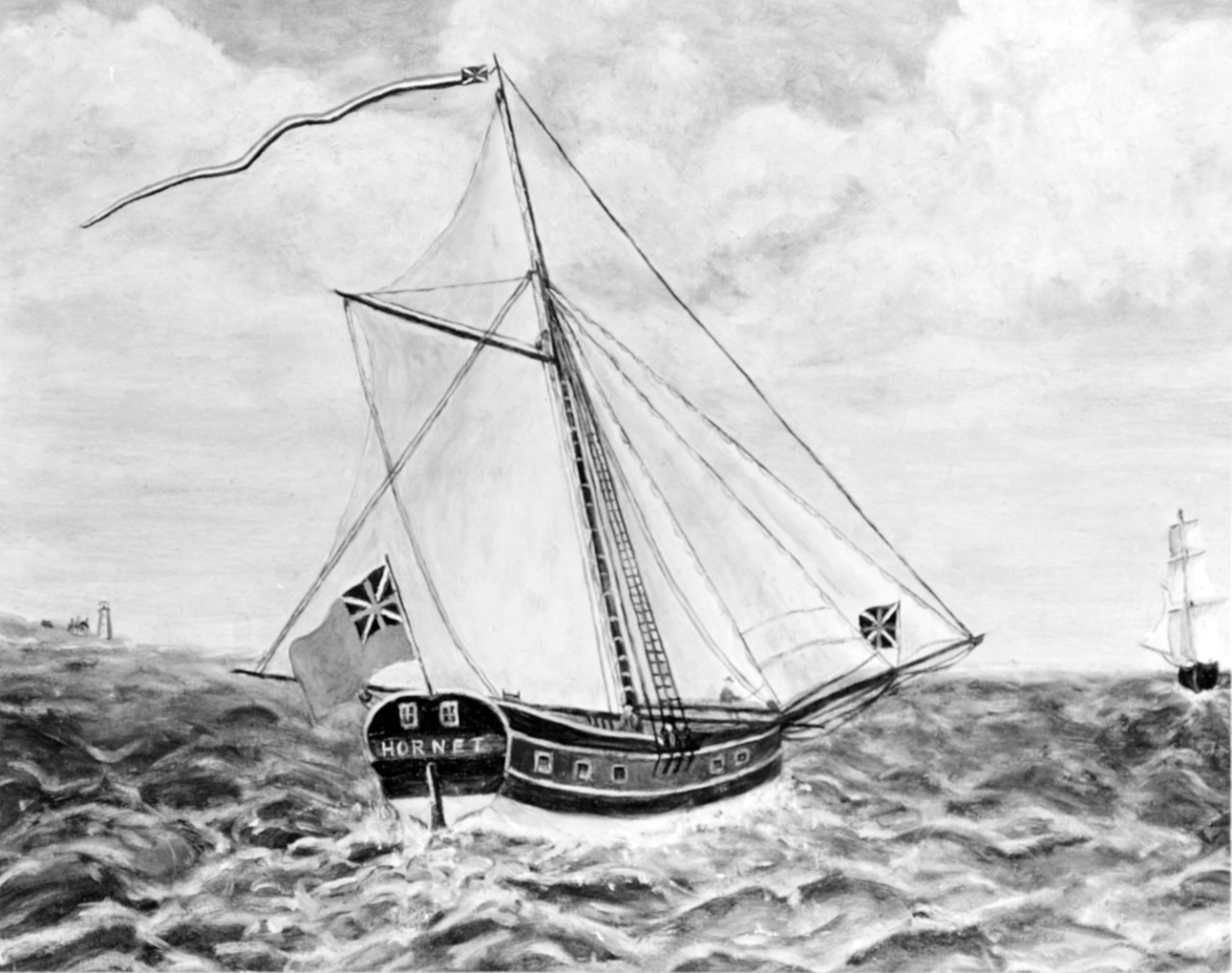
USS Hornet 1775-77. Copy of detail from the portrait of Captain William Stone. Mrs. Florence Whitehill, copy painter. Charles Wilson Peale, original painter. Naval History and Heritage Command.
Several ship names from the Revolutionary War era also appeared during World War II. For example, the Continental Navy purchased the 10-gun sloop Hornet in 1775, and it served the young nation for two years before disappearing from the historical record. Evidence for what happened to the ship is incomplete, but the British may have captured it. Five other ships bearing the name Hornet served the United States between 1805 and 1898. Hornet reappeared during World War II, first as CV-8, a Yorktown-class aircraft carrier.
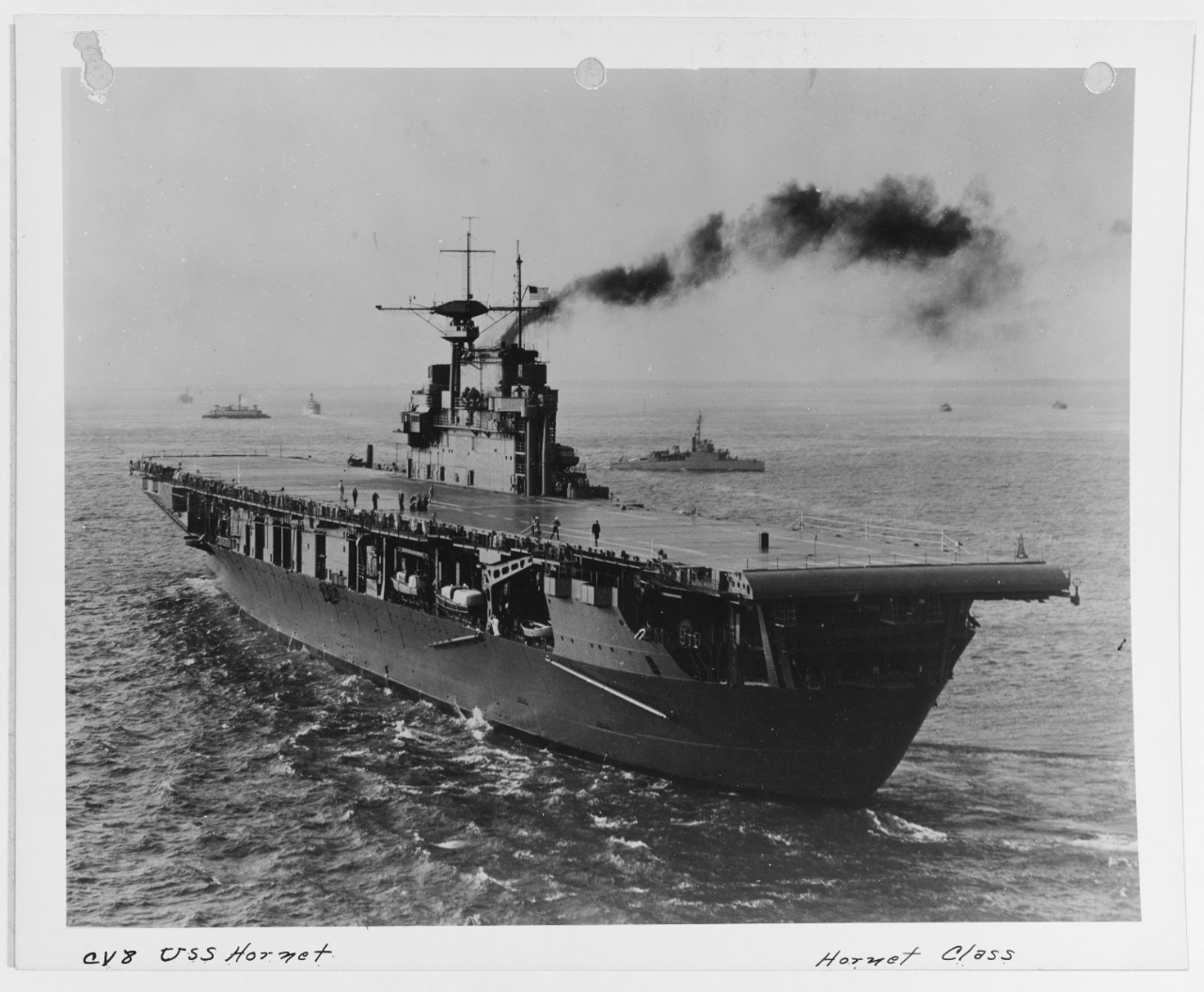
USS Hornet (CV-8), photographed circa late 1941, soon after completion, probably at a U.S. east coast port. U.S. Naval History and Heritage Command Photograph.
The ship was commissioned in October 1941, participated in the Doolittle Raid on Tokyo, fought at the Battle of Midway, and was sunk following the Battle of Santa Cruz in October 1942. In 1943, a new Essex-class aircraft carrier was commissioned USS Hornet (CV-12) in honor of CV-8. This eighth Hornet served throughout the Pacific, including the battles for Saipan, the Philippines, Palau, Iwo Jima, and Okinawa.3
USS Barry
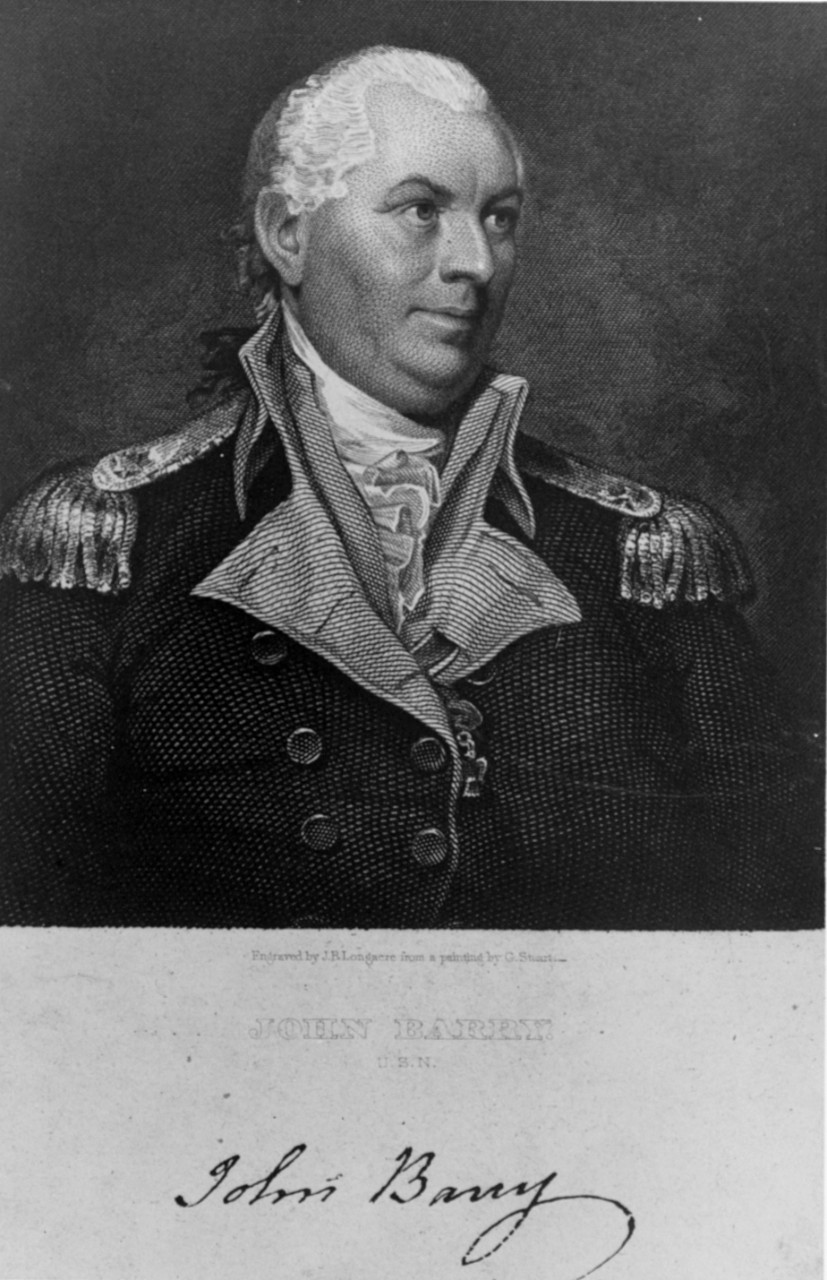
Commodore John Barry, USN (1745-1803). Engraving by J.B. Longacre, after the painting by Gilbert Stuart, published in National Portrait Gallery of Distinguished Americans, by James Herring and James Longacre, 1859. U.S. Naval History and Heritage Command Photograph.
The names of important American Revolution naval leaders also appeared in World War II. One example was Commodore John Barry. Barry became a Continental Navy captain and commanded the Lexington. He and his crew captured the first British ship of the war, Edward, in early April 1776. After the war, Barry went back to captaining merchant ships but returned to naval service after Congress created an official Navy. Barry became the new Navy’s first commissioned officer and commanded the USS United States during the Quasi-War with France. He died in 1803.4
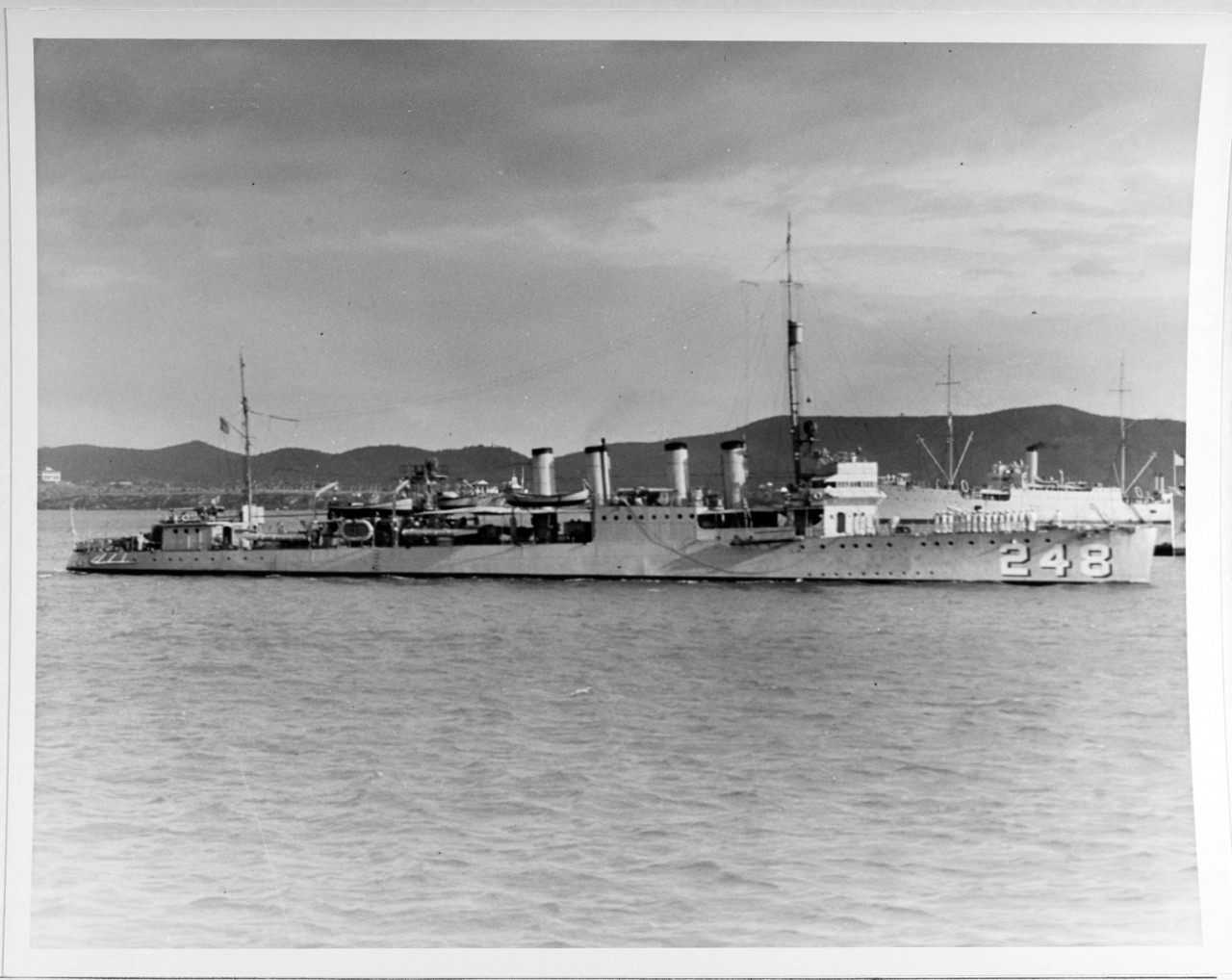
USS Barry (DD-248) in Guantanamo Bay, Cuba, during the late 1920s or early 1930s. Donation of Franklin Moran, 1967. U.S. Naval History and Heritage Command Photograph.
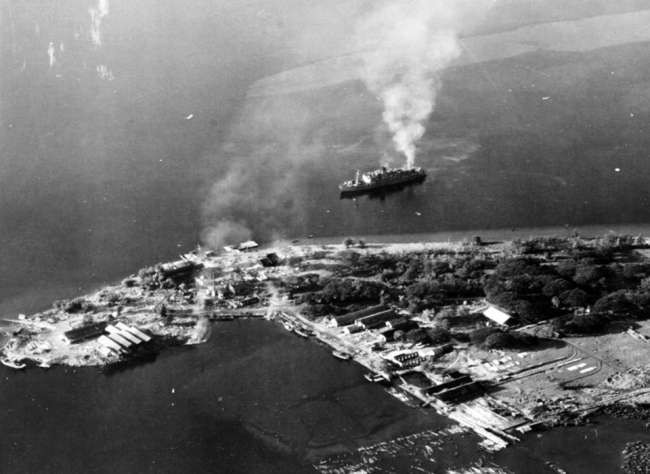
In honor of Commodore Barry’s service, the Navy named several ships for him. This included USS Barry II (DD-248), a destroyer launched in 1920 and still in service during World War II. The ship served in both the Atlantic and Pacific theaters. Barry underwent conversion to a high-speed transport in 1944 and was reclassified as APD-29. The ship participated in the Allied landings in southern France, served in the Mediterranean, and returned to the Pacific in 1945, supporting the Battle of Okinawa. On May 25, 1945, a kamikaze struck Barry near Okinawa. The ship was towed to Kerama Retto, where crews determined it was unsalvageable and made the decision to tow Barry back to Okinawa as a decoy. On the way, Barry was again attacked by kamikaze planes and, alongside escort LSM-59, sank.5
Both USS Hornet and USS Barry upheld the long traditions of the US Navy during World War II. Though often encountering tragedy, these ships and their crews served with distinction. Navy ship names continue to honor important people and events in American history. Today, USS Hornet (CV-12) serves as a museum ship in Alameda, California, and the name Barry is represented by USS Barry (DDG-52), an Arleigh Burke-class guided missile destroyer currently in service.
- 1
Kali Martin, “Pluck, Pogy, and Portland: Naming Navy Ships in World War II,” October 26, 2020, https://www.nationalww2museum.org/war/articles/naming-navy-ships-in-world-war-ii (accessed January 13, 2026).
- 2
Martin, “Pluck, Pogy, and Portland.”
- 3
Naval History and Heritage Command, “Vessels of the Continental Navy,” August 23, 2017, https://www.history.navy.mil/research/library/online-reading-room/title-list-alphabetically/v/vessels-of-the-continental-navy.html (accessed January 13, 2026); Naval History and Heritage Command, USS Hornet (CV-8),” undated, https://www.history.navy.mil/content/history/museums/nmusn/explore/photography/ships-us/ships-usn-h/uss-hornet-cv-8.html (accessed January 13, 2026); Aviation: From Sand Dunes to Sonic Booms, “USS Hornet,” undated, https://www.nps.gov/articles/uss-hornet.htm (accessed January 13, 2026); and Samuel Eliot Morison, History of United States Naval Operations in World War II, vol. 5, The Struggle for Guadalcanal, August 1942-February 1943 (Naval Institute Press, 2010), 199-224.
- 4
Naval History and Heritage Command, “Vessels of the Continental Navy,” August 23, 2017, https://www.history.navy.mil/research/library/online-reading-room/title-list-alphabetically/v/vessels-of-the-continental-navy.html (accessed January 13, 2026); Naval History and Heritage Command, USS Hornet (CV-8),” undated, https://www.history.navy.mil/content/history/museums/nmusn/explore/photography/ships-us/ships-usn-h/uss-hornet-cv-8.html (accessed January 13, 2026); Aviation: From Sand Dunes to Sonic Booms, “USS Hornet,” undated, https://www.nps.gov/articles/uss-hornet.htm (accessed January 13, 2026); and Samuel Eliot Morison, History of United States Naval Operations in World War II, vol. 5, The Struggle for Guadalcanal, August 1942-February 1943 (Naval Institute Press, 2010), 199-224.
- 5
Naval History and Heritage Command, “Vessels of the Continental Navy,” August 23, 2017, https://www.history.navy.mil/research/library/online-reading-room/title-list-alphabetically/v/vessels-of-the-continental-navy.html (accessed January 13, 2026); Naval History and Heritage Command, USS Hornet (CV-8),” undated, https://www.history.navy.mil/content/history/museums/nmusn/explore/photography/ships-us/ships-usn-h/uss-hornet-cv-8.html (accessed January 13, 2026); Aviation: From Sand Dunes to Sonic Booms, “USS Hornet,” undated, https://www.nps.gov/articles/uss-hornet.htm (accessed January 13, 2026); and Samuel Eliot Morison, History of United States Naval Operations in World War II, vol. 5, The Struggle for Guadalcanal, August 1942-February 1943 (Naval Institute Press, 2010), 199-224.
Sarah Patterson, PhD
Sarah Patterson, PhD is a World War II Military Historian at the Jenny Craig Institute for the Study of War & Democracy at the National WWII Museum in New Orleans.
Cite this article:
MLA Citation:
APA Citation:
Chicago Style Citation: