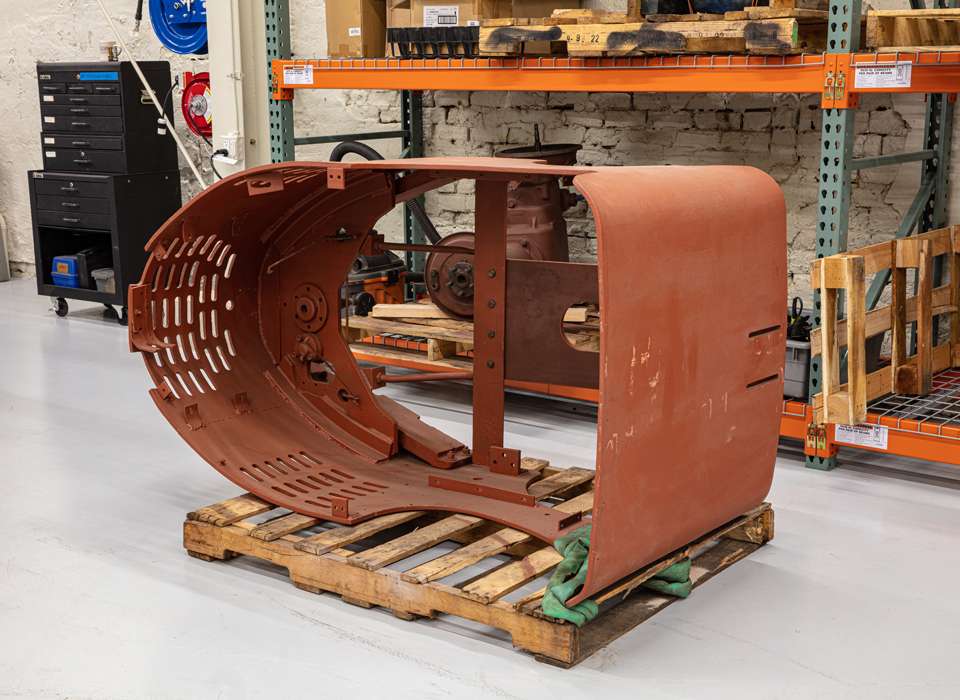
The National WWII Museum cares for more than 300,000 artifacts from the WWII era. Some are small objects that belonged to individual servicemembers. Others are huge vehicles and machines that helped win the war.
In John E. Kushner Restoration Pavilion’s WWII Motor Pool, you can watch our team bring these large objects back to their wartime appearance. Staff and volunteers research each artifact, gather the right parts, and spend hundreds of hours restoring it carefully and safely.
Current Projects
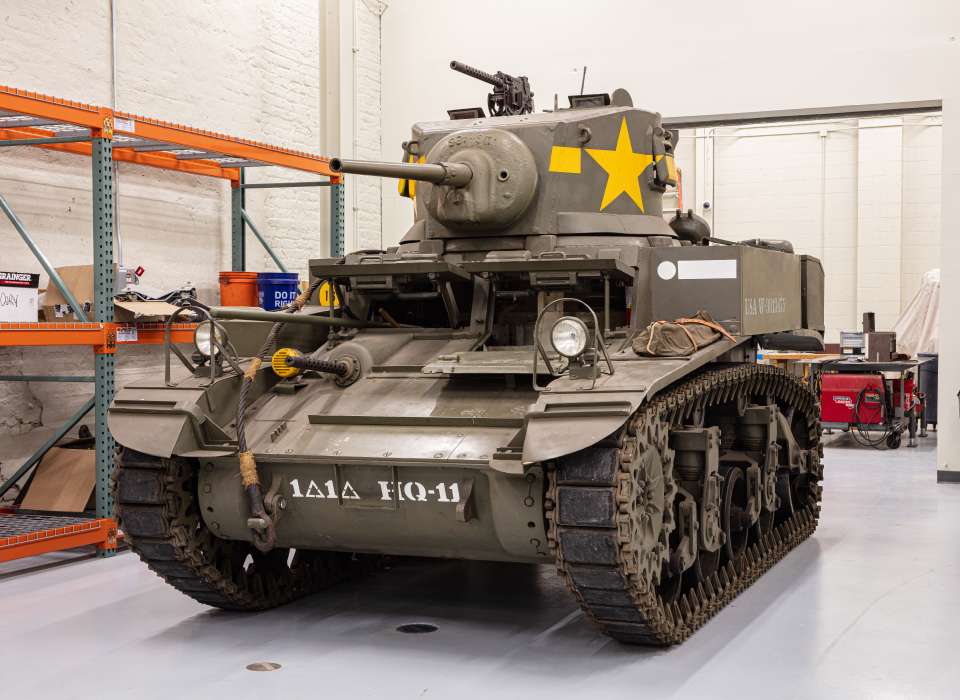
M3A1 Stuart Tank
The M3 Stuart was the first American tank in combat in World War II, fighting invading Japanese troops in the Philippines in December 1941 and serving with British forces in North Africa, where the troops nicknamed the Stuart “Honey” because of its smooth ride and dependable radial engine. In the Pacific, its 37mm gun was effective against small Japanese tanks and pillboxes. But in Europe, the Stuart was outclassed by many German tanks. As a result, Stuarts were often used for scouting duties or to screen and support American infantry soldiers. US factories built more than 22,000 M3 and upgraded M5 tanks during the war. This machine most likely served in Brazil during and after World War II.
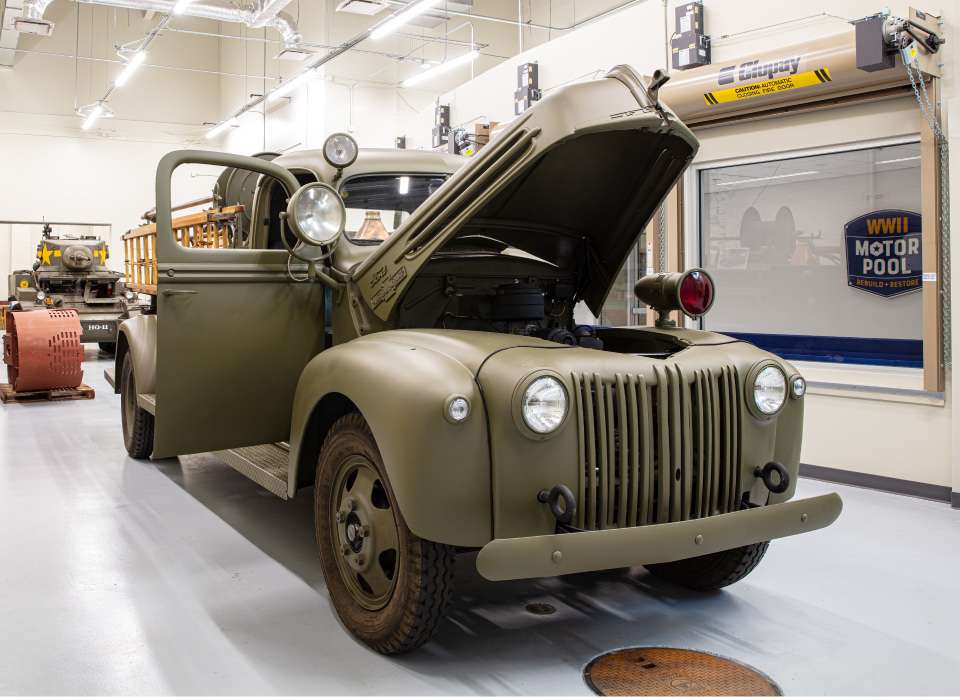
1943 Ford/American LaFrance Airfield Fire Truck
A 1.5-ton Ford commercial truck was the chassis for this airfield fire truck, modified by American LaFrance to hold a powerful midship-mounted pump, an expansive water tank, and other firefighting equipment. The truck left the LaFrance factory in Elmira, New York, in 1943 and was assigned to service a US Army Air Forces airfield in Alabama. After the war, the vehicle was employed by several local fire departments in the Birmingham area before newer equipment replaced it. The truck was donated to The National WWII Museum in 2009.
Clark Clarkat Model B Factory Tug
Clark tugs were used for hauling cargo unloaded from trucks and freight trains, for moving parts and tooling in wartime factories, and for towing aircraft and bombs at military airfields. This one was purchased from Clark Equipment Company by a New Orleans-area roofing business. Later the machine was adapted to maneuver boats on trailers at a boatyard in Arabi, Louisiana. Salvaged after Hurricane Katrina, the tug and trailer are being restored to appear as they did when they left Clark’s Battle Creek, Michigan, factory near the end of World War II.