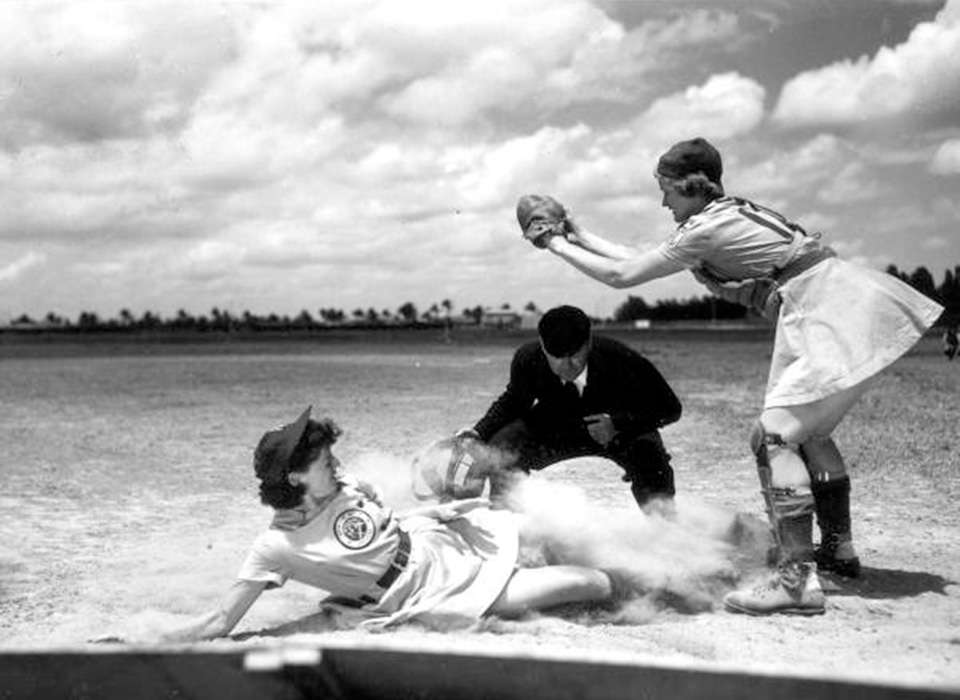
Top Photo: Vivian Kellogg, catcher for the Fort Wayne Daisies (AAGPBL), awaits a throw as second baseman Marg Callaggah slides safely into home as umpire Norris Ward watches the play during an inter-team practice game in Opalocka, Florida, ca. April 22, 1948. Wikimedia Commons
When the Women’s Pro Baseball League (WPBL) began its inaugural season in 2026, it had been 72 years since there was a professional baseball league for women in the United States. Its precursor, which became widely known as the All-American Girls Professional Baseball League (AAGPBL), began in 1943 and lasted just over a decade.
THEIR OWN LEAGUE
After the United States’ mobilization for World War II, many owners in Major League Baseball (MLB) feared for the future of their teams. The War Department warned that the MLB might be suspended due to the need to support the war effort. In fact, over 500 MLB players would eventually be inducted into the US Armed Forces during the war.
The idea of a professional league for women came from Philip K. Wrigley, a chewing gum manufacturer and owner of the Chicago Cubs. Following the War Department’s directive to hire women in war production factories, Wrigley saw a similar opportunity to keep the public interested in baseball.
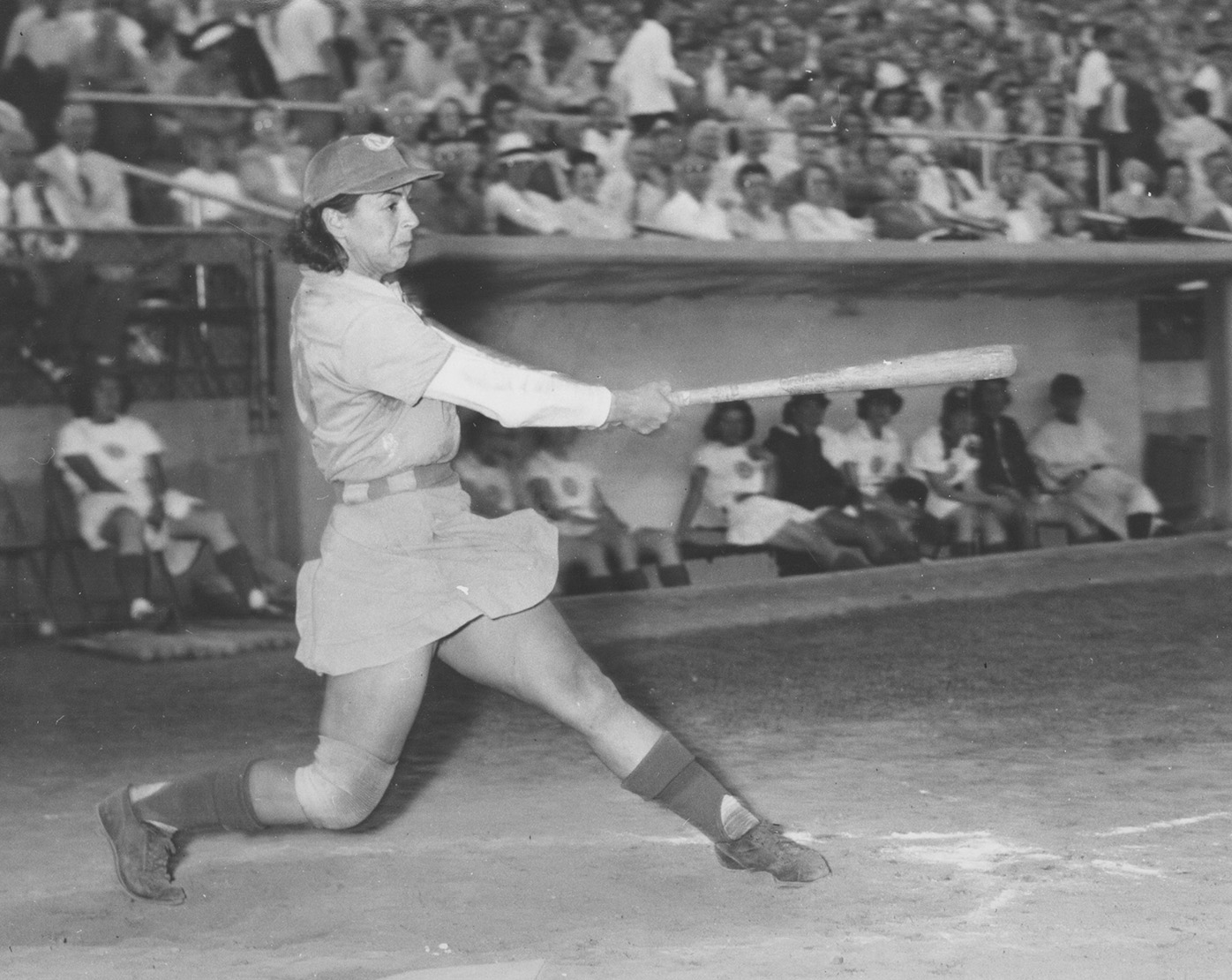
Dorothy Maguire - Muskegon Lassies. Courtesy of The History Museum, South Bend, Indiana
Although by the fall of 1942 it was clear the MLB would continue its regular seasons throughout the war years, Wrigley had already set the ball in motion. He devised a plan to create a professional softball league for women and have teams placed in midsize defense industry cities. Softball had long been a popular pastime among women in the United States, and by the 1940s, amateur and semi-professional leagues played throughout the country.
Wrigley outlined the three objectives of the AAGPBL (then the All-American Girls Softball League1):
- To furnish additional means of healthful recreation to the public who are all in one way or another under severe pressure from war work during this critical war time.
- To create the incentive on the part of girls and women employed in war work to get out and play softball themselves, thereby getting the exercise they need to carry on their jobs more efficiently.
- To keep all workers better satisfied with living in the community in which they are now located by furnishing additional entertainment which may now be available to them only in large cities.2
Approved in February 1943, the AAGPBL began preparations for its first season to be held that fall. Wrigley sent scouts out to find the best women softball players in the United States and Canada. An extensive search ensued, and thousands tried out for the league. If they made the cut, they were invited for a final tryout in Chicago. In the end, 75 women were chosen to be part of the league’s first season.
Four teams were formed: the Kenosha Comets (Wisconsin), the Racine Belles (Wisconsin), the South Bend Blue Sox (Indiana), and the Rockford Peaches (Illinois). Each team was based within a 100-mile radius of Chicago.
The first two years of the league were run as a nonprofit with Wrigley, Brooklyn Dodgers owner Branch Rickey, and Chicago Cubs attorney Paul Harper as trustees of the organization. Wrigley named Cubs general manager Ken Sells as the league’s first president to organize and manage its everyday operations. The league was funded by each team’s local city guarantors and officials covering half of the projected budget, while Wrigley covered the other half and any overage expenses.
Unlike the MLB, players in the AAGPBL were contracted by the league, rather than their team. Every year team managers and league administrative personnel would organize teams by pooling players and evenly distributing them to teams based on their talents. This way the competition between teams was equally matched and prevented one team from dominating the league each year, which was common in the MLB.
The rules of play were also adjusted for the league to increase fan appeal and more closely correspond to baseball. The number of on-field players was reduced from 10 to nine, pitching distance and base paths were extended, and players were allowed to lead off and steal bases. Throughout the league’s history, the rules would continue to change. The ball became smaller, the pitching and base path distance increased, and pitching style changed from underhand, first to limited side-arm pitching then to overhand pitching in the last six seasons of the league.
ALL-AMERICAN WOMEN
Wrigley sought to set his women’s league apart from the already existing amateur and semi-pro women’s leagues, which had the reputation of not meeting societal standards of femininity and womanhood. As Sells told reporters: “Femininity is the keynote of our League…No pants-wearing, tough-talking female softball [player] will play on any of our four teams.”3 AAGPBL player Annabelle Lee Harman later stated, “They wanted us to look like ladies and act ladies, but play like men.”4
Wrigley enlisted his wife, Helen, poster artist Otis Sheperd, and the first player signed to the league, Ann Harnett, to design new “feminine” uniforms for the league. Inspired by the outfits women athletes wore for field hockey, tennis, and figure skating, they developed a one-piece dress with a flared skirt, baseball cap, belt, and knee-high stockings. Team uniform colors consisted of pastel shades of green, blue, yellow, and peach, with darker-colored trimmings.
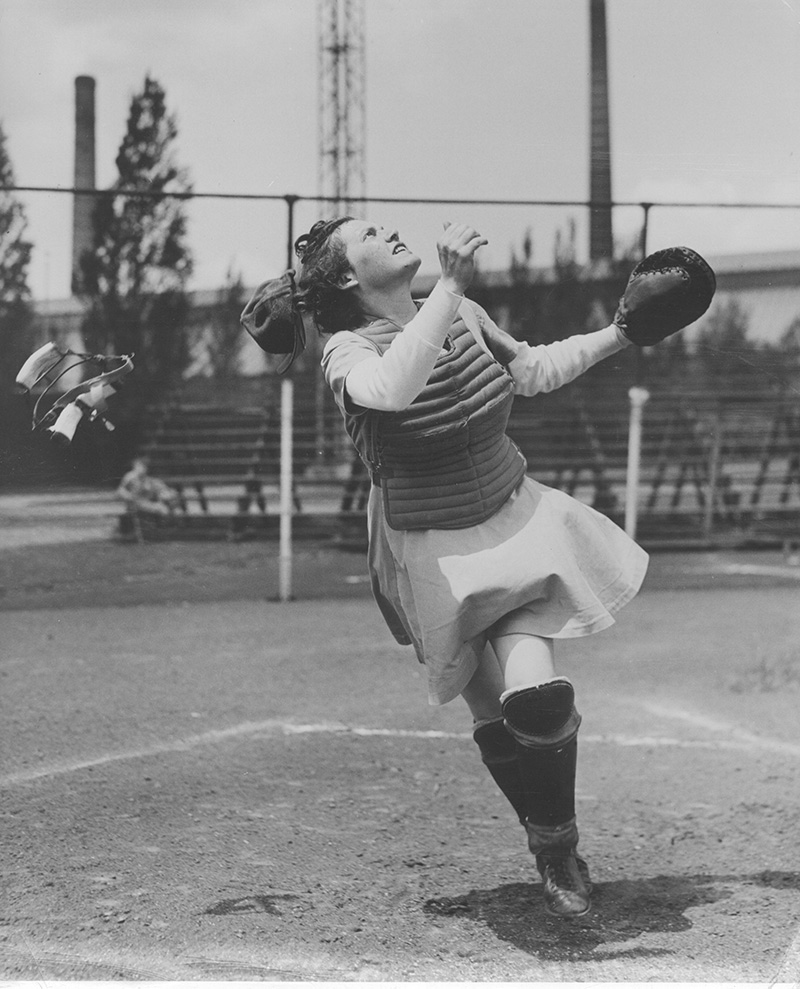
Ann Harnett - 1944 Kenosha Comets. Courtesy of The History Museum, South Bend, Indiana
From its inception, there was an extensive publicity campaign for the AAGPBL promoting its players as representing the highest ideals of American womanhood. During spring training, players attended charm school classes every evening after practice. They were taught proper etiquette and posture, how to apply make-up, and how to present themselves both on and off the field.
Female chaperones were assigned to each team, putting many families of young players moving away on their own at ease. A strict off-field code of conduct was enforced; rules included no “boyish” haircuts, no wearing of slacks, no drinking or smoking in public, and a requirement that chaperones must approve all social engagements and living quarters.
Newspapers also published short biographical sketches of individual players focusing not only on their athletic abilities but also highlighting their family backgrounds, personal interests, and often their domestic skills.
Although the All-American Girls were to represent the pinnacle of American womanhood, their presence was to also boost morale and promote patriotic sentiments. They hosted exhibition games for the Red Cross and played for and visited veterans stationed at nearby camps and US Army hospitals. Military personnel were given free admission to league games. The league also held an All-Star game at Wrigley Field in July 1943, as part of a Women's Army Corps recruiting rally.
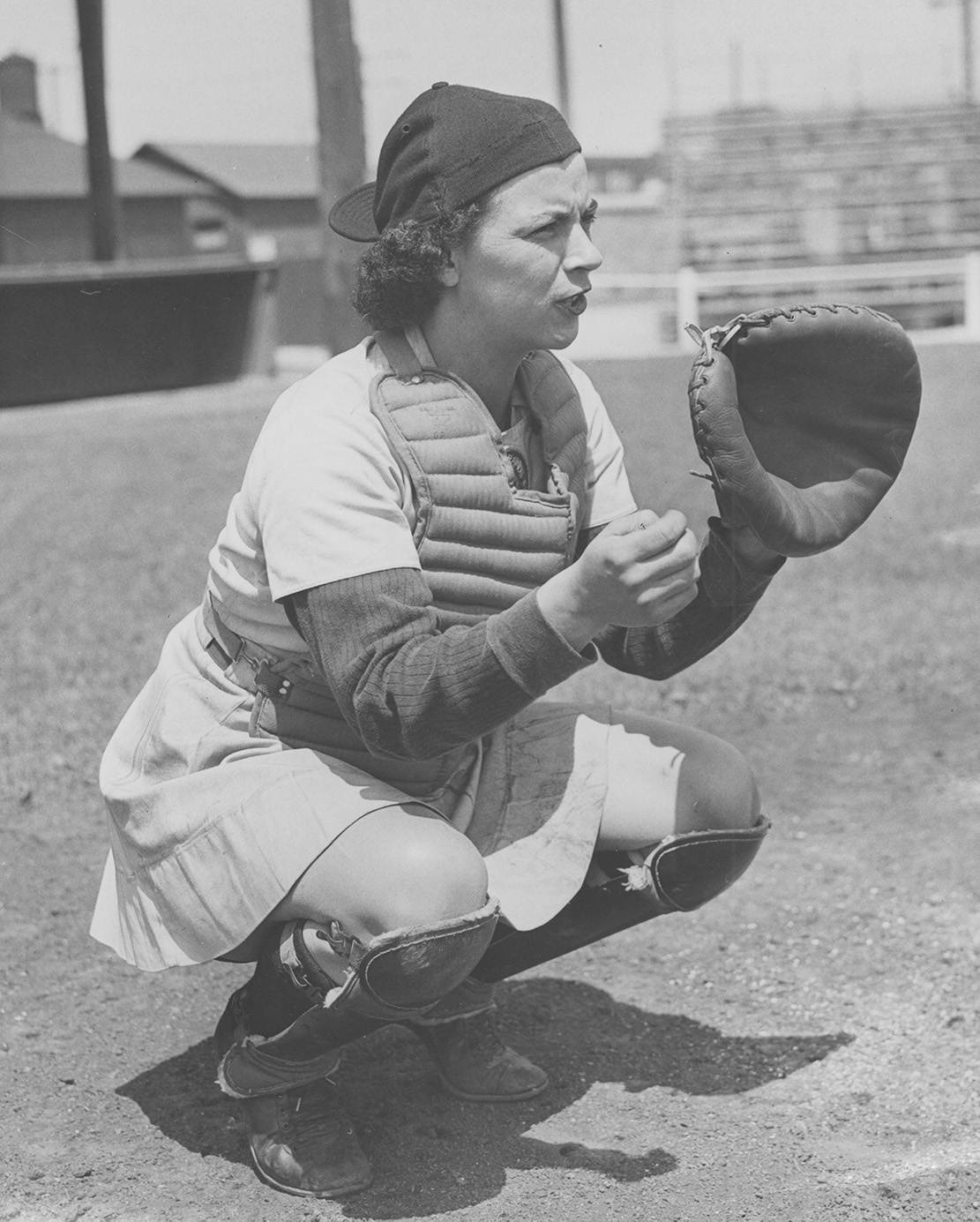
Dorothy Maguire - 1945 Grand Rapids Chicks. Courtesy of The History Museum, South Bend, Indiana
In addition, they gave the public a fun and affordable escape from the worries of what was happening overseas. One player, Dorothy “Mickey” Maguire, learned of her husband’s death in Italy just minutes before the start of the game. Instead of sitting out, Maguire insisted she would carry on as planned and asked that the crowd not be notified of the news until after the game. Already a popular player in the league, she became a source of courage for fans who had lost or would lose loved ones in the war. The AAGPBL players would also start every game forming a “V” for victory from homebase toward the pitcher’s mound, while the national anthem played as a tribute to the Armed Forces and to unite the crowd.
LET THE GAMES BEGIN
The teams in the AAGPBL played a total of 108 games during their regular season from mid-May to the beginning of September. The top two teams then competed in a series of playoff games to determine the “World Champions of the All-American Girls Base Ball League.” At the end of the 1943 season, the pennant-winner Kenosha Comets were defeated in the five-game series by the Racine Belles, who became the first World Champions of the AAGBBL.
After the success of the league’s first year, two more teams were added to the roster: the Minneapolis Millerettes and the Milwaukee Chicks. These two teams were funded solely by Wrigley without the assistance of local officials and businesses. The idea was that these teams would draw larger crowds due to the cities’ increased population. This venture, however, would not be as successful as the original four teams for many reasons. Because Wrigley did not have any local guarantors in Minneapolis and Milwaukee, there were no local businessmen helping to support or promote the league in these cities. The media in these larger cities also did not cover the league’s games as closely or favorably as the smaller cities. Furthermore, the local residents had more opportunities for entertainment in larger cities.
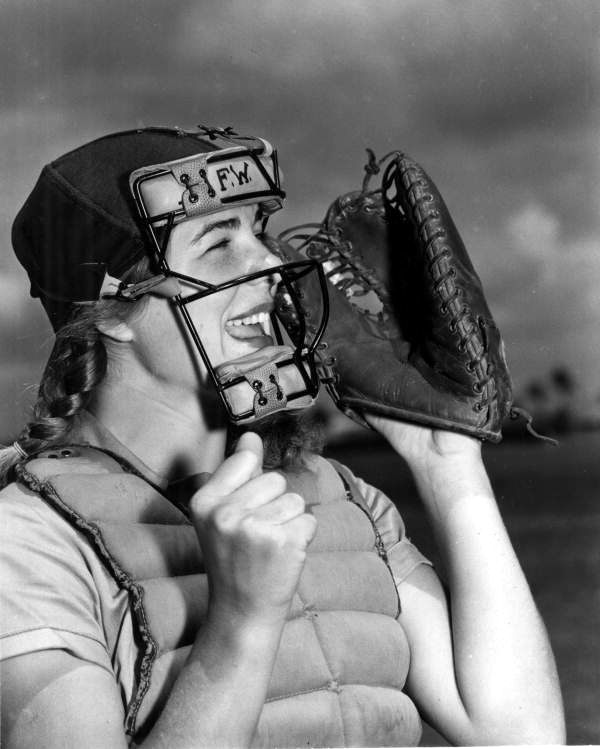
Dottie Schroeder, catcher, shouting "Play Ball" behind the mask, promotional photo, circa April 22, 1948. Wikimedia Commons
The stadiums used in Minneapolis and Milwaukee also served as a hindrance to the teams’ success. The fields were larger because they were where the American Association Baseball Club (men’s minor league) played. This not only impeded the female players’ performance and ability to accomplish feats such as over-the-fence-homeruns but also caused distance between the players and their fans. In the smaller cities, fans were able to sit close to the fields and dugouts and interact with the players, creating more camaraderie.
Both teams would be moved to smaller cities the following season. The Millerettes became the Fort Wayne Daisies in Indiana, and the Milwaukee Chicks became the Grand Rapids Chicks in Michigan.
At the end of the 1944 season, with the war likely coming to a close, Wrigley sold the league to his advertising agent, Arthur Meyerhoff. Under Meyerhoff’s leadership, the League Board of Directors was formed with representatives from each team, allowing each franchise to have a say in league rules and regulations.
STRIKE! THEY’RE OUT
The AAGPBL continued to prosper even after the end of World War II. Minor leagues were created, traveling post-season games were played, and by the end of 1948, the league had reached its peak with 10 teams and an attendance record of 910,00 fans turning out in one season. Unfortunately, this was the beginning of the end for the league. In 1950, team directors purchased the league from Meyerhoff and chose to operate their teams individually. This decision decentralized the league. There was no longer a united body to promote the league, procure new talent, or ensure the players were equally distributed between the teams.
Moreover, by this time the league was closer to the game of baseball than softball, and most new players required training. Finances were declining, and team owners could not afford to send players to rookie training or even properly advertise national recruitment.
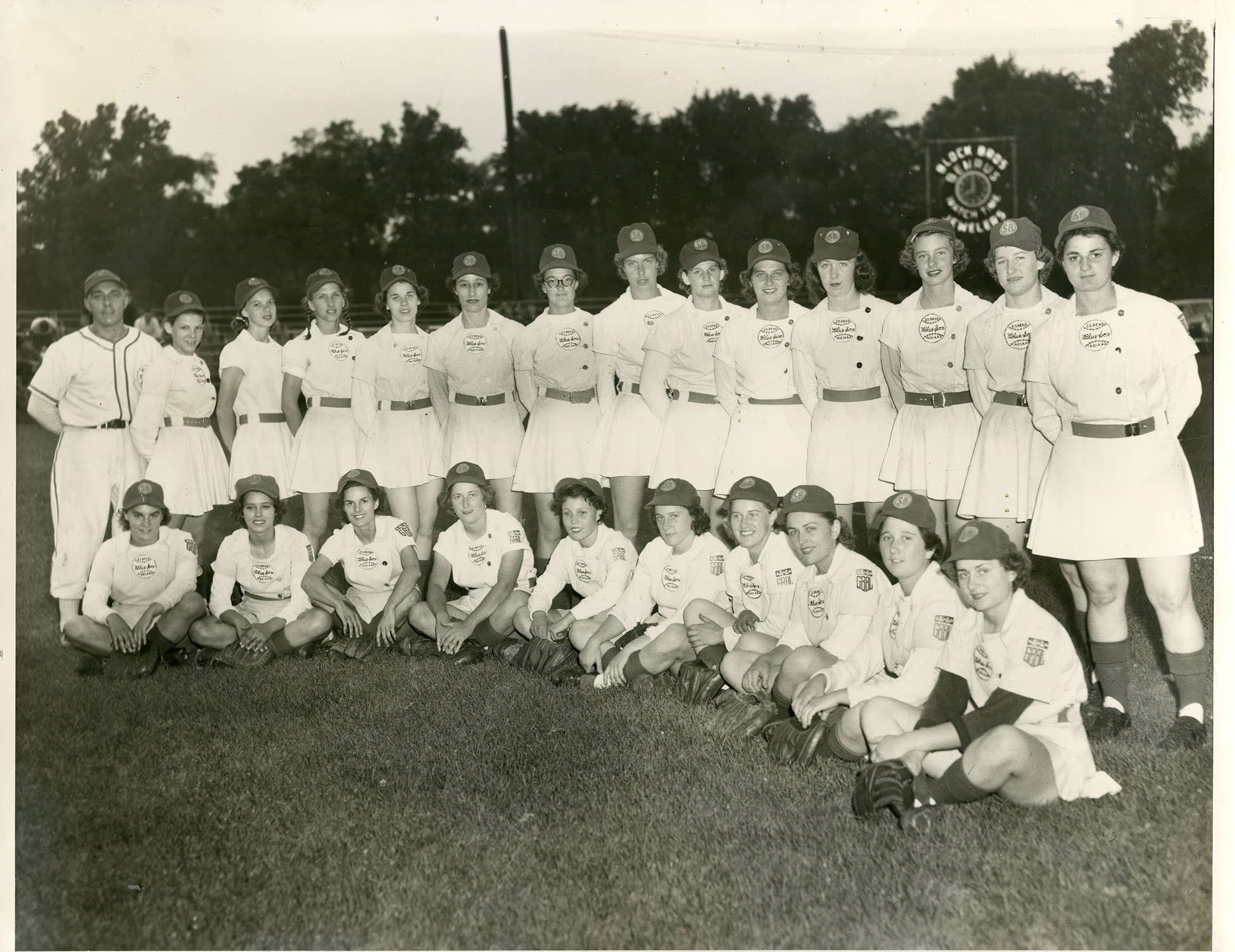
1950s South Bend Blue Sox Team Photograph, Courtesy of The History Museum, South Bend, Indiana
The league’s fan base dwindled in its later years, and by 1952 there were only six teams left. The following year, another team was dropped, and by 1954, the last five teams folded due to low attendance rates.
The All-American Girls Professional Baseball League served as inspiration for young women across the country and opened the door further for women’s professional sports.
- 1
The League went through multiple name changes throughout its history. However, due to the efforts of former players in 1987, it has been officially recognized historically as the All-American Girls Professional Baseball League.
- 2
Merrie A. Fidler, The Origins and History of the All-American Girls Professional Baseball League (McFarland and Company, 2006), 33.
- 3
“First All-Women Softball League Takes Over in Chicago.” The Daily Worker, May 17, 1943. https://www.newspapers.com/image/1144074302/?match=2&terms=%22All%20American%20Girls%20SoftBall%20League%22
- 4
Merrie A. Fidler, The Origins and History of the All-American Girls Professional Baseball League (McFarland and Company, 2006), 36.
Marisa Primeaux
Marisa Primeaux is a research assistant at The National WWII Museum in New Orleans.
Cite this article:
MLA Citation:
APA Citation:
Chicago Style Citation:


.jpg)
