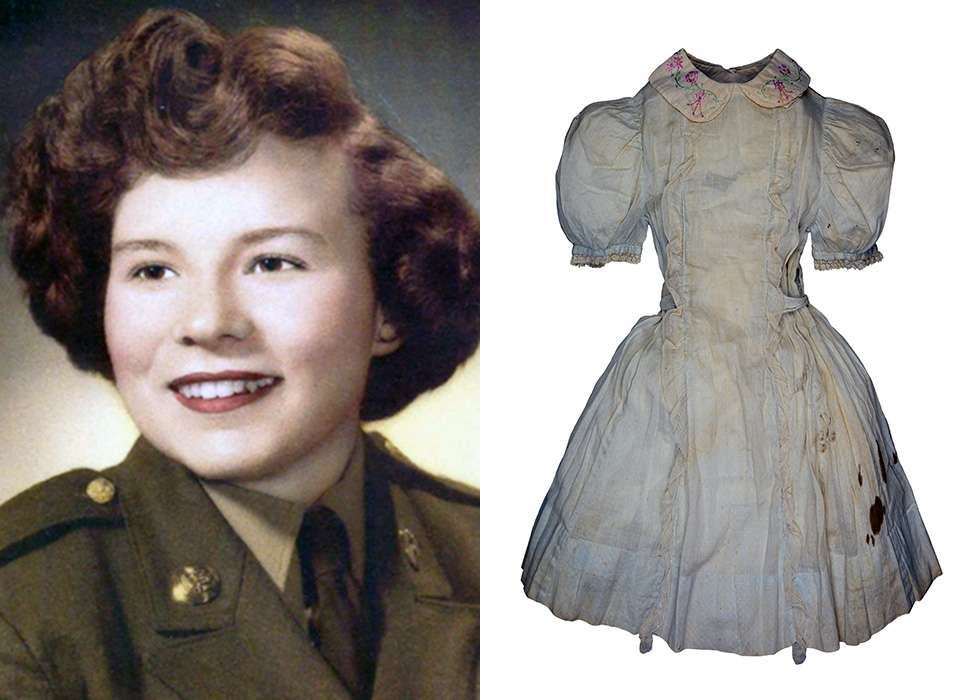
Top Photo: Left: Nancy Sellers joined the US Army after graduating from high school. This image was taken in the 1950s during basic training. Right: Nancy’s handmade church dress is an iconic artifact from the day the world changed forever. Courtesy Nancy Lee Sellers.
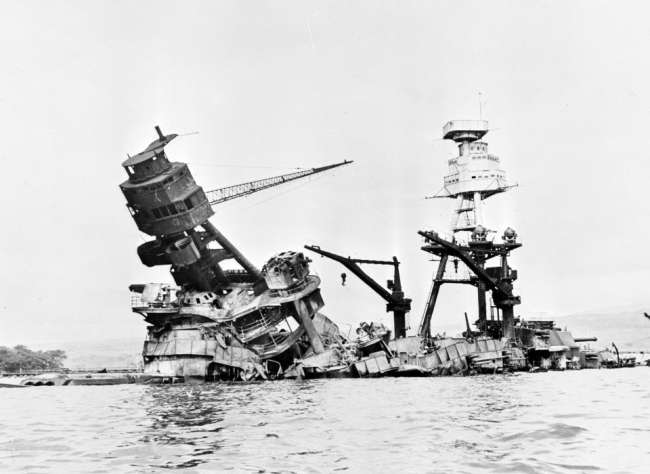
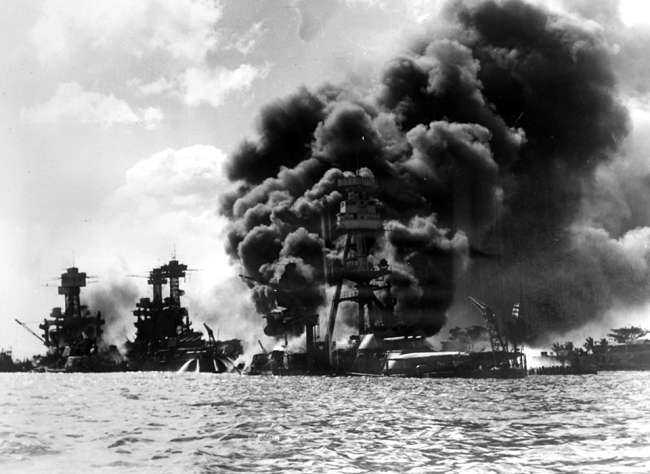
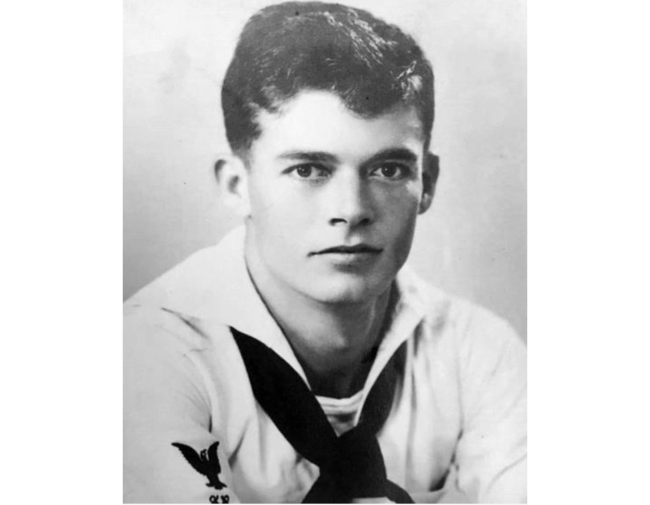
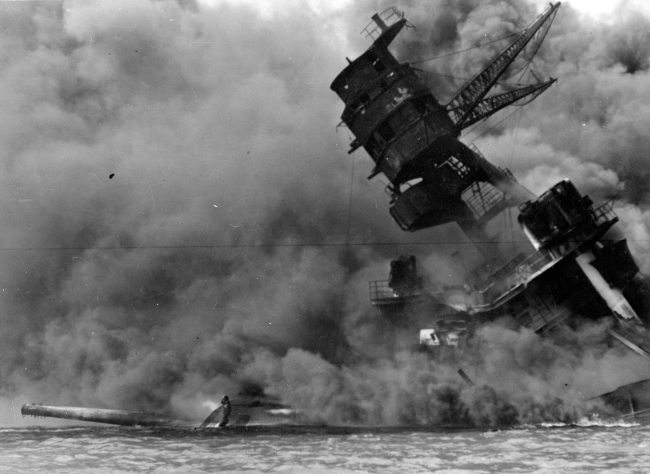
The story of the attack on Pearl Harbor has been recounted countless times over the decades. While depictions of the heartbreaking destruction of the USS Arizona (BB-39), the bravery of Doris “Dorie” Miller, and the wild dogfight involving Lieutenants Welch and Taylor are all approaching the realm of American legend, little is ever written about the civilians who found themselves suddenly on the front lines of conflict.
Nancy Lee Sellers was eight years old when the events of December 7, 1941, vaulted America into war. She, along with her mother, Frances, her older sister, and her younger brother, had arrived in the Territory of Hawaii via steamship just a month before. The move meant they were finally reunited with “Dad,” US Navy Aviation Chief Machinist’s Mate Walter Ray Sellers. Walt had come to Pearl Harbor two years earlier, attached to Patrol Squadron 24 (VPB-24). The unit operated PBY Catalina aircraft from Ford Island at the center of Pearl Harbor.
The family settled into the married family housing on Ford Island soon after their arrival. On that fateful Sunday, Walt’s aircraft were away, conducting joint submarine exercises off the coast of Hawaii. The welcome break in the action left him free to attend church with the newly reunited Sellers clan.
Nancy wore a blue and white dress with an embroidered collar that her mother had crafted. When the attack began, the children pointed out the approaching aircraft to their father, who immediately knew the scene was highly unusual, telling them, “They would never do that on a Sunday.” As sirens blared and bombs began to burst, Walt rushed to his post and neighbors shooed the kids inside. Walter was gone for days.
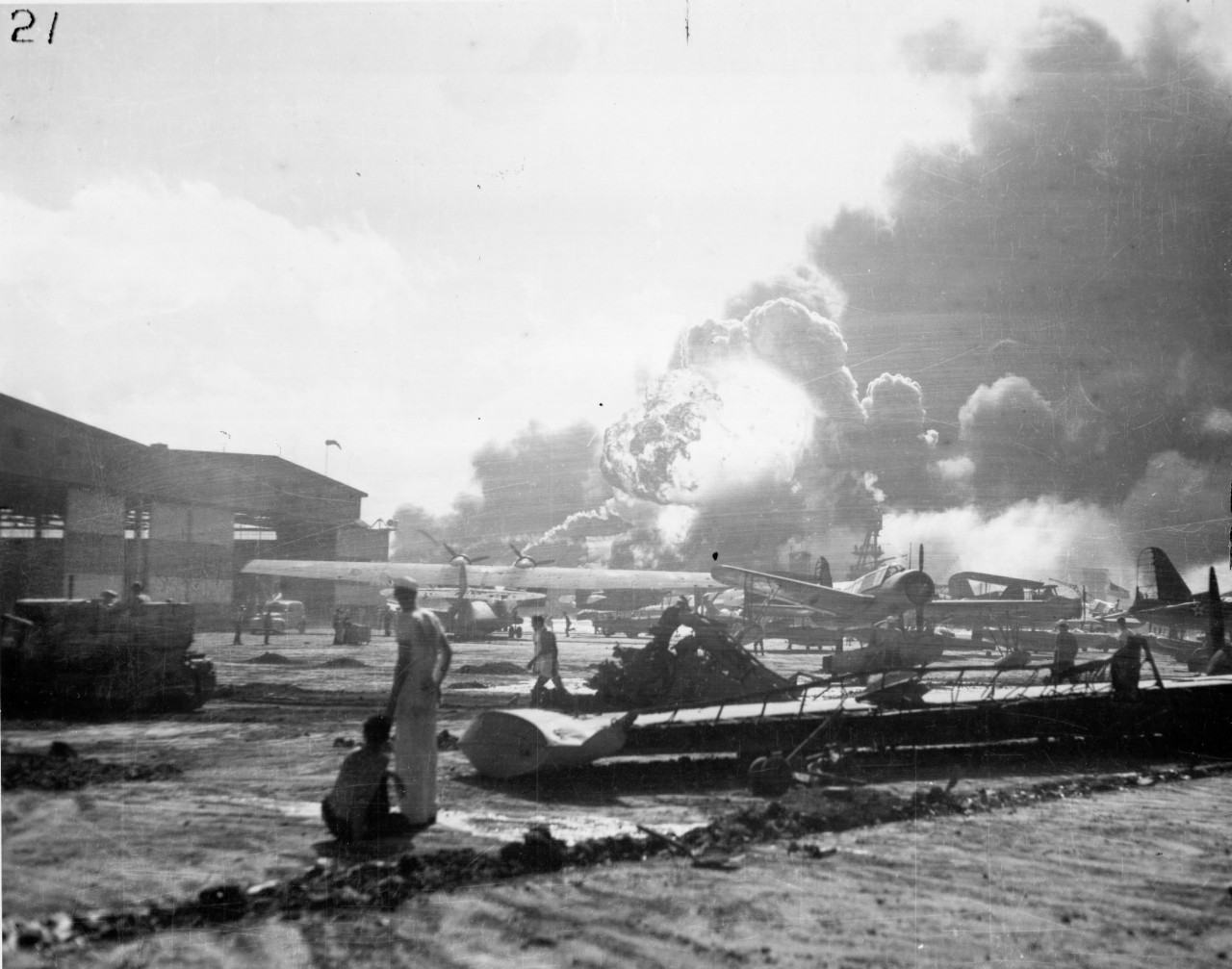
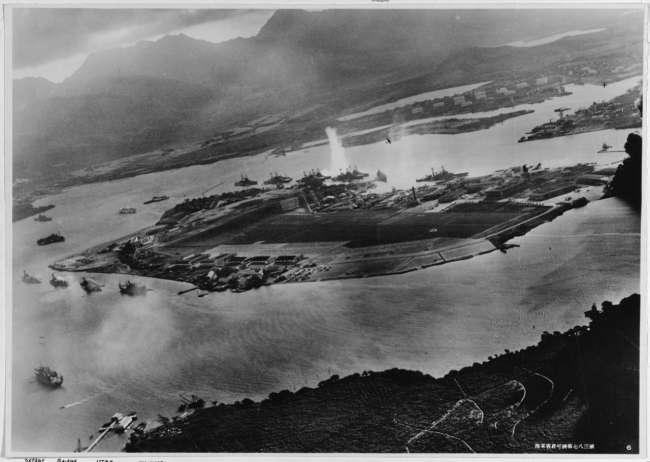
Ford Island’s seaplane base lies in shambles as sailors see the USS Shaw (DD-373) explode across the channel. Naval History and Heritage Command
Meanwhile, the remainder of the Sellers family hunkered down amid thunderous booms and towering smoke clouds. After more than an hour, the second wave of Japanese planes departed, leaving destruction. Within minutes, oil-soaked sailors and Marines arrived with orders to gather the children and quickly load them into trucks. During the chaos, dirty and exhausted military men sullied Nancy’s exquisite dress, spotting it with fuel oil as they lifted her into the bed of the truck. Their destination was the “Dungeon,” the offhand name of an underground bunker beneath the home of an admiral on the island. The bunker was a WWI-era gun battery that workers had converted into a bomb shelter. Nancy and her siblings stayed under the military’s watchful eye for three days before they were allowed to return home.
Weeks later, the family once again separated. Unlike most civilians who departed for the continental United States, Frances and the trio of Sellers children stayed in Hawaii, with the youngsters toting their gas masks to school, constantly pestering bored soldiers, and slipping through barbed wire to get to the beach. Walt, still attached to his Navy patrol unit, repositioned up the Hawaiian island chain to Midway Atoll, some 1,300 miles away.
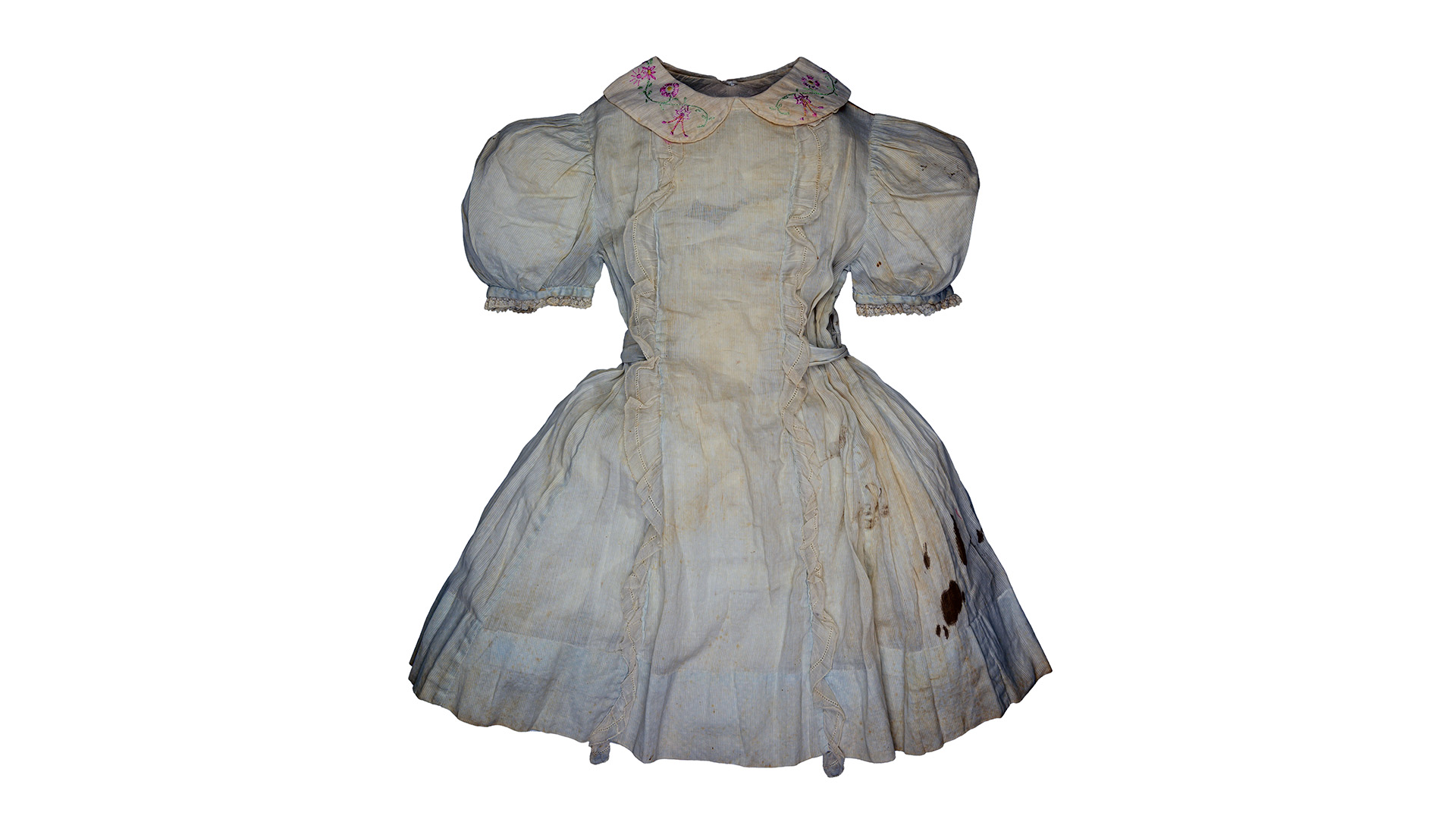
Nancy Seller’s handmade church dress is an iconic artifact from the day the world changed forever. The National WWII Museum
With the events of the “date which will live in infamy” still part of her temperament and identity, Nancy volunteered for the US Army right out of high school. Sergeant Sellers met her future husband, a Navy man like her father, while she was stationed at Okinawa during the Korean War. Nancy and Leroy had two children of their own, and she went on to help develop the Atlas booster rocket while working as a civilian at Convair in San Diego.
Her daughter recalled that Nancy, who passed away in 2015, did not tell many people about her the day she witnessed America’s entry into World War II. But her oil-splashed dress, less than 22 inches from collar to hem, is now part of The National WWII Museum’s world-class collection. This unique artifact tells a one-of-a-kind story from the day that irrevocably changed the world.

Cory Graff
Cory Graff is a Curator and Restoration Manager at The National WWII Museum.
Cite this article:
MLA Citation:
APA Citation:
Chicago Style Citation: