Article Type
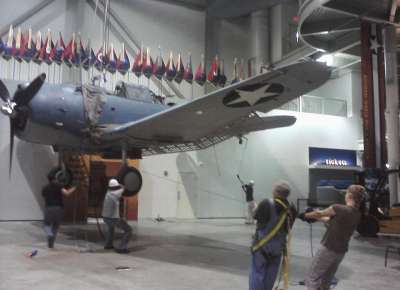
SHOP TALK: Collecting Aircraft at The National WWII Museum
Building a Collection of World War II aircraft 60 years after the war has been a challenging aspect of building the Museum collection.
Building a Collection of World War II aircraft 60 years after the war has been a challenging aspect of building the Museum collection.
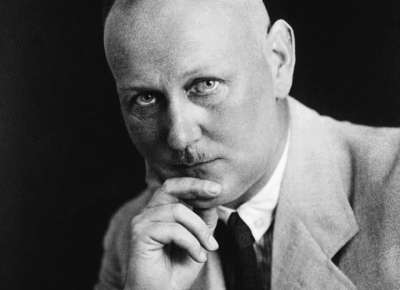
The horrors of World War I led to research that resulted in two antibiotics that saved thousands of lives in World War II, and many millions since.
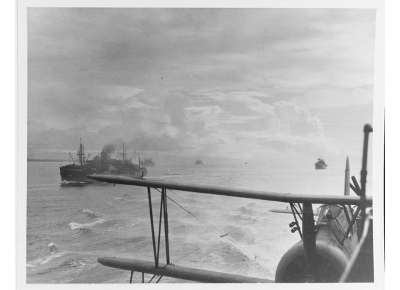
From Guadalcanal to Okinawa, the USS Crescent City (AP-40/APA-21) was in the thick of the US drive across the Pacific. See how a small ship made a major difference in World War II.
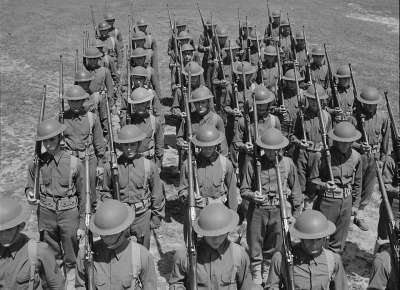
The creation of a G.I. Army in 1941 required planning, hard work, and a little good luck. And it helped America win the war.
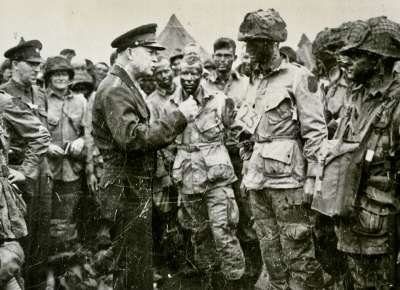
A collection of German pistols captured by a paratrooper featured in one of the most iconic photographs of World War II.
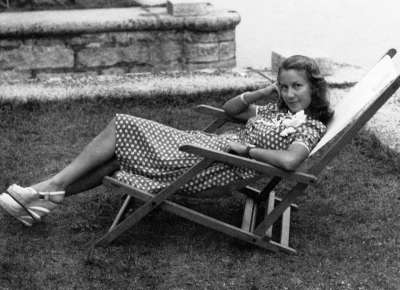
The Museum’s collection has over 250,000 objects, but only one night to host the greatest fashion show in history.
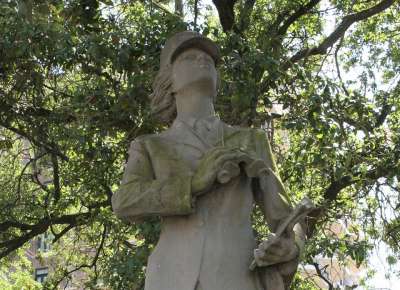
In 1943, a Mexican artist in New Orleans sculpted a statue of a Woman Reservist (United States Marine Corps) named Molly Marine. Displayed on Canal Street, she can still be found in the city today.
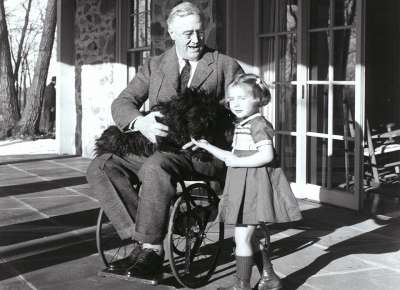
Before he took office and faced the challenges of the Great Depression and World War II, FDR faced the challenge of Polio. This disease was sometimes deadly and always feared in the US during the first half of the twentieth century. Part of FDR's legacy is the Polio vaccine, released in 1955.
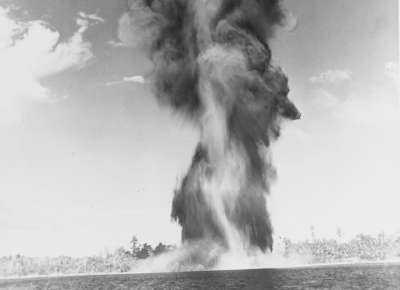
The men of the Underwater Demolition Teams in the Pacific were born out of the necessity of the moment in World War II, and blasted their way from one island to another to help achieve American victory over Japan.
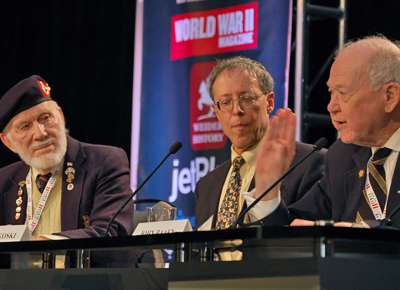
A sampling of some of the Museum's most poignant programs featuring WWII veterans, civilians, and Holocaust survivors.