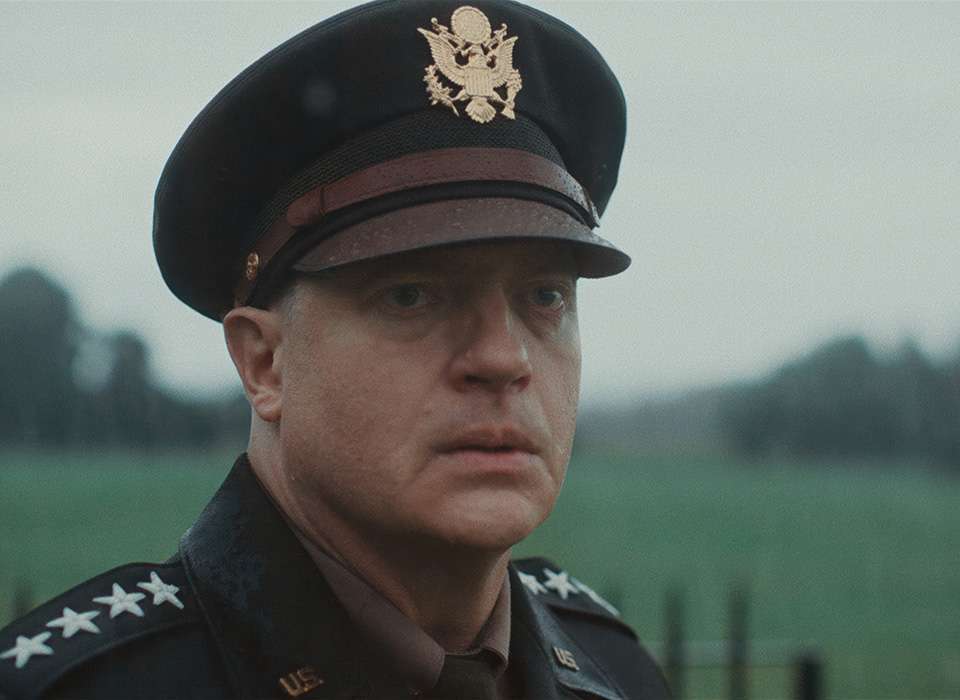
Top Photo: Brendan Fraser stars as General Dwight D. Eisenhower in director Anthony Maras's Pressure, a Focus Features release. Credit: Courtesy of Focus Features / STUDIOCANAL © 2026 All Rights Reserved.
Americans love a good WWII movie. Saving Private Ryan, The Thin Red Line, Flags of Our Fathers, Letters from Iwo Jima, Midway—these are just some of the more recent Hollywood treatments. For many moviegoers, such films often create narratives that set a precedent for public memory. Whether fictional or nonfictional, accurate or inaccurate, these depictions establish a storyline that often supplants factual, historical events. Certainly, directors and writers need to take some artistic license and historical shortcuts for entertainment value. But errors—intentional or unintentional—along with manufactured drama often distort the more interesting and complex story.
The next big WWII movie coming out is Pressure, scheduled for release in May 2026. Directed by Anthony Maras and starring Brendan Fraser as Supreme Allied Commander General Dwight D. Eisenhower, the film tells the story of the Allied weather forecast leading to the invasion of Normandy on June 6, 1944. With bad weather and the limitations of meteorological technology at the time, Ike had to determine when to launch the cross-channel invasion and begin Operation Overlord. Fraser’s co-star, Andrew Scott, plays Royal Air Force (RAF) Group Captain James Stagg. Stagg served as Eisenhower’s staff meteorologist and was responsible for determining and reporting forecasted weather conditions in and around the invasion area. Pressure, like other films, will set a popular historical narrative. But, before its release, some background and context on Eisenhower’s decision might help inform the audience of this complex and layered story.
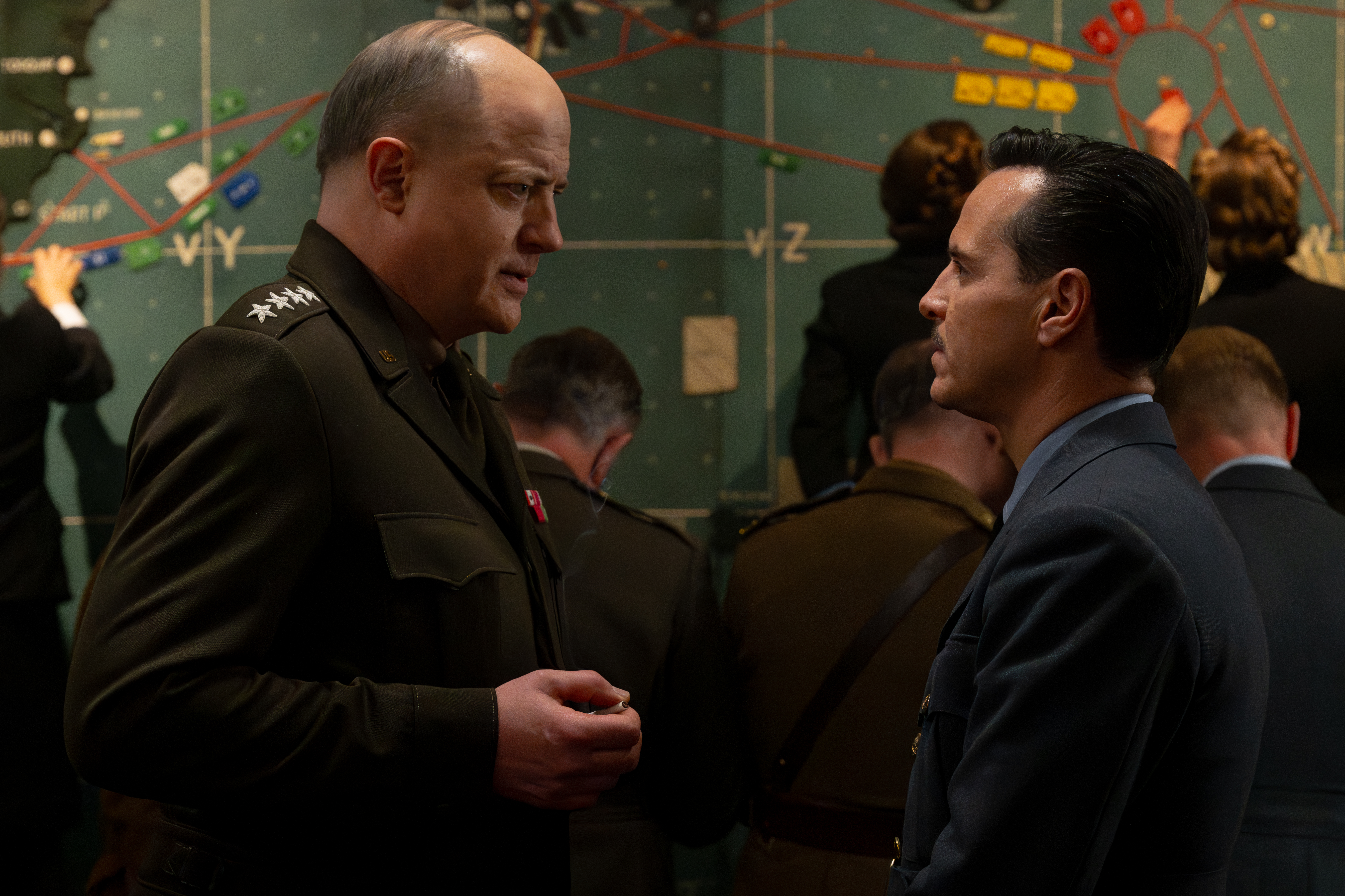
Brendan Fraser as General Dwight D. Eisenhower and Andrew Scott as Captain James Stagg in director Anthony Maras's Pressure, a Focus Features release. Credit: Alex Bailey / Focus Features / STUDIOCANAL © 2026 All Rights Reserved.
Environment, Weather, and Normandy
Amphibious assaults are complex operations. They require military forces to operate jointly in all three domains: air, land, and sea. But each service had its own requirements for Operation Overlord. Of significant concern were the naval conditions needed for ship-to-shore movement. Landing craft coming ashore with men, materiel, and supplies had several elements to consider, including the sea state, breaking surf, beach composition, and shore gradient. Larger naval ships providing support fire and logistics had similar concerns as environmental conditions also affect their operations. Likewise, aviation assets required good visibility and acceptable cloud ceilings, with winds conducive to both airborne landings and air support. For the ground forces, they hoped to avoid heavy downpours hampering traffic once ashore.
In addition to these meteorological and hydrographic concerns, for the Normandy invasion, ambient moonlight and tides were also a factor. Wanting illumination to assist in the predawn operations, planners sought dates with a full moon. Bright “moon shine” aided pilots carrying paratroopers in identifying selected landing zones while helping airborne soldiers avoid trees and other obstacles during their descent. The moonlight also assisted troops embarking on landing craft in the early morning at sea and in the organization of assault waves heading ashore. Finally, it helped illuminate enemy positions for both naval and air pre-landing fires.
For the assault, planners also wanted to land while coastal tides were at low ebb. Such conditions exposed German beach obstacles, allowing assaulting troops to locate, evade, or destroy the hedgehogs, tetrahedrons, Belgian Gates, and other shoreline defenses. While this increased the risk for soldiers crossing the open and exposed beach line, the benefits outweighed the risks. Given these parameters, the 150,000 men, 11,000 aircraft, and over 6,000 vessels comprising the landing force had only a few dates that fit these two naturally occurring conditions. Along the Normandy coast, only a small window on June 5–7 provided such environments.
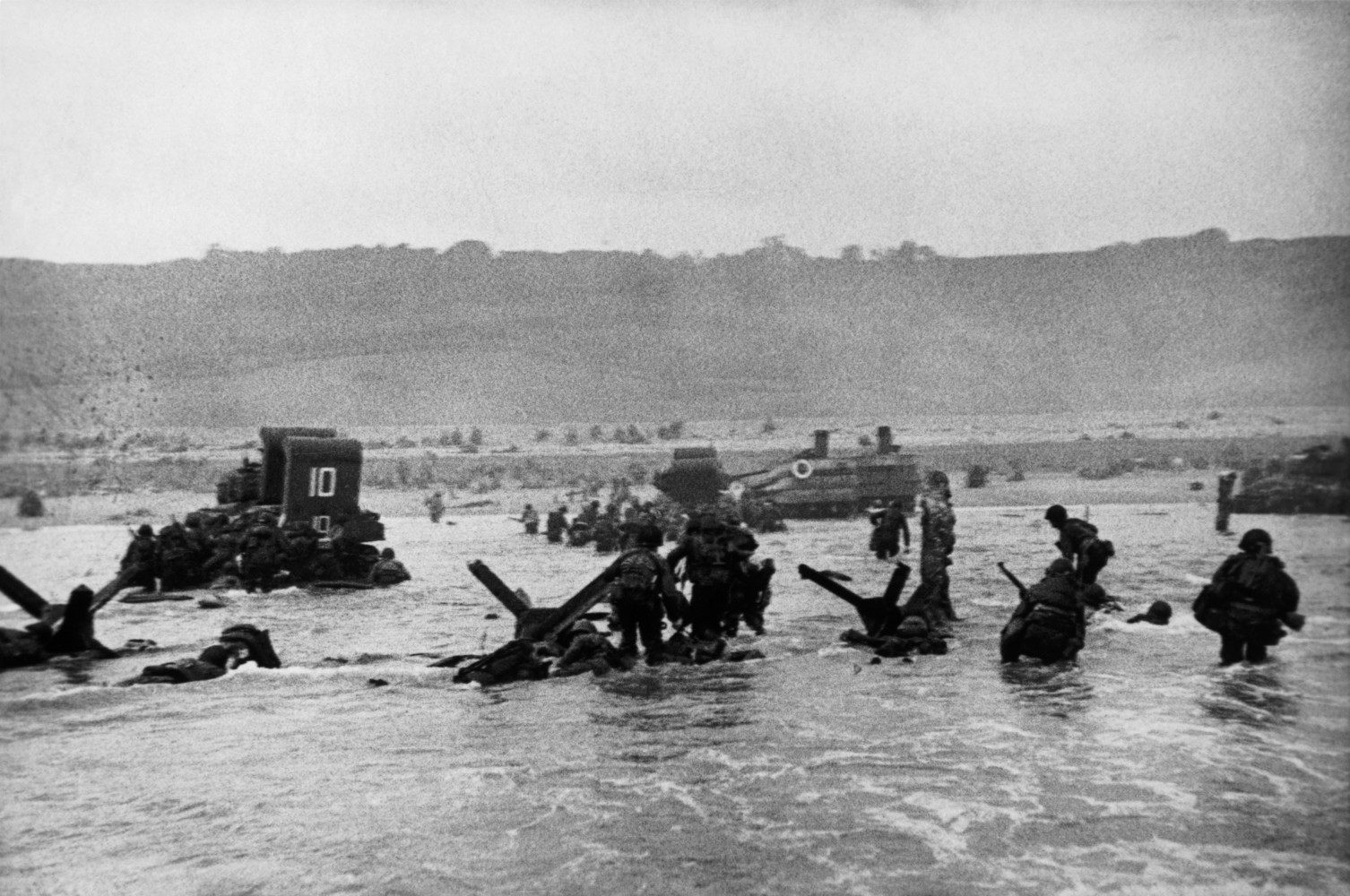
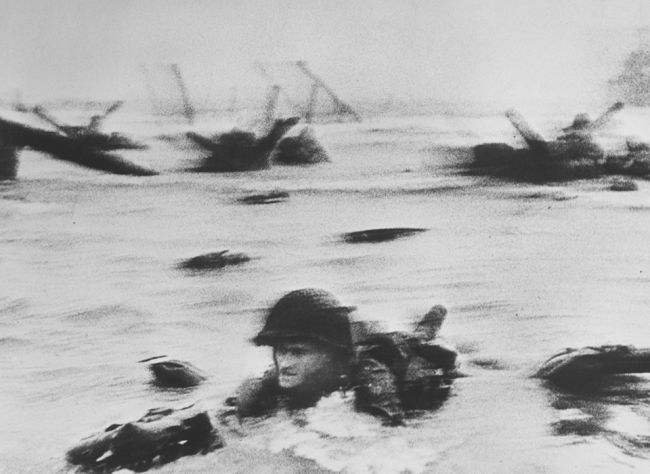
US troops assault Omaha Beach during the D-Day landings. Normandy, France. June 6, 1944. © Robert Capa © International Center of Photography | Magnum Photos
With those calendar dates, planners also required two to three days of mild weather allowing simultaneous air, naval, and land operations. At the time, Supreme Headquarters Allied Expeditionary Force (SHAEF) planners hoped for what they referred to as “quiet weather.” While each service has specific meteorological requirements, “quiet weather” included winds between 7 and 10 knots on the coast and 13 and18 knots at sea, and cloud cover no more than 30 percent below 8,000 feet, with visibility greater than three miles. The question facing Eisenhower was: Would the small June 5–7 window meet these weather conditions? This question fell to Stagg, but answering it required a weather forecast approximately 36 to 48 hours in advance of the execution order.
Forecasting during this era, however, was difficult. Weather fronts in the Atlantic generally travel from west to east. Given this pattern, predicting weather along coastal France required an understanding of the conditions over North America, the Atlantic, Greenland, and the British Isles. At a time before satellites, weather radar, and computer simulations, meteorologists could rely only on various scheduled (or unscheduled) observations from established weather stations, ships at sea, or aircraft reports. From these observations, meteorologists at the time created subjective forecasts, but there was no real way to determine weather conditions 48 to 72 hours out—although some claimed they could.
The Met Office, ‘Widewing,’ and the Admiralty
Almost a century before, in 1854, the British first established the Meteorological Office, known as the Met Office. By 1859, it began reporting weather for mariners, and, during World War I, the Met Office provided comparable services to the nascent Royal Flying Corps. In World War II, the Met Office and RAF joined forces with civilian observers to support military operations.
Starting in 1940, the Met Office’s central forecasting and communications office was located at Dunstable Downs, 35 miles northwest of London. With a staff of nearly 10,000 people, it maintained a series of weather stations with various capabilities to help determine forecasts during the conflict. Some 500 stations in the British Isles, including Ireland, made hourly reports: Observers sent their updates via teleprinter to the main office at Dunstable, where the information was used to produce forecasts and plot weather maps.
When the US Army Air Forces (USAAF) arrived in the United Kingdom, it also brought its own meteorological services. In 1944, a central forecasting office codenamed “Widewing” was established under the US Strategic Air Forces. Headed by Colonel Donald Yates, Widewing shared responsibility with the British Admiralty and the Met Office in preparing forecasts for the (SHAEF) and the Overlord effort. As a result, Stagg had support from three separate meteorological services at his disposal. But this was not necessarily an asset.
SHAEF had integrated British and American command structures, with a US general as the Supreme Allied Commander and staff sections led by British officers with American deputies. Although the two countries were allies, disagreement over doctrines, methodologies, and strategies often created tensions. Understanding that diplomacy, tact, and the ability to work in a stressful environment was required, in November 1943 Met Office director Dr. Nelson Johnson nominated Stagg as SHAEF’s chief meteorologist. Eventually, SHAEF’s meteorological office reflected the larger integrated arrangement, with Stagg as the lead and Yates serving as deputy.
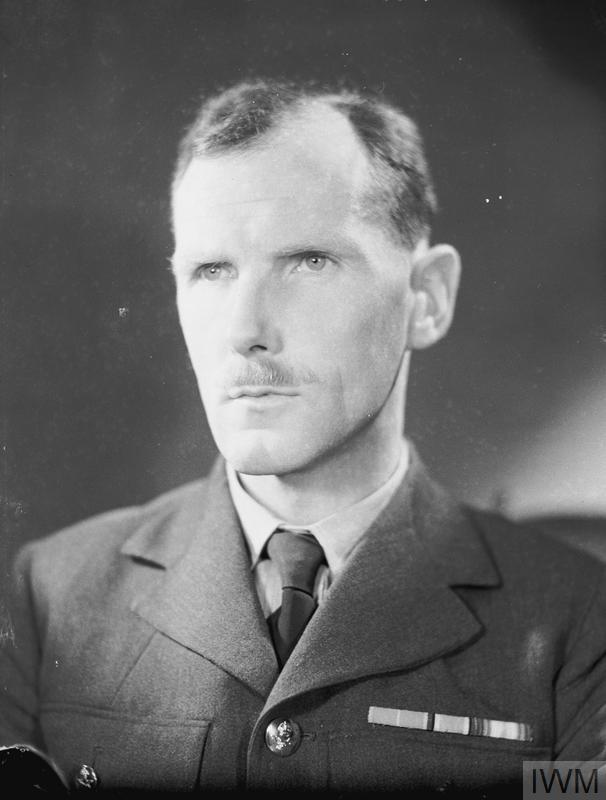
Royal Air Force Group Captain James Stagg. Despite having no formal military training, he was named Chief Meteorologist at the Supreme Headquarters Allied Expeditionary Force. Imperial War Museums
Born in 1900 and described as a “dour but canny Scot,” Stagg studied mathematics and philosophy at the University of Edinburgh. Participating in the 1932 British Polar Expedition of Arctic Canda, he gained his appreciation of the meteorology community despite having no formal training in the disciple. After he received a doctorate in science in 1936, Stagg worked in the Air Ministry weather office and was eventually appointed superintendent of the Kew Observatory. By spring 1944, he was commissioned as a Group Captain in the RAF Volunteer Reserve, authorized to wear the uniform, which removed the stigma of being a civilian in the SHAEF Headquarters.
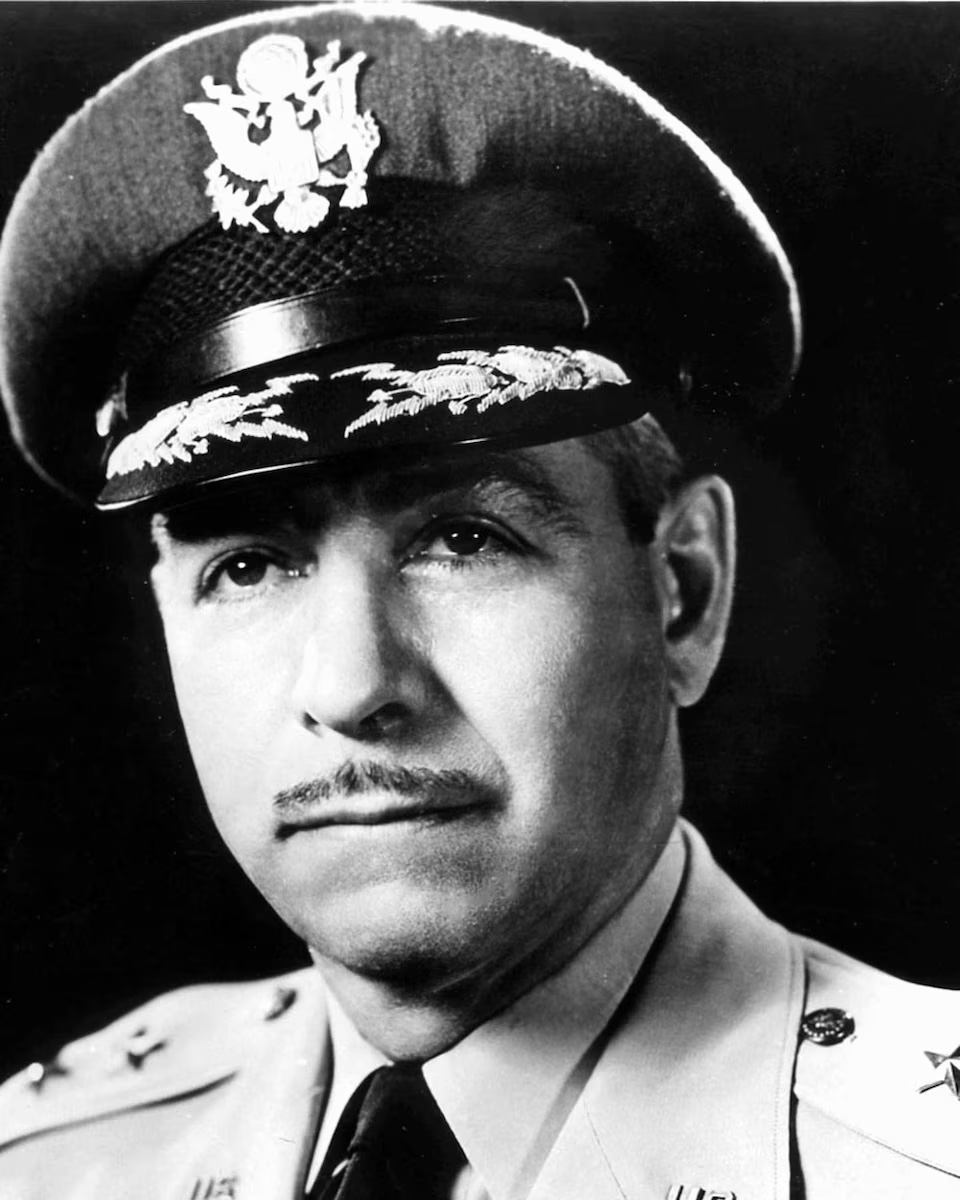
US Army Air Force General Donald Yates. As a Colonel, he headed the American Widewing meteorological office in the United Kingdom. US Air Force Photo
Serving together at SHAEF, Stagg and Yates established a friendly, cordial, professional relationship. Despite their amiable personal relationship, their respective national meteorological services did not share the same sentiments, as each followed differing schools of thought regarding forecasting. Even upon his appointment, Stagg began wondering, “Is it really the case that I shall have to make my forecasts fit with those of several other teams of forecasters?” The competing methodologies along with organizational animosities would make Stagg’s job even harder.
Yates joined the SHAEF staff while still in charge of the American Widewing office. Located at Bushy Park southwest of central London, his fellow Americans subscribed to the “Analogue Method” of forecasting. Advocated by Lieutenant Colonel Irving Krick, this method utilized current observations and compared them with previous surface weather patterns. Prior to the war, Krick gained the trust of USAAF Chief of Staff General H. H. Arnold and leveraged his patronage. Using historical charts, he would find one that matched current conditions and assumed the weather would follow the previous pattern. They claimed this method to be accurate for up to five days, with an arrogant Krick even going so far as to claim he could accurately forecast weeks in advance. While confident in his methodology, Krick failed to include upper atmosphere circulation patterns that often drive surface weather conditions.
Alternatively, the Met’s Dunstable office included veteran meteorologists C. K. M. Douglas, a WWI pilot, and Norwegian Sverre Petterssen, who served as head of the Meteorological Department at the Massachusetts Institute of Technology. These men advocated the “Bergen School,” which was a more three-dimensional approach. It included upper air reports from the newly discovered jet streams and made connections to surface conditions and forecasts. This method required RAF weather aircraft to report on conditions at low, medium, and high altitudes while flying routes stretching from Gibraltar to Norway. Even with these reconnaissance flights and reports, Douglas believed that forecasts after 48 hours were mere speculation. He went on further to quip, “It is just not possible to make regular forecasts for five or six days ahead that can have any real value for military operations or any other purpose … at least in this country.” In addition to the divergence in method between the Americans and the British, personal animosity between the self-promoting Krick and Met Office staff made the two offices even less willing to accept each other’s conclusions.
Complicating the differences in meteorological approach, neither office had the most accurate or timely weather data. Reports and observations from both ships and planes in the Atlantic were often sporadic, late, or had to be decoded (leading to errors). Once these observations were collected, weather charts were then hastily drawn by hand and prone to error or personal interpretation. Developing specific forecasts from such unreliable or subjective sources was obviously a problem. In addition, each organization used its own charts for interpretation. As a result, members of the collective group were using their own charts instead of one agreed upon depiction.
Eisenhower moved SHAEF from Norfolk House in London to Southwick House in Portsmouth on May 29, with Stagg also relocating. However, at the new location, the Group Captain had neither his own meteorological office or staff. Both Stagg and Yates had to rely on British Admiral Bertram Ramsey’s weather personnel, charts, and workspaces located in a Nissen hut behind the estate building. With no staff of their own, they commandeered a secretary from Widewing until they could secure a one from the Woman’s Auxiliary Air Force. Hardly a well-staffed or equipped office given its importance.
The Dilemma
With the small June window of opportunity for the invasion, Eisenhower needed to believe that he could trust his meteorologists. Before SHAEF moved to Portsmouth, Stagg’s office was adjacent to Ike’s war room, and the men frequently chatted about the weather. Additionally, Eisenhower’s Chief of Staff, Lieutenant General Bedel Smith, directed Stagg to start preparing weather forecasts each Monday, then compared them with actual conditions as the week unfolded, with Thursday as the targeted D-Day. From this, SHAEF hoped to deduce the accuracy of his meteorological staff. To assist in this endeavor, and in addition to Widewing and the Met Office, Stagg also conferred with the Royal Navy Admiralty along with other air and naval meteorologists. These various parties conferred on Sunday nights, with Stagg hoping to gain a consensus. Unfortunately for the SHAEF meteorologists, such agreement rarely, if ever, happened.
Eventually, the May landing date had to be pushed back one month due to a lack of landing craft. The target date was now tentatively set for June 5, with the next possible window on June 19-21. Although the later date did not have a full moon, the tidal conditions remained suitable. However, if the “quiet weather” required during the first window failed to materialize, the coiled spring that was the invasion force would have to idle at staging areas for weeks, risking the discovery of the Overlord plan.
The weather during May was largely fine and clear, but as the month ended, it worsened. Weather forecasts occurred twice daily at Southwick House, and those scheduled for early June were crucial. On June 1, the Americans predicted a ridge of high pressure building northwards from the Azores for several days and eventually covering the landing beaches. They predicted clear weather and light winds but forecasted deteriorating conditions beginning the 3rd and 4th, with the ridge reestablishing itself afterward. The Americans at Widewing concluded that the invasion should begin as scheduled on June 5.
However, British analysts at Dunstable saw an anti-cyclone over Greenland forcing cold air south. The upper air charts showed a thermal gradient tracking eastward to Scotland. With this movement, Douglas and Petterssen predicted a large depression with accompanying bad weather, producing heavy winds and low clouds over the invasion beaches on June 5. These diverging forecasts put Stagg and Yates in the difficult position of having to reconcile conflicting reports from their respective meteorological offices. For Yates, it was especially difficult, as siding with Dunstable meant he was rejecting his own Widewing forecasters. Stagg, too, felt the pressure, with the lead planner for Overlord, General Freddie Morgan, commenting to the Group Captain, “Good luck Stagg, may all your depressions be nice little ones; but remember we’ll string you up from the nearest lamp post if you don’t read the omens right.”
On June 3, the high pressure over the Azores drifted westward, and the depression over Scotland moved south with a cold front causing winds to build over the English Channel. This produced the lowest depression ever recorded over Britian at that time of year, with pressure falling to 976.8 millibars. Eventually, both Stagg and Yates were swayed by Dunstable’s argument and determined Widewing’s predictions were suspect. At the 9:30 p.m. meeting, Stagg reported to Ike that the approaching conditions would produce 10/10 (100 percent) cloud cover, a ceiling at times of only 500 feet, winds from 13 to 30 mph with gusts up to 39, rain squalls accompanied by heavy showers, and fog both at sea and in coastal areas.
Weather conditions such as these would adversely and severely affect airborne operations, ship-to-shore movement, close air support, and a host of other essential functions. Paratroopers would be scattered over a large area, assuming they could even safely make it to the ground. Many of the landing craft heading ashore would capsize or be swamped in the rough seas, or land way off mark. Lastly, fighter and bomber support aircraft would be unable help the ground forces ashore and under the low overcast and fog. Stagg reported the front would eventually cross over the invasion beaches on June 5.
He and Yates eventually left the room to wait outside. After an hour, at 10:15 p.m., Eisenhower’s Assistant Chief of Staff G-3, Major General Harold Bull, announced the decision to delay the operation on a day-to-day basis. While some ships would sortie that tonight, another meeting was scheduled early the next morning. Despite forecasting bad weather for the assault, as Stagg exited Southwick House, the skies above were clear and the wind was still, with a quiet falling upon the grounds.
Helping Stagg with his forecast was an observation from a postmistress in the village of Blacksod, Ireland. Some 520 miles north of Normandy and living on the island’s west coast, 21-year-old Maureen Flavin’s duties included taking weather observations at the local post office and then reporting them to the Met Office. While Ireland was neutral during the war, it continued providing weather data to Dunstable. At 1:00 a.m. on her birthday, June 3, Flavin reported steadily increasing wind and rain with an accompanying pressure drop, signaling the approach of bad weather. After her initial report, Met Office staffers asked her again later that next morning to confirm the observations that eventually led to Stagg’s report.
After conferring with Widewing, Dunstable, and other offices throughout the late night and early morning, Stagg and Yates again entered the library of Southwick House. Briefing SHAEF leadership at 4:15 a.m., the Group Captain reiterated much of the same from his earlier briefing only hours earlier, claiming very little had changed. Putting great stock in the ability of air support to increase the chances of success, Eisenhower concluded that they needed to postpone. After asking for dissenting voices, the Supreme Allied Commander received none, then instructed his Chief of Staff to inform the Combined Chiefs that he was calling for a postponement for one day and to recall the ships that had already begun sailing. With time before the next set of observations were to arrive, both men finally grabbed a little bit of sleep as the sun shone brightly upon their tent.
But, as the day passed, the weather around Portsmouth began to turn for the worse. While local weather became gloomier, patterns in the Atlantic promised a possible interval of better weather in the objective area. Later that same day, at the 9:30 p.m. meeting with Eisenhower, Stagg and Yates reported a marked change in the weather. While the recent weather was more indicative of the mid-winter period, Stagg forecasted that wind speeds would drop to 13 to 24 mph and 8 to 18 mph along the French coast, clouds breaking to a 5/10 (50 percent) overcast with a ceiling of 2,500 to 3,000 feet. While certainly better, the conditions remained marginal. Struggling with the new information, Ike faced a dilemma, asking, “Just how long can you keep this operation on the end of a limb and let it hang there?”
After their report, Stagg and Yates left the room as Eisenhower turned to his commanders asking for their assessment. While his subordinates were split, he eventually concluded: “I’m quite positive the order must be given.” When he emerged from the room, he gave a provisional order for the slower ships of the invasion fleet to launch. Turning to Stagg, the Supreme Commander quipped, “Well, Stagg, we’re putting it on again; for heaven’s sake hold the weather to what you told us and don’t bring any more bad news.” However, Eisenhower still called for an update at 4:30 a.m. the next day.
The Decision
The low-pressure system Stagg and others had been watching in the Atlantic slowed, and a possible 36-hour window of fair weather emerged. Waking from a fitful sleep at 3:30 a.m. June 5, Eisenhower again made his way to Southwick House. At 4:15 a.m., as hard rain pelted the windows and stiff winds howled, he again listened to Stagg’s report. Like the previous night’s predictions, Stagg forecasted the weather would indeed hold for a few days and that Tuesday’s conditions would include patches of overcast less than 5/10, a cloud base at 2,000 feet, with winds around 15 to 18 mph. The days following would hold much the same weather. Upon completion of his briefing, the meteorologists were again dismissed and waited outside.
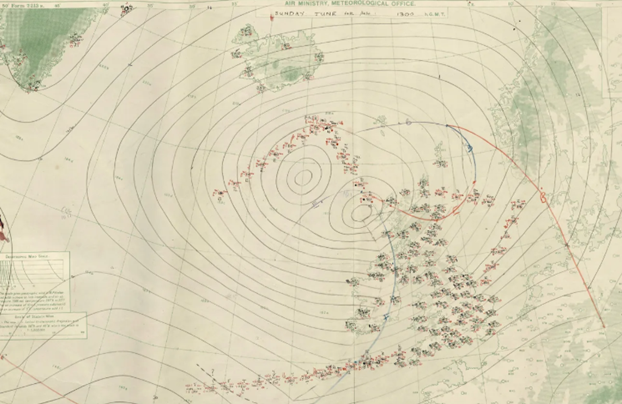
The Met’s forecasting map for June 4, 1944, that helped Stagg make his forecast report to Eisenhower that evening. (UK National Meteorological Library and Archive)
Accounts differ on what Eisenhower’s actual words were that morning. Whether he said, “Well, we’ll go!,” “OK, let ’er rip,” “OK boys, we will go,” or “OK, we’ll go ahead,” the verbiage does not matter. Despite contradicting inputs from his staff and commanders, suspect weather patterns, and a myriad of other concerns, Eisenhower, and Eisenhower alone, made the decision to launch the Allied assault. A decision long in coming had finally arrived.
Later that morning around 9:00 a.m., Stagg called General Bull and confirmed his earlier forecast. Stagg went on to reassure the G-3 that the decision to delay was correct, with Bull reporting:
“…the possible feeling of the commanders that the decision to reference Monday’s postponement might not have been a sound one…[Stagg] called attention to the well-established fact that the rain and clouds which was over here [Southwick House] last night has been over the OVERLORD area with a 10/10s cloud last night continuing probably up to 9:00 AM, which presented a situation unacceptable to our air and airborne plans. Monday definitely would have been highly unsatisfactory.”
Despite this observation and the resulting weather, Widewing and Krick continued to argue their case, claiming their assessments were correct. Amazingly, they continued this claim for decades.
Reports from the naval task force approaching Utah beach revealed a partly cloudy sky, ceiling of 2,000 to 3,000 feet, visibility of 7 to 8 miles, west winds at 18 to 25 mph, with a moderately choppy sea with 3- to 4-foot waves. With paratroopers already landing, at H-Hour, the sky turned 9/10 covered, but with a ceiling above 10,000 feet with scattered clouds at 1,200 feet. Visibility was 8 miles, 18 mph winds, and 3- to 4-foot waves. While not optimal, it was good enough.
The weather on June 7 proved less desirable, but by that point, Allied troops were already ashore. While the situation was still tenuous, over 130,000 men landed that first day. If Eisenhower ordered another delay, the next launch window was June 17-18. Unbeknown to all at the time, a severe storm in the English Channel arrived June 19-21, a storm so powerful that it wrecked one of the two Allied artificial “Mulberry” harbors. Had they waited for that second window and been hit by the storm, the operation may have well been a failure. Additionally, given tidal and moonlight requirements, the next launch window would not occur until August. Such a two-month delay would give the Germans more time to discover Allied intentions and strengthen their beach defenses. Given these considerations, Eisenhower wrote Stagg weeks later after learning of the storm of June 19-21: “I thank the gods of war we went when we did.”
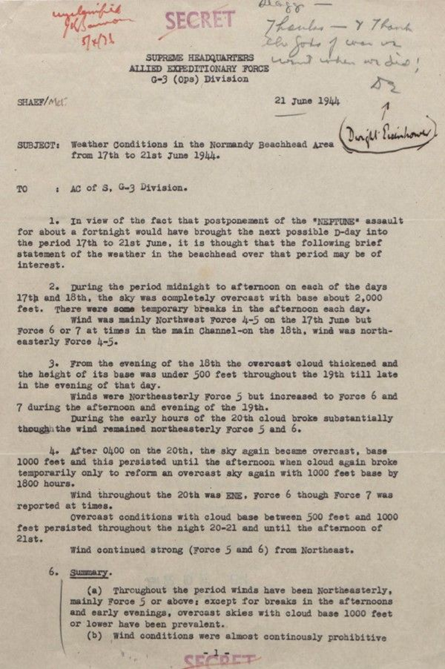
Stagg’s weather report of June, 21, 1944. The highlighted area is where Eisenhower scribbled his reference to the “gods of war.” (UK National Meteorological Library and Archive)
While the Normandy landings eventually proved successful, Stagg faced a difficult task given the technology available, a lack of dedicated staff, having to use often imprecise or subjective data, differing opinions from other meteorologists and weather offices, along with other internal frictions. Stagg’s path in developing his forecasts was a difficult one. Despite all these challenges, in the end, he got it right.

John Curatola, PhD
John Curatola is the Samuel Zemurray Stone Senior Historian at the Jenny Craig Institute for the Study of War and Democracy.
Cite this article:
MLA Citation:
APA Citation:
Chicago Style Citation: