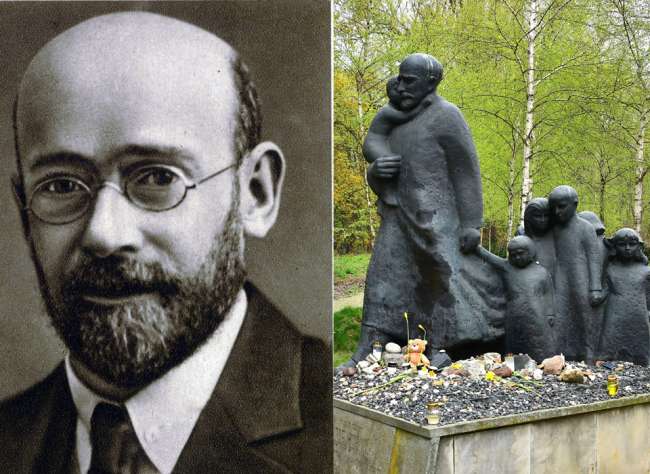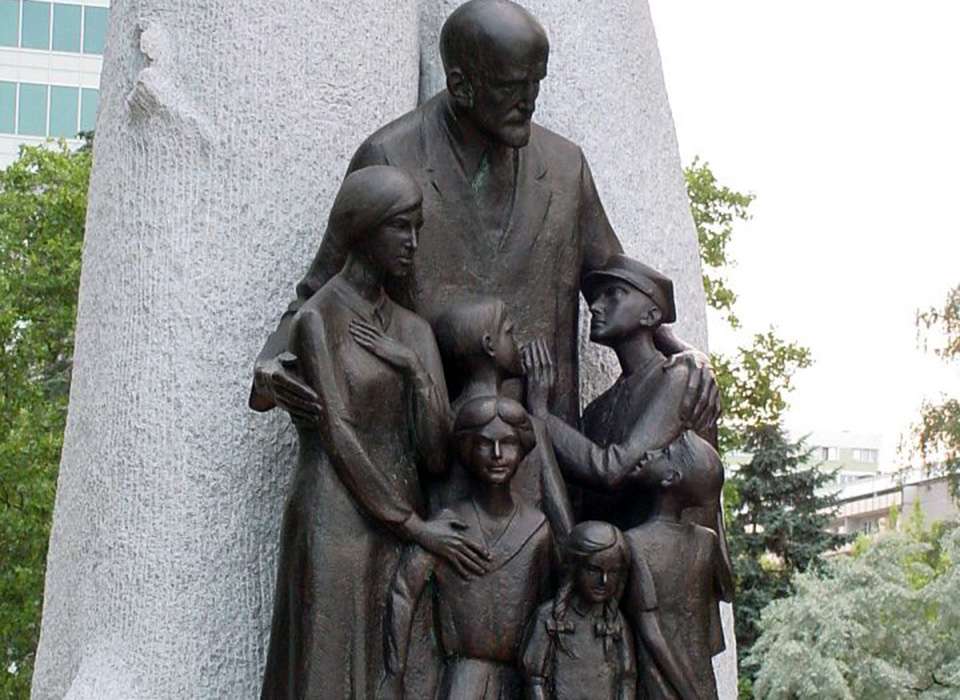
Top Photo: Monument to Janusz Korczak in Warsaw, Poland. Jan Chmielewski. Wikimedia Commons.
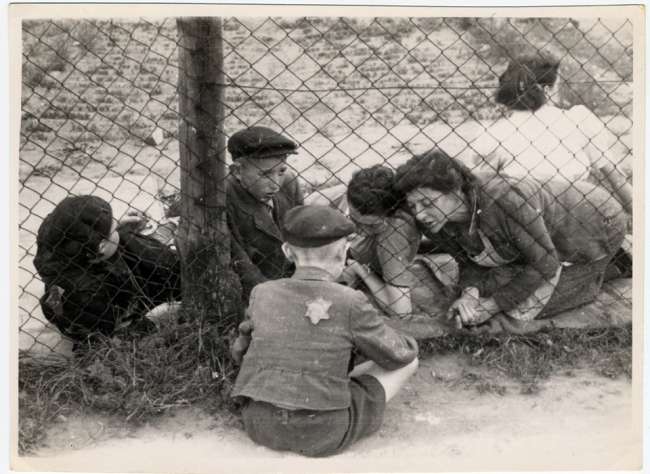
In 1942, when the Nazis rounded up the children in his Warsaw Ghetto orphanage and sent them to the death camp at Treblinka, Janusz Korczak refused to leave their side. He was murdered alongside his pupils shortly after arriving at Treblinka. You can read more about his story here.
How to Teach WWII is a monthly blog by the Teaching & Learning team of The National WWII Museum to help readers bridge history, humanity, and education through World War II. This month, in accordance with International Holocaust Remembrance Day, we seek to help learners consider how to approach teaching and learning about the Holocaust.
An Overview: How to Teach the Holocaust
Studying the Holocaust with students can feel daunting because of the gravity and importance of the subject; fortunately, many educators and institutions have done extensive work to help teachers explore this subject in a way that is honest, respectful, and thoughtful.
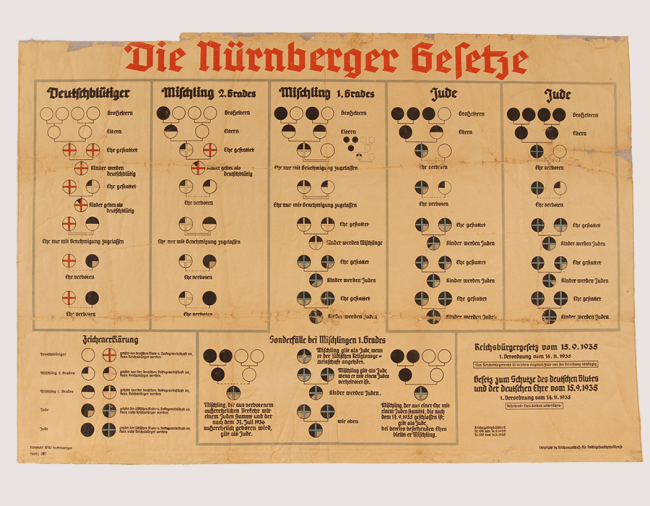
At The National WWII Museum, we often rely upon the Pedagogical Principles established by the Holocaust education organization, Echoes & Reflections. Many of these principles contain best practices for all teachers of history, including relying on primary sources, encouraging inquiry-based learning, and contextualizing history. However, it is also important to pay attention to specific guidelines regarding this topic, such as helping students understand the history of antisemitism and “translating statistics into personal stories.”
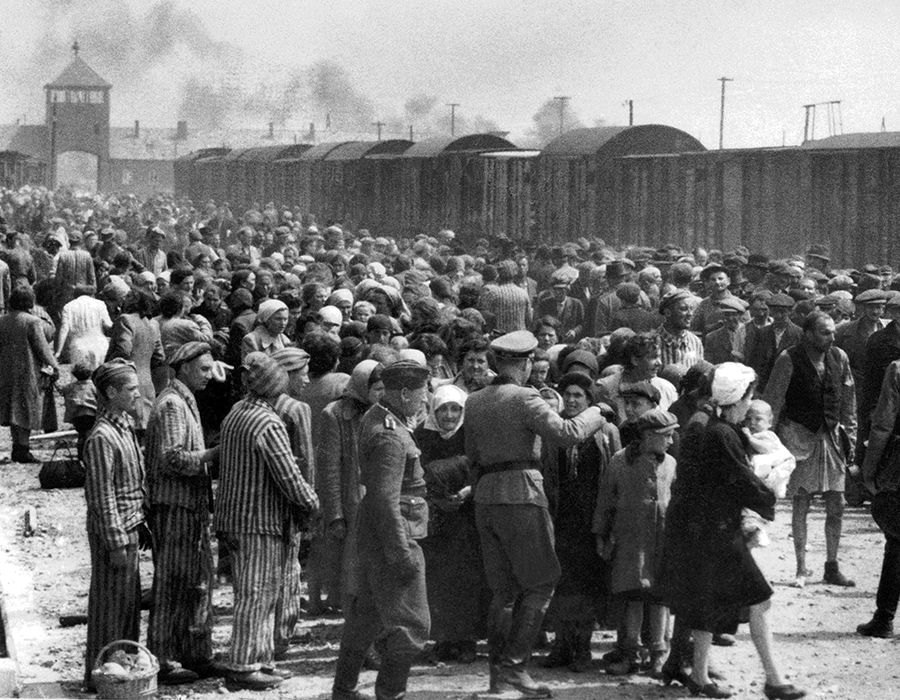
"Selection" of Hungarian Jews on the ramp at Auschwitz-II-Birkenau in German-occupied Poland, May/June 1944, during the final phase of the Holocaust. Jews were sent either to work or to the gas chamber. Yad Vashem
In following with these principles, we also recommend beginning a unit on the Holocaust by guiding students through a thoughtful definition of the Holocaust, which you can read more about in this essay, Defining The Holocaust. The United States Holocaust Memorial Museum (USHMM) has also created this introductory lesson plan to help students understand the term and topic and to help them get acquainted with USHMM’s comprehensive Holocaust Encyclopedia.
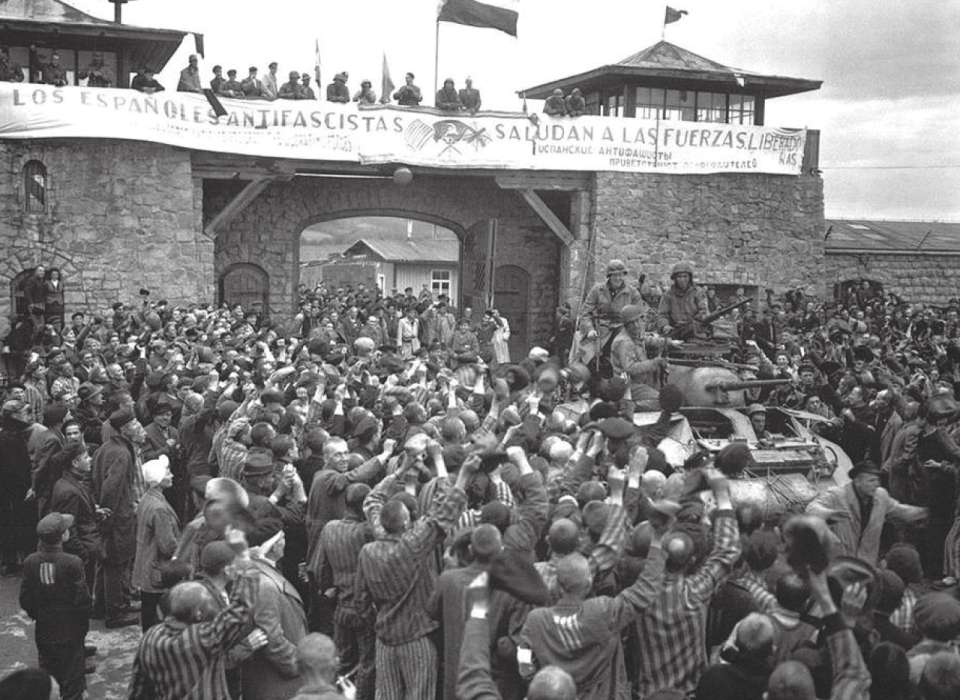
At The National WWII Museum, we always seek to ground our exhibits and our materials in primary sources. Our Holocaust Curriculum provides six lessons to help teachers explore a variety of topics, including a lesson on Jewish artifacts, another on the Nazi T-4 Program, and lessons focused on the oral histories of American GI liberators and survivors of the concentration camps.
A Closer Focus on Specific Topics
Included below are resources for exploring more specific topics related to the Holocaust.
- What was Jewish life like before the Holocaust? Prior to World War II, Jewish life across Europe was diverse and culturally rich. Explore diaries, letters, notebooks, and family films that depict Jewish life across Europe before the Holocaust through a collection of materials from Yad Vashem, the World Holocaust Remembrance Center.
- What was the “Holocaust by Bullets”? On the interactive website Yahad-In Unum: Holocaust by Bullets, teachers and students can explore how the Nazis conspired with local law enforcement to carry out the persecution and murder of millions of Jewish people across Europe and the Soviet Union.
- What did Americans know about the threats posed by Nazi Germany before World War II? Explore Americans and the Holocaust, a featured exhibit from the United States Holocaust Memorial Museum that examines the motives, pressures, and fears that shaped Americans’ response at the time. Further investigation can be done using another resource from USHMM, History Unfolded: US Newspapers and the Holocaust, where students can search newspaper articles from around the country from 1933 to 1946.
- How can I use literature to teach the Holocaust? There are so many acclaimed novels, graphic novels, poems, and memoirs about the Holocaust that can help students understand what happened and develop empathy for those who endured its horrors. This list of 25 Books about the Holocaust from the Holocaust Museum Houston is a great starting point.
Highlights from The National WWII Museum's Collection
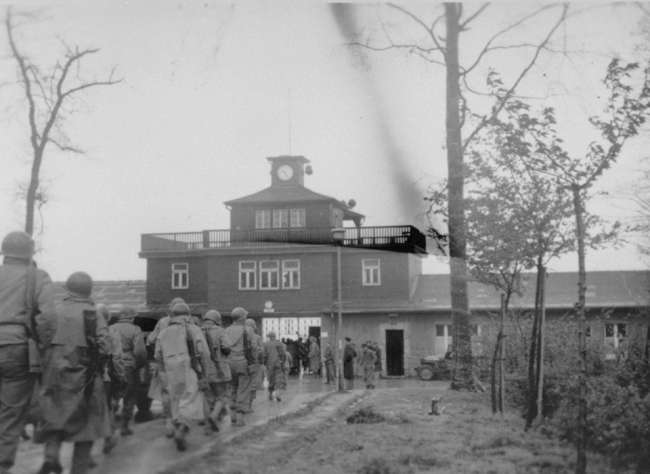
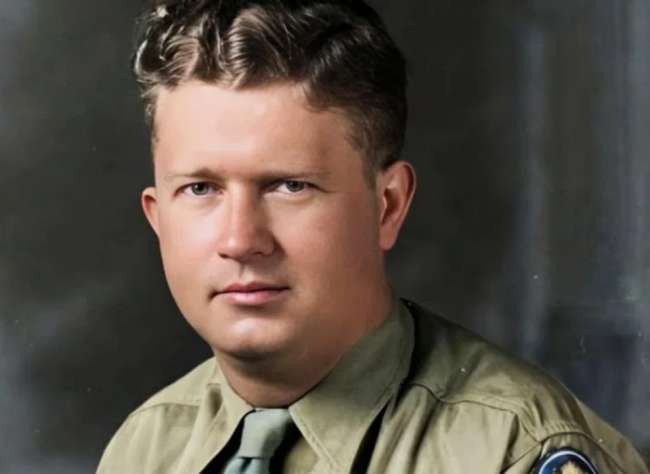
When you visit The National WWII Museum, be sure to visit the Pam and Mark Rubin Liberation Theater to view the stories of survivors and liberators of the Holocaust, located in Liberation Pavilion. There, a 30-minute compilation of testimonials gathered by oral historians from The National WWII Museum and partners such as the Shoah Foundation tells the compelling stories of survivors of concentration camps as well as the courageous American GIs who arrived to provide aid and secure freedom for the prisoners. You can also view some of these oral histories at WW2Online.org. For example, you can watch an oral history from Leon Bass, who served in the 183rd Engineer Combat Battalion. In April 1945, his battalion’s arrival at Buchenwald changed his life forever and affirmed his belief in the need to fight for equal rights both at home and abroad.
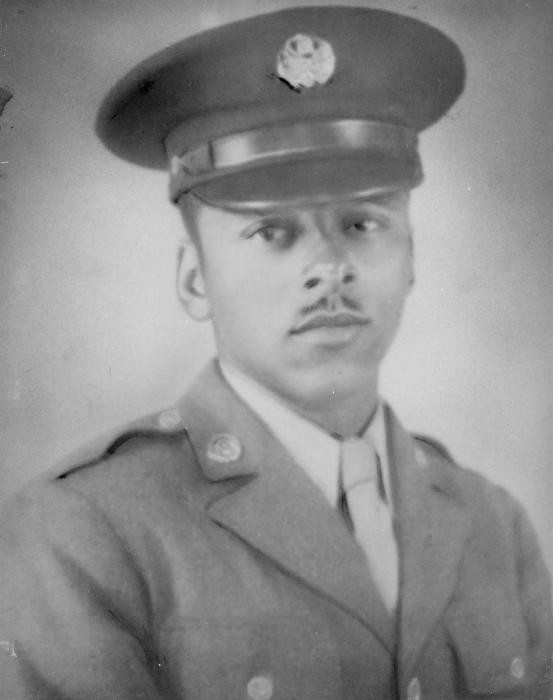
Photo of Sergeant Leon Bass, USHMM, courtesy of Leon Bass. As an 18-year-old, he enlisted in the US Army in 1943. Leon and other members of the 183rd Engineer Combat Battalion witnessed Buchenwald several days after its liberation in April 1945. After the war, he became a teacher and was active in the Civil Rights Movement.
Teaching and Learning Tips
In the essay “Bringing Students Safely In and Out When Teaching the Holocaust,” Holocaust educator Rebecca Keel writes: “When I was first trained as an Echoes & Reflections facilitator, I immediately gravitated to the Pedagogical Principles for Effective Holocaust Instruction. Understanding the intention and choices behind how we teach sensitive subjects is like rocket fuel for me as an educator. These principles have become my road map, shaping the way I write curriculum and guide my teaching. While all the Echoes & Reflections principles resonate deeply, one in particular struck a profound chord with me: Creating a Safe Learning Environment, known within the Echoes community as the ‘Safely In, Safely Out’ principle.”
While we recommend that you read her entire essay, she highlights these key strategies:
- Journaling
- Establishing Turn-and-Talk Partners
- Restorative Justice or Community Circles
- Passing to Take a Break
- Engaging Support Systems
- Movement to Process Emotions
- Breathing and Silence
- Using Music and Art
- Focusing on the Light in the Darkness

Annie Preziosi
Annie Preziosi is the Curriculum Development Specialist at The National WWII Museum.
Cite this article:
MLA Citation:
APA Citation:
Chicago Style Citation: