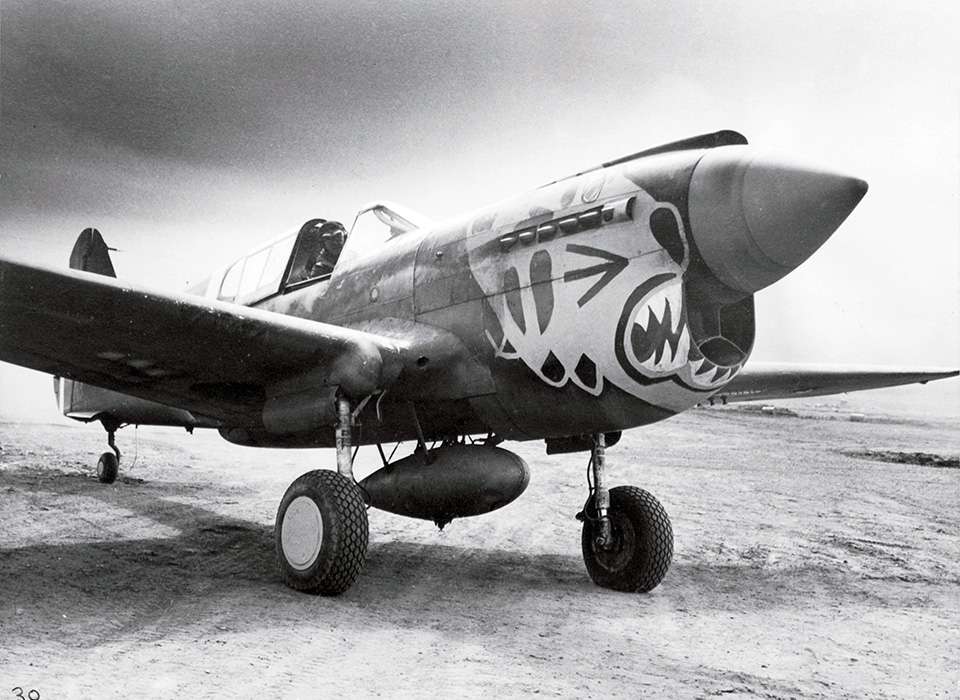
Top Photo: An 11th Fighter Squadron P-40E on Umnak in 1942. Courtesy US Air Force
While most associate the Curtiss P-40 Warhawk with the “Flying Tigers” of General Claire Lee Chennault’s 1st American Volunteer Group, the airframe saw action throughout the war in almost every theater across the globe. In fact, one of the more overlooked Warhawk units serving in the cold north of the Alaskan Territory was tied closely to Chennault: the 343rd Fighter Group’s 11th Fighter Squadron, under the command of Chennault’s son, Lieutenant Colonel John “Jack” Stephen Chennault.
John Chennault was born on May 20, 1913, in Eudora, Arkansas, to Claire Chennault and his wife, Nell. Having grown up in a military family, he joined the US Army Air Corps on July 2, 1933, and learned to fly at Texas’s Kelly Field. As war clouds loomed on the horizon and his father prepared to leave for China, then-First Lieutenant John Chennault received his initial exposure to the P-40 in February 1941 as an Army test pilot at the Curtiss plant in Buffalo, New York. Shortly after the Japanese attack on Pearl Harbor, he deployed north to Alaska, serving as the commanding officer of the then-innocuous, P-40-equipped 11th Pursuit Squadron (Interceptor).
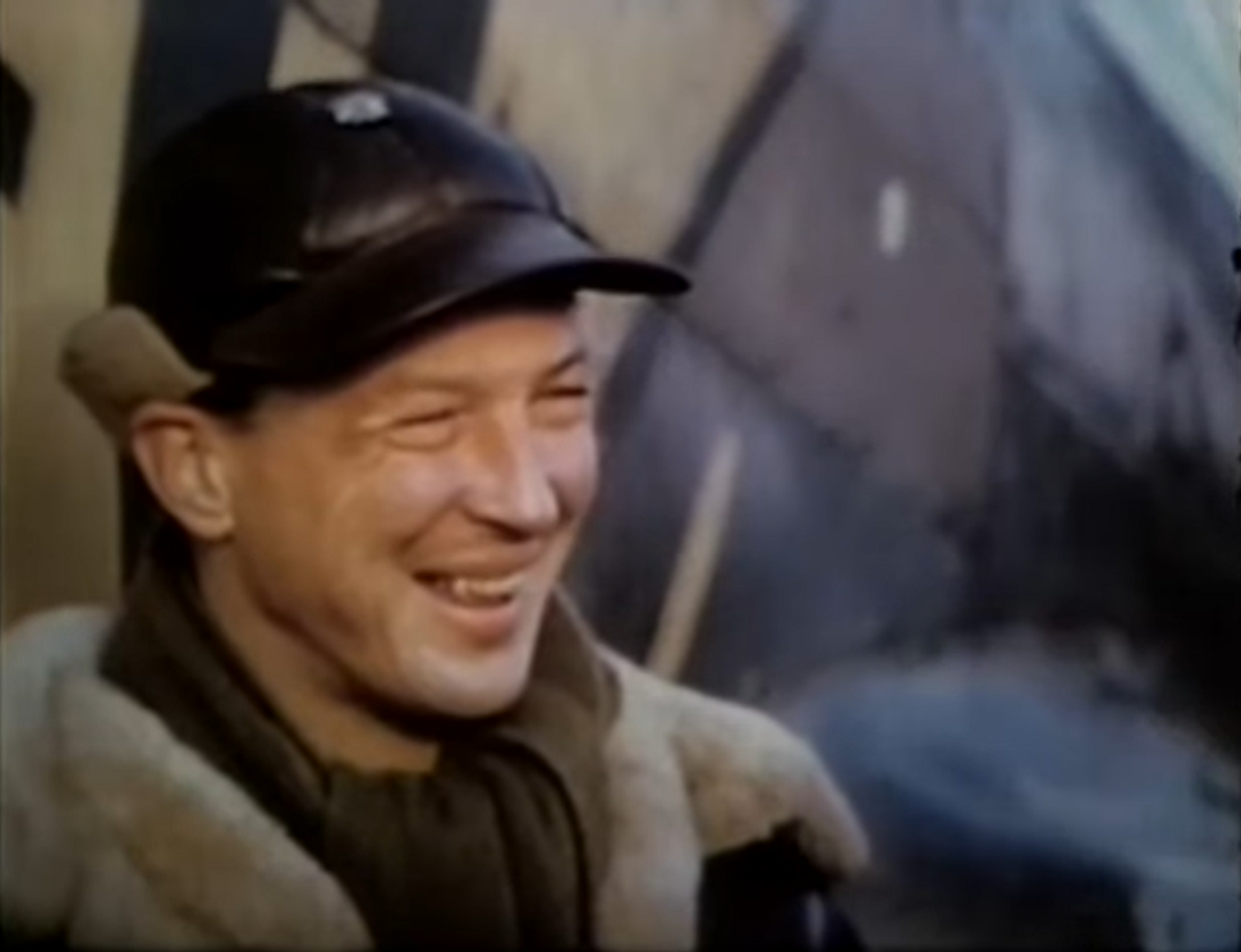
Film still of John Stephen Chennault in the Aleutians during 1942. Courtesy US Army
Redesignated the 11th Fighter Squadron on May 15, 1942, the unit began their Alaskan operations alongside the 18th Fighter Squadron as the pursuit contingent for the Eleventh Air Force’s 28th Composite Group. Officially equipped with 25 P-40Es but often functioning with far fewer due to operational and environmental problems, John Chennault and the 11th Fighter Squadron moved 10 of their airworthy planes from Elmendorf Field near Anchorage to the newly constructed secret airfield at Fort Glenn on the Aleutian Island of Umnak on May 26, 1942. It was from here that the men experienced their first combat with the Japanese and earned both their nickname and reputation.
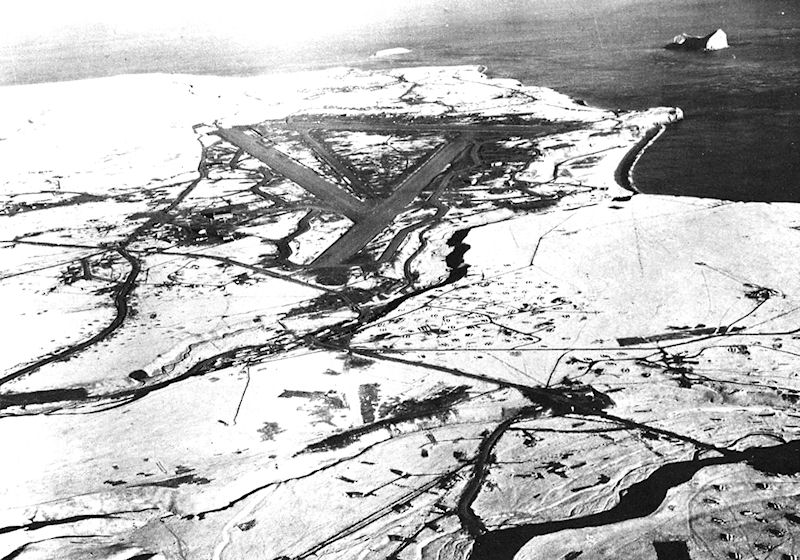
Fort Glenn airfield on the island of Umnak was later renamed Cape Field after 11th Fighter Squadron pilot John Jarvis Cape Jr. Courtesy US Air Force
When Japanese aircraft from the carriers Ryūjō (Prancing Dragon) and Jun'yō (Peregrine Falcon) attacked the American base at Unalaska’s Dutch Harbor on June 3, 1942, US forces were caught off-guard. As the Japanese aircraft withdrew, seven P-40s encountered four of the retreating Japanese aircraft, claiming one victory and damaging a second. The next day, June 4, six of the squadron’s Warhawks encountered elements of the Japanese aerial attack force following their second raid on Unalaska. In the ensuing melee, two Japanese D3A “Val” dive bombers and one A6M “Zero” fighter were shot down. Two American P-40s were lost, and one pilot, Second Lieutenant John Jarvis Cape Jr., was killed in action.
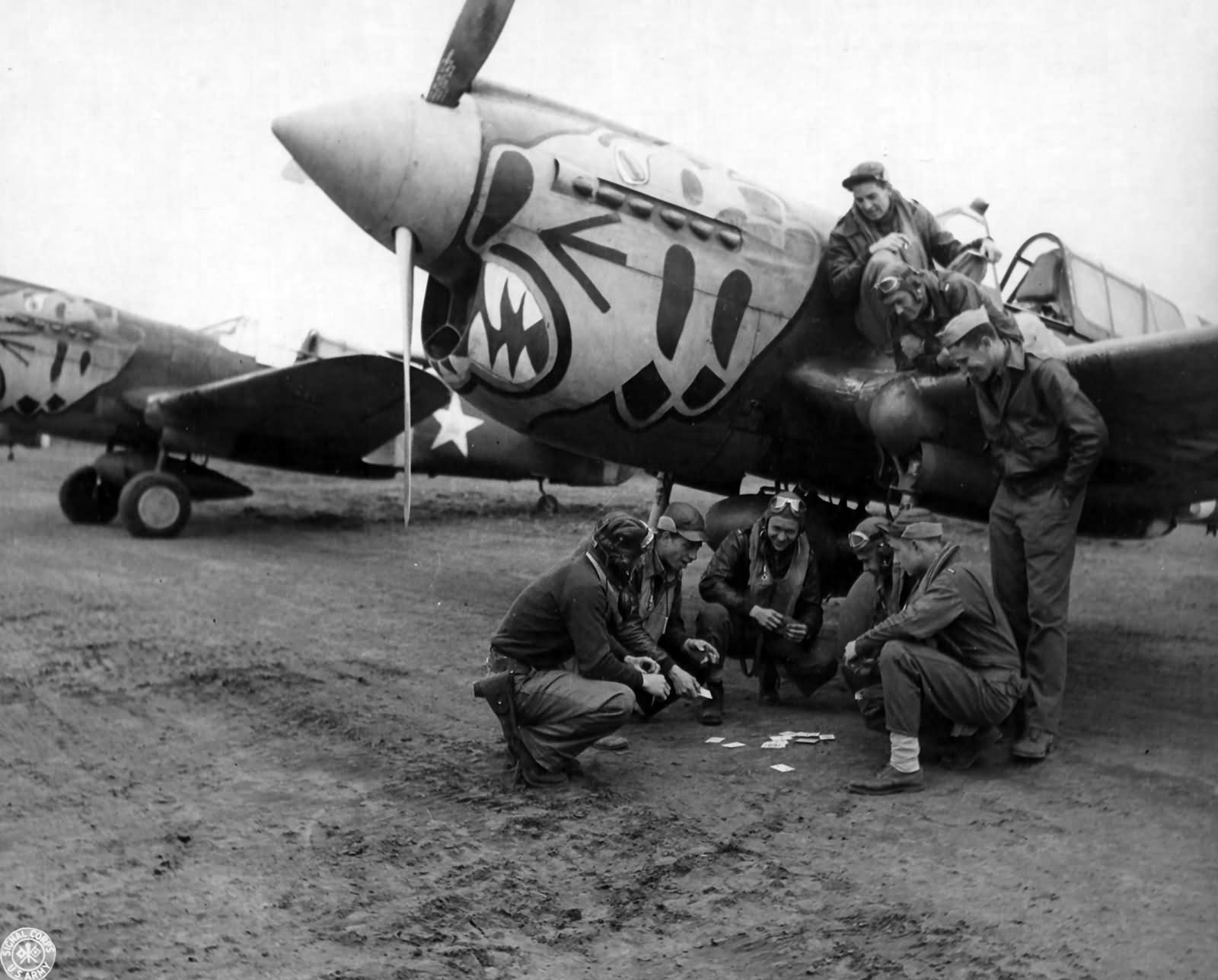
Pilots of the 11th Fighter Squadron play cards in front of their aircraft. Courtesy US Army
Following this first foray into combat, John Chennault decided to christen his squadron’s planes with nose art. Drawing inspiration from the Flying Tigers moniker of his father’s American Volunteer Group in China, each of Chennault’s 11th Fighter Squadron P-40s received a vibrant yellow Bengal tiger head. These distinctive designs lent weight to the squadron’s new nickname of the “Alaskan Flying Tigers.” This name later evolved into the “Aleutian Tigers,” with the image of the yellow tiger heads being a well-remembered sight of the early Aleutian Islands Campaign.
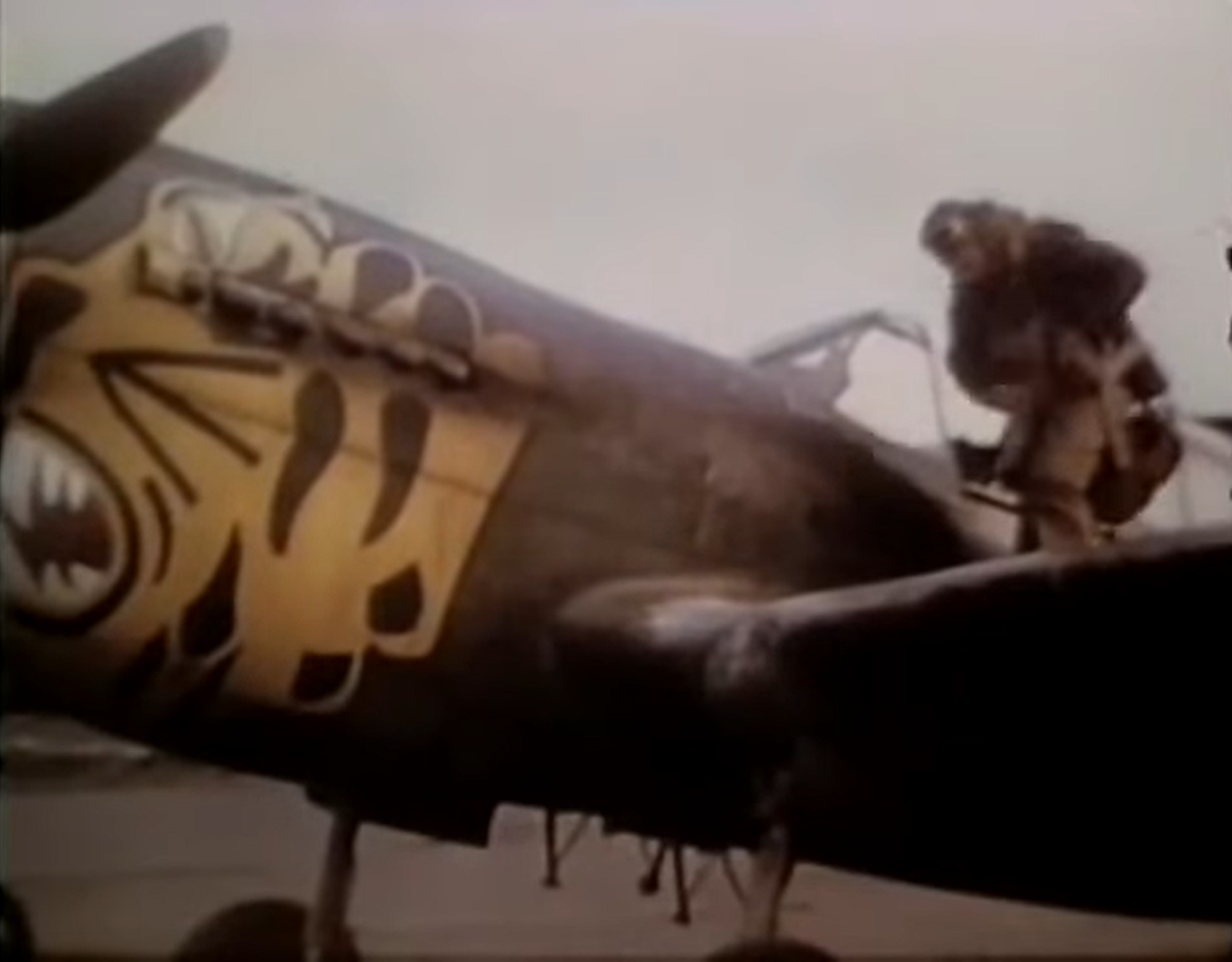
These film stills from Report from the Aleutians shows an 11th Fighter Squadron pilot readying for an escort mission. Courtesy US Army
John Chennault and his unit both gained new assignments on September 11, 1942. On that day, they became part of the newly formed 343rd Fighter Group, with the now Lieutenant Colonel Chennault appointed its first commanding officer. Almost immediately, the fighter pilots found themselves operating out of Adak’s new Davis Army Air Field as escorts for bombing raids against the Japanese-held Aleutian Island of Kiska. Back in the United States, the actions of the 11th were featured on collectable cards in gum packages, in newspaper articles, and as part of newsreels on the Aleutian Campaign. In 1942, the squadron’s airbase even hosted director John Huston, cinematographer Rey Scott, and producer Daryl Zanuck for six months as the men worked on an in-depth documentary chronicling the air war against Kiska. Shot in color and premiering on July 30, 1943, Report from the Aleutians featured Lieutenant Colonel Chennault, several members of the 343rd, and some of the 11th’s tiger-head P-40s alongside other airframes from the fighter group. The film would go on to receive an Academy Award nomination for Best Documentary of 1943, ultimately losing out to the British-produced film Desert Victory.
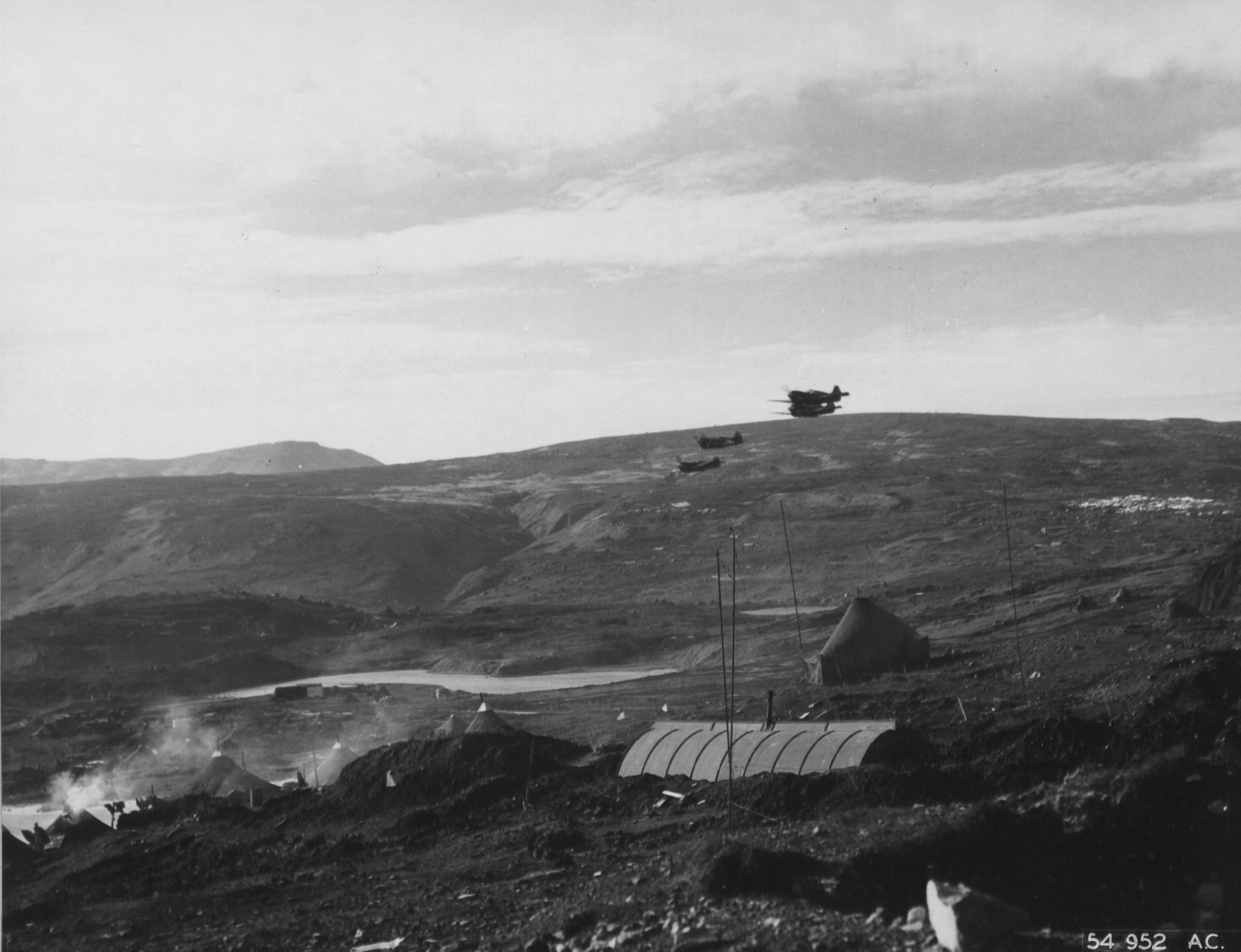
P-40s from the 343rd Fighter Group fly over Kiska in November 1943. Courtesy National Archives
Time would take its toll on the Aleutian Tigers. The P-40Es were slowly joined by newer P-40K models, and 1943 saw the introduction of P-38 Lightnings into the 11th Fighter Squadron. John Chennault himself was called away from the theater, transferring to California where he assumed command of the 360th Fighter Group in May 1943 to train new P-38 pilots in combat tactics. By the summer of 1943, the now war-weary tiger nose art began to disappear under fresh coats of olive drab or through the replacement of worn parts. The men and machines remained active throughout the period, participating in actions against Japanese-held Attu and Kiska until completing their last combat sortie against raiding Japanese bombers on October 13, 1943.
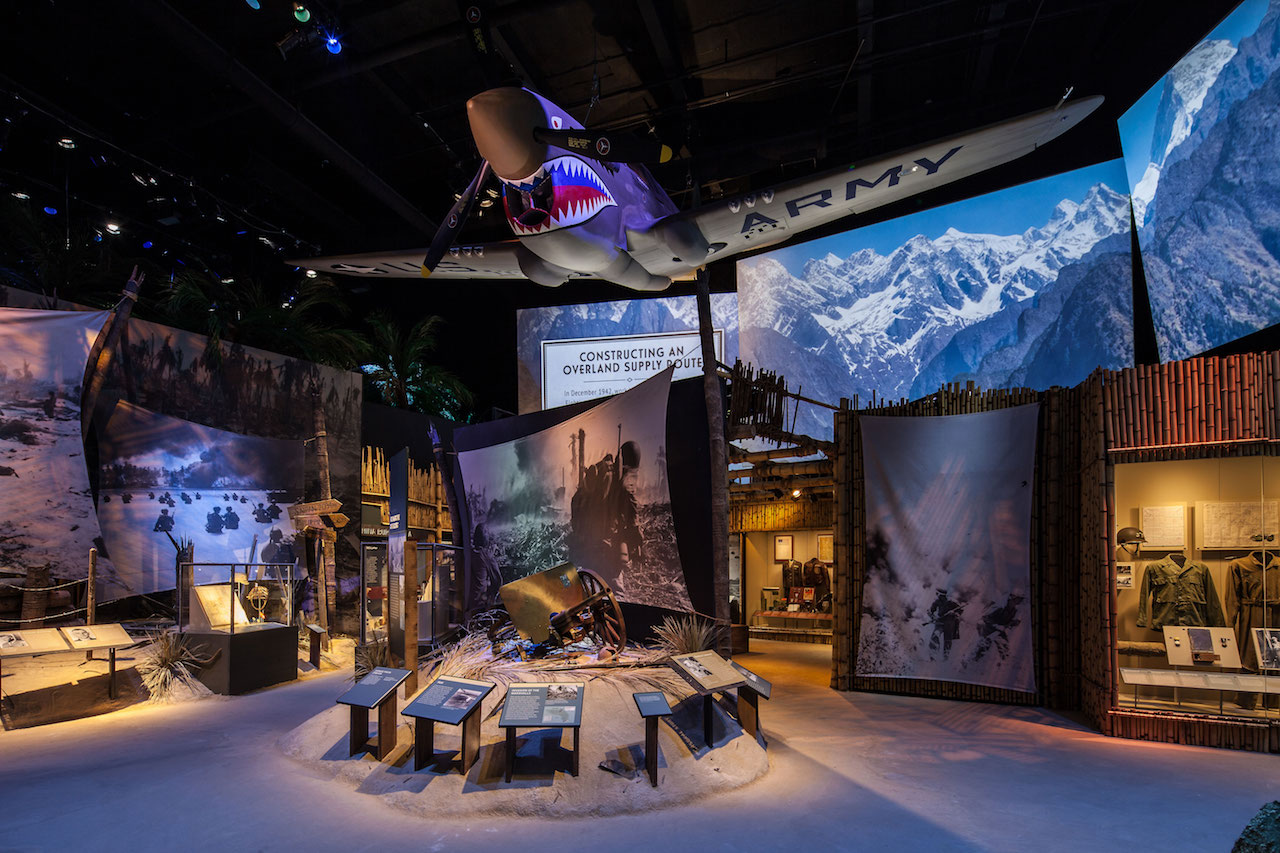
The National WWII Museum’s restored P-40E, which once saw service in the Aleutians with the 343rd Fighter Group, hangs in the Road to Tokyo exhibit.
The men of the 343rd remained stationed in the Aleutians through the end of the war, flying patrols and carrying out other airborne assignments along the island chain. The 11th Fighter Squadron’s last duty station would be the Aleutian Island of Shemya, with the unit finally being demobilized on August 15, 1946. John Chennault continued his military career after the war, joining the newly independent Air Force and commanding a bomber wing in Germany during the Korean War. He died on December 4, 1977, at the age of 64, having retired from the military as a Colonel. Though the Aleutian Tigers have largely faded from public memory of World War II, their legacy lives on in both Alaskan historical sites and in the preserved or restored P-40s of the 343rd that still bear their iconic yellow tigers.

Charles Ross Patterson II
Charles Ross Patterson II is a Curator at The National WWII Museum.
Cite this article:
MLA Citation:
APA Citation:
Chicago Style Citation: