
-
 Learn More
Press Release
-
Learn More
Fact Sheet
-
Learn More
Images
-
Learn More
Video
High-Resolution Images & Video
Click on an image or video below to download a high-resolution file. Don’t see the content you are looking for? Contact us with your specific request. Please specify your publication and deadline.
Please credit all images and video "Courtesy of The National WWII Museum."
Images
Liberation Pavilion Exterior
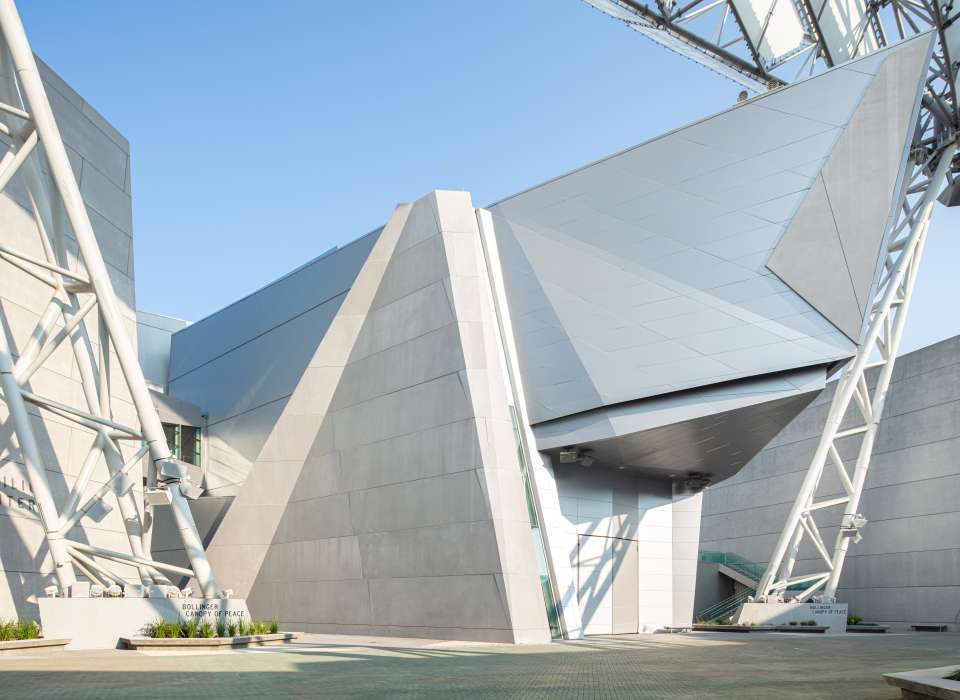
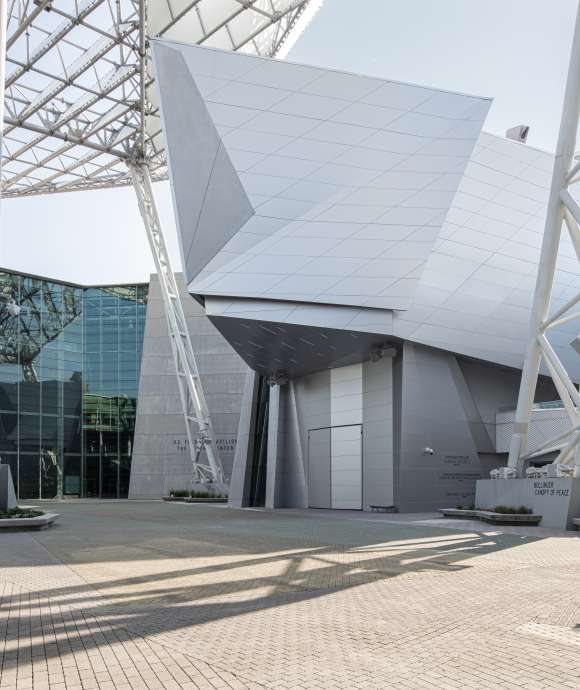
The National WWII Museum’s capstone exhibit hall, Liberation Pavilion, explores the end of World War II, the Holocaust, the postwar years, and how the war continues to impact our lives today. The three-story pavilion houses two floors of exhibit space featuring first-person accounts, iconic imagery, powerful artifacts, and immersive environments, as well as a third-floor theater offering a brand-new cinematic experience.

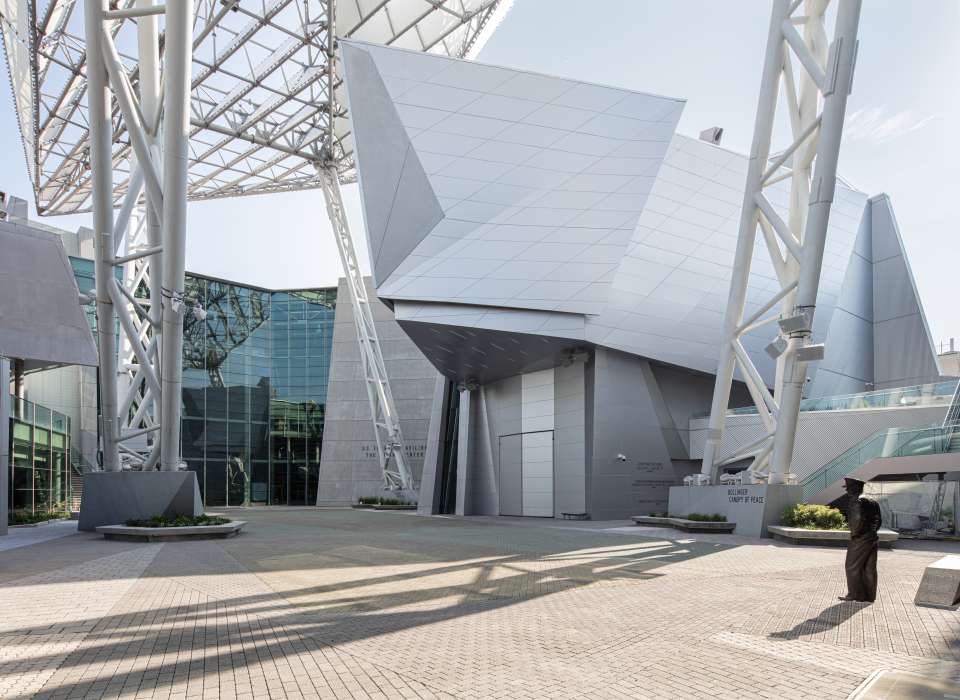
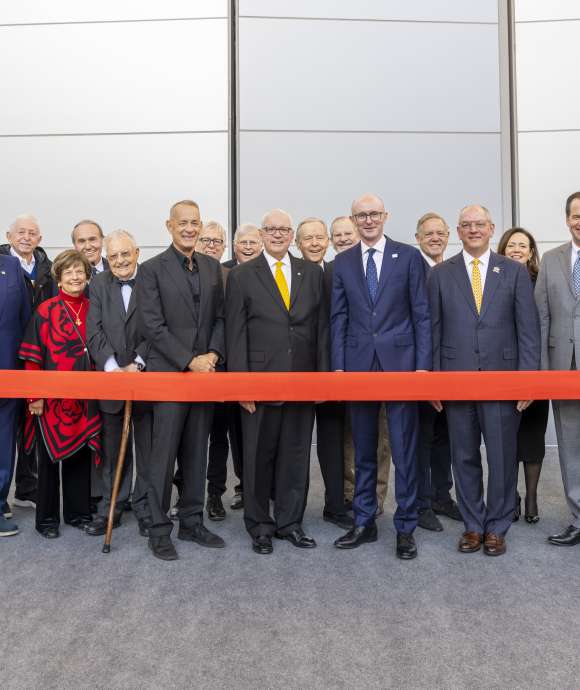
The 2023 Grand Opening of Liberation Pavilion and dedication of the Col. Battle Barksdale Parade Ground, the impressive 24,000-square-foot outdoor gathering space at the heart of The National WWII Museum’s campus, marked the conclusion of the Museum’s $400 million Road to Victory Capital Campaign that has fueled the expansion of its physical campus in New Orleans.

Finding Hope in a World Destroyed
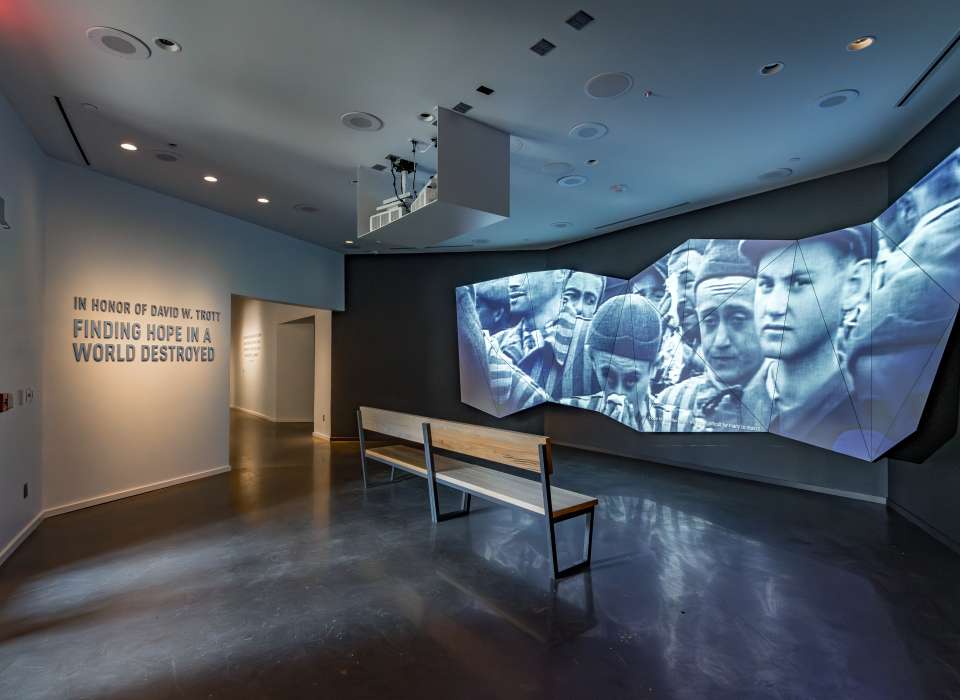
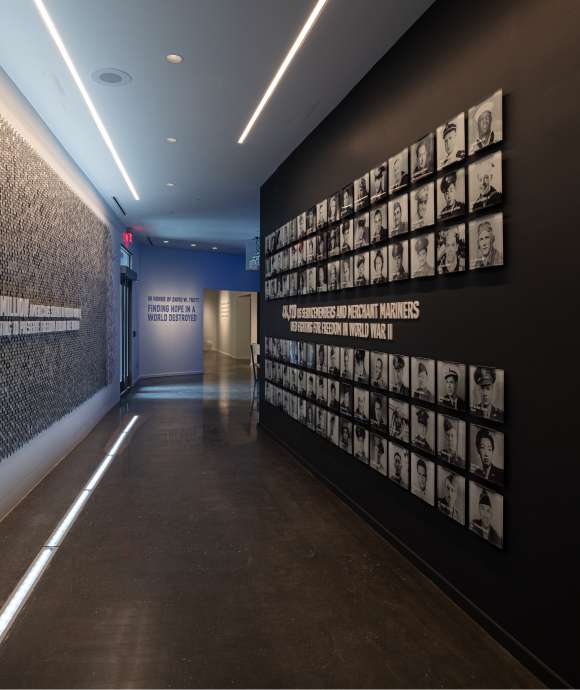
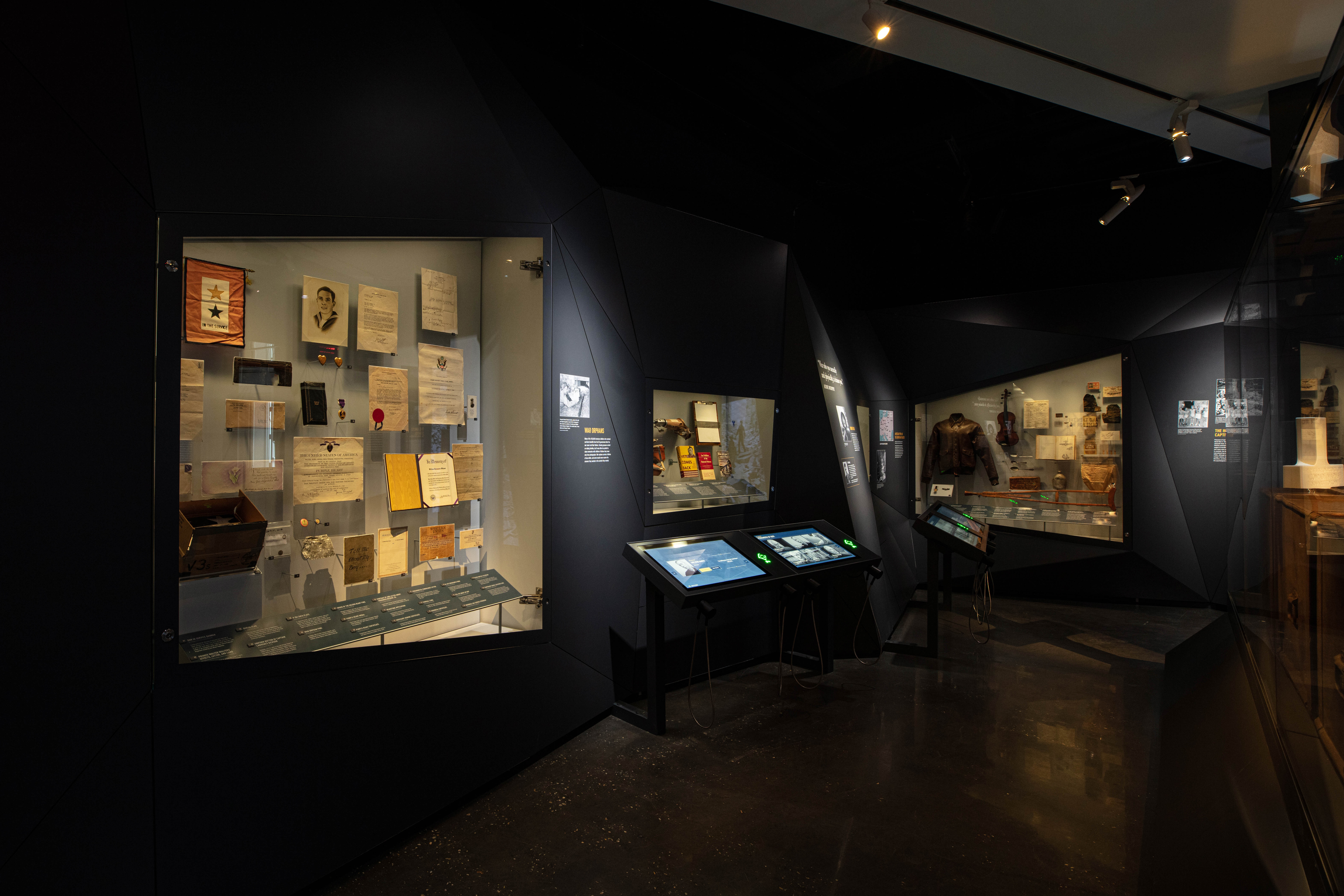
Liberation Pavilion’s first-floor exhibit, In Honor of David W. Trott Finding Hope in a World Destroyed, honors the sacrifices of the WWII generation and explores the immense cost of war with exhibits on the Holocaust, Anne Frank, faith in wartime, and the Monuments Men and Women.


Those Who Served Gallery: A wall of dog tags represents the over 16.4 million Americans who donned their country’s uniform, more than 414,000 of whom made the ultimate sacrifice and would never return home to their families.

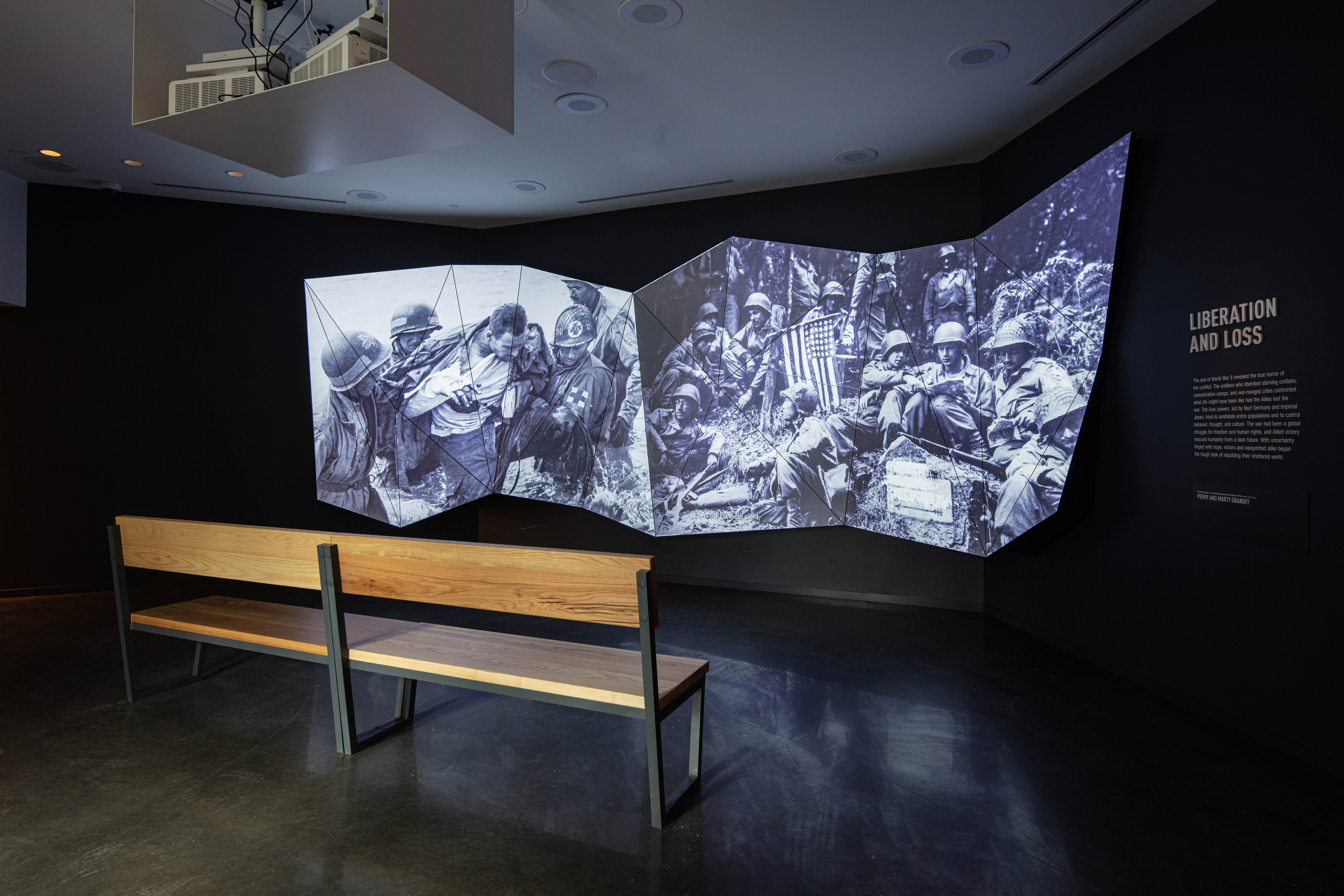
Liberation and Loss Gallery: This gallery offers an introductory film focusing on how liberation led to visions of a hopeful future for millions of Americans, but tragedy also remained as many carried the war’s scars for the rest of their lives.


The Cost of Victory Gallery: This gallery looks at how, in the wake of the war, famine struck Europe and Asia, while political uprisings and civil wars shook countries only recently liberated from Axis occupation. All over the world, men and women returned home to discover that familiar people and places were forever changed. In the midst of victory parades, families mourned their lost loved ones.



“And Then They Came for Me” Gallery: The rise of Nazi terror and their persecution of Europe’s Jewish population is explained through an immersive media experience using the words of Anne Frank in a representation of the apartment annex where she and her family hid from the Nazis after fleeing to the Netherlands.




"And Then They Came for Me" Gallery: The gallery also focuses on the concentration camp system and the liberation of the camps, featuring listening stations with testimonies from Holocaust survivors.



Pam and Mark Rubin Liberation Theater: This panoramic theater features powerful personal testimonies capturing the complicated emotions felt by liberated Holocaust survivors and the US Servicemembers who freed them.


Faith in Wartime Gallery: This gallery invites visitors to explore personal reflections from veterans on faith and spirituality. Featured in the central position of the gallery is the story of the Four Chaplains, US Army chaplains of different faiths who were aboard the SS Dorchester and sacrificed their lives to aid their brothers-in-arms after the ship was struck by a torpedo from a German U-boat and sank in the North Atlantic.

Frank and Paulette Stewart Interfaith Chapel: Honoring the critical role of faith in World War II, this reverential space for meditation and contemplation offers visitors an opportunity to reflect on the stories presented in the Museum as well as their own personal journeys.


The Monuments Men and Women Gallery: This gallery explores the Nazi looting of art and cultural treasures during World War II and the story of the Allied scholar-soldiers tasked with protecting monuments and cultural sites as well as locating and returning stolen objects to their rightful owners. The gallery includes an immersive “salt mine,” a narrated film, and a room filled with re-creations of art saved by this volunteer group.



Forces of Freedom at Home and Abroad
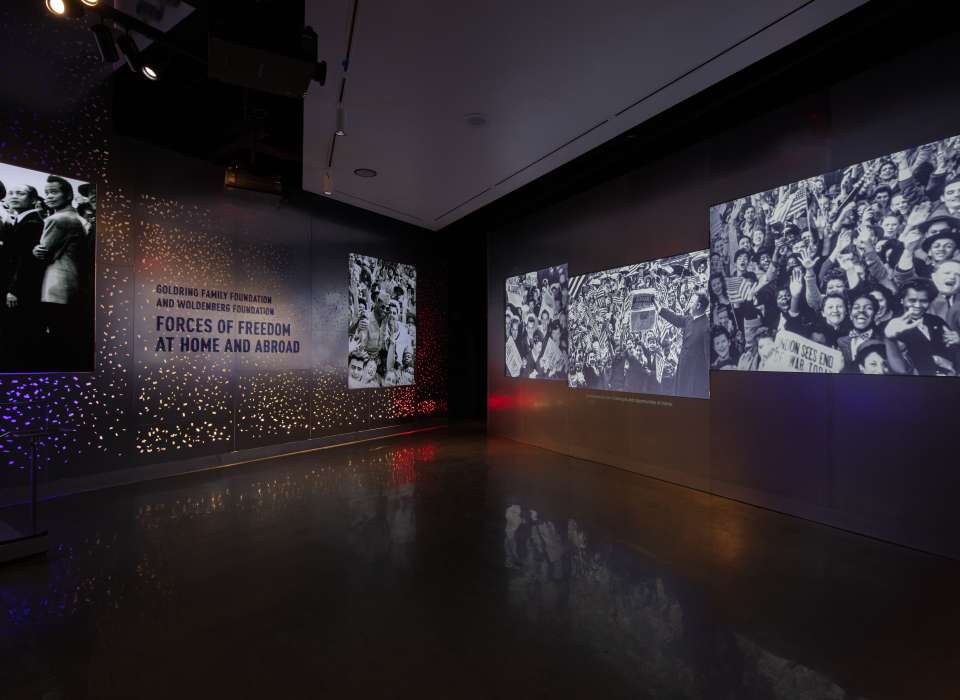
Liberation Pavilion's second-floor exhibit, the Goldring Family Foundation and Woldenberg Foundation Forces of Freedom at Home and Abroad: 1945–Present, explores the war’s impact in the postwar period and its lasting legacies today. Exhibits examine the rebuilding efforts of a world destroyed, the war crimes trials, the emergence of the US as a world “superpower,” movements for social change and civil rights, new technological innovations, and the war’s impact on foreign policy.


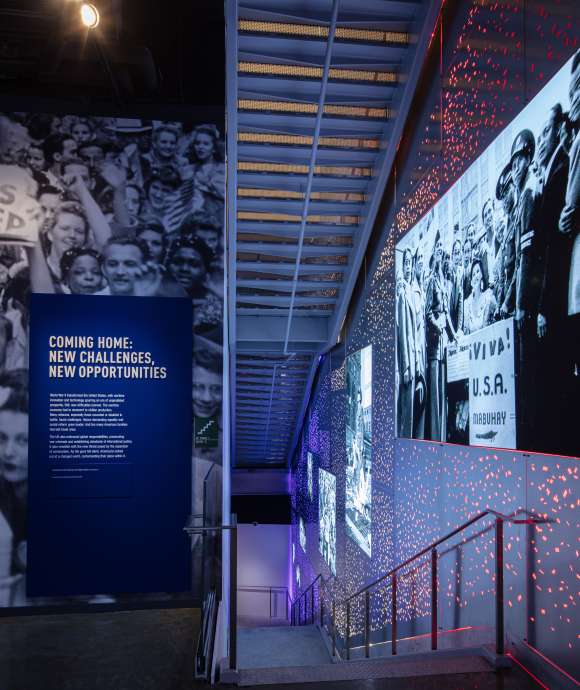

Coming Home: New Challenges, New Opportunities Gallery: This gallery explores how World War II transformed the United States. Wartime innovation and technology spurred an era of unparalleled prosperity but, still, new difficulties loomed.
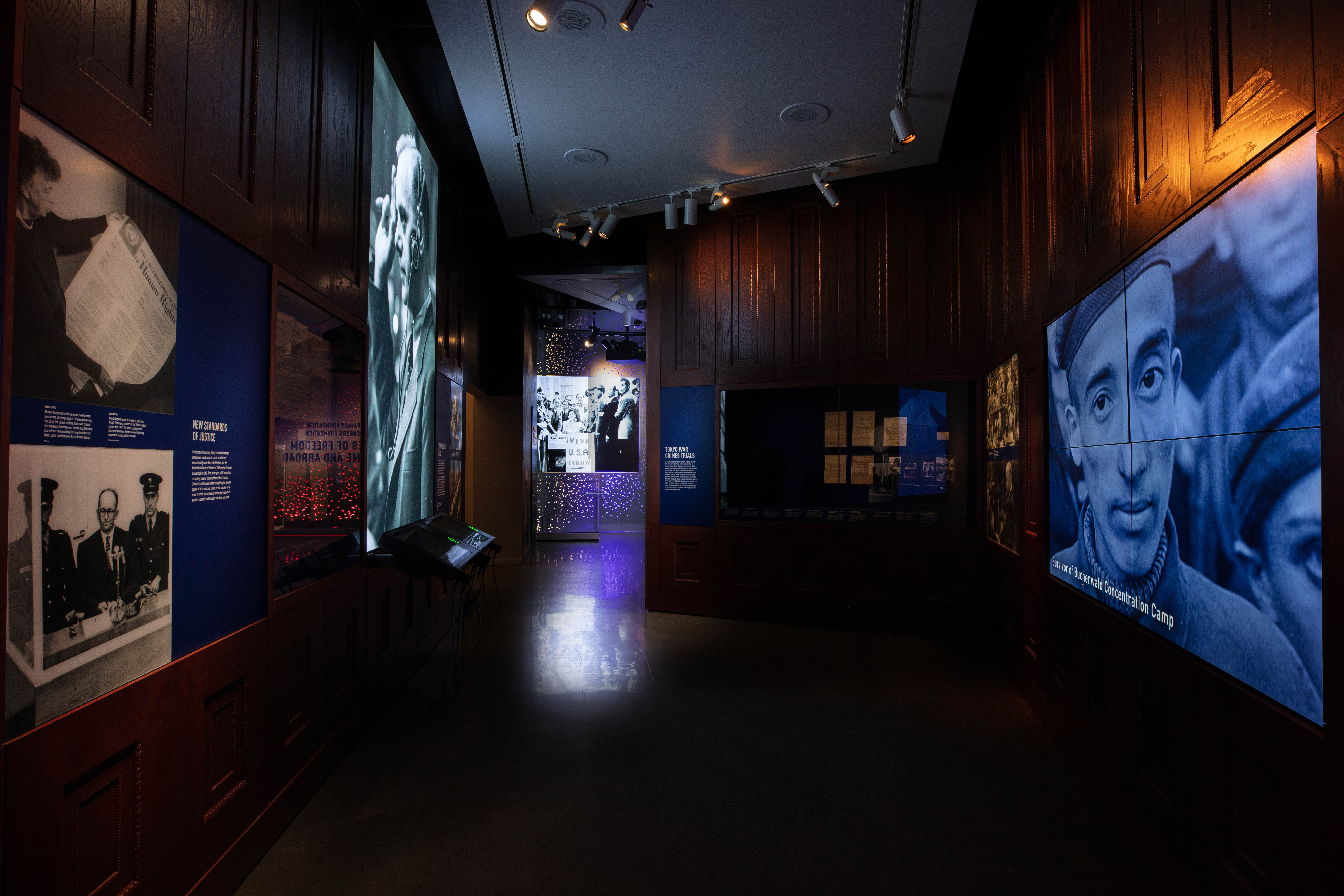
Restoring Justice: This gallery provides a look at the first-ever international trials of war criminals, in which the Allied nations prosecuted thousands of German and Japanese defendants accused of crimes against peace, war crimes, and crimes against humanity.



Conrad N. Hilton Foundation Great Responsibilities Theater: This theater features a film that illuminates the position the United States achieved as a world “superpower” during the postwar period of 1945 to 1950, a status based on its vibrant economy and its monopoly on nuclear weapons.

Prosperity and Change Gallery: This gallery shows how scientific, technological, and medical advancements made during the war created new opportunities in civilian life that sparked dramatic social change. While the postwar era seemed to be a time of calm and conformity, dramatic changes were underway, as women and veterans of color demanded equal rights. The changes begun by World War II reverberated for decades to come.



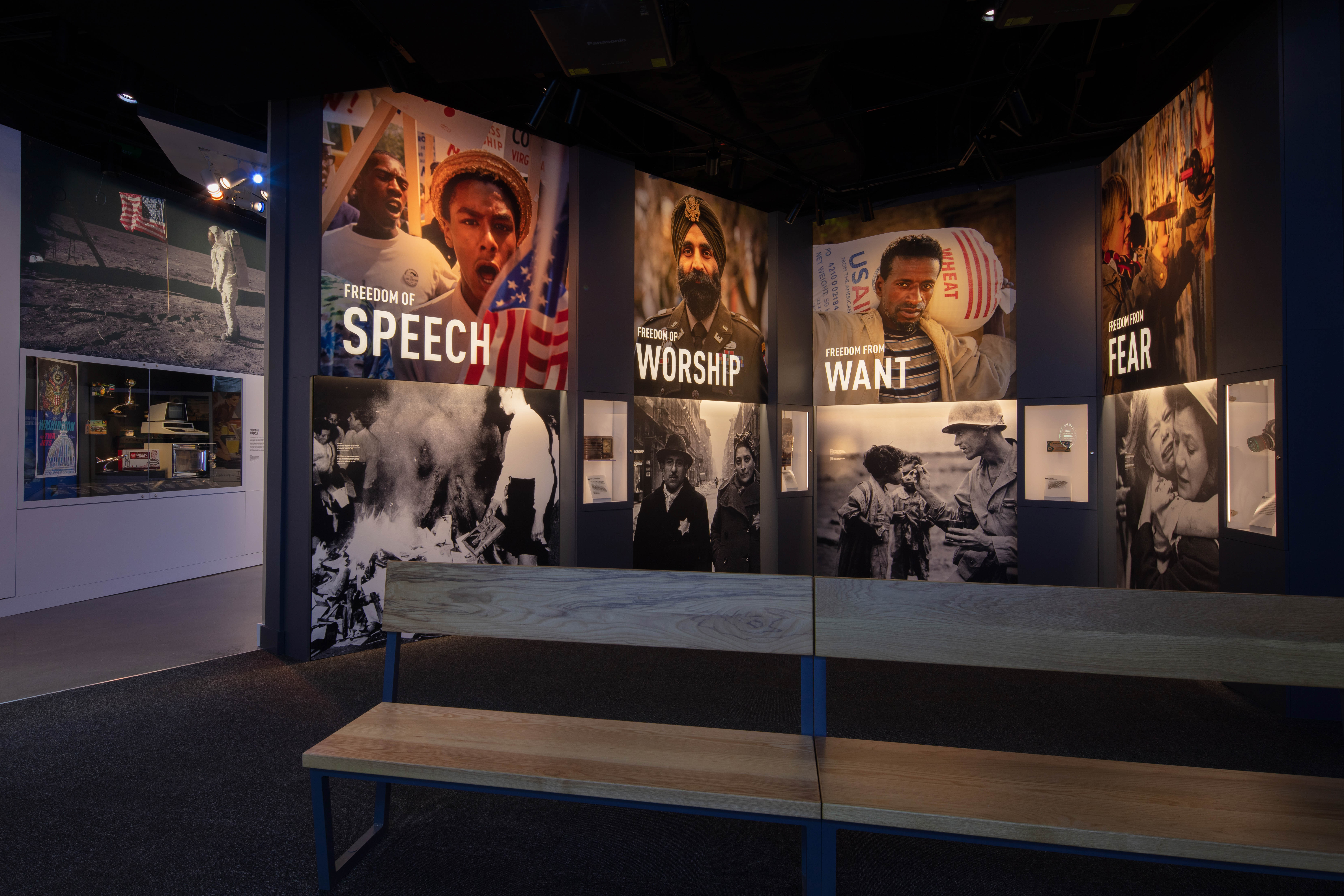
The Fight for Freedom Gallery: Allied victory in World War II did not permanently end turmoil and conflict, nor did it universally safeguard freedom. This gallery emphasizes America’s ongoing efforts to uphold and expand democracy and human rights, and to ensure the survival of the Four Freedoms proclaimed by President Franklin D. Roosevelt at the dawn of the war.


What Does World War II Mean Today? Gallery: This interactive gallery provides a reflective space for visitors to share their thoughts on the war’s impact.

Priddy Family Foundation Freedom Theater
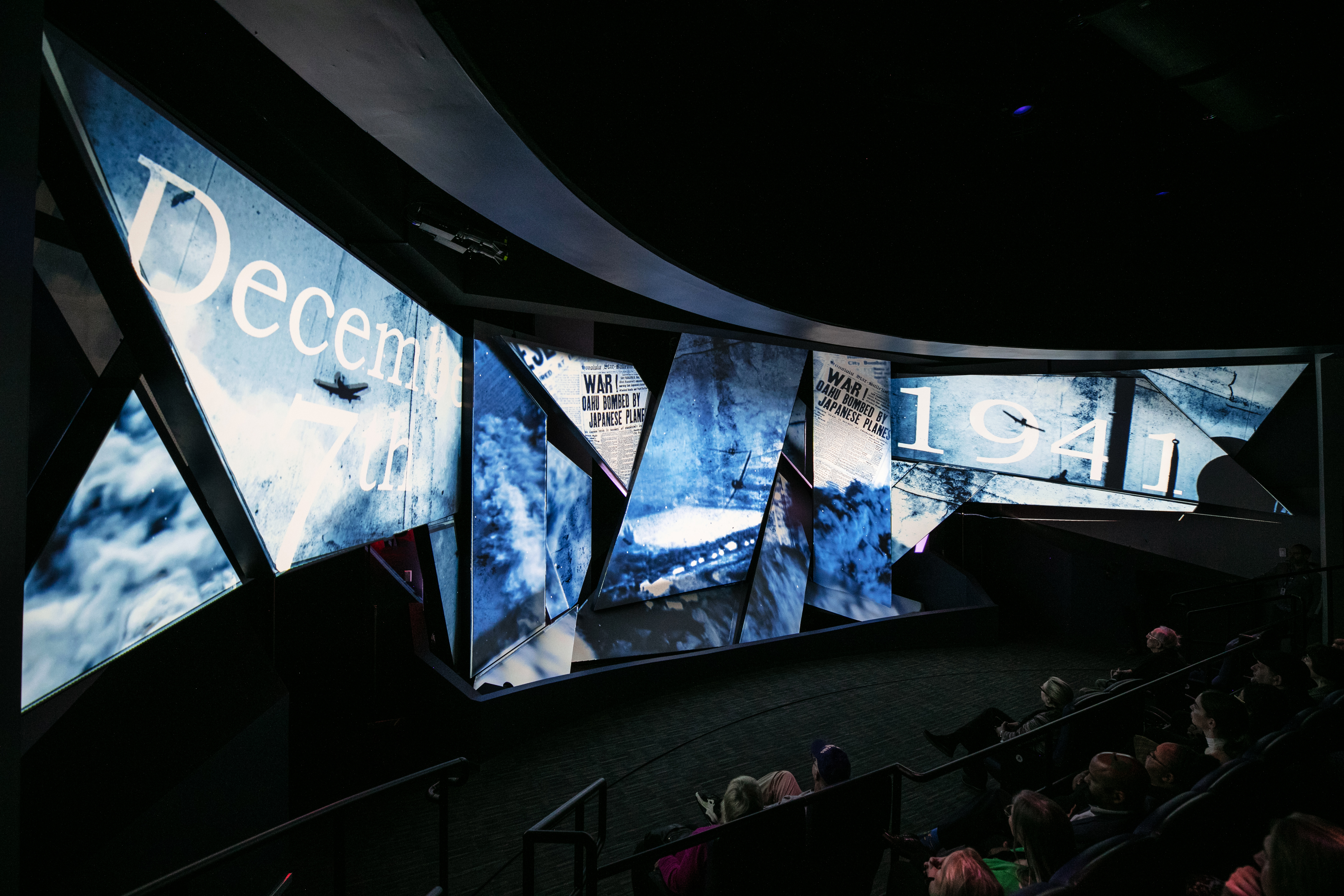
On the third floor of Liberation Pavilion, the Priddy Family Foundation Freedom Theater offers audiences a multimedia experience focused on what was at stake during World War II and subsequent generations’ ongoing struggle for freedom and human rights. Powerful, original visuals are projected throughout the show, and at a pivotal moment, the theater audience platform itself rotates.

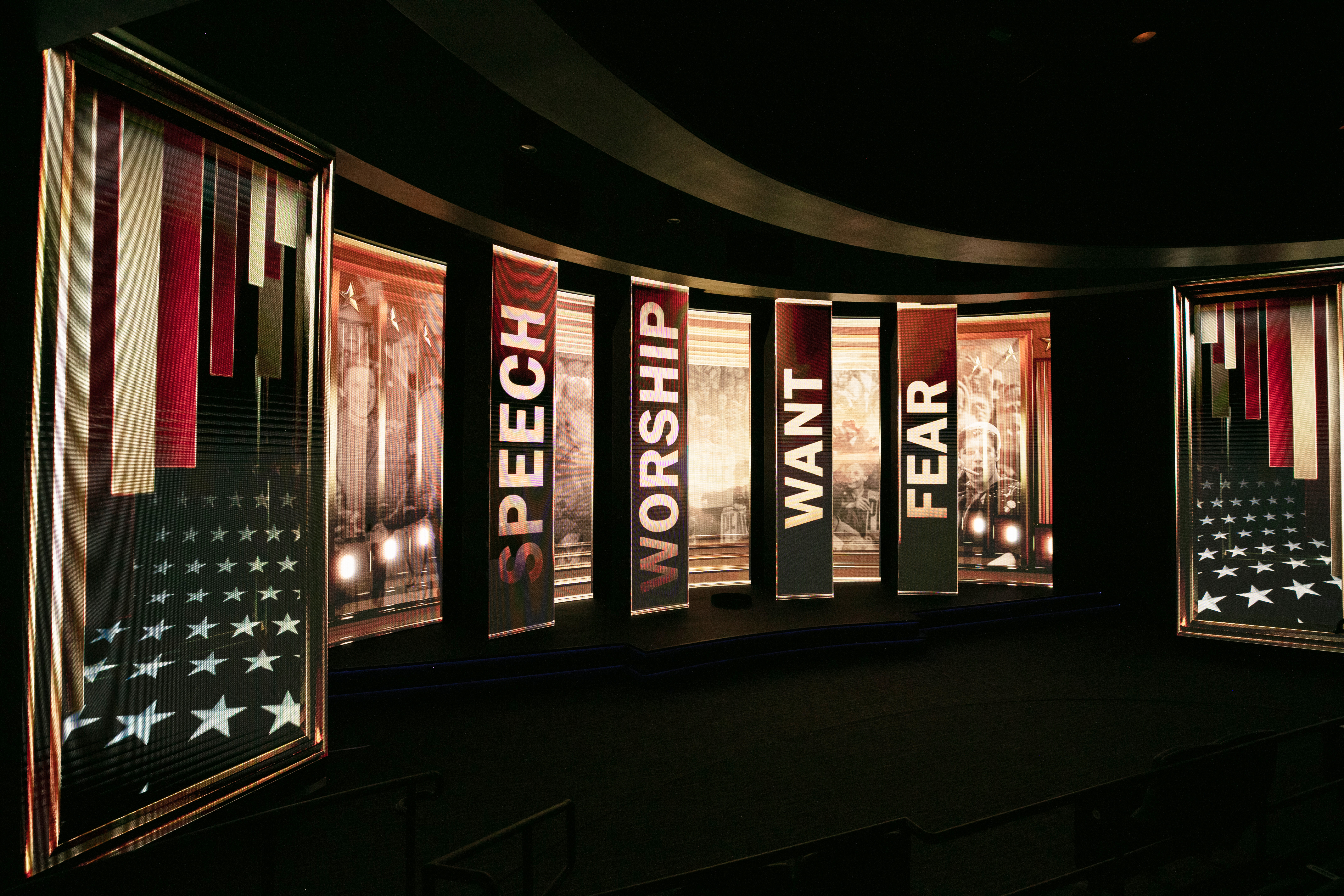

Liberation Pavilion Dedication Ceremony
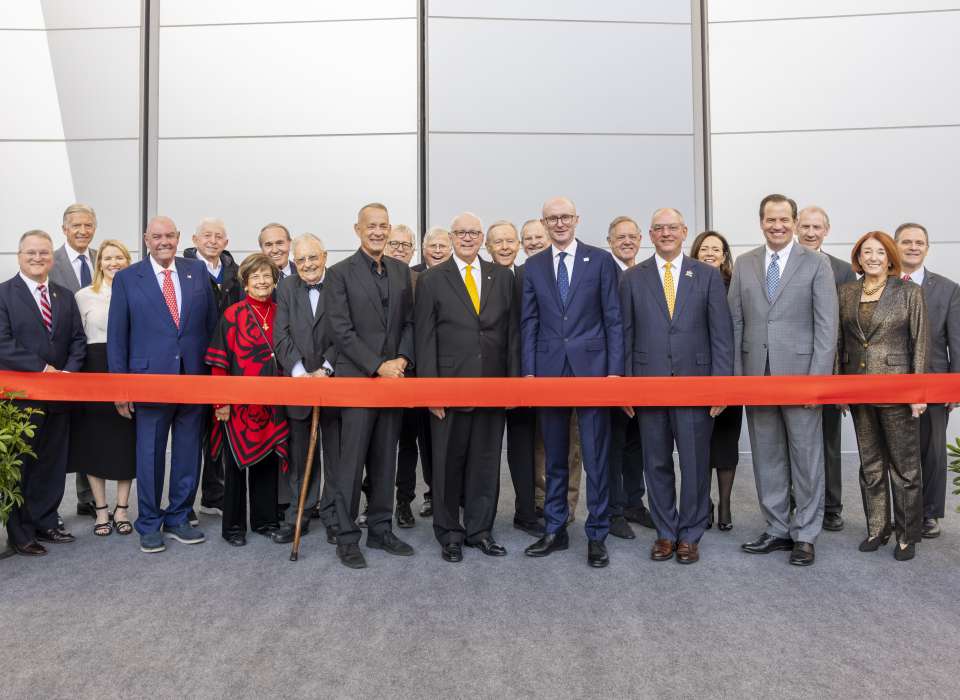
Ribbon Cutting: Officials from The National WWII Museum, the State of Louisiana, and special guests attend the ribbon-cutting ceremony at the Nov. 3, 2023, Grand Opening of the Museum's final permanent exhibit hall, Liberation Pavilion.
