Related Content
-
 Article Type
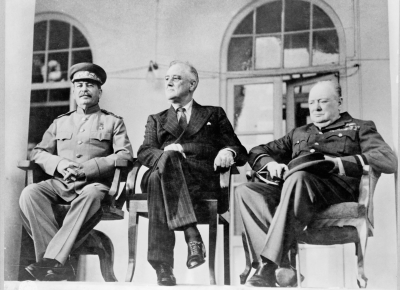
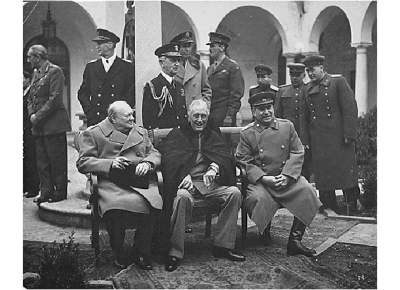
The Big Three
Learn MoreIn World War II, the three great Allied powers—Great Britain, the United States, and the Soviet Union—formed a Grand Alliance that was the key to victory. But the alliance partners did not share common political aims, and did not always agree on how the war should be fought.
-
Article Type
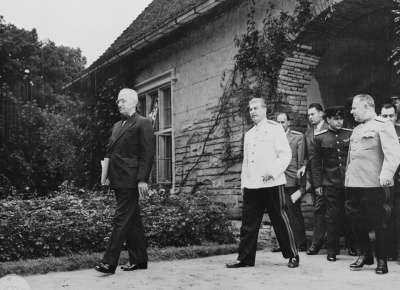
Cold Conflict
Learn MoreThe United States was not the only leading power on the world stage after the end of World War II; it had a new competitor for this power in the Soviet Union. Tensions between the former allies quickly grew, leading to a new kind of conflict—one heightened with the threat of atomic weapons—that came to dominate global politics for the remainder of the twentieth century.
-
Article Type
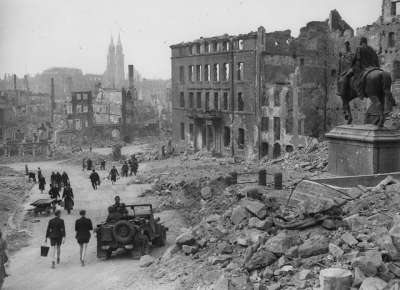
The Cost of Victory
Learn MoreAs fighting came to an end in 1945, people the world over faced for the first time the unprecedented extent of destruction and loss of life caused by World War II. As the costs of victory came into devastating focus, the diplomatic responses, rising global tensions between the United States and the Soviet Union, and social disruption that followed in the aftermath of this conflict showed that World War II was truly "the war that changed the world."
-
Exhibit
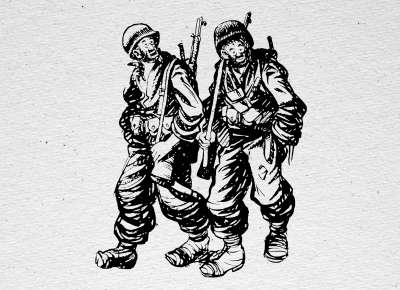
Drawn to Combat: Bill Mauldin and the Art of War
Learn MoreDrawn to Combat: Bill Mauldin and the Art of War explores the life and legacy of one of the most important American cartoonists of the 20th century, whose work during World War II captured the realities of life on the front lines. Originally organized by the Pritzker Military Museum & Library.
-
-
Article Type
Kriegie Christmas, 1944
Learn MoreWhile thousands of their fellow Americans were about to enter into the Battle of the Bulge and likely face capture under harsh circumstances by the war-weary German enemy, others, already POWs, celebrated a lonely Christmas holiday, the last of the war, in camps across Europe.
-
Article Type
Should the United States Keep Troops in Germany?
Learn MoreHow the looming Cold War convinced Americans to keep troops in Europe after the war.
-
Article Type
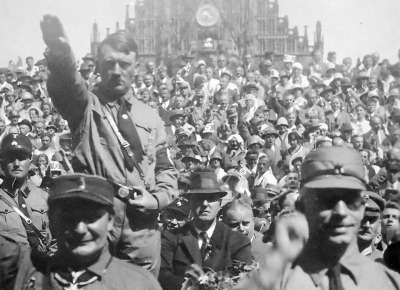
How Did Adolf Hitler Happen?
Learn MoreAdolf Hitler was appointed chancellor of Germany in 1933 following a series of electoral victories by the Nazi Party. He ruled absolutely until his death by suicide in April 1945.
-
Exhibit
Ghost Army: The Combat Con Artists of World War II
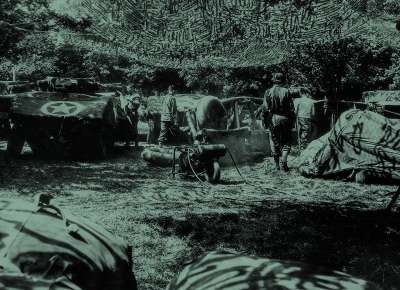
Learn MoreThe special exhibit Ghost Army: The Combat Con Artists of World War II, on view in the Hall of Democracy’s Senator John Alario, Jr. Special Exhibition Hall from March 5 to January 31, 2021, and curated by the Museum’s James Linn, tells the story of the 23rd and their deception operations across Europe through featured artifacts such as artwork, uniforms, an inflatable tank, and more.