Article Type
The Chopping Block: The Fate of Warplanes after WWII
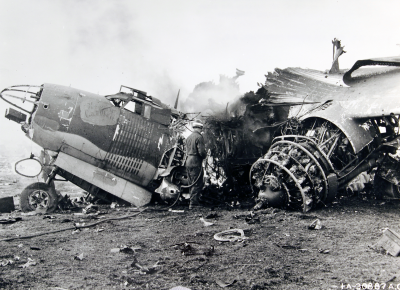
After the war, hundreds of thousands of US warplanes remained—but the military needed only a fraction of them.
After the war, hundreds of thousands of US warplanes remained—but the military needed only a fraction of them.
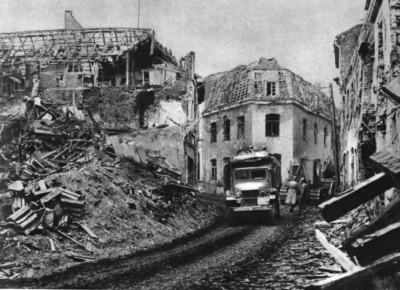
Operation Clipper, an offensive to reduce the Geilenkirchen salient in Germany, highlighted the value of specialized tanks in a combined US-British operation.
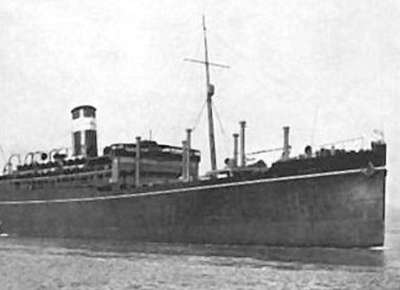
Classified for 50 years, the sinking of the HMT Rohna remains one of the least known—yet most catastrophic—events of World War II.
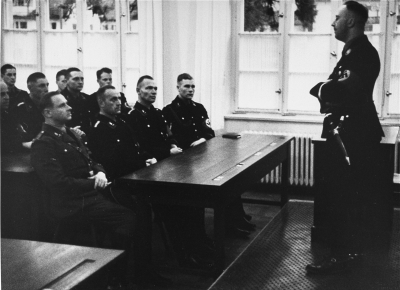
In October 1943, SS leader Heinrich Himmler gave two speeches, showing the full depravity of the exterminationist mindset.
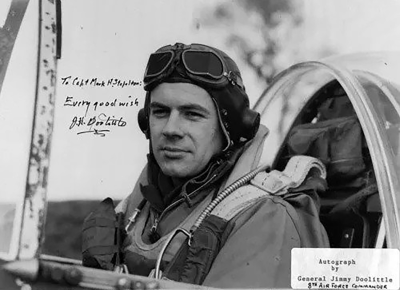
Mark Stepelton flew in some of the most dangerous environments of the war by escorting bombing aircraft over occupied Europe and conducting air interdiction missions, striking enemy targets deep behind the lines.
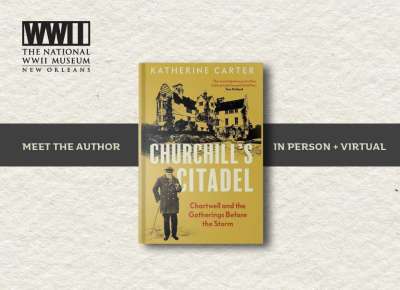
Join us for the Orlin Russell Corey Memorial Lecture with Katherine Carter, a curator and historian at Winston Churchill’s country home, Chartwell.
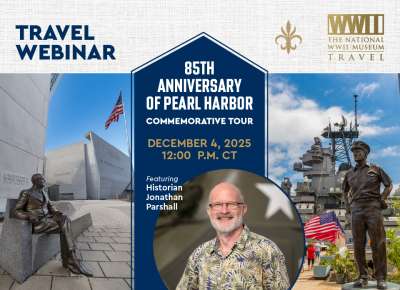
Join The National WWII Museum's Educational Travel Team and expert historian Jonathan Parshall to learn about an all-new journey to commemorate the lives lost on America's day of infamy.
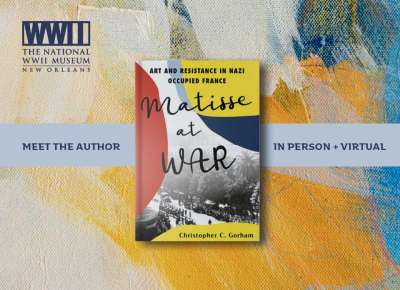
Join us in conversation with author Christopher C. Gorham, whose new book explores the wartime experiences of one of the most celebrated artists of the modern era.