-
-
-

Nominate a Hero!
To commemorate Veterans Day 2017, volunteers at The National WWII Museum are sending handwritten letters to local WWII veterans to personally thank them for their sacrifice and service to our country. Complete the form below to nominate a Louisiana-area WWII veteran to receive one of our thank-you notes! Deadline to submit a veteran is October 20, 2017.
-
-
Silver Service Medallion: Past Recipients
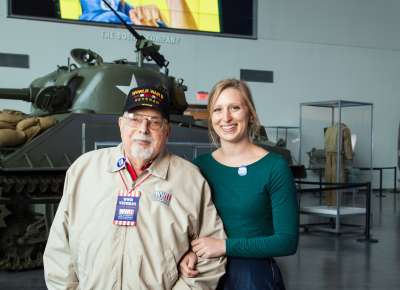
The National WWII Museum President & CEO awards the Silver Service Medallion to veterans, and those with a direct connection to World War II, who have served our country with distinction and continue to lead by example.
Past Events
-
"Expressions of America"
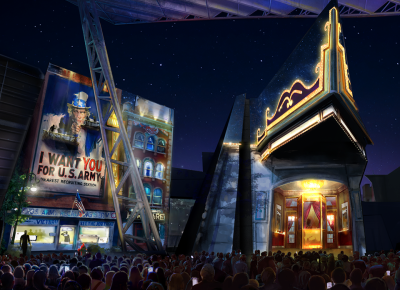
12/29/2022 | 6:00 PM - 8:30 PMThe Museum's outdoor sound and light show features incredible music, stunning imagery, festive snacks and beverages, and 90-foot-tall projections.
-
"Expressions of America"
12/28/2022 | 6:00 PM - 8:30 PMThe Museum's outdoor sound and light show features incredible music, stunning imagery, festive snacks and beverages, and 90-foot-tall projections.
-
"Expressions of America"
12/27/2022 | 6:00 PM - 8:30 PMThe Museum's outdoor sound and light show features incredible music, stunning imagery, festive snacks and beverages, and 90-foot-tall projections.