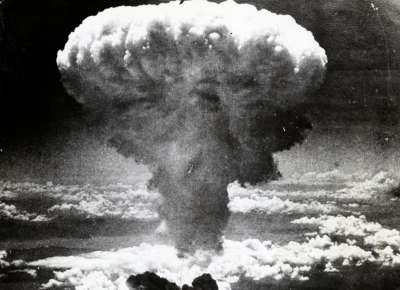
Episode 7 – A City Vanished
In the hours after Truman drops the bomb on Hiroshima, news reports begin to surface of “a city vanished.”
In the hours after Truman drops the bomb on Hiroshima, news reports begin to surface of “a city vanished.”
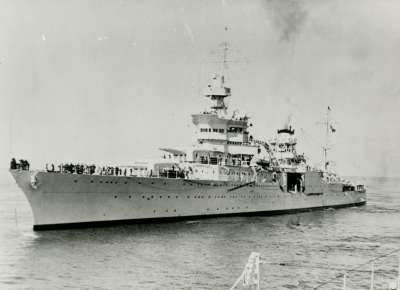
In July 1945, after the success of the Trinity Test, President Truman ordered that the new atomic bombs be ready for assembly and potential use as quickly as possible.
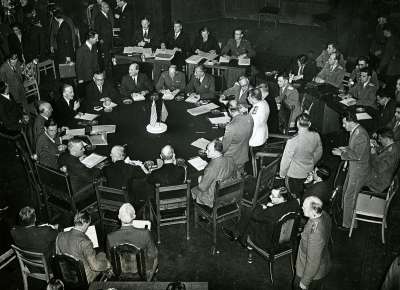
In July 1945, representatives of the victorious Allies met in the heart of Germany, in the Berlin suburb of Potsdam.
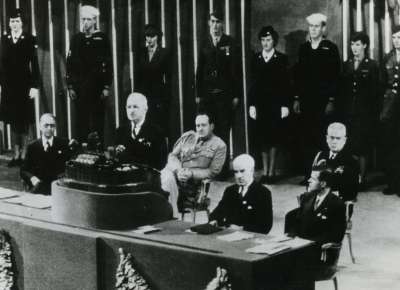
World War II had been so horrible that the victorious powers decided that nothing like it must ever happen again. President Roosevelt’s dream had been to establish a “United Nations” (UN) organization, in which the peace-loving nations of the world would settle disputes and intervene to punish aggression, but it was Truman who saw it through.
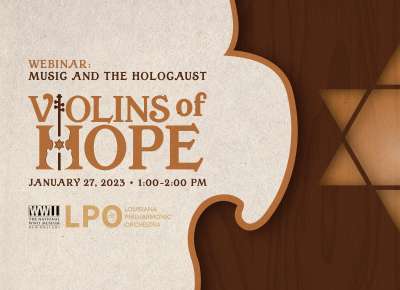
Join The National WWII Museum along with the Louisiana Philharmonic Orchestra (LPO) for this webinar on International Holocaust Remembrance Day as we discuss the importance of music during the Holocaust, as well as Violins of Hope, a private collection of violins that belonged to many Jewish people during World War II.

The Museum's outdoor sound and light show features incredible music, stunning imagery, festive snacks and beverages, and 90-foot-tall projections.

Avshalom (Avshi) Weinstein, a third-generation Israeli violin maker, was trained by his father, Amnon, and began working in their workshop in 1998 as a violin maker and restorer of violins, violas and cellos. Together with local educators and musicians, he visits schools where youngsters often have their first introduction to the history of the Holocaust and also the opportunity to see and hold an instrument that has survived so much and represents history.