Okinawa: The Battle and Bomb
Just over 75 years ago—on April 1, 1945—American troops invaded the 70-mile long island of Okinawa in the largest amphibious operation of the Pacific War.
As late as March 1943, the Allies were in danger of losing the Battle of the Atlantic as German U-boats were sinking Allied shipping at an alarming rate.
The National WWII Museum offers a final salute to Bert Stolier, who died Monday, June 13, 2016. He was 97, and the longest-serving WWII-veteran volunteer at the Museum.
On March 8, 2012, The National WWII Museum lost a treasured member of our family. Vernon Main was a WWII veteran and longtime Museum volunteer.In addition to his work here at the Museum, Vernon carried our mission to schools, nursing homes and community centers across the region as a member of the Speakers Bureau.
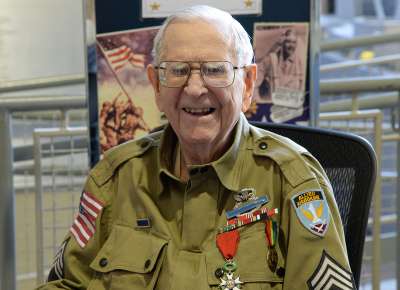
On Thursday, January 15, 2015, The National WWII Museum acknowledged a sad milestone in the death of the Museum’s legendary volunteer Thomas Blakey, a former U.S. Army paratrooper who fought in the European Theater. Blakey died at his home early Thursday morning.
This presentation of FALLOUT, which will premiere on the Museum’s Facebook page, recounts how John Hersey got the story that no other journalist could—and how he subsequently played a role in ensuring that no nuclear attack has happened since, possibly saving millions of lives.
Fox News Anchor and author Chris Wallace discusses his latest book, Countdown 1945: The Extraordinary Story of the Atomic Bomb and the 116 Days That Changed the World.
Join us as we reflect on the atomic bombing of Hiroshima 75 years later. The Museum’s Samuel Zemurray Stone Senior Historian, Dr. Rob Citino, will host a discussion on the history, artifacts, and Museum’s educational initiatives about the atomic bomb and Hiroshima.