The Blitz of 1940
While the RAF fought in the skies overhead, British civilians in towns of southern England endured regular visits from German bombers in what came to be known as “the Blitz."
From the hedgerows of Normandy across the rivers of northern France and into the dense forests of the Hürtgen and the Ardennes, Royal Air Force (RAF) and US Army Air Forces (USAAF) aircraft cleared the way for the advance of the Allied ground armies.
Twenty-five-year-old US Navy Carpenter’s Mate Second Class William R. Burns of Raleigh, North Carolina, has been accounted for more than 80 years after his death.
In the bloodiest battle in Marine Corps history, 27 Marines and sailors were awarded the Medal of Honor for action on Iwo Jima. No other campaign surpassed that number.
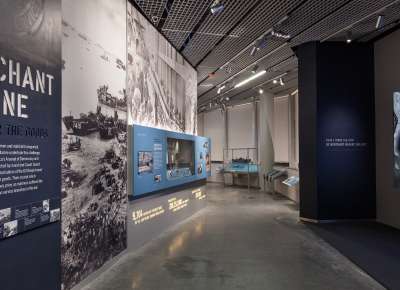
The first to cross the English Channel on D-Day, minesweepers cleared the way for the invasion of France.
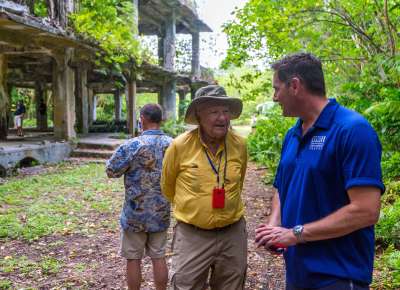
In 1992, Museum founder and award-winning author Stephen E. Ambrose published the New York Times bestseller Band of Brothers — which became not only a successful HBO miniseries, but also a cultural phenomenon that continues today. Join staff from America's official WWII museum and notable historians for the real-life epic journey across Europe. This exclusive travel opportunity includes tour stops and special guests not featured anywhere else.
The National WWII Museum’s most popular tour provides an in-depth itinerary exploring America’s most famous WWII battle. Offering a full week of touring in Normandy at an incredible price, this unforgettable tour offers great value and features top guides, upscale accommodations in prime locations, comprehensive dining, and exclusive access to sites unseen on other programs.
Join us for a conversation with author G. Kurt Piehler, PhD, and Michael Bell, PhD, Executive Director of the Jenny Craig Institute for the Study of War and Democracy, on Piehler’s book A Religious History of the American GI in World War II.