Article Type
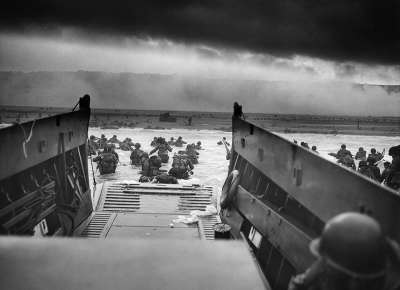
WWII Reads: D-Day
Rob Citino, Samuel Zemurray Stone Senior Historian of the Museum, lists his favorite books on D-Day.
Rob Citino, Samuel Zemurray Stone Senior Historian of the Museum, lists his favorite books on D-Day.
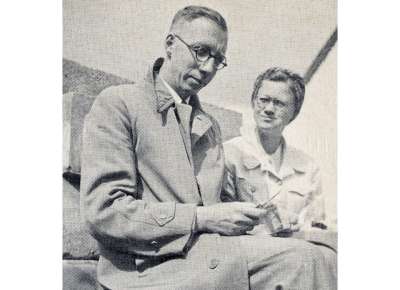
In secret, hidden from occupying German forces, Willem Kolff developed the first dialysis machine to save patients from kidney failure. After the war, he brought his device to the United States and made a career in artificial organ development.
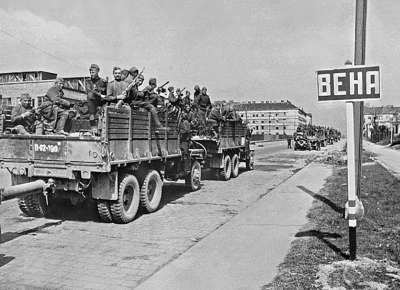
75 years ago Soviet soldiers captured Vienna after bitter street combat.
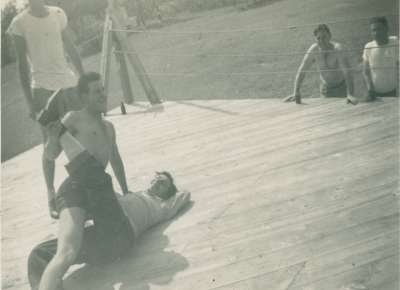
Just in time for WrestleMania, the contributions of professional wrestlers during World War II ranged from performing at bond drives to giving the military tips on hand-to-hand combat, while some wrestlers actually served and fought on the front lines.
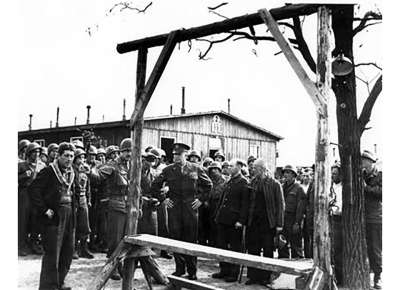
On April 4, 1945, the US 4th Armored Division and 89th Infantry Division of the Third US Army came face to face with the horrors of Nazi brutality. The men discovered Ohrdruf, a Nazi labor camp and a subcamp of the Buchenwald system.
A highlight of some of the best programs the Museum has hosted over the years on our home state Louisiana.
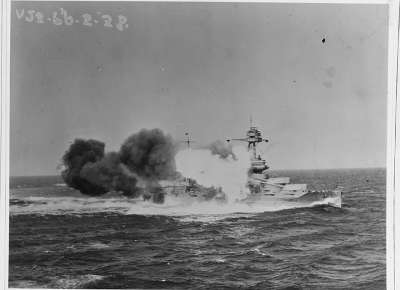
During the battle for Okinawa, the crew of the USS Texas spent over 50 days confined to battle stations in gun turrets and compartments deep within the ship. They stayed put, and saved lives.
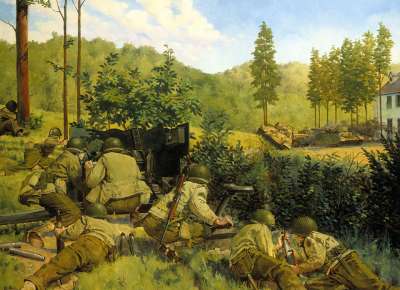
The US 30th Infantry Division receives the Presidential Unit Citation in honor of its heroism at the Battle of Mortain, August 1944.
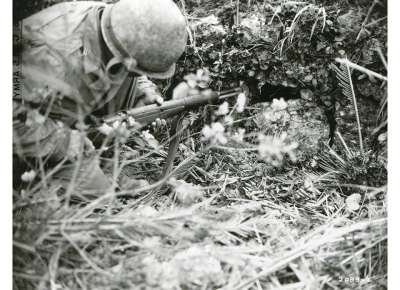
As the American advance pushed further south, it ran headlong into fortified Japanese positions and heavily defended caves near Kakazu Ridge, the first defensive perimeter in what would be called the Shuri Line. The rapid advance and relatively light American casualties sustained so far on Okinawa ended.
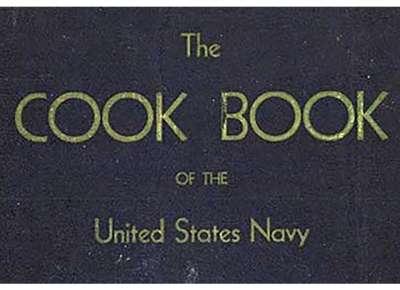
Ever wondered how to feed hundreds of sailors on a US Navy ship? The Cook Book of the United States Navy has the answer.