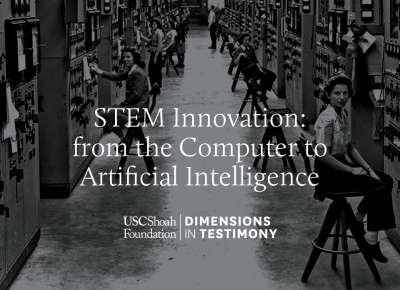
STEM Innovation: From the Computer to Artificial Intelligence
World War II was the catalyst for many technological advances, including creating the world’s first computer—an invention that has revolutionized the world we live in.
World War II was the catalyst for many technological advances, including creating the world’s first computer—an invention that has revolutionized the world we live in.

In conjunction with the Museum’s newest special exhibit, SOLDIER | ARTIST: Trench Art in World War II, this program allows you to create your own punched copper luminary, joining the long legacy of making trench art, a type of folk art created by soldiers dating back to the 1800s.
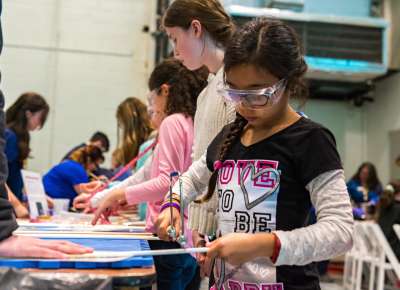
Join us for our third Virtual Innovation Studio! March is "spring forward" season, so this Virtual Innovation Studio is all about time.

As the world implements a vaccination program for Covid-19, we can look to WWII history to learn more about the process.

The days of World War II correlated with a new and radical direction in jazz. Dissatisfied swing musicians devised a new jazz that was faster, angular, virtuosic, and dissonant.
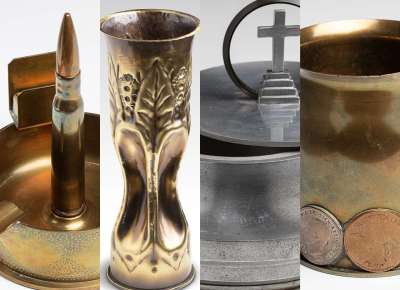
Join the National WWII Museum for a special virtual opening of its newest exhibit, SOLDIER | ARTIST: Trench Art in World War II.
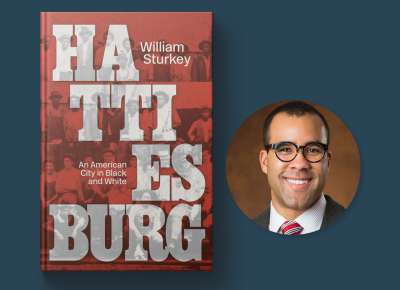
Join us for an engaging discussion about African Americans’ contributions on the Home Front and how they helped lay the groundwork for the post-war Civil Rights Movement.
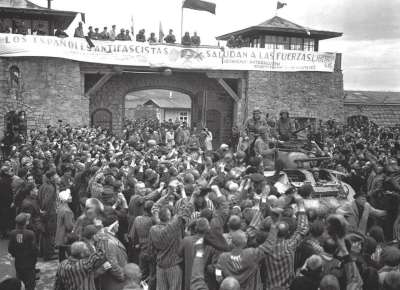
Join Museum educators to discuss the few Americans who saw the atrocities of the Holocaust with their own eyes.

A conversation with the Chair of the Heart Mountain Wyoming Foundation, whose parents were both incarcerated as a result of President Roosevelt’s Executive Order 9066, signed on February 19, 1942.
Military service during World War II and racial integration in the armed forces heightened expectations for social progress.