Translating and Interpreting the Nuremberg Trials
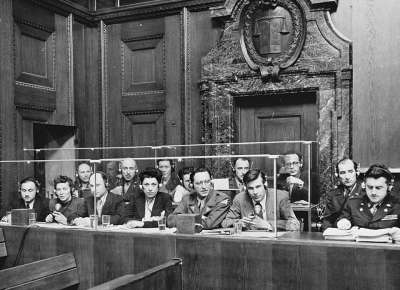
Interpreters and translators were the unspoken heroes of the Nuremberg Trials. Their work at Nuremberg was a groundbreaking development in simultaneous interpretation.
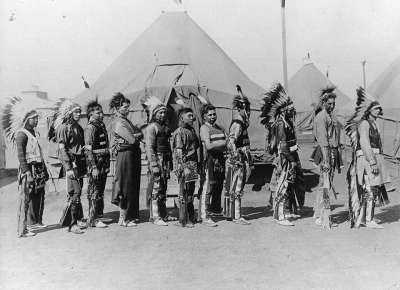
The Executive Director of the 45th Infantry Division Museum in Oklahoma City shares insights about Native Americans in the “Thunderbird Division.”
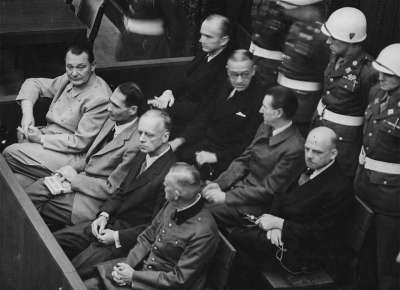
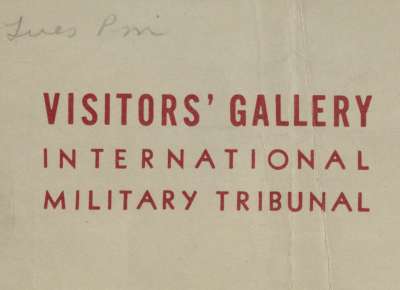
The courtroom of the International Military Tribunal in Nuremberg hosted nearly 400 visitors each day, including 250 members of the international press. The Museum’s collection contains items from some of these visitors, American service members who wanted to sit in on one of the most significant trials in history.
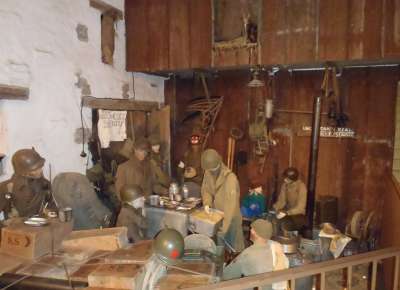
Museum friend and battlefield guide, Roland Gaul of Luxembourg, recounts Thanksgiving 1944 and how it is remembered today.
Following victory, the Allies turned to the legal system to hold Axis leaders accountable. In an unprecedented series of trials, a new meaning of justice emerged in response to war crimes and crimes against humanity committed by both the Germans and the Japanese throughout the war.
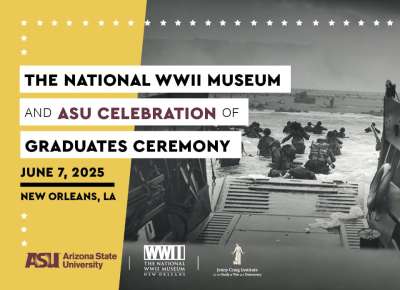
The National WWII Museum will welcome recent graduates from ASU’s WWII Studies master’s program to celebrate the completion of their degrees.
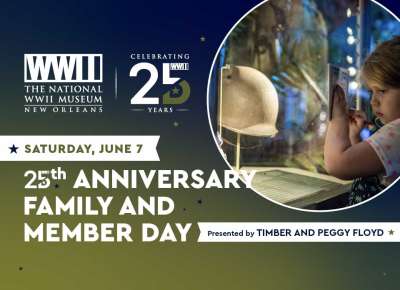
Bring your family and friends to experience an unforgettable day at The National WWII Museum.
Museum admission is FREE for ALL visitors thanks to the generosity of Timber and Peggy Floyd.
Presented by Priddy Family Foundation
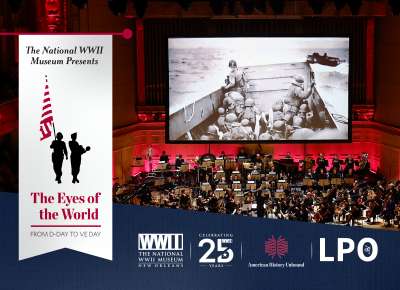
Historian John Monsky joins The National WWII Museum and the Louisiana Philharmonic Orchestra to bring you a musically driven multimedia experience capturing the dramatic final months of World War II in Europe.