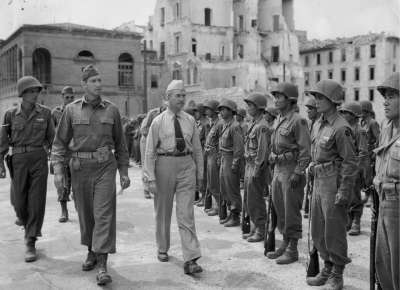
What We’re Fighting For: America’s Servicemen on Hypocrisy on the Home Front
Soldiers and Marines urged fellow Americans to fight against anti-Japanese American racism at home as they were fighting for democracy overseas.
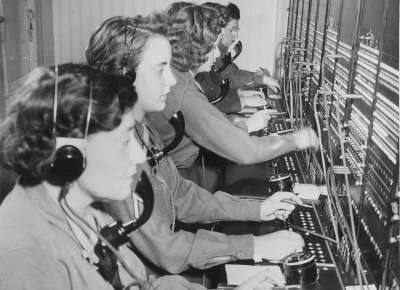
As Allied troops gained ground in Europe, members of the Women’s Army Corps [WAC] were there to serve. Bringing vital communication skills, they jumped into seats at switchboards still warm from the enemy operators who had just vacated their posts. In July 1945, the WAC telephone operators were selected to manage the "Victory switchboard" at the Potsdam Conference.
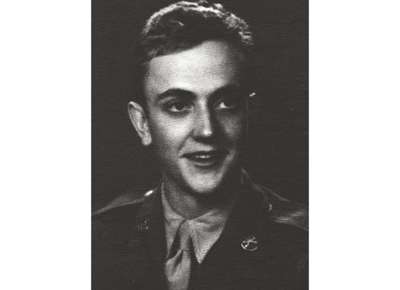
From January 1943 to June 1945, writer Kurt Vonnegut served in the US Army. His experiences with the 106th Infantry Division during the Battle of the Bulge and then later as a prisoner of war in Dresden imprinted his life and provided traumatic (and sometimes comedic) material for his novel Slaughterhouse-Five and other works.
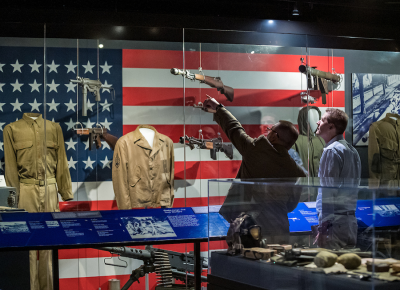
In recognition of 25 years of collecting at the Museum, our curators have highlighted pieces with special significance.
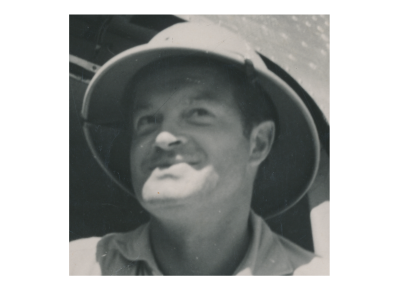
Entertainer Bob Hope brought comfort to generations of American troops on the Home Front and on battlefronts beginning in World War II.
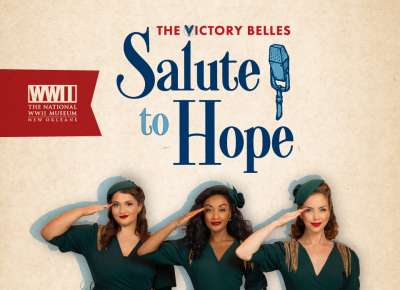
Enjoy a three-course dinner after the delightful Victory Belles trio perform the popular and patriotic music of the 1940s in rich, three-part harmony.
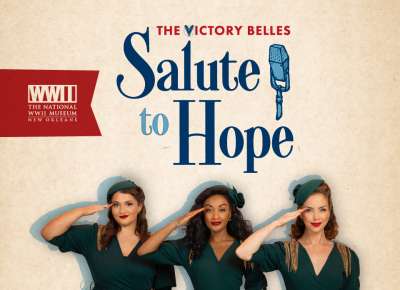
Enjoy a buffet lunch as the delightful Victory Belles trio perform the popular and patriotic music of the 1940s in rich, three-part harmony.
Enjoy a three-course dinner after the delightful Victory Belles trio perform the popular and patriotic music of the 1940s in rich, three-part harmony.