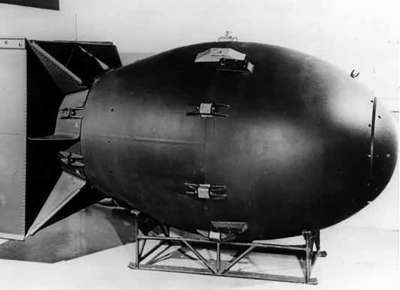
The Atomic Bombings
Many Americans greeted the news of the Atomic bombing of Hiroshima with jubilation. Beginning shortly after the war, however, a number of prominent US military leaders began to question the bomb's use.
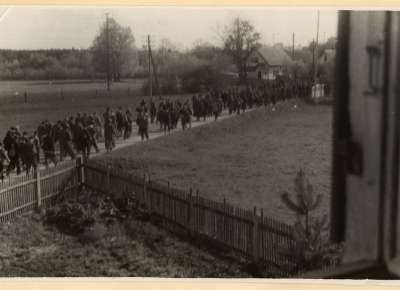
Desperate for slave labor to continue the doomed war effort and fearful of camp survivors exposing Nazi crimes, German decision-makers put in motion nearly three-quarters of a million concentration camp prisoners. Of this number, 250,000 died in these death marches.
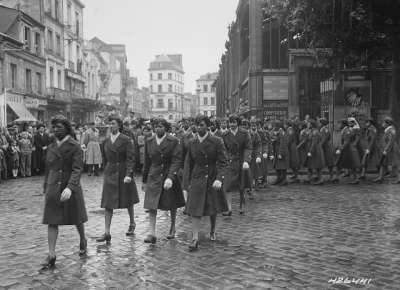
Just when you thought that most of the stories of the legendary all-black female military unit from World War II had been told, along comes the recent discovery that 14 of the 855 women from the “Six Triple Eight” have a final resting place at America’s most hallowed grounds, Arlington National Cemetery.
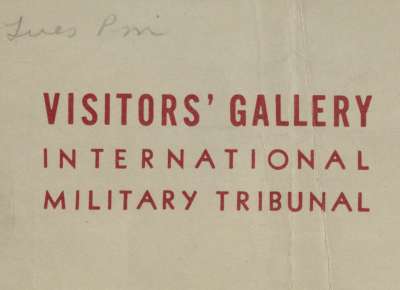
The courtroom of the International Military Tribunal in Nuremberg hosted nearly 400 visitors each day, including 250 members of the international press. The Museum’s collection contains items from some of these visitors, American service members who wanted to sit in on one of the most significant trials in history.
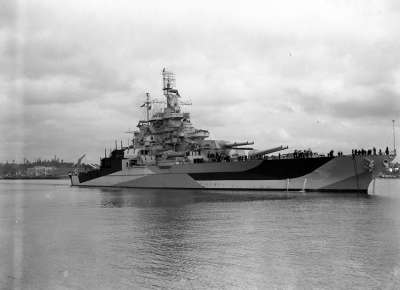
Severely damaged by Japanese torpedoes at Pearl Harbor, USS West Virginia returned to service in October 1944. When the Japanese surrendered on September 2, 1945, she was in Tokyo Bay, a symbol of the resilience of the United States Navy.