History Through the Viewfinder
Seventy-five years after the Germans began their attack on Stalingrad, a look at the Volga from atop Mamayev Kurgan.
The United States was not the only leading power on the world stage after the end of World War II; it had a new competitor for this power in the Soviet Union. Tensions between the former allies quickly grew, leading to a new kind of conflict—one heightened with the threat of atomic weapons—that came to dominate global politics for the remainder of the twentieth century.
Two members of the Institute for the Study of War and Democracy select their four "can't miss" WWII memoirs.
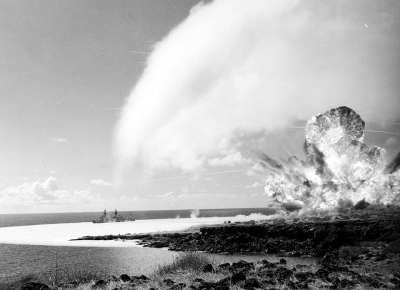
There’s an old saying that necessity is the mother of invention. That sentiment was definitely the case during World War II, a massive global conflict that presented the United States with a variety of tactical and logistical challenges. At every turn Americans seemed to need more of everything—more supplies, bigger bombs, faster airplanes, better medical treatments, and more precise communications.
In her September 2, 1939, My Day column, Eleanor Roosevelt reacts to the news of Germany's invasion of Poland, sharing her dismay at Adolf Hitler's actions and expressing sorrow for the European nations facing the crisis.