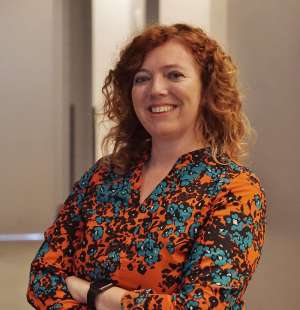
Kimberly Guise is the Senior Curator and Director for Curatorial Affairs at The National WWII Museum. She holds a BA in German and Judaic Studies from the University of Massachusetts Amherst. She also studied at the Universität Freiburg in Germany and holds a masters in Library and Information Science (MLIS) from Louisiana State University. Kim is fluent in German, reads Yiddish, and specializes in the American prisoner-of-war experience in World War II. After working at the National Yiddish Book Center in Amherst, Massachusetts, she began working at The National WWII Museum in 2008, where she has since facilitated the acquisition of thousands of artifacts, led numerous Museum tours, and curated several exhibits including Guests of the Third Reich: American POWs in Europe.
Kim Guise
Senior Curator and Director for Curatorial Affairs
More from the Contributor
-
 Article Type
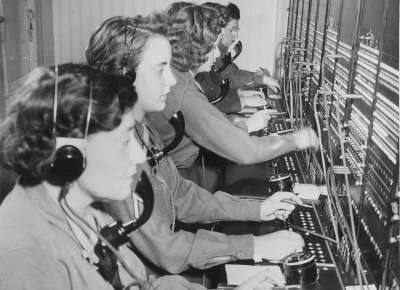
Potsdam Calling: WACs on the Switchboard
Learn MoreAs Allied troops gained ground in Europe, members of the Women’s Army Corps [WAC] were there to serve. Bringing vital communication skills, they jumped into seats at switchboards still warm from the enemy operators who had just vacated their posts. In July 1945, the WAC telephone operators were selected to manage the "Victory switchboard" at the Potsdam Conference.
-
Article Type
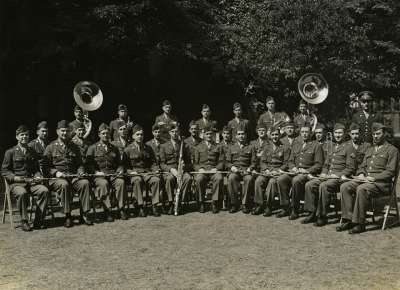
The 156th Infantry Band, the Potsdam Conference House Band
Learn MoreThe 156th Infantry Band from Louisiana brought a New Orleans flair to one of the most influential postwar moments in Europe, when they were selected to provide the musical backdrop for the Potsdam Conference as the “house band” at the Little White House.
-
Article Type
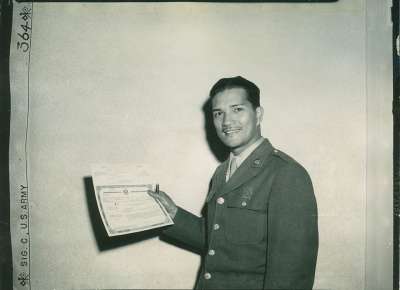
New Citizen Soldiers: Naturalization During World War II
Learn MoreForeign-born US troops made a significant contribution to American victory in World War II. Between July 1, 1942 and June 30, 1945, 109,382 foreign-born members of the US Armed Forces became naturalized citizens.
-
Article Type
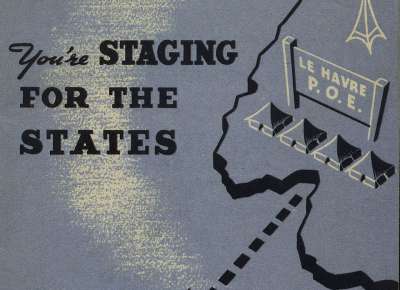
Camp Lucky Strike: RAMP Camp No. 1
Learn MoreThe cigarette camp “Camp Lucky Strike” was a bustling tent city of 58,000 impatient American troops awaiting transportation back to the United States after Victory in Europe. Lucky Strike was described as both “seventh heaven” and complete chaos.
-
Article Type
Bullies and Bad Guys: World War II in Letters to American Children
Learn MoreThe Museum’s archives contains many examples of letters written to children and the tones struck in the letters are as varied as the paper they’re written on. How did those in service help children understand what was happening in World War II while still trying to make sense of it themselves?
-
Remembering Pearl Jacobs Daube, War Bride
Learn MoreThe Museum looks back and remembers volunteer Pearl Jacobs Daube (1924-2013), WWII war bride and National WWII Museum volunteer from 2006-2013.
-
Article Type
Curator's Choice: Gifts from the "Geneva Man"
Learn MoreDiaries provided by the Red Cross and the YMCA occupied many long hours of those held in German POW camps. Assistant Director for Curatorial Service Kimberly Guise discusses how the Museum’s collection of this surprising genre has grown substantially over the last 20 years of the Museum’s life.
-
Remembering Bob Zawada, WWII veteran and Museum volunteer
Learn MoreBob Zawada, WWII veteran, was wounded in action and then captured, during the Hammelburg Raid. As a Museum volunteer he left a lasting imprint on our Education and Curatorial Services Departments.
-
Article Type
Memorial Day: A New Orleans Neighborhood Remembers
Learn MoreOn Memorial Day and every day, the name of Richard McCurdy, killed in action during Operation Torch, and other boys like him should be kept alive and their sacrifices and those of their families remembered. They were and are part of a nation, a city, a neighborhood, and a family.
-
Article Type
A Memorial Day Remembrance: “Happy” Neil’s Share in the American Flag
Learn MoreAmong the Museum's collection are many stories of those who did not return, like PFC Darrel “Happy” Neil, killed in action on July 7, 1944 in France.