Article Type
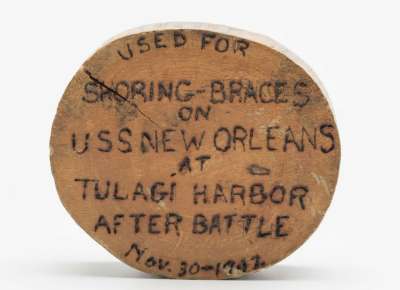
USS New Orleans Coconut Log Artifact
After a Japanese torpedo attack, a heavy cruiser survives to fight again -- with the help of a temporary bow fashioned from a tropical tree trunk.
After a Japanese torpedo attack, a heavy cruiser survives to fight again -- with the help of a temporary bow fashioned from a tropical tree trunk.
Richard B. Frank, author of Guadalcanal: The Definitive Account of the Landmark Battle (1990); Downfall: The End of the Imperial Japanese Empire (1999); and MacArthur (2007); lectures on the decisive battles of the Pacific war.
The August 1942 landing on Guadalcanal was a colossal improvisation, concocted on the fly to take advantage of a recent dramatic turn in the Pacific war.
After the US strategic victories at the Battles of the Coral Sea (May 7–8, 1942) and Midway (June 4–7, 1942), the Japanese Imperial Navy was no longer capable of major offensive campaigns, which permitted the Allies to start their own offensive in the Pacific.
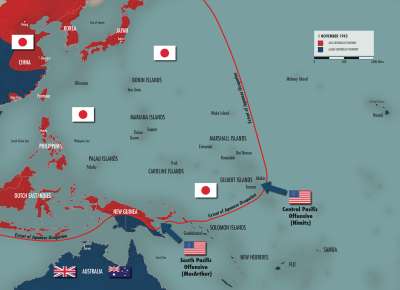
On December 7, 1941, Japan staged a surprise attack on Pearl Harbor, severely damaging the US Pacific Fleet. When Germany and Italy declared war on the United States days later, America found itself in a global war.
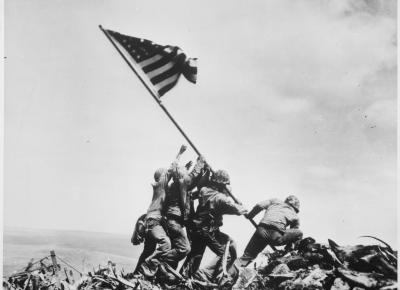
In 1945, US forces bounded forward in the central Pacific as combat reached ever bloodier crescendos.

On December 7, 1941, Japan staged a surprise attack on Pearl Harbor, decimating the US Pacific Fleet. When Germany and Italy declared war on the United States days later, America found itself in a global war.
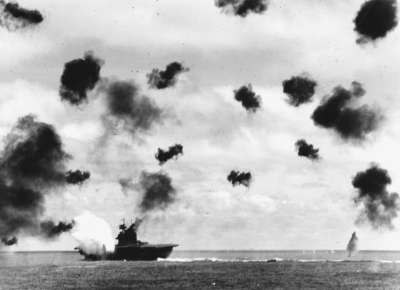
One of Japan’s main goals during World War II was to remove the United States as a Pacific power in order to gain territory in east Asia and the southwest Pacific islands. Japan hoped to defeat the US Pacific Fleet and use Midway as a base to attack Pearl Harbor, securing dominance in the region and then forcing a negotiated peace.
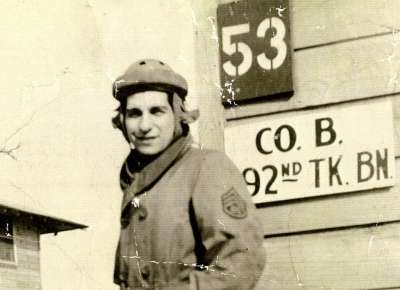
Tenney was a tank commander with the 192nd Tank Battalion, a survivor of the Bataan Death March, and a dear friend of The National WWII Museum.