Explorers Locate Lost Wreckage from WWII Cruiser USS New Orleans
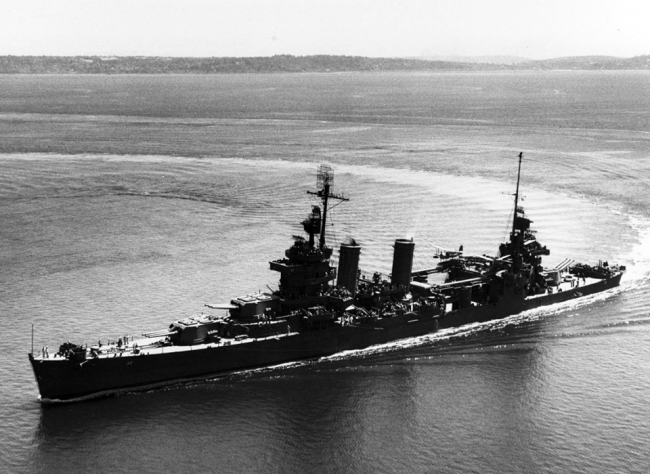
More than 80 years after the Battle of Tassafaronga, a team of scientists and explorers aboard the Exploration Vessel Nautilus found and imaged the wrecked bow of the New Orleans at the bottom of Iron Bottom Sound.
-
 Article Type
The Women's Army Corps and the Manhattan Project
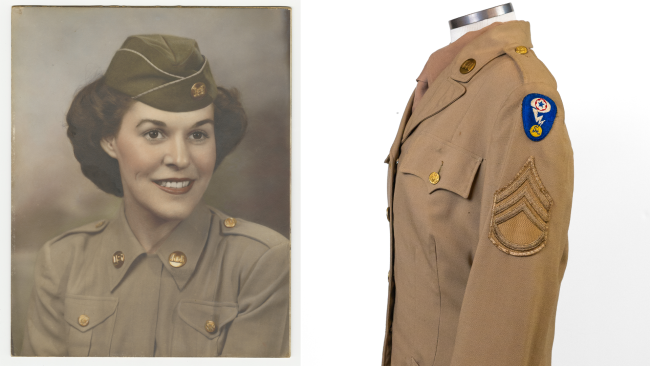
Wilma Betty Gray's WAC journey began when she boarded a train, destination unknown. Her assignment was Oak Ridge, Tennessee, for the Manhattan Project.
-
Article Type
Trinity: Why It Really Mattered
While most people are familiar with the names of “Little Boy” and “Fat Man” as the atomic weapons used over Japan, what they may not be familiar with was how different the respective technologies of each bomb were and why this difference mattered.
-
Article Type
'Destroyer of Worlds': The Making of an Atomic Bomb
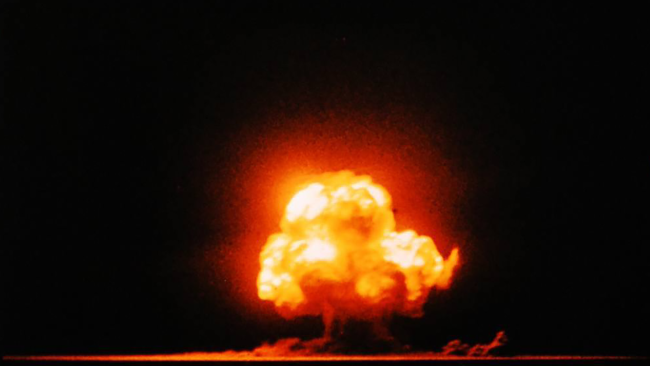
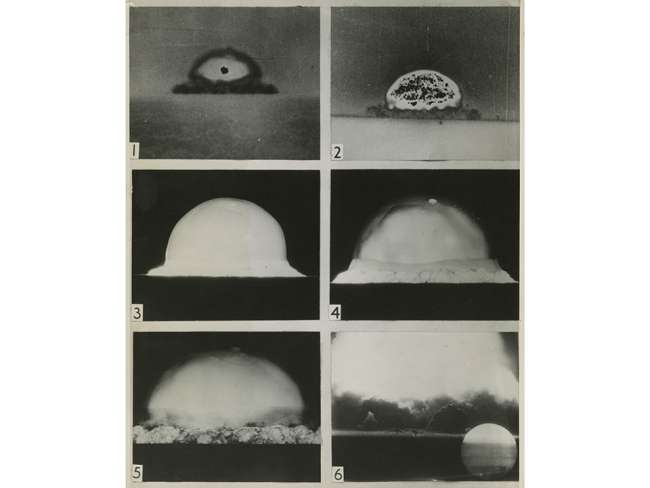
On July 16, 1945, the world’s first atomic bomb detonated in the New Mexican desert, releasing a level of destructive power unknown in the existence of humanity. Emitting as much energy as 21,000 tons of TNT and creating a fireball that measured roughly 2,000 feet in diameter, the first successful test of an atomic bomb, known as the Trinity Test, forever changed the history of the world.
-
Article Type
Signing the UN Charter and 'Preparing the Way' for Peace
In the June 26, 1945, edition of her newspaper column My Day, First Lady Eleanor Roosevelt reflected on the efforts of the delegates at the San Francisco Conference to create the United Nations Charter and her hope that its ratification would help prepare the way for lasting peace in the world.

V-E Day: Victory in Europe
On May 8, 1945, thousands of people took to the streets in cities around the world to celebrate news of Germany's surrender and the end of World War II in Europe.
European Theater of Operations
More from Topic-
Article Type
The Rosenstrasse Protests of 1943: An Interview with Nathan Stoltzfus, PhD
Historian Nathan Stoltzfus has done so much to throw light on intermarriage in Nazi Germany and the remarkable stories of resilience and resistance of everyday people.
-
Article Type
First American Pope Is the Son of a D-Day Veteran
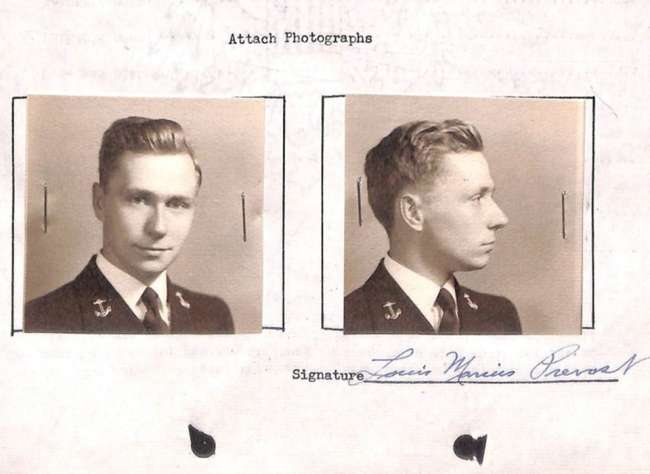
Louis M. Prevost, the father of newly elected Pope Leo XIV, participated in the landings in Normandy and Southern France during World War II.
-
Article Type
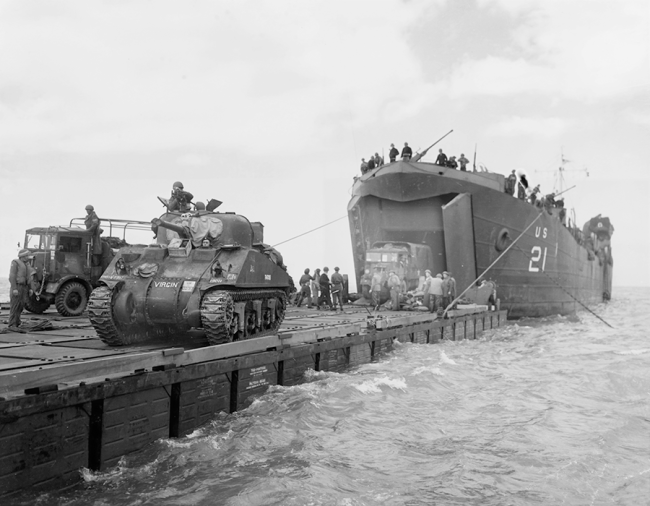
Over-the-Shore Logistics of D-Day
Within 48 hours of the amphibious assault, over 130,000 GIs and some 17,000 vehicles came ashore. With more troops and equipment arriving daily, the amount of supplies required to support this force grew exponentially.
-
Article Type
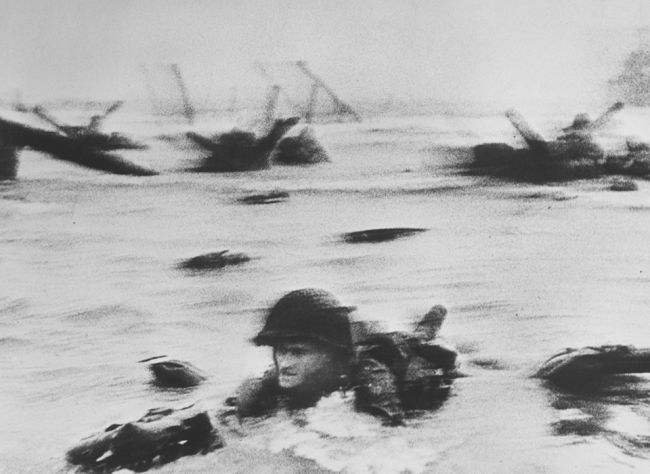
Robert Capa's Iconic Images from Omaha Beach
Early on the morning of June 6, 1944, photojournalist Robert Capa landed with American troops on Omaha Beach. Before the day was through, he had taken some of the most famous combat photographs of World War II.
-
Article Type
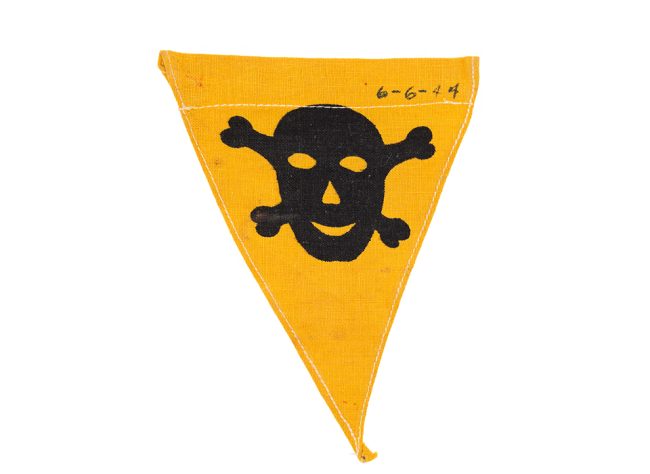
From Utah and Omaha: Souvenirs from D-Day
A look at the personal objects American soldiers collected during the D-Day landings, revealing how everyday items became lasting symbols of war, survival, and memory.
-
Article Type
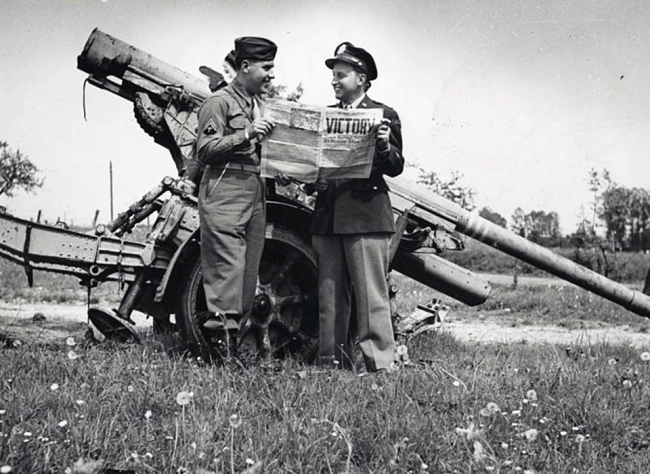
'The War in Europe is Over'
In her My Day column on May 9, 1945, the day after V-E Day was officially confirmed, Eleanor Roosevelt reflects on the cautious mood, the devastation in Europe, and the unfinished task of winning peace.
-
Article Type
Last Surviving Pilot from Battle of Britain Passes Away at 105
John “Paddy” Hemingway, along with his fellow RAF pilots who have been revered as “the Few,” played a critical role in defending the United Kingdom against Nazi Germany during the summer of 1940.
-
Article Type
Operation Undertone: The Allies Clear the Rhineland
US Third and Seventh Armies' March 1945 offensive cleared the Rhineland, pushing deep into Germany and decisively weakening German defenses before the final Allied push.


Pacific Theater of Operations
More from Topic-
Article Type
Explorers Locate Lost Wreckage from WWII Cruiser USS New Orleans
More than 80 years after the Battle of Tassafaronga, a team of scientists and explorers aboard the Exploration Vessel Nautilus found and imaged the wrecked bow of the New Orleans at the bottom of Iron Bottom Sound.
-
Article Type
WWII Airmen Killed in Pacific Crash Identified After 80 Years
More than eighty years after the B-24D Liberator named Heaven Can Wait crashed off Awar Point in Papua New Guinea, four of its crew have been accounted for and will finally be returned to the United States.
-
Article Type
The Liberation of Mindanao
The liberation of Mindanao was, in some respects, an unnecessary campaign militarily, but it had important political implications, as it enabled the United States to fulfill its promise of independence to the Philippines.
-
Article Type
The PBY Catalina in World War II
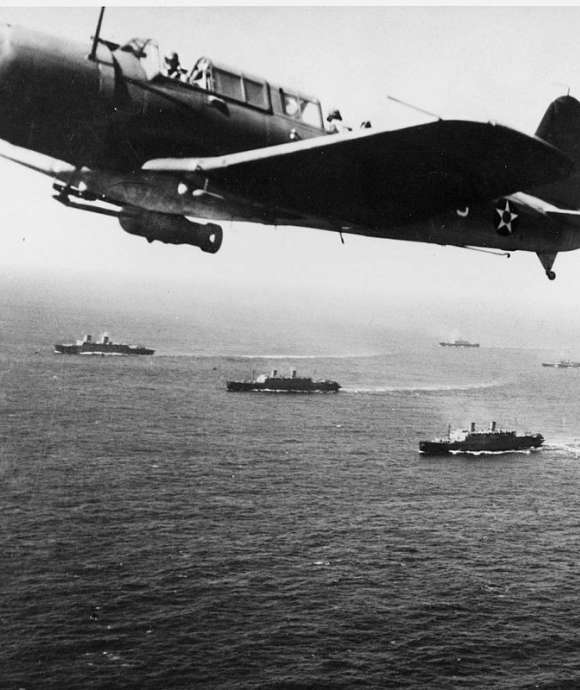
Whether it played the role of the “Black Cat,” “Mad Cat,” or “Dumbo,” the PBY Catalina proved itself as one of the most instrumental amphibious planes as it struck fear in the Axis and provided hope for the Allies.
-
Article Type
Marine Killed at Peleliu Accounted For 80 Years After Battle
After 80 years, the remains of Private First Class John Henry Newstrom, a US Marine killed during the Battle of Peleliu in 1944, have been identified and will be returned home thanks to a joint recovery effort by the US and Japanese governments.
-
Article Type
New Underwater Exploration of Attu’s World War II Shipwrecks
A multinational team has rediscovered long-lost WWII shipwrecks off Attu Island in Alaska, using sonar, drones, and archival research to document a forgotten underwater battlefield.
-
Article Type
Marguerite Hunold and Weather Forecasting in the Aleutians
Marguerite Frances Hunold, a pioneering aerologist in the US Navy’s WAVES program during World War II, became the first woman in her field to serve in Alaska, where she helped shape naval aviation forecasting in one of the world’s most challenging weather environments.
-
Article Type
Operation Iceberg: The Battle for Okinawa
Controlling the Ryukyu Islands would allow the Americans to finally sever Japan from its South Asian empire.



Explore By Topics
View More-
Learn More
European Theater of Operations
-
Learn More
Pacific Theater of Operations
-
Learn More
Home Front
-
Learn More
More Topics
Home Front
More from Topic-
Article Type
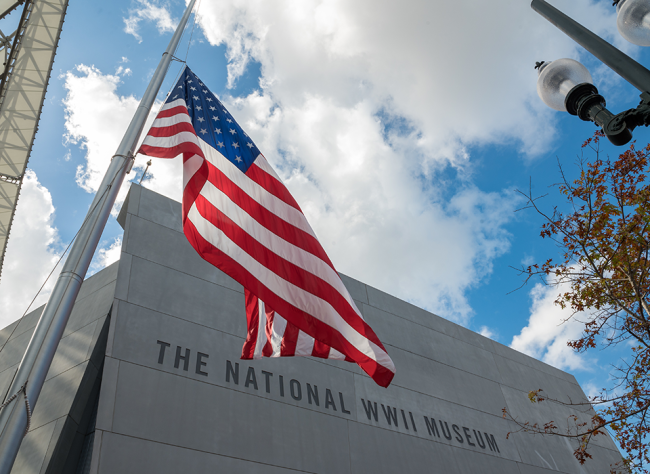
How New Orleans Became Home to America's National WWII Museum
Visitors often ask, “Why is the Museum in New Orleans?” The answer to this simple question requires an understanding of the city’s involvement in World War II, politics, and American memory.
-
Article Type
The Spirit of Service at The National WWII Museum
Volunteers have helped keep things running smoothly at the Museum since it opened in 2000—and a very special group has been here from the very beginning.
-
Article Type
Hedy Lamarr’s WWII Invention Helped Shape Modern Tech
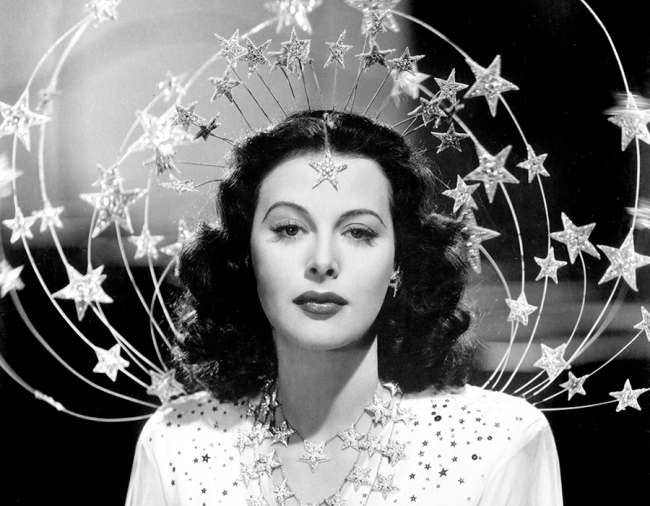
Regarded as the “most beautiful woman in the world,” Hedy Lamarr was not only a famous Hollywood actress who sold millions in war bonds during World War II, she was an inventor. Her creations included a frequency-hopping radio communications device for Allied torpedoes during the war.
-
Article Type
Eleanor Roosevelt’s My Day Column after FDR's Death
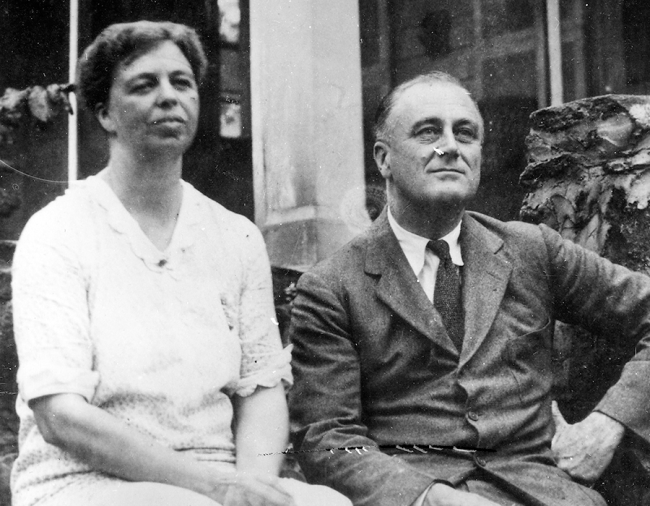
In her first My Day column after Franklin D. Roosevelt's death on April 12, 1945, Eleanor Roosevelt reflects on the sorrow following his passing, honors his commitment to justice, and urges the world to unite in building a lasting, just peace.
-
Article Type
The Legacy of WWII Tattoos: Stories of Ink, Sacrifice, and Memory
Each tattoo inked on the skin of those who lived through World War II tells a unique story, reflecting both personal experiences and collective history.
-
Article Type
The GI Bill and Planning for the Postwar
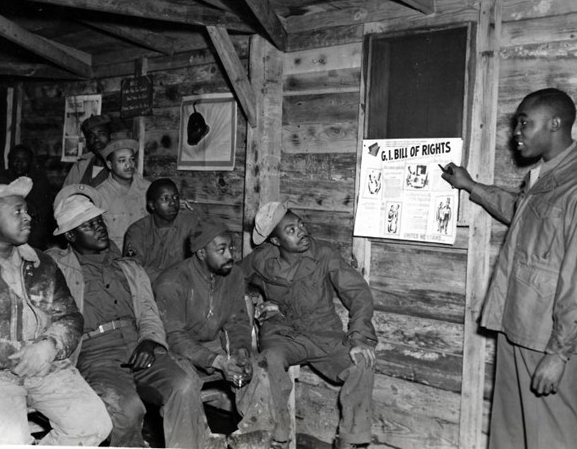
Well before the war ended, President Franklin D. Roosevelt envisioned a plan for veterans to return home and better their lives through the Servicemen's Readjustment Act of 1944. But administering the massive welfare program required navigating social and political challenges.
-
Article Type
The Washington Naval Conference of 1921-22
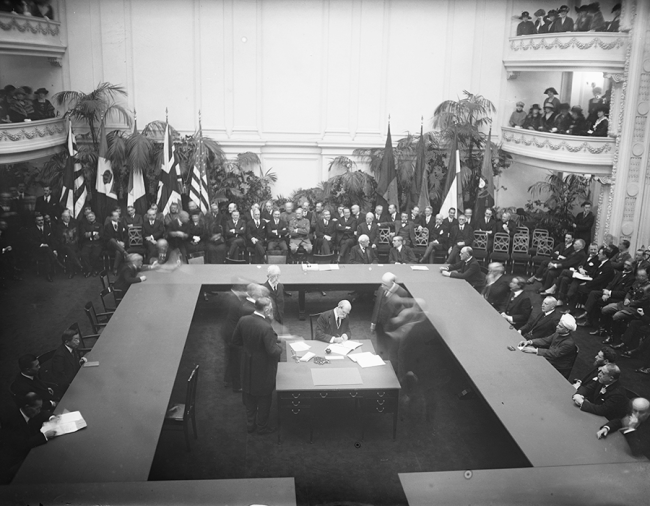
Although the Washington Naval Conference concluded nearly two decades before the attack on Pearl Habor, its outcome shaped the course of World War II in the Pacific between the United States and Japan.
-
Article Type
Jack Sanders and the NFL Join the Fight
As dozens of their players left the gridiron for battlefields overseas, the cities of Philadelphia and Pittsburgh joined forces to keep the decimated NFL squads up and running.



Medal of Honor Recipients of World War II
More from Topic-
Article Type
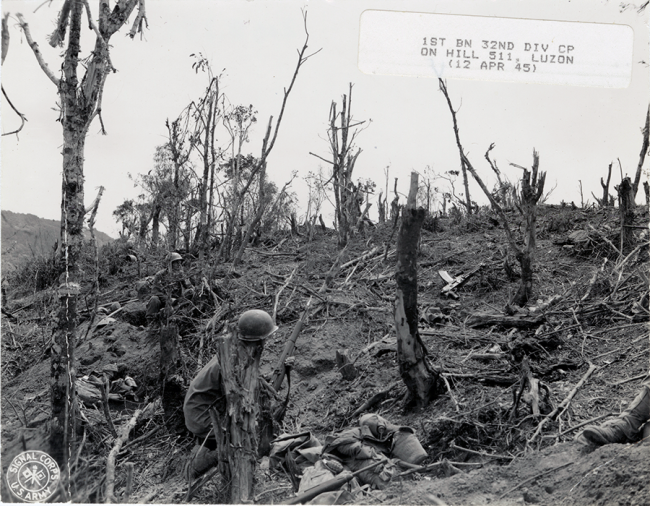
The Trail of Valor: The Red Arrow Division on the Villa Verde Trail
Over 119 days of skirmishes, which included hand-to-hand combat and engagements with the enemy at close range in caves and thick jungles, the Red Arrow Division earned an incredible 28 Silver Stars, 20 Distinguished Service Crosses, and four Medals of Honor.
-
Article Type
The Depths of Courage: Howard Gilmore and the USS Growler
Commander Howard Gilmore’s story is certainly one of extraordinary valor, dedication, and sacrifice.
-
Article Type
Jefferson DeBlanc and the Air Battle for Guadalcanal
When Jefferson Joseph DeBlanc entered Guadalcanal, the United States had been fighting a defensive campaign against Japanese attempts to retake Henderson Airfield and dominate the surrounding seas.
-
Article Type
Rudolph B. Davila's Medal of Honor
Second Lieutenant Rudolph B. Davila, of Spanish-Filipino descent, received the Medal of Honor for his heroic actions near Artena, Italy, during World War II.
-
Article Type
Manuel Pérez Jr.’s Medal of Honor
After parachuting on Tagaytay Ridge, Manuel Pérez participated in the horrendous fighting with the Japanese in the Philippines' capital city of Manila, the scene of some of the bloodiest urban combat of the war.
-
Article Type
A 'Gallant Stand' at Monte Battaglia: Manuel V. Mendoza’s Medal of Honor
For what he did on October 4, 1944, Staff Sergeant Manuel V. Mendoza garnered a special place in the history of Nazi Germany’s defeat.
-
Article Type
Johnnie David Hutchins's Medal of Honor
The loss of Johnnie David Hutchins was devastating to his family, but his moment of bravery almost certainly saved other parents and siblings from experiencing that same loss in the fall of 1943.
-
Article Type
John Joseph Parle's Medal of Honor
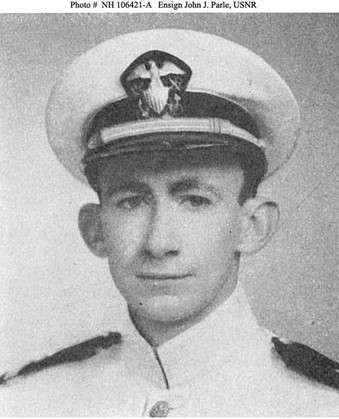
Navy Ensign John Joseph Parle risked his own life to save a ship and ensure a successful Allied amphibious invasion of Sicily in 1943.